Which Sea Hunt is right for you?
Sea Hunt builds three series for three kinds of days on the water. Start with how you'll use the boat, then pick a size.
In this article
Choose the series first. Ultra is for families who also fish (21 to 30 feet). Gamefish is for anglers who run offshore (25 to 30 feet). BX is for bay and inshore fishing (22 to 28 feet). Then pick a size by where you boat, who comes along and how you'll store it.
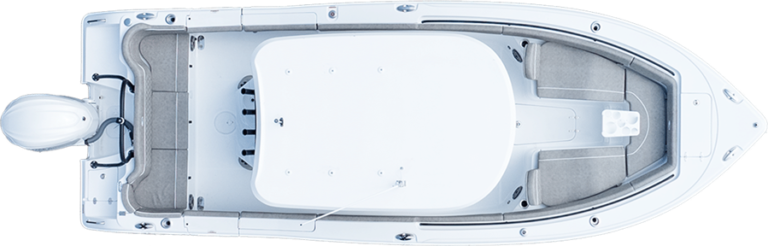
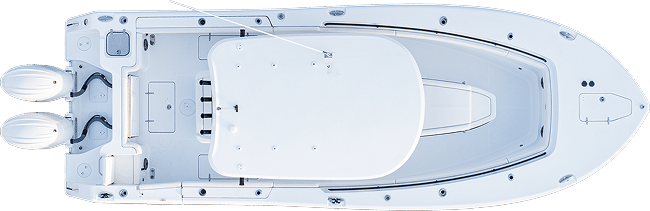
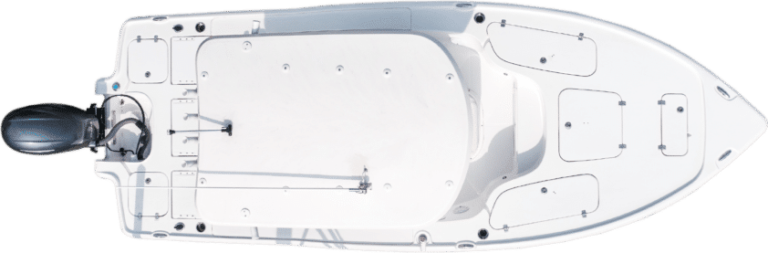
Most buyers start with a length and a budget. Start instead with the trip you'll take most often: who's aboard, where you'll launch and how far you'll run. That one picture narrows Sea Hunt's three series to one, and the sections below take you from there to a model: hull shape and draft, one engine or two, size and storage, the features that matter, and the questions to ask before you sign.
What is your boating style?
Pick the line below that sounds most like your typical Saturday, not your dream trip. Each one points to the series built around it.
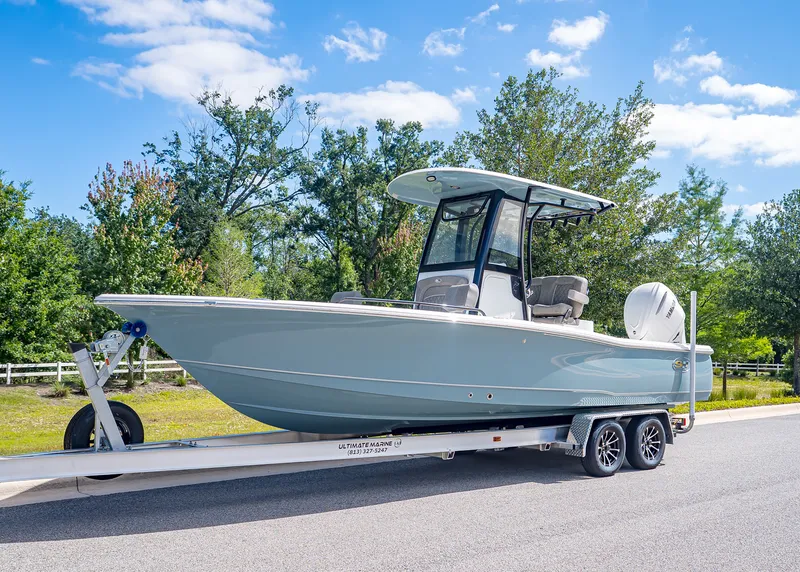
- Inshore and bay fishingBX. The shallow draft gets you onto flats and into skinny water deeper boats can't reach.
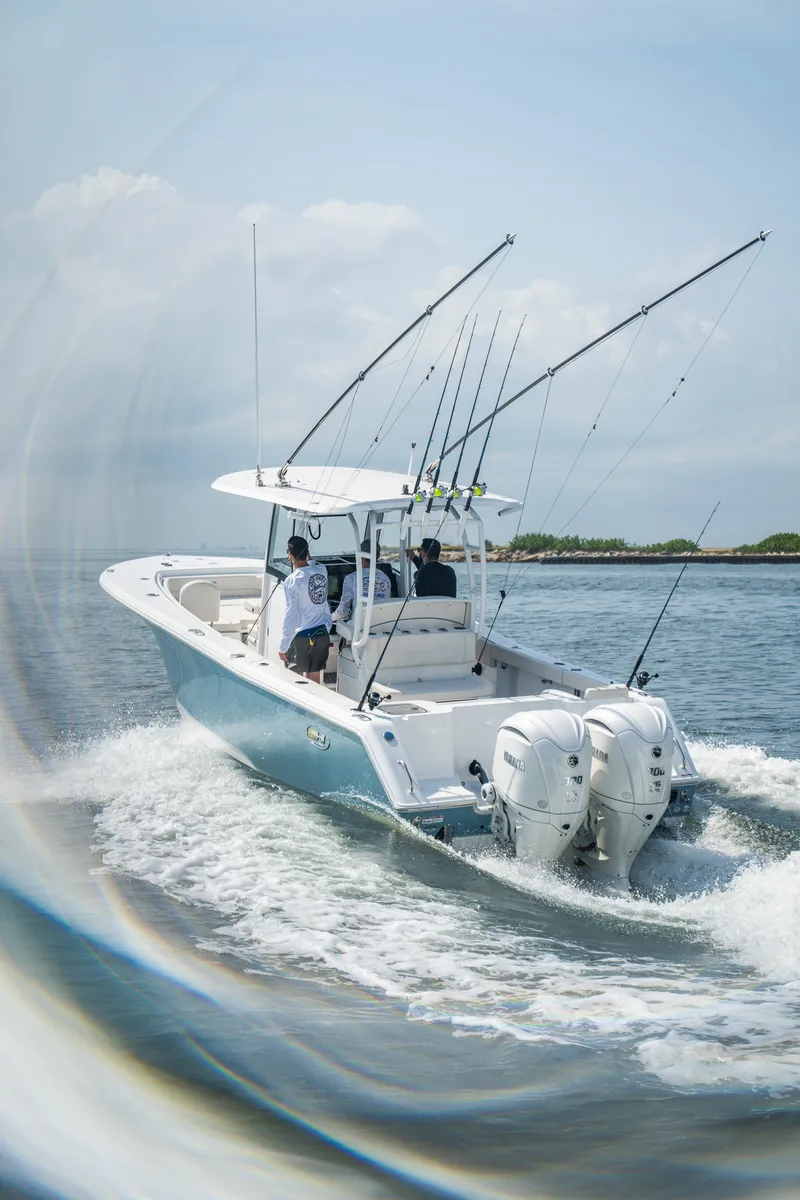
- Offshore fishingGamefish. Deep-V hulls, 200-quart fish boxes and livewells for long runs.
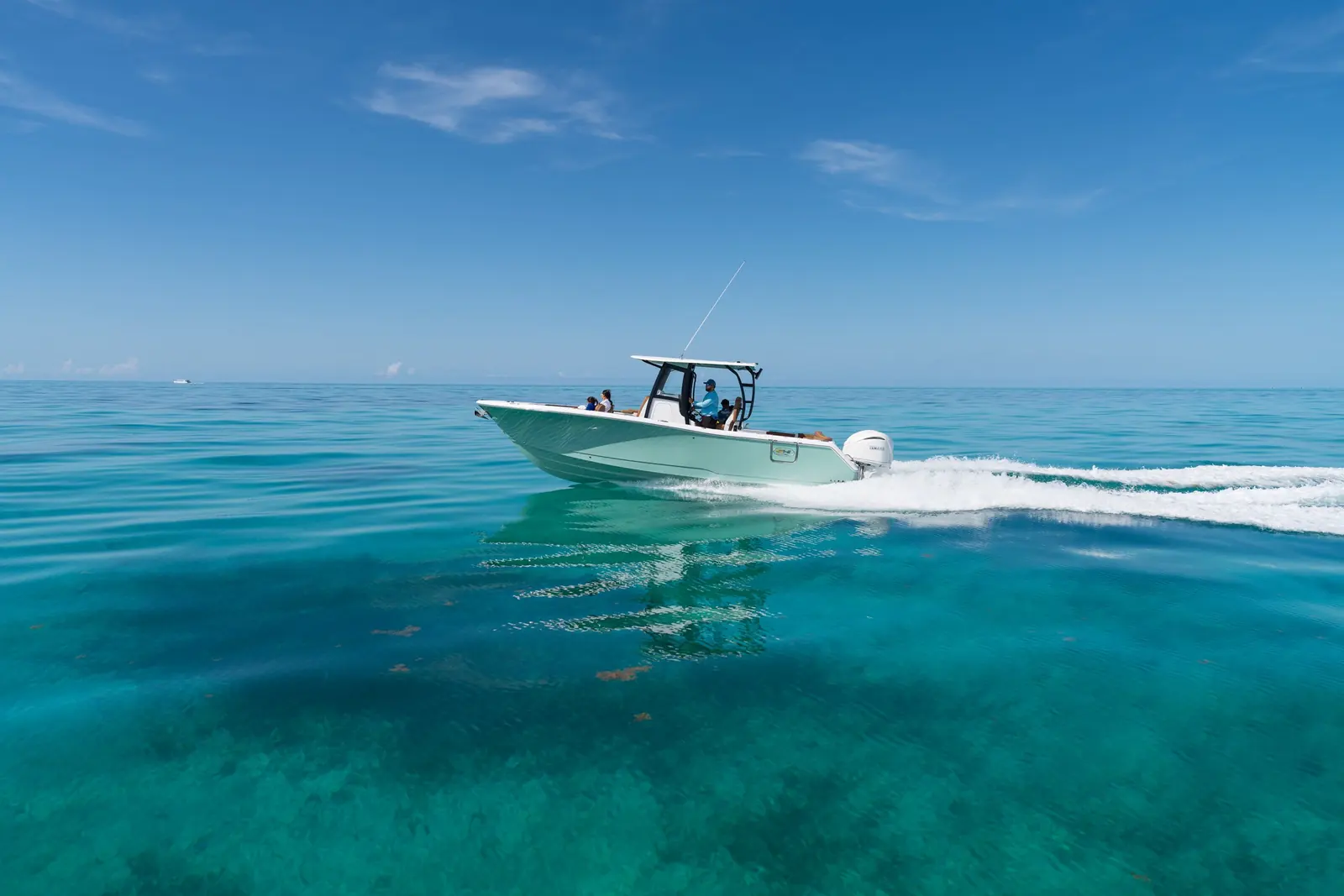
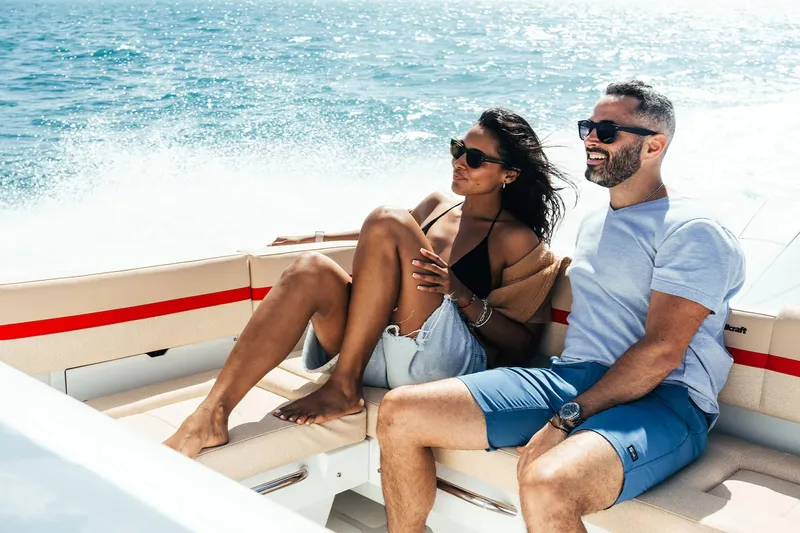
- Family days that include fishingUltra. Bow seating, livewells and, on the 245 SE and larger, a standard marine toilet, so the same boat works for the sandbar and the reef.
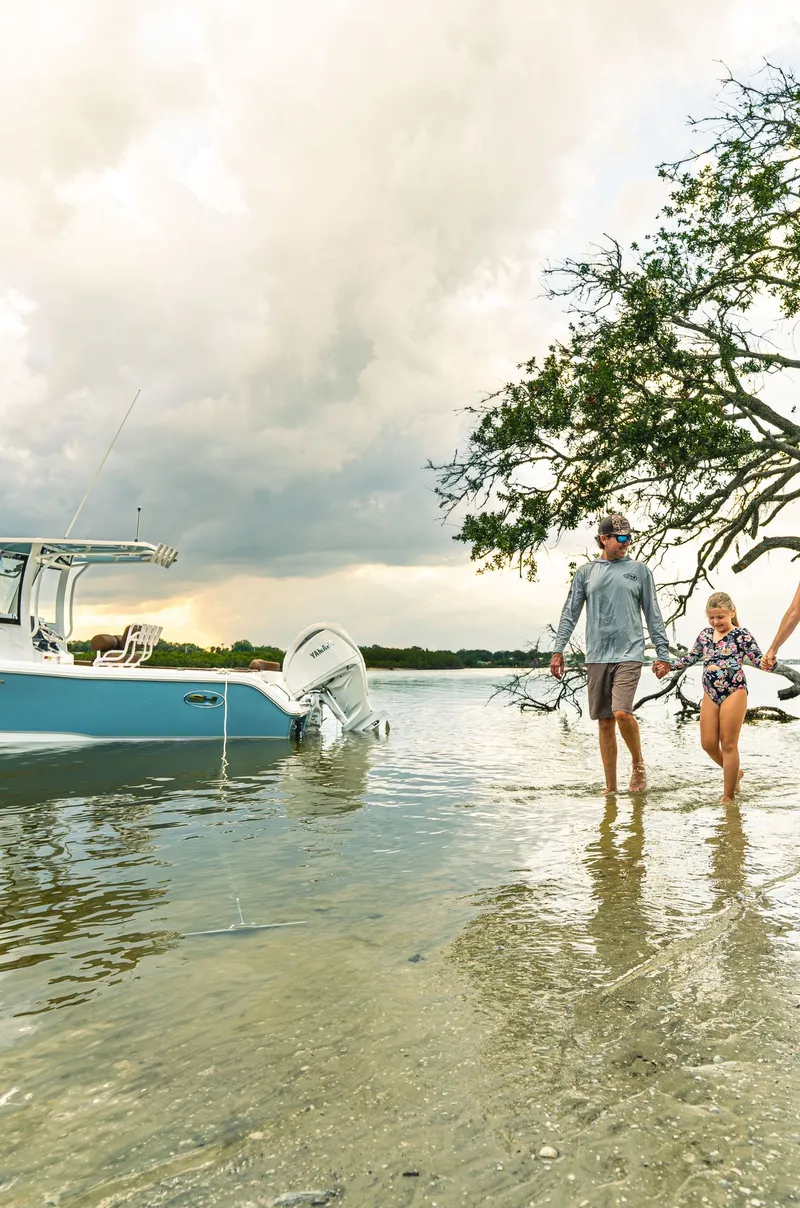
- Sandbar daysUltra. Seating for the whole group and a T-top for shade (standard on the 235 SE and larger), with a side-entry ladder and cooler slide available as options.
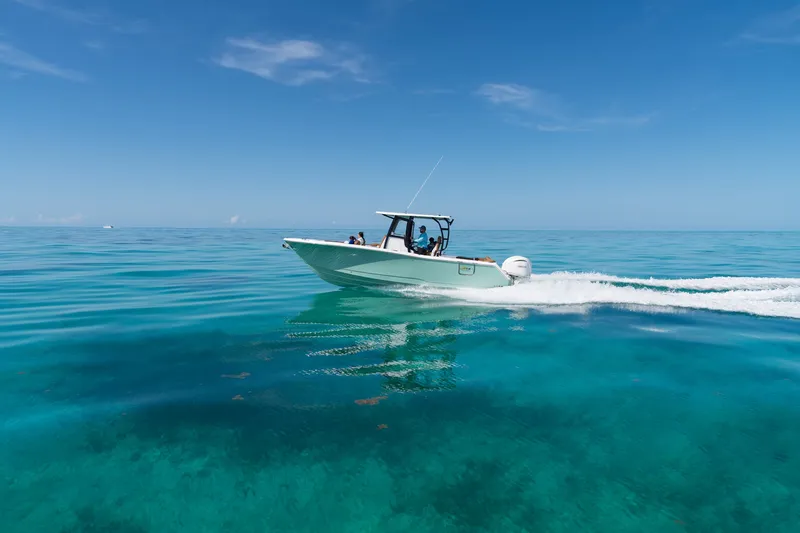
- Cruising the IntracoastalUltra SE models such as the 275 SE, with more comfort and fuel for longer days.
For a full tour of each series, see Introducing Sea Hunt boats; for every Ultra size, the Ultra size guide; for the fishing picks, the Top 9 Sea Hunt fishing boats.
Two examples make the choice clearer. A family of five in St. Petersburg who spend most weekends at the Tampa Bay sandbars and fish the grass flats now and then will use an Ultra's bow seating, shade and console toilet every trip. Two friends who launch at Ponce Inlet before dawn for kingfish and snapper will fill a Gamefish's livewells and fish boxes and never miss the lounge seating. An angler who sight-fishes reds in the Mosquito Lagoon needs the BX's shallow draft more than either.
If your weekends really are split, the Ultra is usually the safer pick, since it fishes better than a family boat has to. Buy for the fifty normal weekends, not the twice-a-year trip.
How do the Sea Hunt series compare on size, power and fuel?
| Series | Models | Length | Max power | Fuel |
|---|---|---|---|---|
| Ultra | 219 to 305 SE | 21′ 4″ to 30′ 2″ | 200 to 700 hp | 60 to 230 gal |
| Gamefish | 25 to 30 CB | 25′ 8″ to 30′ 2″ | 400 to 700 hp | 145 to 230 gal |
| BX | 22 BR, 25 FS, 28 | 22′ 10″ to 28′ 6″ | 250 to 600 hp | 53 to 157 gal |
Ranges from our model pages (Sea Hunt, current model year). Fuel economy depends on load, sea state and engines; ask us for real numbers on a specific rig.
The ranges overlap more than the series names suggest. A 25-foot Ultra 255 SE and a 25-foot Gamefish 25 are close in length, but the Gamefish carries more fuel (145 gallons to 120) and more power (400 hp to 350). The BX tops out at 28 feet with 157 gallons, which is enough for big bays and calm nearshore days. More fuel and power mean more range and a better ride when the sea builds; both cost you in towing, storage and fuel.
Draft and deadrise, by series
| Model | Draft | Deadrise |
|---|---|---|
| Ultra 219 | 13″ | 16/20/55 |
| Ultra 255 SE | 14″ | 18/24/55 |
| Gamefish 25 | 19″ | 21/24/60 |
| Gamefish 27 CB | 21″ | 21/24/60 |
| BX 22 BR | 13″ | 15/20/50 |
| BX 28 | 19″ | 19/20/56 |
Specs from our model pages. Deadrise is listed in degrees at three points along the hull.
Draft is how deep the hull sits in the water at rest. Deadrise is the angle of the V in the bottom, and it's given as three numbers measured at different points from stern to bow. More deadrise slices through a chop; less deadrise sits flatter and floats shallower. On a glassy morning in the Indian River Lagoon you won't feel much difference. In a 2-foot afternoon chop running back to Ponce Inlet, the Gamefish's 21-to-24-degree bottom softens each impact, while a flatter bay hull pounds more and throws more spray. Flip the situation and the BX 22 BR's 13 inches of draft reaches flats where the Gamefish would touch bottom.
Do you need one engine or two?
Sea Hunt answers part of this for you. Every Gamefish comes with twin Yamahas as standard, from twin F150s on the Gamefish 25 to twin F300s on the 30-footers. The smaller Ultras run a single engine: an F150 on the Ultra 219, an F200 on the 235 SE and an F300 on the 245 SE and 255 SE. The BX 22 BR and 25 FS are single-engine bay boats, and the BX 28 steps up to twin F300s.
The case for twins is redundancy. If one engine quits 30 miles off Port Canaveral, the other gets you home, slowly. That matters more the farther and more often you run offshore, and some anglers won't cross the Gulf Stream without it. Twins also help the boat hold a heading and maneuver around a dock.
The case for a single is simplicity. One engine means one set of oil changes, one water pump and one lower unit to service each year, one prop to protect from oyster bars, and less weight hanging off the transom. A single also tends to sip less fuel: in Yamaha's tests, the single-F350 Ultra 255 SE gets better miles per gallon at cruise than any twin-engine Gamefish. For inshore, sandbar and nearshore days in good weather, a modern single is the norm.
A useful rule: if your regular trip takes you beyond where you'd be comfortable waiting for a tow, look hard at twins. Our Sea Hunt performance data page shows speed and fuel burn for both kinds of setup.
How big a boat do you need for your group?
More seating, fuel and ride. Look at the Ultra 275 SE or Gamefish 30 CB.
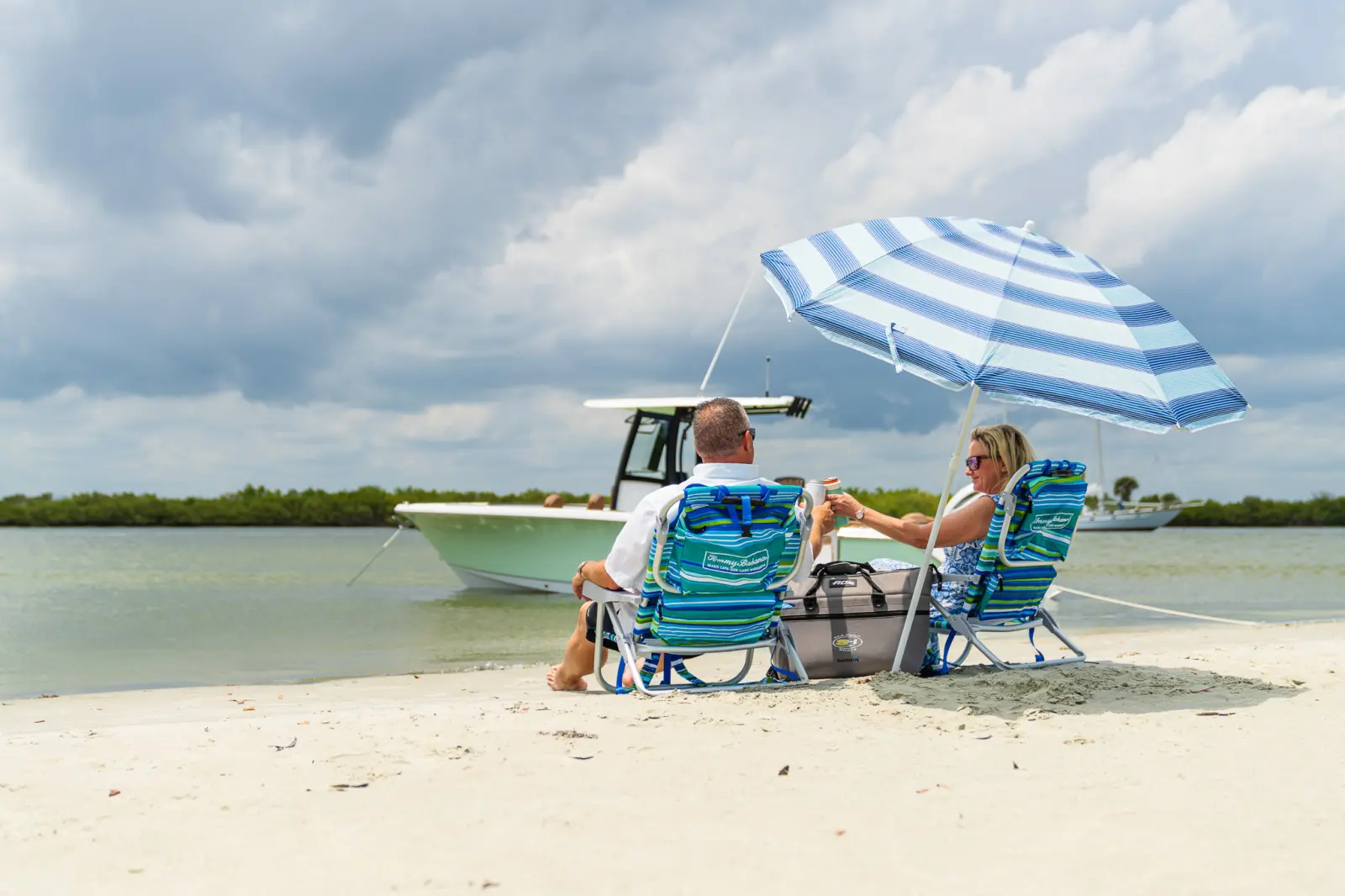
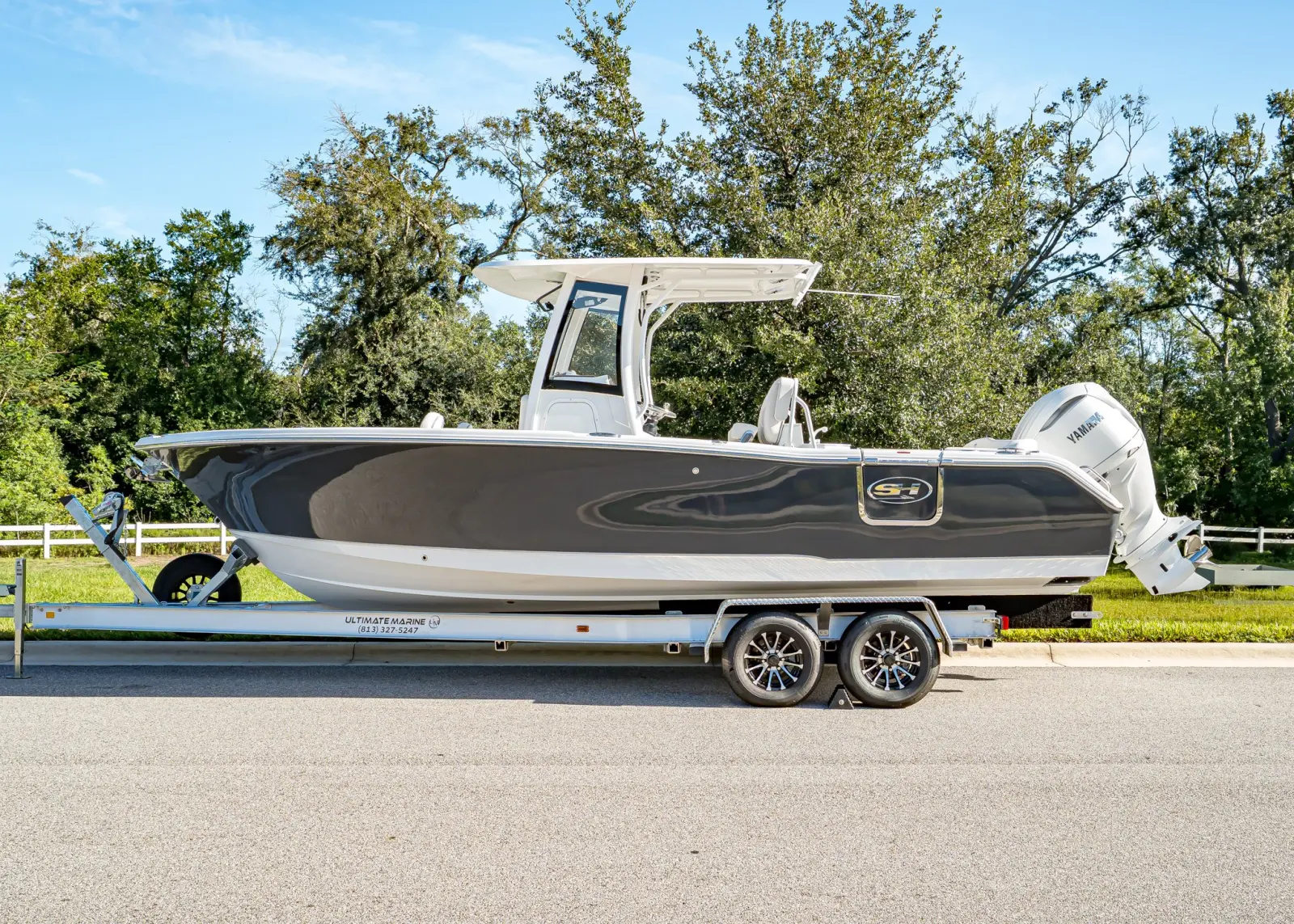
Each model page lists its capacity; count the people you'll actually carry, then add room for coolers and gear. Size also decides how the boat lives at home. Florida law limits a trailered load to 102 inches (8′ 6″) wide without a permit. The Ultra 219 (8′ 3″), the 229 through 245 SE (8′ 6″) and the BX 22 BR (8′ 5″) and 25 FS (8′ 6″) all fit that limit. The Ultra 255 SE (8′ 9″), the Gamefish 25 (9′ 2″) and everything larger are wider. Many owners still trailer them with an oversize permit (check FDOT's requirements), but plenty move to a lift, a slip or dry stack instead.
Weight matters as much as width. The Ultra 219 is 2,350 pounds dry and the Gamefish 25 is 6,100, before the trailer, fuel and gear. A half-ton pickup that pulls the first easily may be out of its depth with the second on a slick, shallow ramp at low tide. Check your tow vehicle's rating against the loaded package, not the dry number.
Which features matter for anglers and families?
Every Sea Hunt has the basics: seating, a livewell, storage and a Garmin display. The differences that matter show up in a few places.
For anglers
- Livewells and fish boxes (Gamefish and BX)
- Lockable rod storage (BX); rod holders are listed as options on the model pages
For families
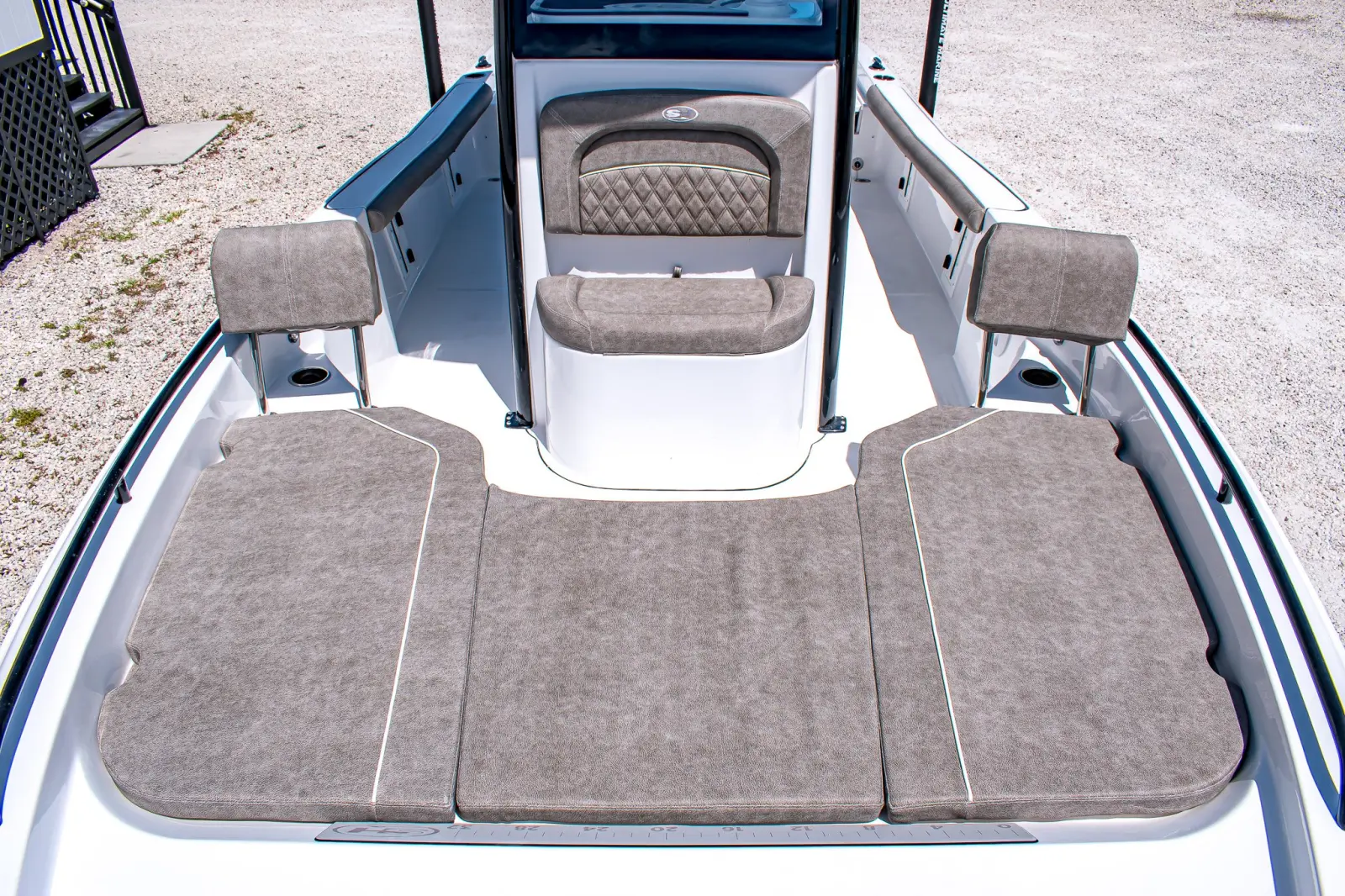
- Cushioned seating and shade (Ultra)
- A marine toilet (standard on Ultra 245 SE and larger; optional portable toilet on smaller Ultras)
- Swim platform and, on the SL models, a sun lounge
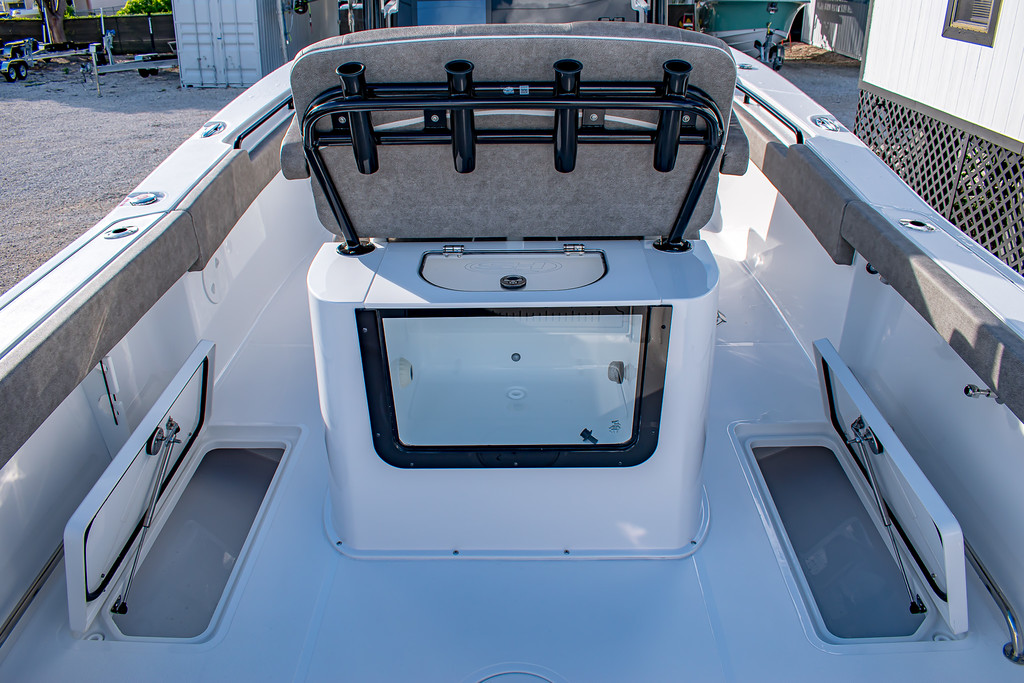
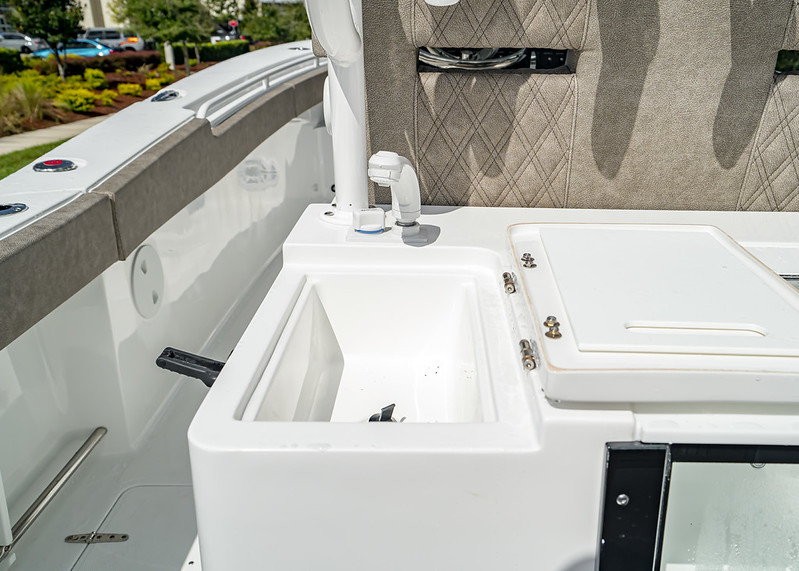
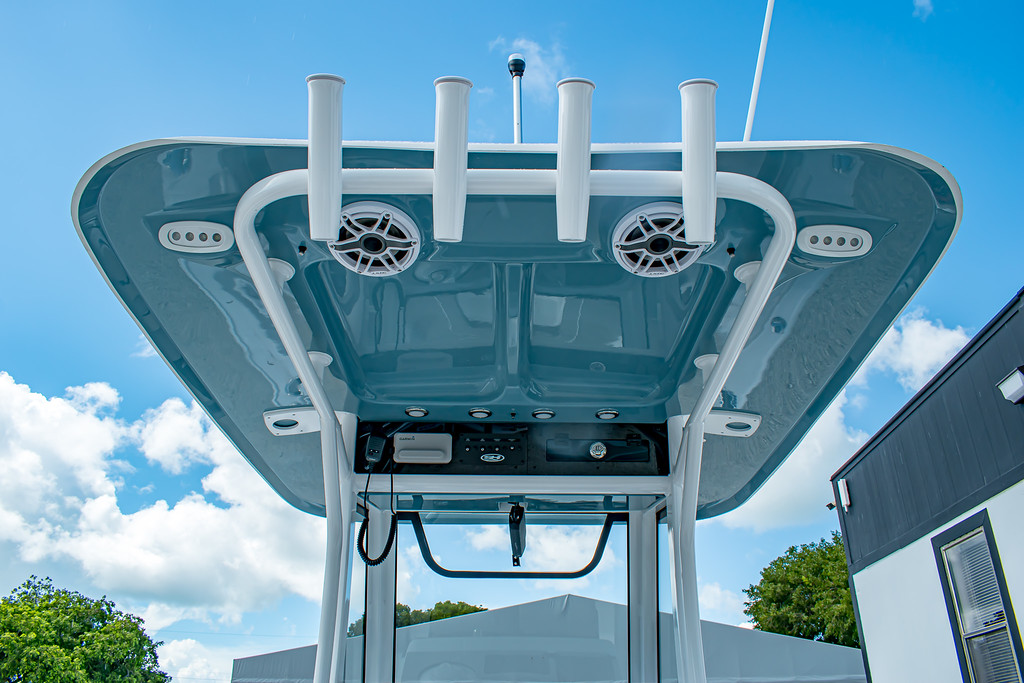
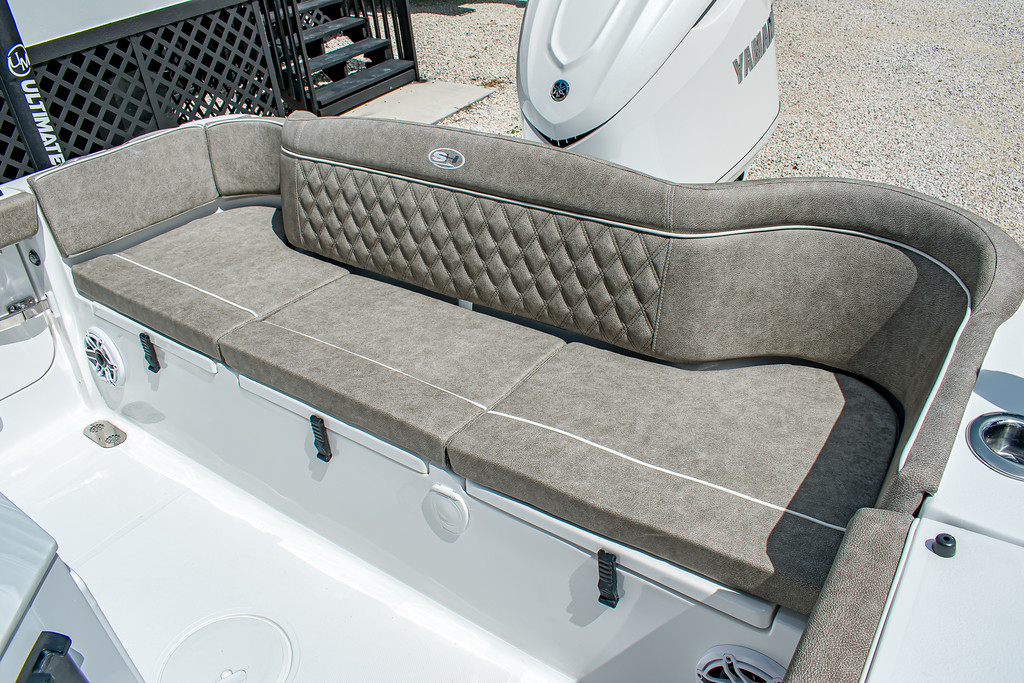
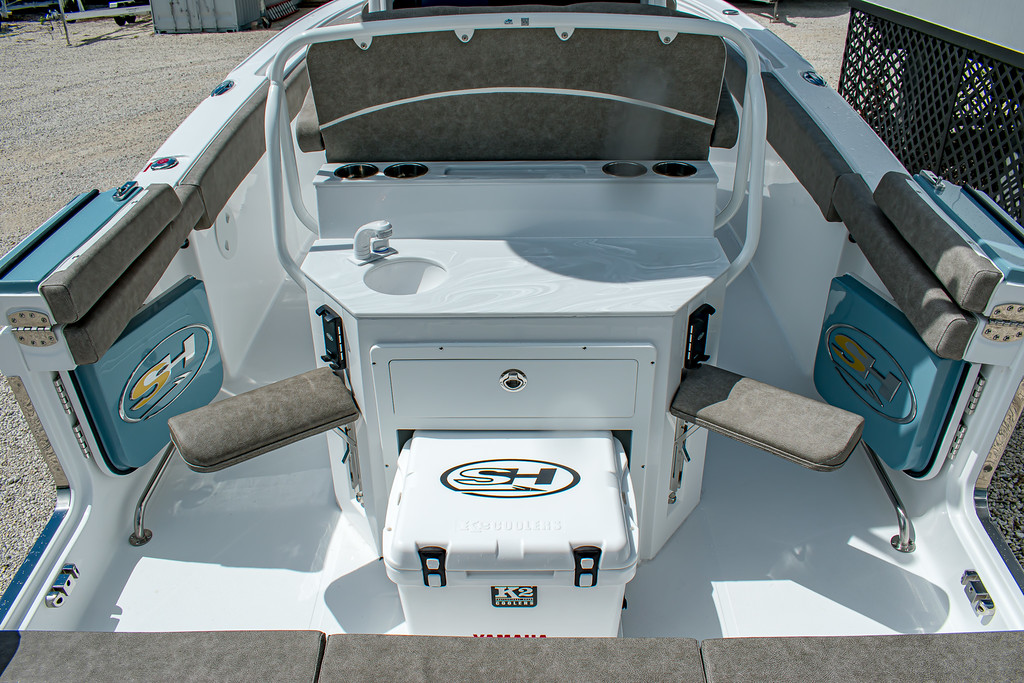
For fishing: rod holders on a Gamefish 27FS leaning post and a rigging station with a sink on a Gamefish 28. For family: T-top shade, the stern bench and a cooler under the leaning-post seat on an Ultra 255 SE.
Read the livewell numbers closely, because they say a lot about who a boat is for. The Ultra 255 SE has a 10-gallon livewell plus a 60-quart mezzanine cooler; the Gamefish 25 has a 35-gallon leaning-post livewell and a 16-gallon transom well; the Gamefish 27 CB adds a third well for pitch baits on top of its 40-gallon mezzanine well. A crew slow-trolling live pogies for kingfish wants the Gamefish setup. A family who fishes a couple of hours with shrimp will be fine with the Ultra's.
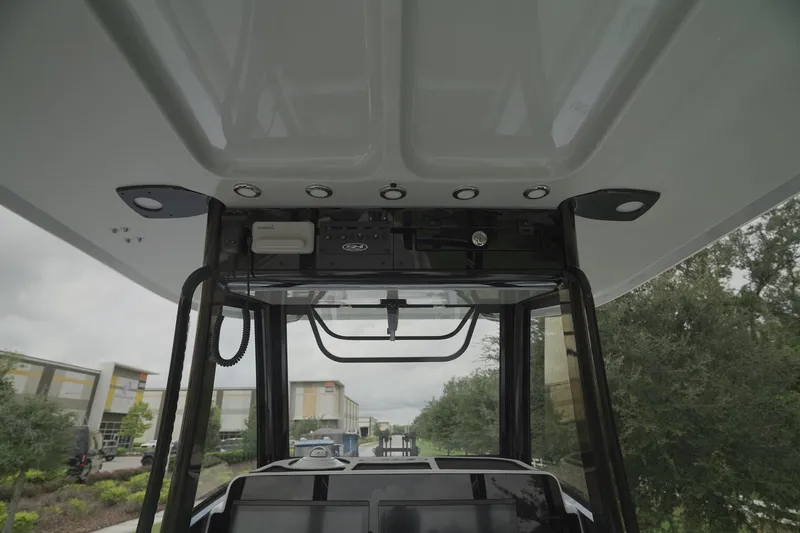
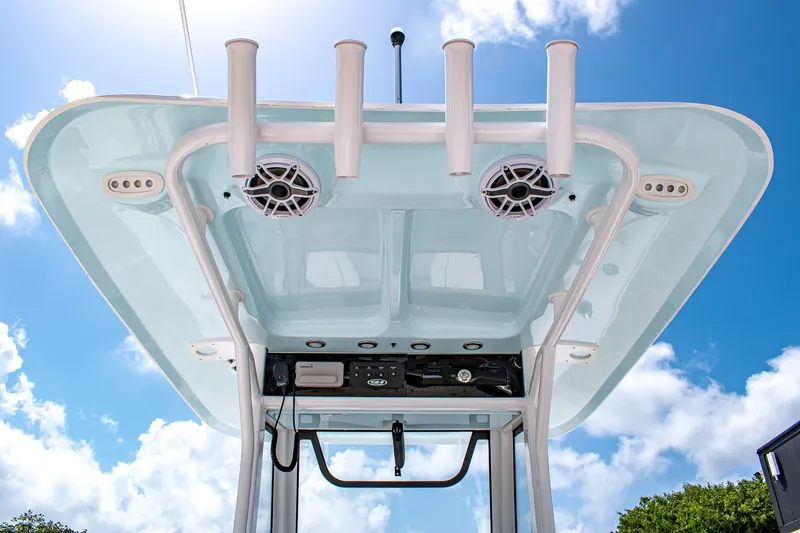
Check the shade and the head next. A T-top is standard on the Ultra 235 SE and larger and on every Gamefish; on the Ultra 219 it's an option. A china toilet comes standard from the Ultra 245 SE up, on the Gamefish line and on the BX 28. If kids or guests ride along on long days, that one line on the spec sheet will decide more trips than top speed.
Where will you keep it, and what does ownership take?
Storage shapes how often you'll actually use the boat, so decide it before you pick a model. There are four common options in Florida, and each one favors different boats.
- Trailer at home. The most flexible and cheapest to run. It suits boats within the 8′ 6″ road limit.
- Boat lift. On a canal, a lift keeps the hull out of the water, so there's no bottom growth. Check its weight rating.
- Wet slip. Always ready, but the hull needs bottom paint and regular cleaning in warm Florida water.
- Dry stack. A forklift launches the boat when you call ahead. Confirm the marina's length, weight and height limits, since T-tops count.
Maintenance follows the engines: twins double the oil, gear-oil and water-pump work, and a bigger boat costs more in fuel, slip, service and insurance. Our routine maintenance guide and hurricane prep checklist cover the rest.
How do you decide?
Once you've narrowed it to two or three boats, bring a short list of questions to the dealer and get the answers for each boat side by side.
Questions to ask about each boat
Then picture the boat on a normal day, not an ideal one: a 6 a.m. launch at your usual ramp, a full crew, a cooler and an afternoon storm building to the west. The boat that still sounds easy in that picture is the right one. We'll talk it through with you, compare layouts and accessories, and set up a sea trial where available.
Ask us which Sea Hunt fits
Tell us where you boat and who comes along. We'll point you to the series and sizes worth a look.
Questions we hear
What Sea Hunt models are there?
Sea Hunt's current lineup has three series. The Ultra runs from the 21-foot Ultra 219 to the 30-foot Ultra 305 SE, with SL versions of the larger models. The Gamefish includes the 25, 27, 28 and 30, with CB and FS layouts on the 27 and up. The BX bay boats are the BX 22 BR, BX 25 FS and BX 28. Our Sea Hunt page links every current model with its specs.
Which Sea Hunt is best for fishing?
It depends on where you fish. For offshore trips, the Gamefish is built around fishing, with twin Yamahas, big livewells and 200-quart fish boxes. For flats, creeks and bays, the BX's shallow draft and lockable rod storage fit better. The Ultra still fishes well with livewells on every model, but it gives more of the deck to seating. Match the series to the water you fish most.
What size Sea Hunt do I need?
Small crews in protected water do well at 21 to 24 feet, and those boats stay within Florida's 8′ 6″ trailer width. Regular offshore trips, a full family or a crew of four anglers point to 25 feet and up, with more fuel, beam and power. Check the capacity plate on each model page, and think about storage: anything wider than 8′ 6″ needs an oversize permit to trailer.
What happened to the Sea Hunt Escape?
Sea Hunt has discontinued the Escape line. If you liked the Escape, look at the BX for bay fishing or the Ultra for family days. Both cover much of the same ground with current models. Owners and used-boat shoppers can still find pre-owned Escapes; check our used boats and have any older boat inspected before you buy.
Can you trailer a Sea Hunt?
Yes, many models. The Ultra 219 through 245 SE and the BX 22 BR and 25 FS are 8′ 6″ wide or narrower, within Florida's 102-inch limit for trailered loads. Wider models, from the Ultra 255 SE and Gamefish 25 up, need an oversize permit. Check your tow vehicle's rating against the boat, engine, fuel, gear and trailer combined.