Can Sea Hunt boats go offshore? Hull, build and range
In this article
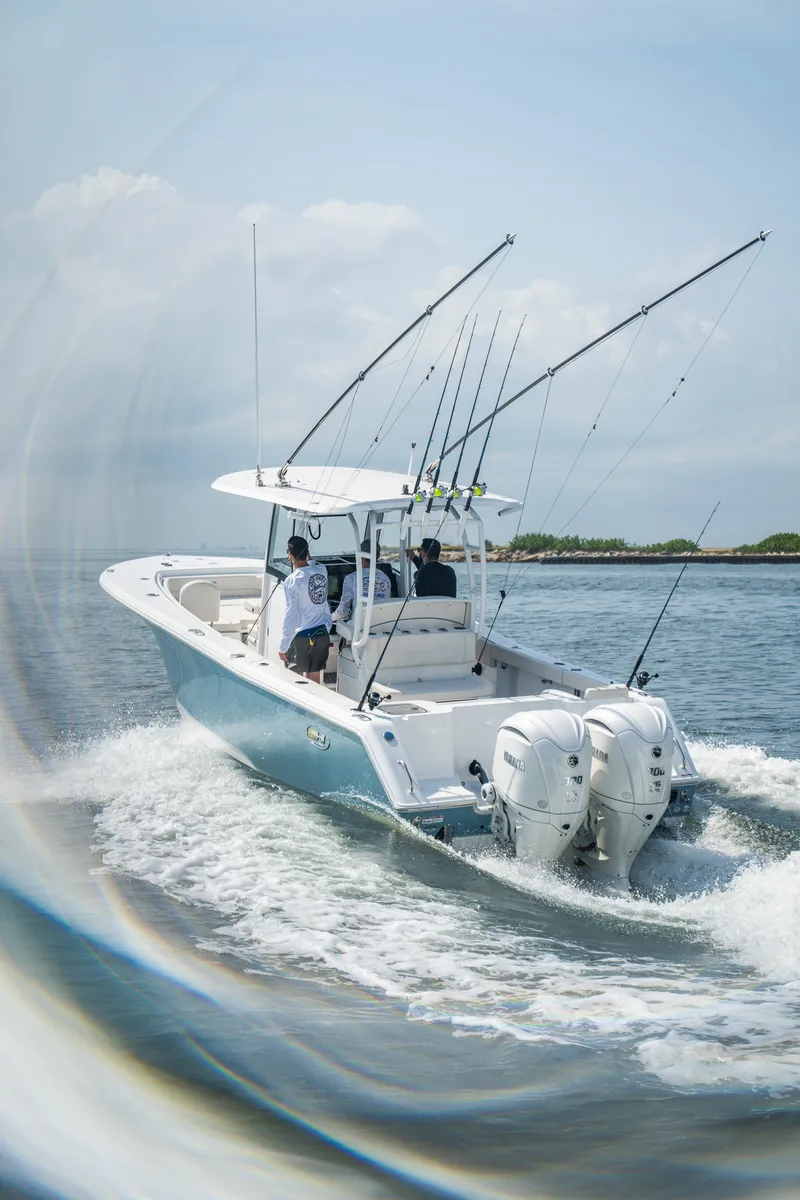
Yes. The Gamefish series and the larger Ultras (265 SE and up) are built and equipped for offshore fishing, with twin Yamahas as standard and 145 to 230 gallons of fuel. The BX bay boats are inshore boats that can make nearshore runs on calm days. On any given day, the marine forecast, your boat's size and fuel, and your experience decide if you should go offshore, not the brand.
Below: the construction questions people search first, how Sea Hunt hulls are built and what that feels like past the inlet, how far each model can range, which series to pick, and the weather and gear checks that decide whether today is an offshore day. For the whole Sea Hunt lineup, start at the brand page.
Are Sea Hunt boats foam filled and wood free?
Sea Hunt's website and owner's manual don't say whether its hulls are foam filled or wood free, so we won't answer for Sea Hunt; ask us about the exact model and year and we'll put the question to Sea Hunt in writing. The manual does describe hand lay-up with fiberglass mat and knitted and woven fabrics. For construction and flotation in detail, see Sea Hunt hull technology. Either way, plan as if any offshore boat could swamp, which is why the gear checklist at the end of this page matters more than any construction claim.
What makes a Sea Hunt offshore-ready?
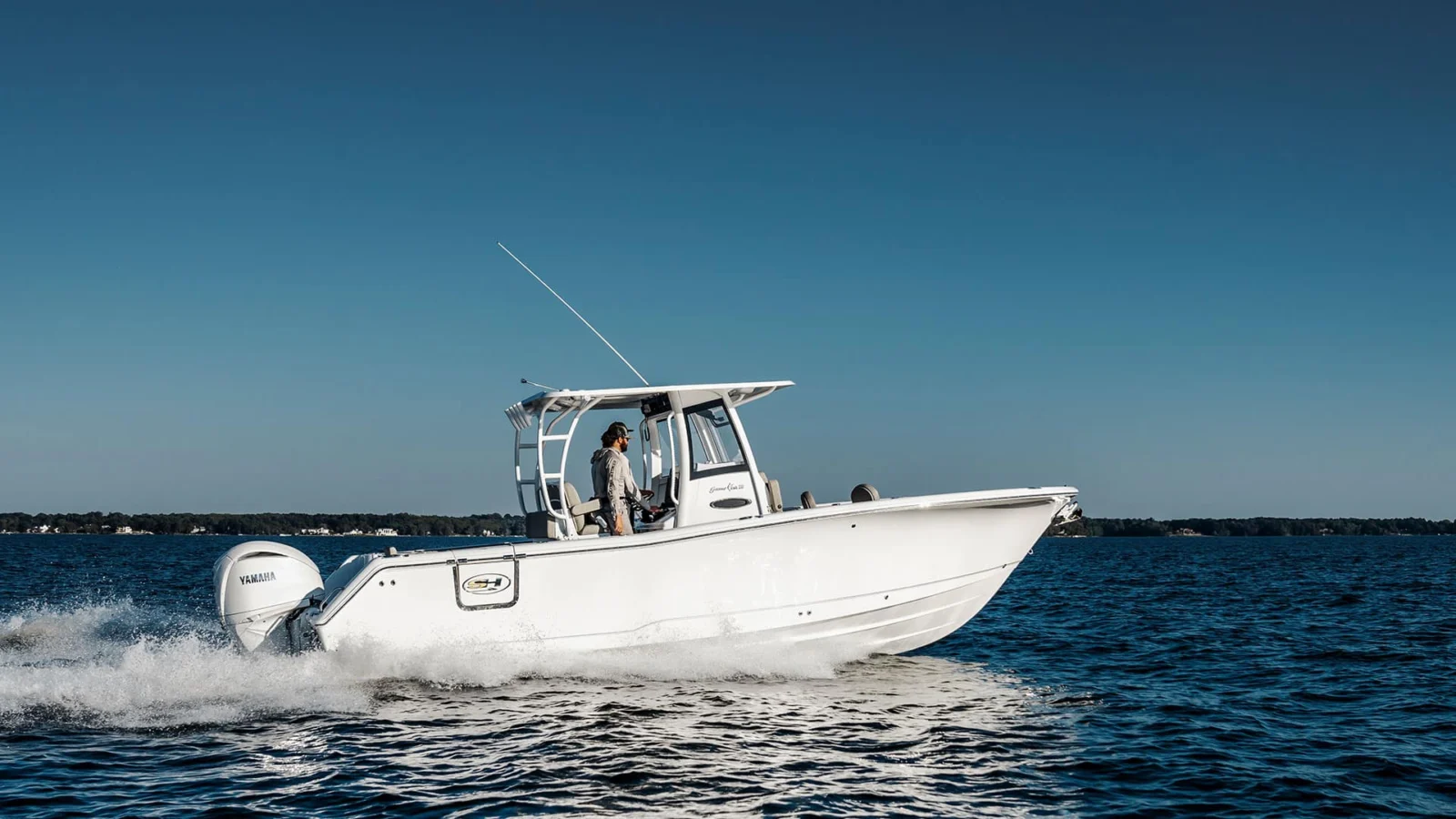
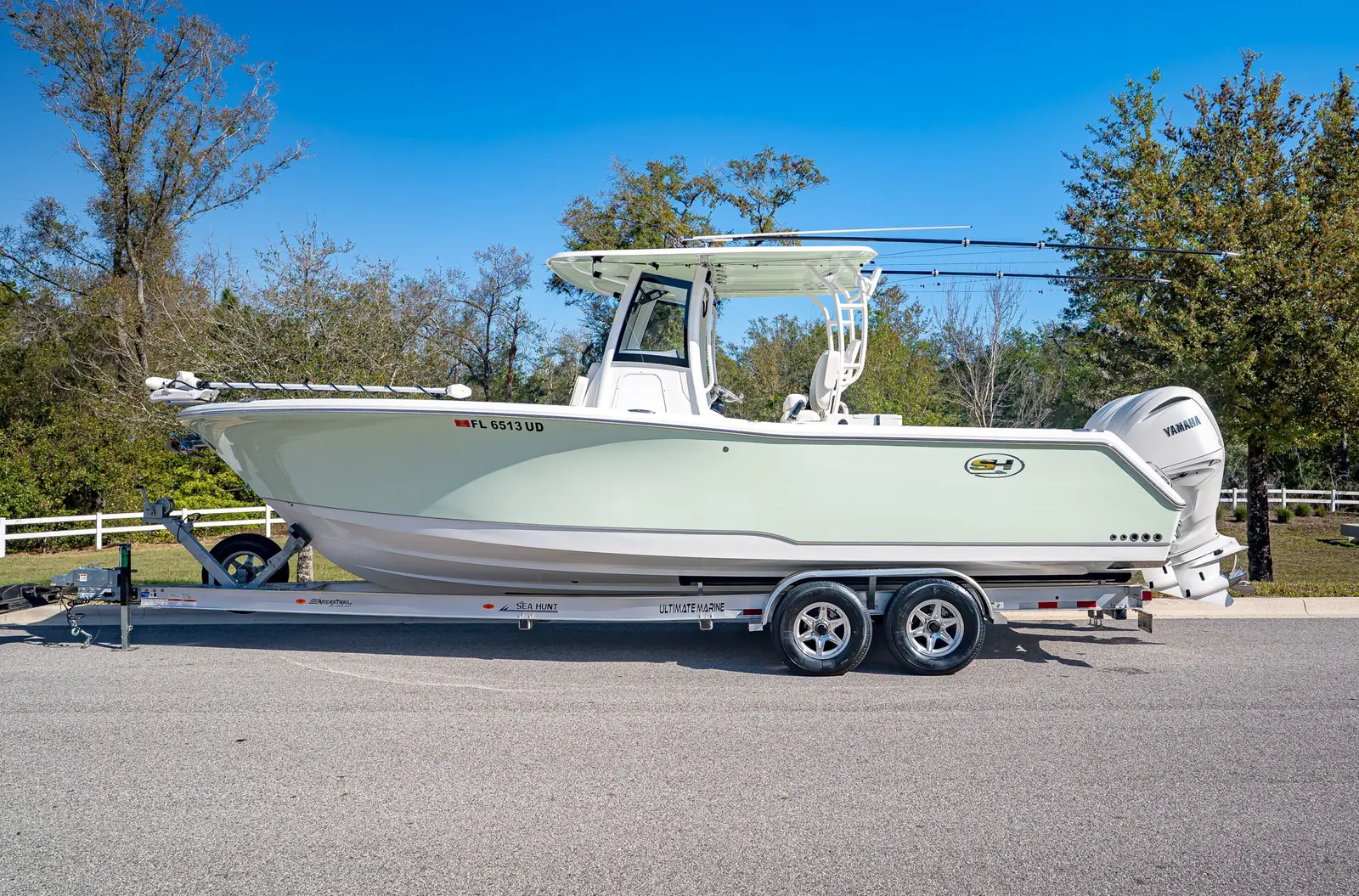
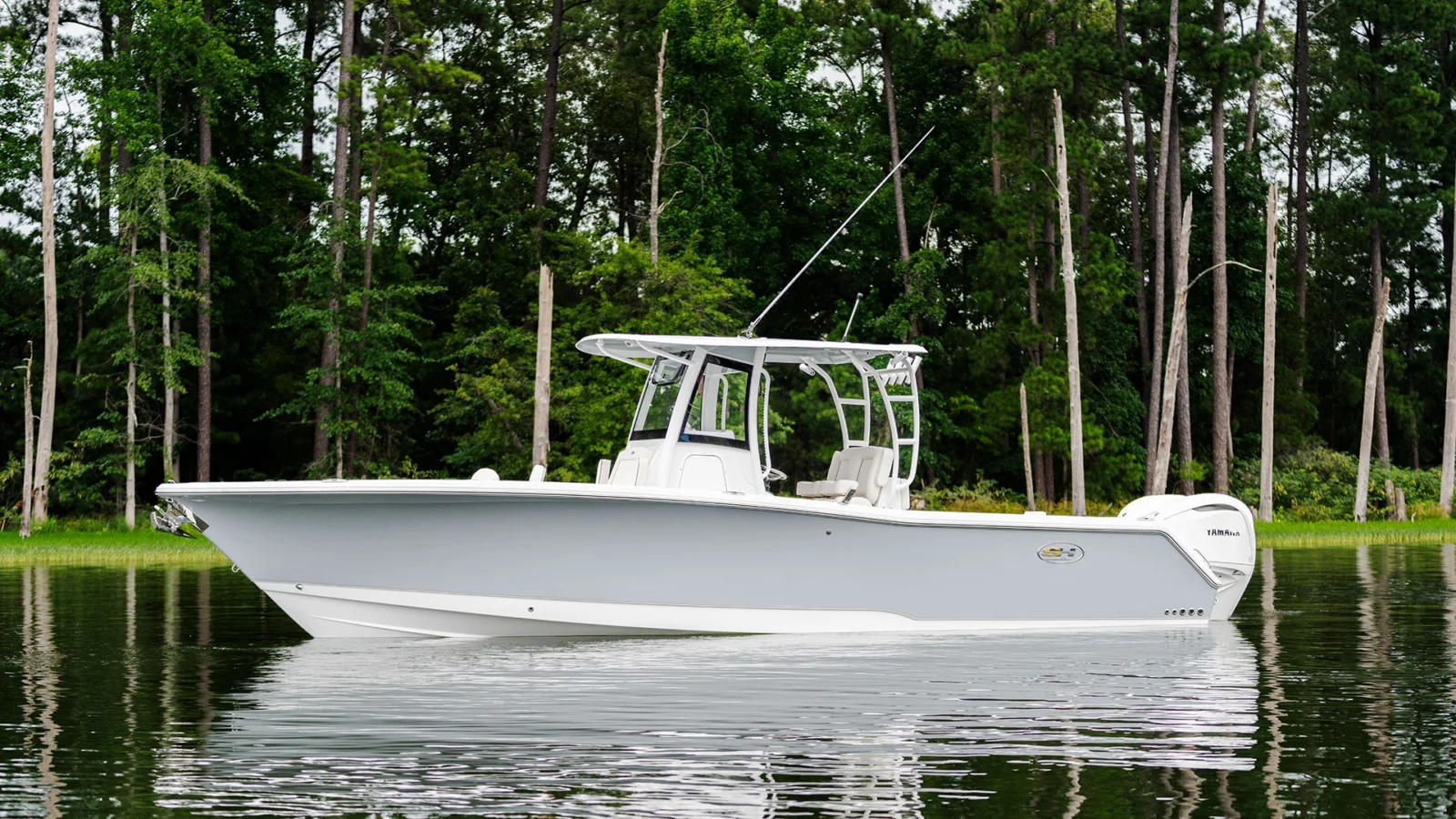
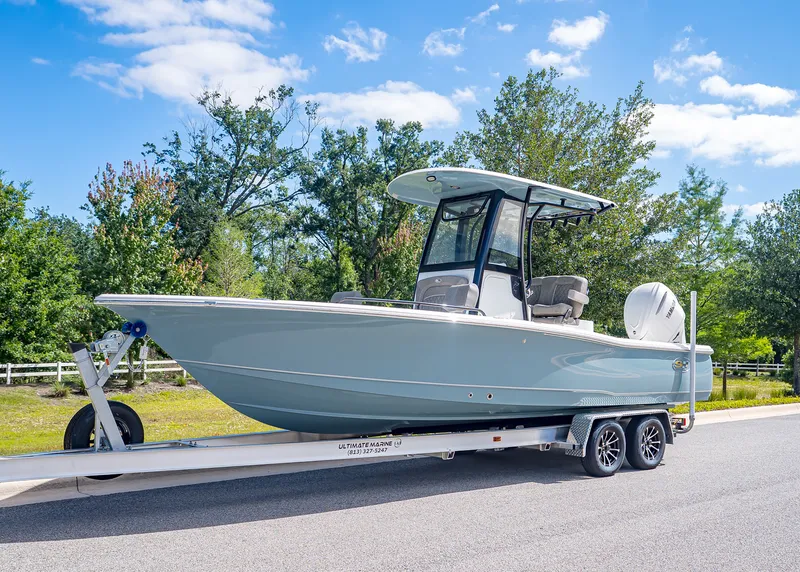
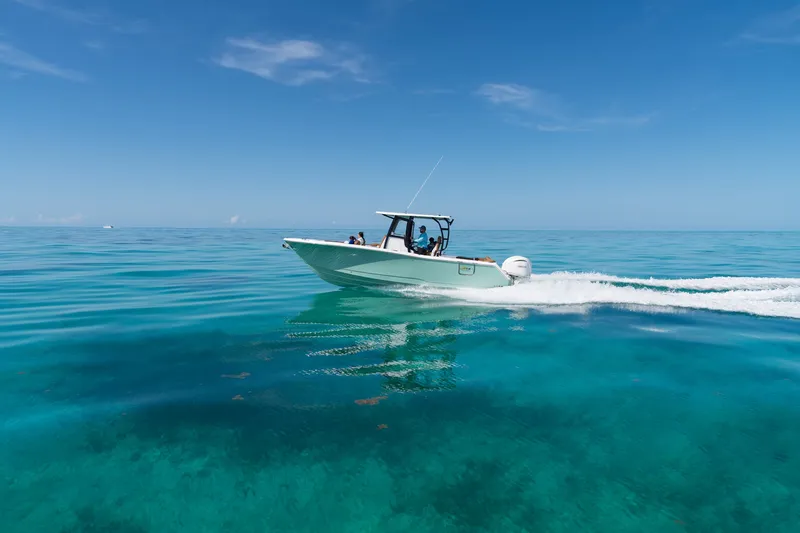
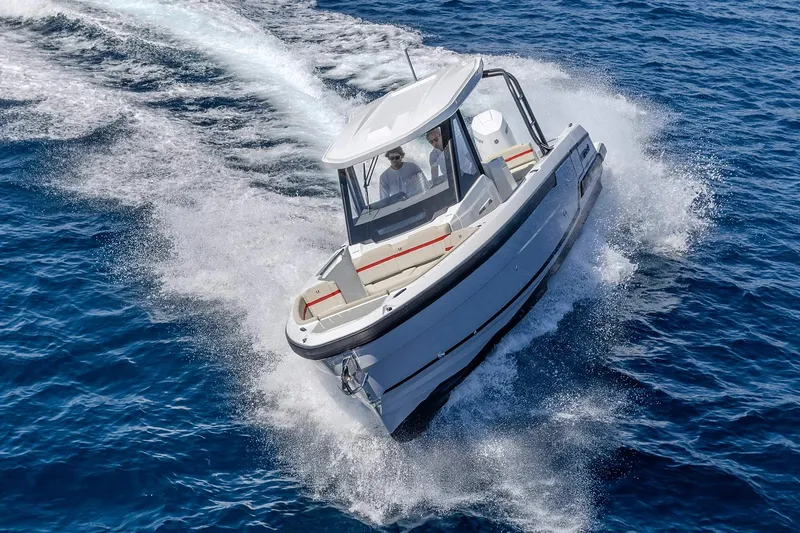
Sea Hunt designs its hulls to be the driest-riding in the industry, using its True Carolina Bow Flare with a sharp entry deadrise. The flare is the outward curve of the bow's topsides that turns spray down and away. The sharp entry is a steep V at the bow that cuts into a wave rather than climbing over it. Sea Hunt also says it gives you more running surface per foot than competitors.
| Model | Deadrise (stern/mid/bow) | Dry weight | Draft |
|---|---|---|---|
| Gamefish 25 | 21/24/60 | 6,100 lb | 19 in |
| Gamefish 28 CB | 21/23/60 | 6,800 lb | 21 in |
| Ultra 275 SE | 21/24/60 | 6,600 lb | 21 in |
| BX 28 | 19/20/56 | 5,800 lb | 19 in |
| BX 22 BR | 15/20/50 | 2,700 lb | 13 in |
Specs from our model pages. Deadrise in degrees.
The table shows why the series behave differently past the jetties. The offshore models carry 21 degrees of deadrise at the transom and weigh three tons or more dry. Weight and a deeper V let a hull push through the short, steep chop that stacks up at Port Canaveral or Ponce Inlet when an afternoon sea breeze runs against an outgoing tide. The BX 22 BR, at 15 degrees and 2,700 pounds, was drawn for the opposite job: floating in 13 inches on a grass flat. It will feel every wave in the same inlet.
Rough-water comfort also comes from how you drive. Trim the bow down in a head sea so the sharp entry does the work, and trim up a little running with the waves so the bow doesn't bury. Bennett trim tabs are standard on every Gamefish and BX and on the Ultra 235 SE and up, and they let you level the boat against a crosswind or uneven load. Slow down before the boat starts to slam; speed is what turns a 3-foot sea from wet into dangerous.
How far offshore can a Sea Hunt go?
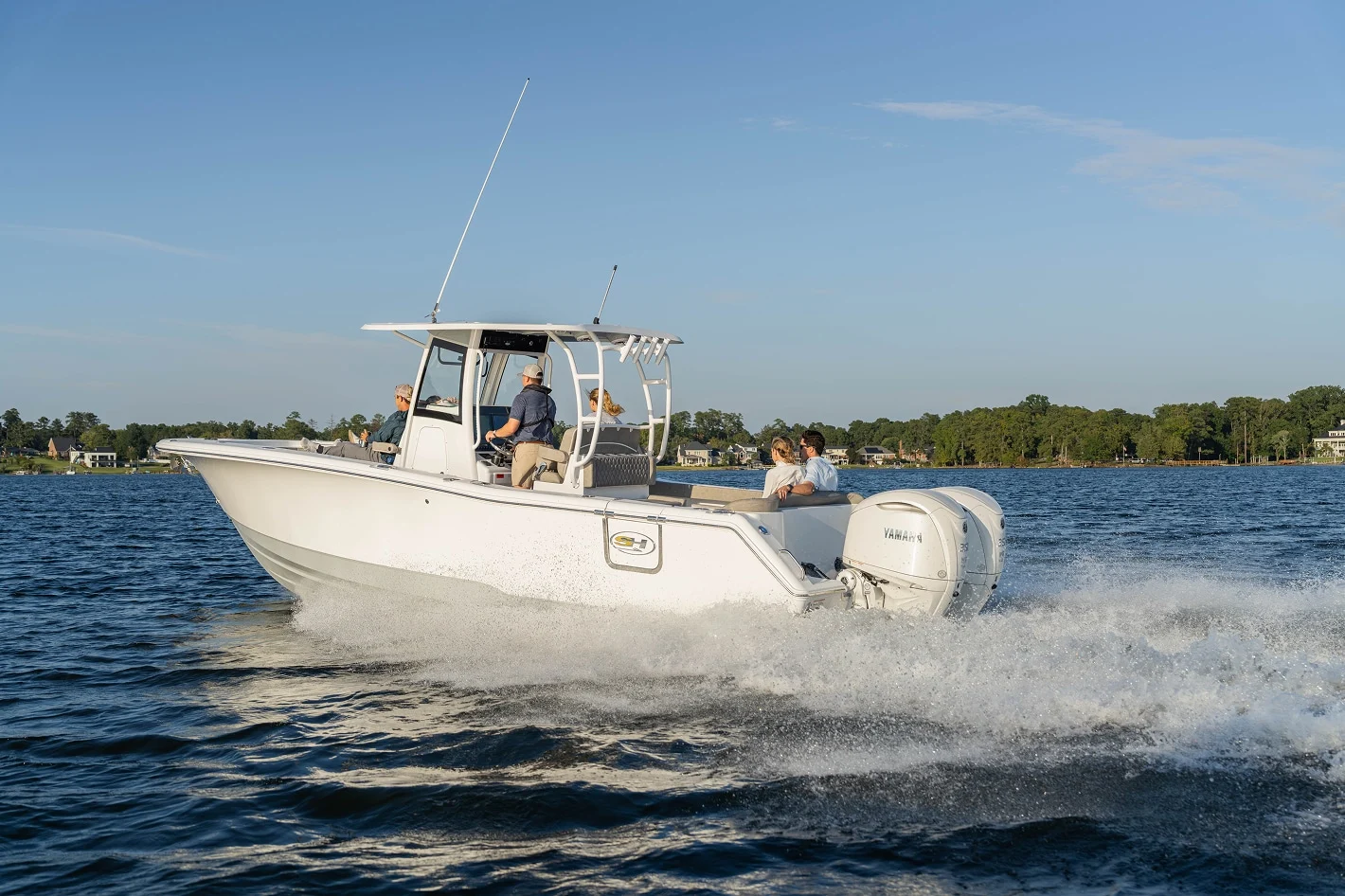
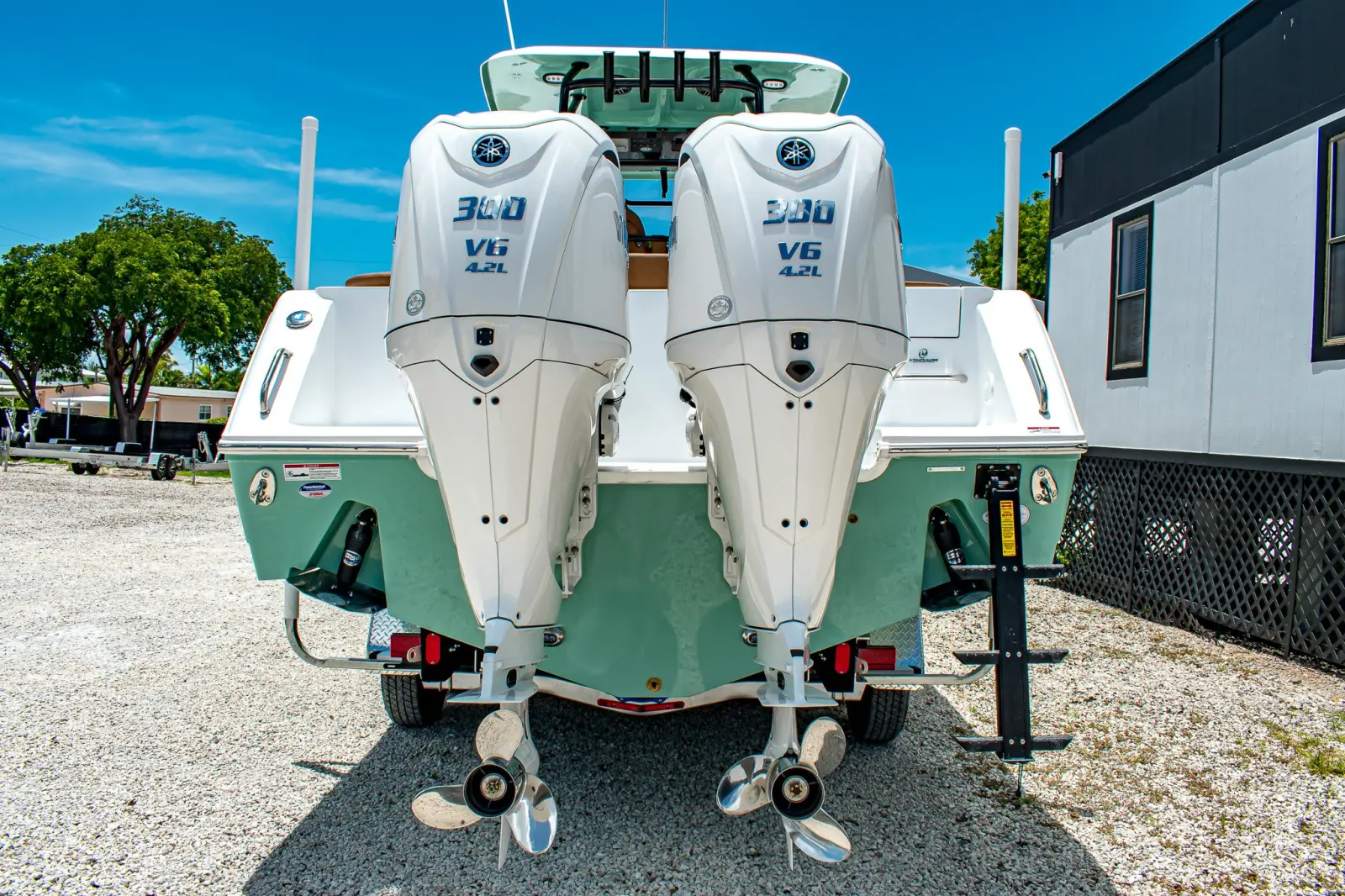
Range comes from fuel capacity, load and how fast you run. Every Gamefish and the Ultra 265 SE and up come standard with twin Yamaha outboards, so you have a second engine to get home on if one quits.
| Model | Length | Max power | Standard power | Fuel |
|---|---|---|---|---|
| Gamefish 25 | 25′ 8″ | 400 hp | Twin F150 | 145 gal |
| Gamefish 27 CB | 27′ 6″ | 500 hp | Twin F200 | 180 gal |
| Gamefish 28 CB | 28′ 6″ | 600 hp | Twin F300 | 180 gal |
| Gamefish 30 CB | 30′ 2″ | 700 hp | Twin F300 | 230 gal |
| Ultra 265 SE | 26′ 5″ | 400 hp | Twin F150 | 145 gal |
| Ultra 275 SE | 27′ 6″ | 500 hp | Twin F200 | 180 gal |
| Ultra 305 SE | 30′ 2″ | 700 hp | Twin Yamaha | 230 gal |
| BX 28 | 28′ 6″ | 600 hp | Twin F300 | 157 gal |
From our model pages and Sea Hunt's model pages. For speed and fuel burn by rpm, see the performance data article.
Plan fuel with the rule of thirds: one third to get out, one third to get back and one third in reserve. Headwinds, a heavy load, a long troll and a slower ride home in building seas all burn more than the calm-water numbers in a test bulletin. On a boat with 180 gallons, that means planning the day around 120 gallons of running and trolling. Sea Hunt's manual adds a fueling note: don't top off past the automatic shutoff, because overfilling can push fuel into the vent system.
Where you fish changes the rules too. Florida state waters run from shore to 3 miles out in the Atlantic and 9 miles out in the Gulf; beyond that, federal fishing regulations apply. A run from Sebastian Inlet to a reef 20 miles out puts you in federal water, so check both sets of seasons and size limits before you leave. The performance data article lists cruise speeds and fuel burn by model so you can turn gallons into miles.
Which Sea Hunt series suits offshore fishing?
Twins as standard, 145 to 230 gallons and a deck laid out for fishing. See the Gamefish series.
Seating, shade and side doors, with the same twin power and fuel as a Gamefish of the same size. See the Ultra series.
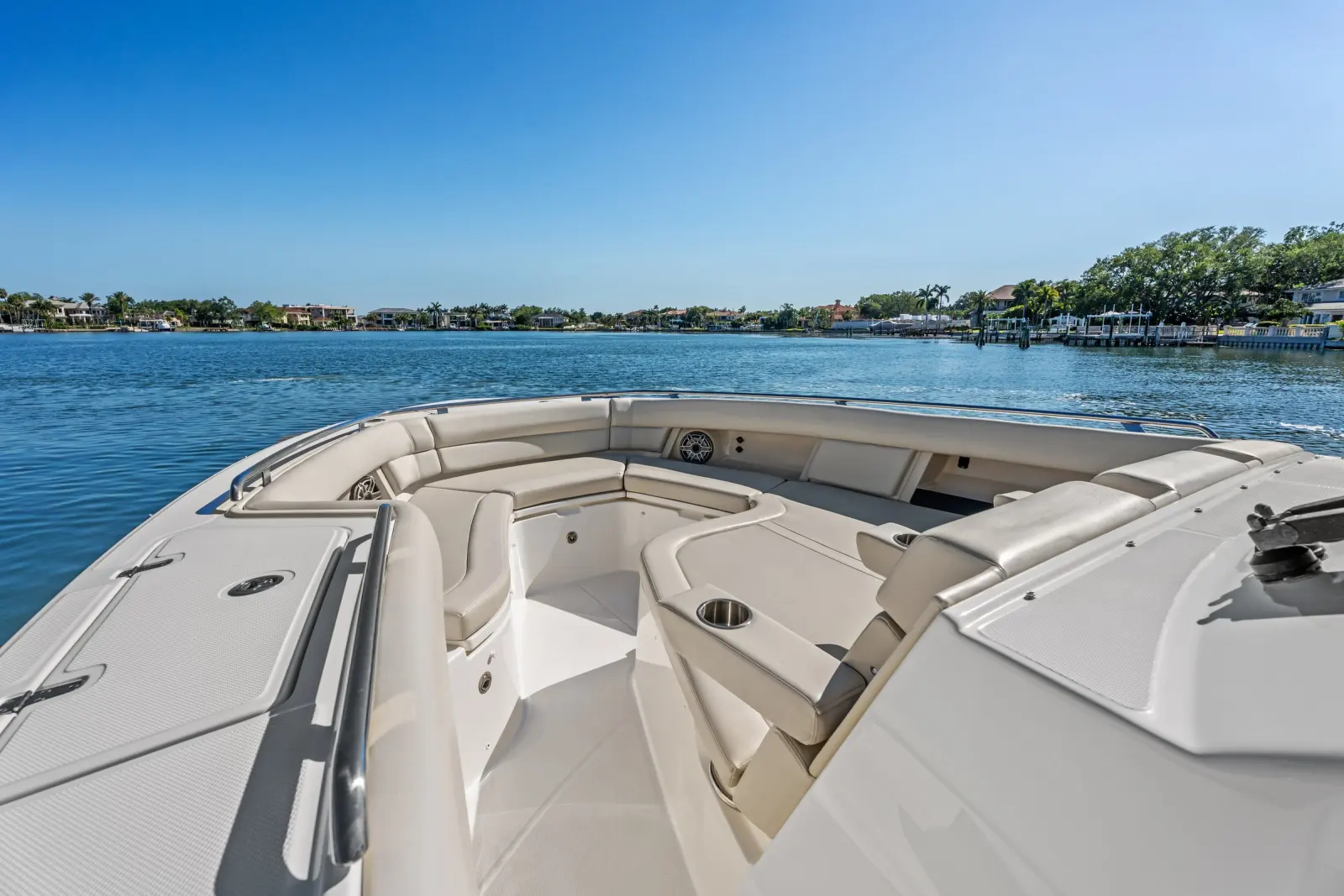
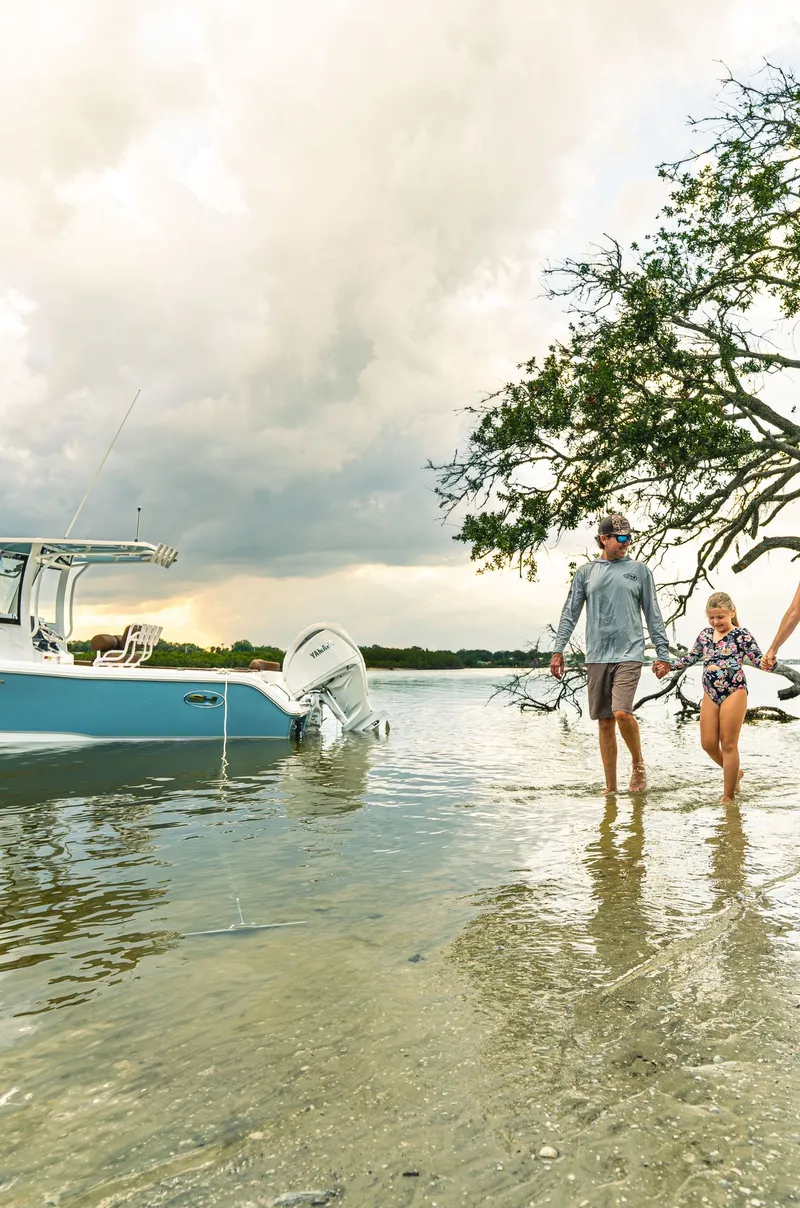
The Gamefish 25 and Ultra 265 SE share a beam, power rating, fuel tank and standard twin F150s, and the Gamefish 27 CB and Ultra 275 SE match the same way. Inside each pair you're choosing a deck, not a hull. The Gamefish gives you a bait-tank or mezzanine leaning post and fish boxes; on the 27, 28 and 30 CB the bow becomes a coffin box. The Ultra gives you bow seating, a table and more places to sit. A crew of four chasing kingfish off Fort Pierce every weekend wants the Gamefish. A family who runs to a nearshore reef in the morning and anchors off a beach after lunch will use the Ultra's seating on every trip.
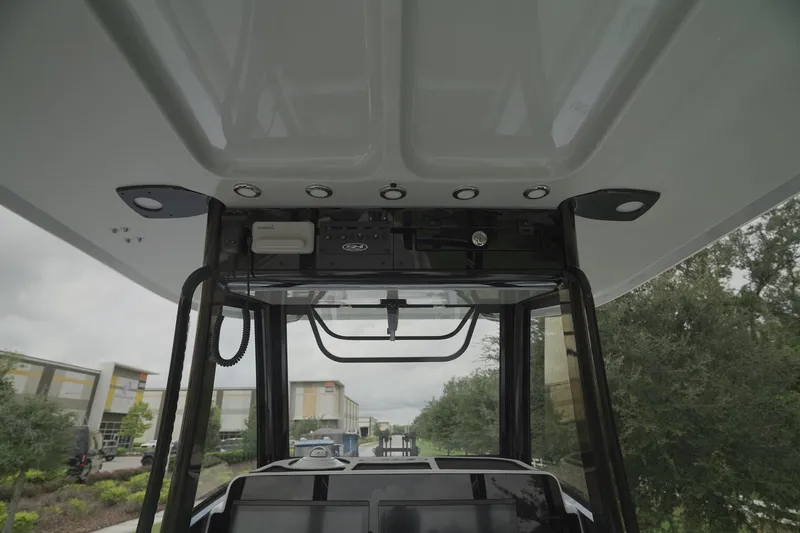
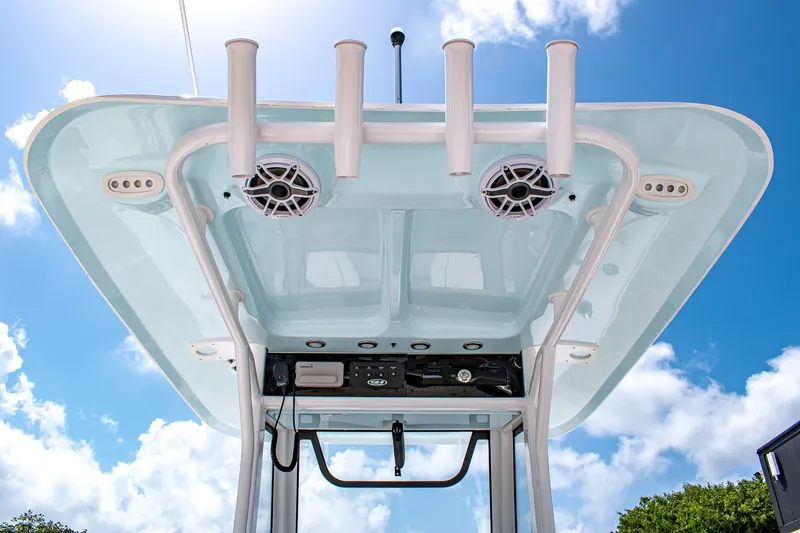
Offshore equipment varies by model, so read the standard list for the exact boat. A Garmin GPSMAP package with VHF is standard on every Gamefish, every Ultra and the BX 22 BR and 25 FS; the BX 28's listing names its dual Garmin package without mentioning VHF. The Gamefish 28 and 30 CB add a Yamaha autopilot as standard. Kingfish rod holders and an outrigger kit are options, not standard. Sea Hunt also offers a mezzanine leaning post with a Seakeeper gyrostabilizer on the Gamefish 30 CB, 30 FS and Ultra 305 SE, which reduces roll at rest when you're drifting or anchored on a wreck.
The BX bay boats are built for inshore water. The BX 28 has twin F300s and 157 gallons, so it can make a nearshore run on a calm day, but its flatter 19-degree stern and lower sides aren't the choice for regular trips beyond the reef line.
What weather is too rough to run offshore?
No boat is offshore-ready in every condition. Check the marine forecast before you leave and while you're out, and turn back early if wind and seas build.
Start with the National Weather Service coastal waters forecast for your stretch of coast, not the land forecast. A Small Craft Advisory means sustained winds of 20 to 33 knots and/or hazardous seas; NWS Key West uses 7 feet or greater as its seas threshold. A Special Marine Warning covers short-lived storms with winds of 34 knots or more, and it is also issued for waterspouts. When either is up for your zone, a 25-foot boat has no business outside the inlet.
Wave height alone doesn't tell you how a day will feel. Look at the wave period too. Four-foot seas 10 seconds apart roll under a Gamefish comfortably; the same four feet at 5 seconds is a steep, punishing chop. Wind against current makes it worse, which is why inlets on the east coast can be rough on an outgoing tide with an onshore breeze even when the forecast offshore looks fine.
In a Florida summer the bigger threat is the afternoon thunderstorm. Cells build over land through the day and often drift toward the coast, bringing lightning, sudden gusts and sometimes waterspouts. Sea Hunt's manual is blunt: in bad weather the best advice is to stay home, and if a storm approaches, return to port, put everyone in a life jacket, slow down and head into the wind. With lightning, it says to dock and seek shelter on land. In practice that means fishing early and being headed in before the sky to the west starts to stack up. NOAA Weather Radio broadcasts on 162.400 to 162.550 MHz, which the VHF on most Sea Hunts can receive.
What should you carry and check before running offshore?
Before you run offshore
Federal rules set the floor. Under 33 CFR 175.110, a boat 16 feet or longer on coastal waters must carry visual distress signals suitable for day and night use, which covers every Sea Hunt. The Coast Guard recommends leaving a float plan with someone who will call for help if you're overdue. Sea Hunt's pre-start checklist adds the basics people skip on a rushed morning: required maintenance done, drain plug in, battery terminals clean and tight, no fuel, oil or water leaks, and more fuel than you expect to use.
One loading point is easy to miss on bigger boats. Sea Hunt puts a capacity label at the helm only on boats under 26 feet; on larger models, the captain decides the safe load. Count people, coolers, ice and bait before a long run, and keep heavy gear low and centered. If you're new to running offshore, go first with someone experienced, pick a calm forecast, and keep your first trips inside a range where you can see the beach.
Talk to us first
Tell us where you plan to run. We'll help you pick the right size, power and fuel for that water.
Questions we hear
Are Sea Hunt boats foam filled?
Sea Hunt's website and owner's manual don't say whether its hulls are foam filled, so we don't claim it. The manual says Sea Hunt boats under 20 feet are designed to meet level flotation requirements, and that larger models should keep a portion of the boat above water depending on load and damage. Every current Sea Hunt is over 20 feet. Ask us about a specific model and year and we'll confirm the details with Sea Hunt.
Are Sea Hunt boats wood free?
Sea Hunt's website and owner's manual don't say. The manual describes hand lay-up construction with fiberglass mat and woven fabrics, and Sea Hunt backs the hull with a 10-year structural warranty, but neither document makes a wood-free claim. If it matters to your purchase, ask us about the model and year you're considering and we'll get an answer from Sea Hunt before you buy.
What size Sea Hunt do I need to go offshore?
For regular offshore runs, look at 25 feet and up with twin engines: any Gamefish, or an Ultra 265 SE or larger. Those carry 145 to 230 gallons of fuel and come standard with twin Yamahas. Smaller Ultras and the BX can make nearshore trips on calm days. Size isn't the only factor, though; the forecast and your experience decide whether any given day is an offshore day.
How far offshore can a Sea Hunt Gamefish go?
It depends on fuel, load and speed. The Gamefish carries 145 gallons (25) up to 230 gallons (30 CB). Plan with the rule of thirds, one third out, one third back and one third in reserve, and check our performance data article for fuel burn at cruise. Also check the forecast for the whole day: the trip home into a building afternoon sea is often slower and thirstier than the run out.
Can a Sea Hunt BX go offshore?
The BX is a bay boat, built for flats and inshore water with a flatter hull and shallow draft. The BX 28 has twin F300s and 157 gallons, so it can make nearshore runs on calm days. For regular trips beyond the reef line or in a building sea, a Gamefish or a larger Ultra with a deeper V is the safer choice.
Sources
- Sea Hunt features page (seahuntboats.com/features).
- Sea Hunt owner's manual 2025-26 (PDF).
- 33 CFR 183.201, flotation applicability.
- 33 CFR 175.110, visual distress signals.
- NWS Key West, marine definitions.
- U.S. Coast Guard, float plan.
- FWC, saltwater recreational regulations.
- Boating Magazine, avoid running out of fuel.