





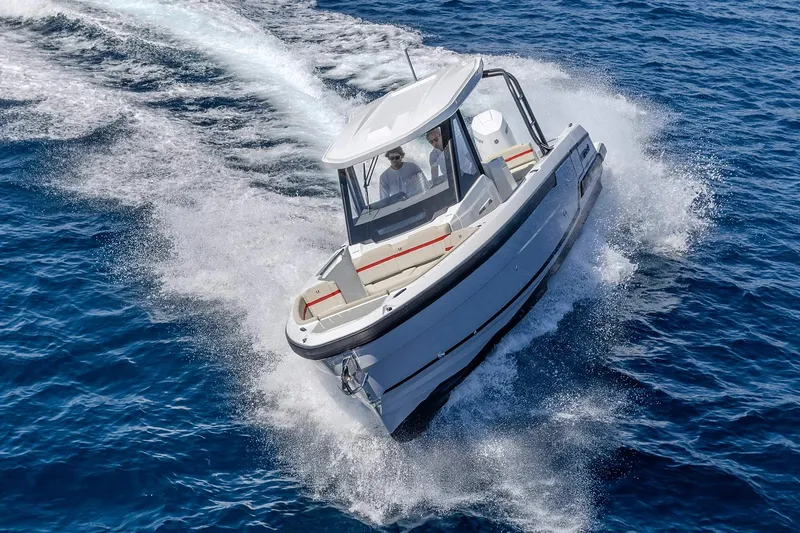

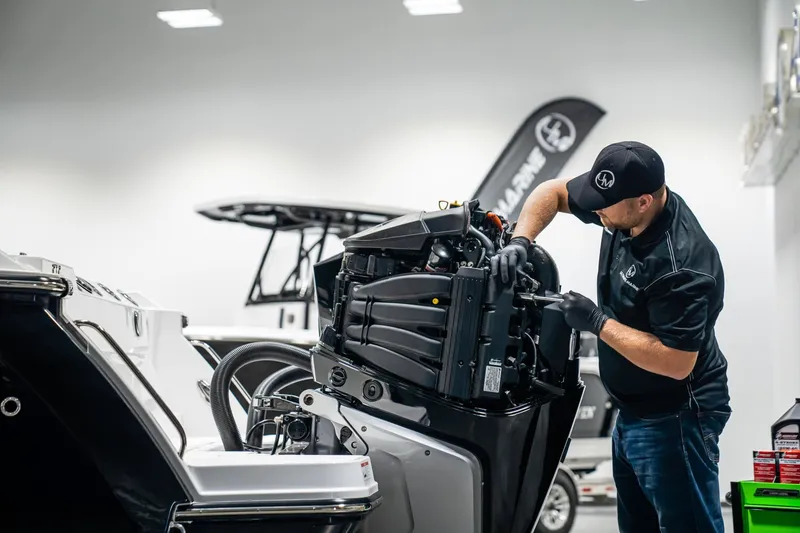
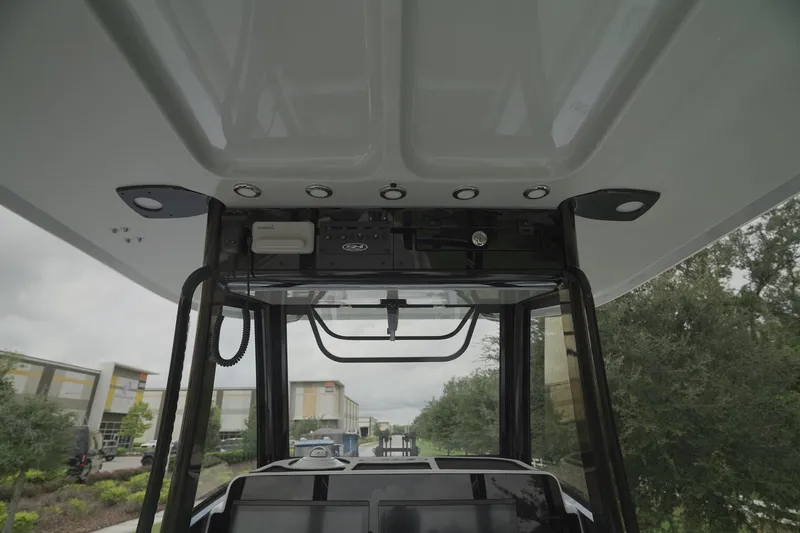
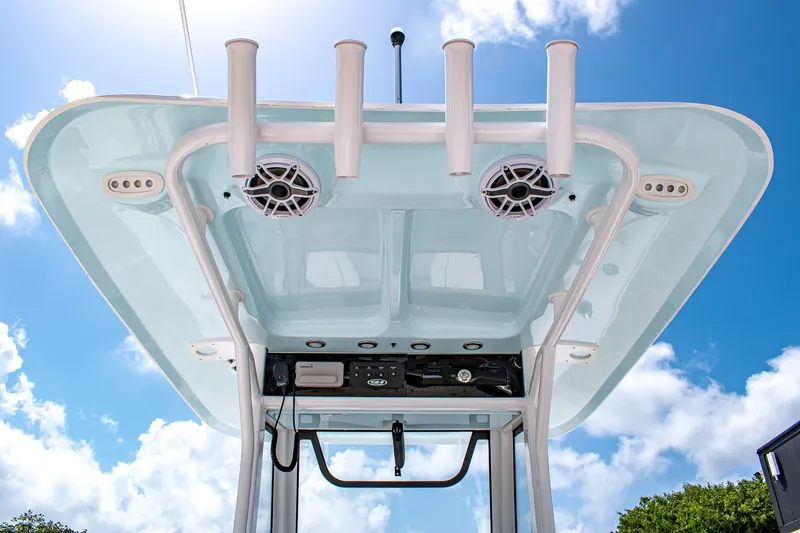
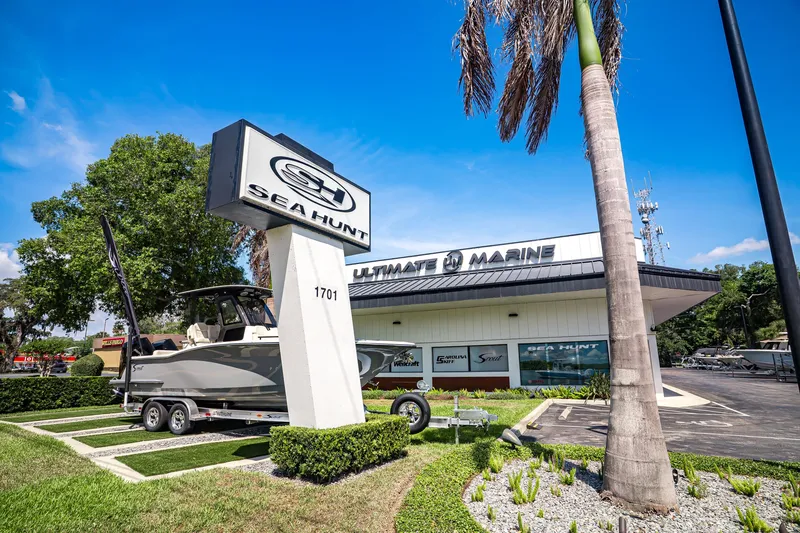
Yamaha's F350 outboard on Sea Hunt boats
Yamaha's all-new F350 is a 4.3-liter V6 built for offshore center consoles. Here's what changed, which Sea Hunts offer it, and how to decide between it and the standard F300s.
In this article
- The F350 is a 4.3L V6 that weighs 629 lb with the shortest shaft and has electric steering built in.
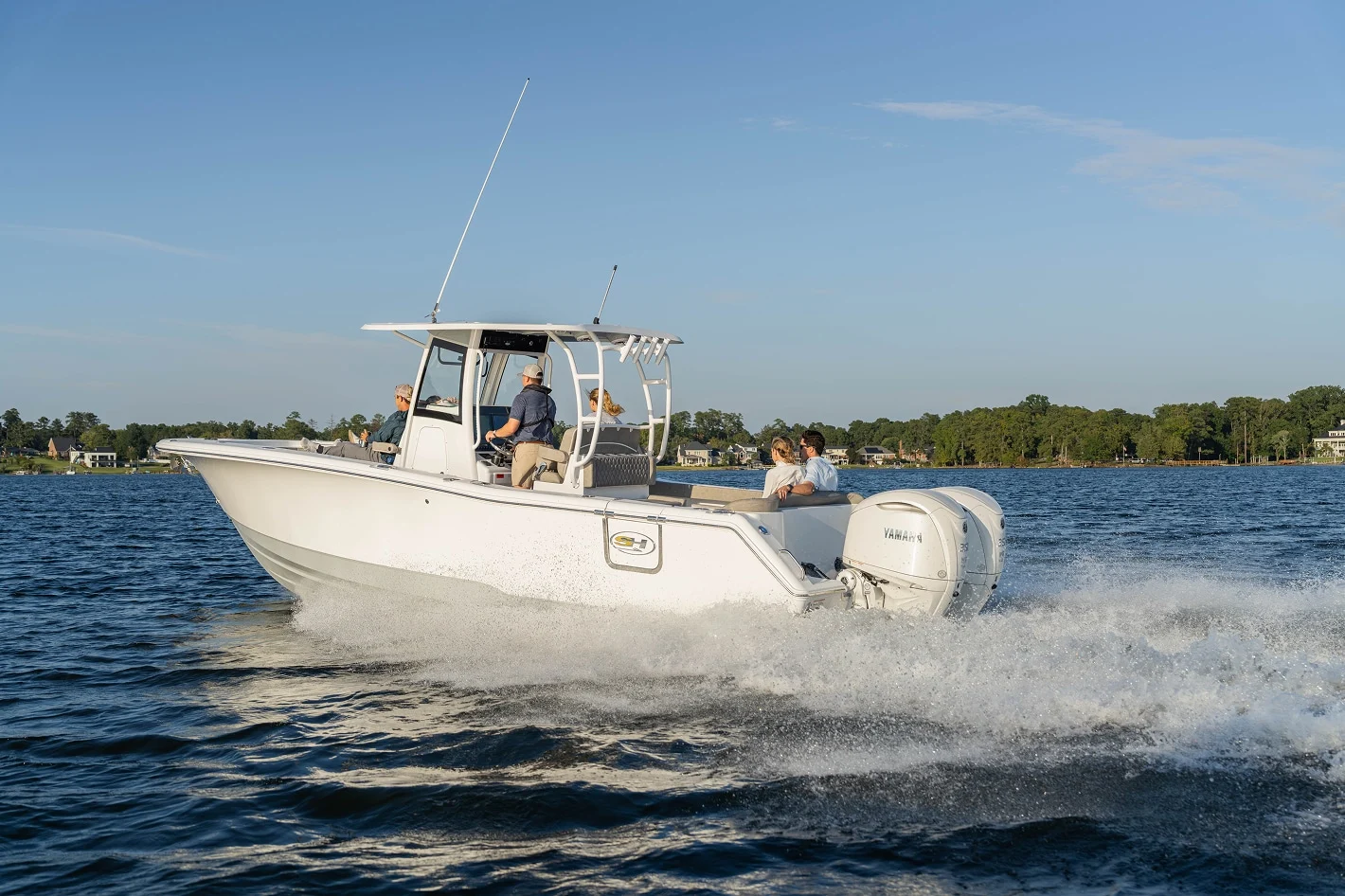
- Twin F350s are offered on Sea Hunt's 30-foot Gamefish and Ultra models, and a single F350 is offered on the BX 25 FS and the Ultra 255 SE.
- Bigger power pays off on long, heavy, rough-water runs. For bay and nearshore days, the standard engines are usually enough.
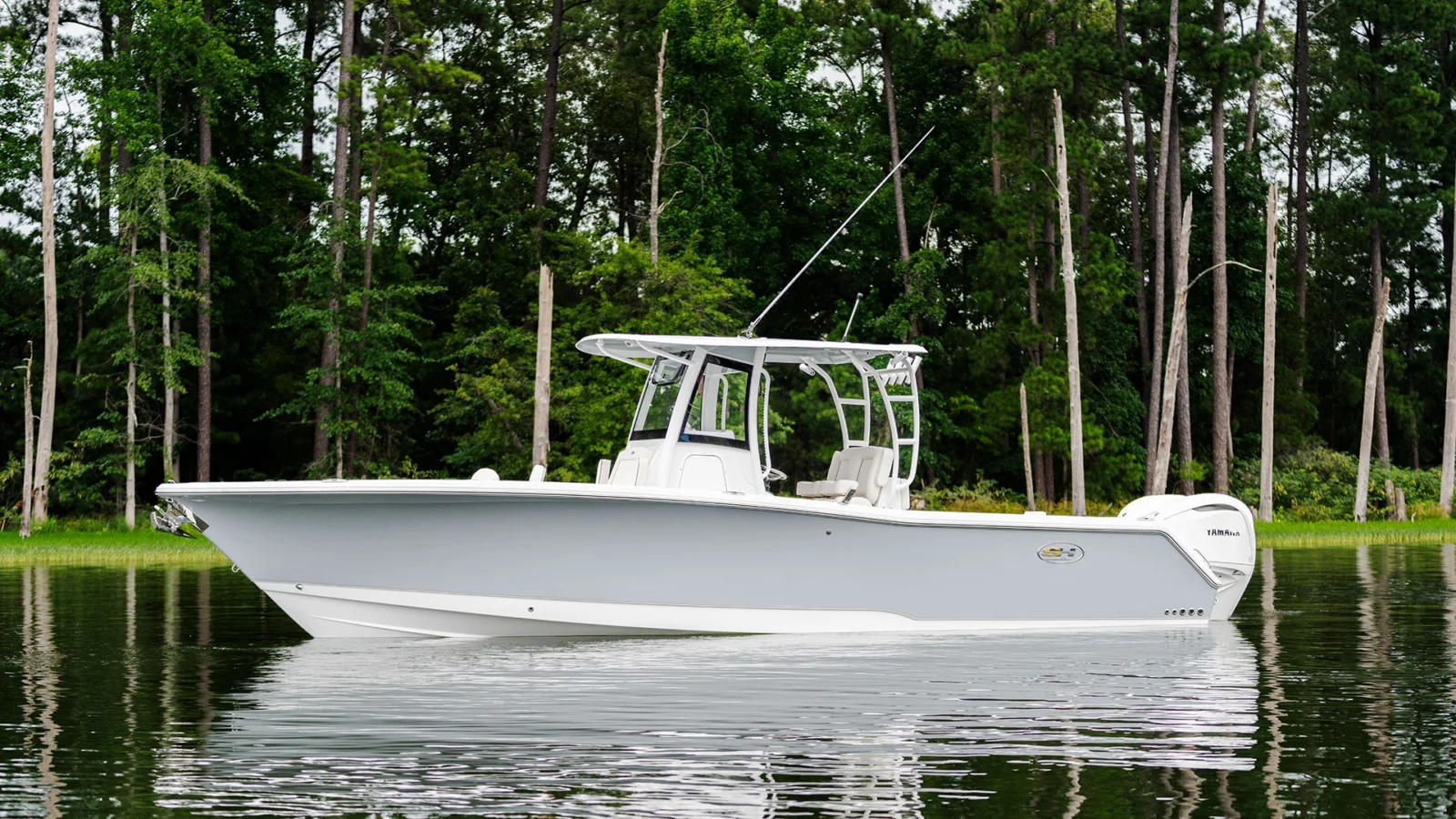
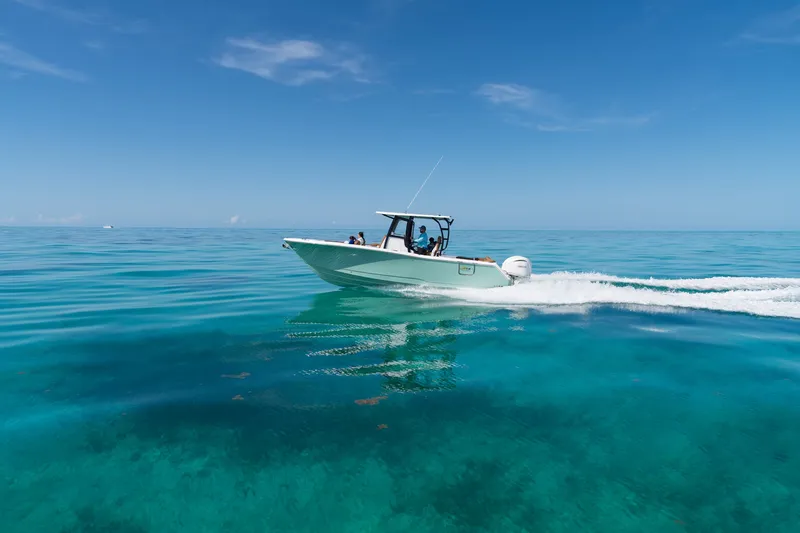
Sea Hunt rigs its boats with Yamaha outboards, so Yamaha's new F350 gets a lot of questions from people shopping the bigger Sea Hunt center consoles. This explainer covers what's new on the engine, the specs that matter to an owner, which Sea Hunt models list it as an option, and how to decide whether you need it.
Engine specs come from Yamaha's F350 page and model options from Sea Hunt's model pages, both checked October 31, 2026. Packages change between model years, so confirm the one on the boat you're looking at.
What's new on the Yamaha F350?
The F350 is an all-new 4.3-liter V6 for offshore boats. The changes that matter most to an owner are:
- Weight. 629 pounds with the shortest (25-inch) shaft. Yamaha says that gives it the best power-to-weight ratio in its class by more than 65 pounds.
- Breathing. A center-mounted 81 mm electronic throttle valve, 8% larger than the F300's, plus a higher-lift camshaft and an 11:1 compression ratio.
- Charging. A 70-amp alternator that produces more than 30 net amps per engine at idle, nearly double Yamaha's other comparable outboards.
- Steering. Integrated steering with electric actuation, listed in the engine's own specs.
- Reverse thrust. Thrust Enhancing Reverse Exhaust keeps exhaust bubbles away from the prop below 2,500 rpm and in reverse.
- Control. Compatible with Helm Master EX, Yamaha's joystick and autopilot system for one to five engines.
Two of those matter more on the water than on paper. The charging output keeps batteries topped up while displays, pumps, aerators and lights run for hours at trolling speed, so a weak start at the end of a long reef day is less of a worry. The reverse exhaust helps when you back down on a fish or dock stern-to against a current.
Treat Yamaha's comparisons as Yamaha's; the useful question is how they play out on your hull, which is what the performance bulletins below answer.
Yamaha F350 specs at a glance
| Spec | F350 |
|---|---|
| Engine | 4.3L V6, EFI |
| Prop shaft horsepower | 350 @ 6,000 rpm |
| Full-throttle range | 5,000 to 6,000 rpm |
| Weight | 629 / 642 / 653 lb (25 / 30 / 35 in shaft) |
| Gear ratio | 1.75:1 |
| Alternator | Up to 70 amps |
| Recommended fuel | 89 octane, 10% ethanol maximum |
| Fuel filtration | Yamaha 10-micron fuel/water separating filter (external) |
| Engine oil capacity | 7.9 L |
| Steering | Integrated, electric actuation |
| Mounting centers | 28.5 in |
| Warranty | Limited 3-year pleasure |
From Yamaha's 4.3L V6 Offshore F350 specifications page. Weight is without oil, gear oil and propeller.
Two lines affect ownership more than performance. The engine wants 89 octane with no more than 10% ethanol, so buy mid-grade and skip E15 pumps. The 28.5-inch mounting centers and three shaft lengths decide whether it fits your transom on a twin install or repower.
Which Sea Hunt boats offer the Yamaha F350?
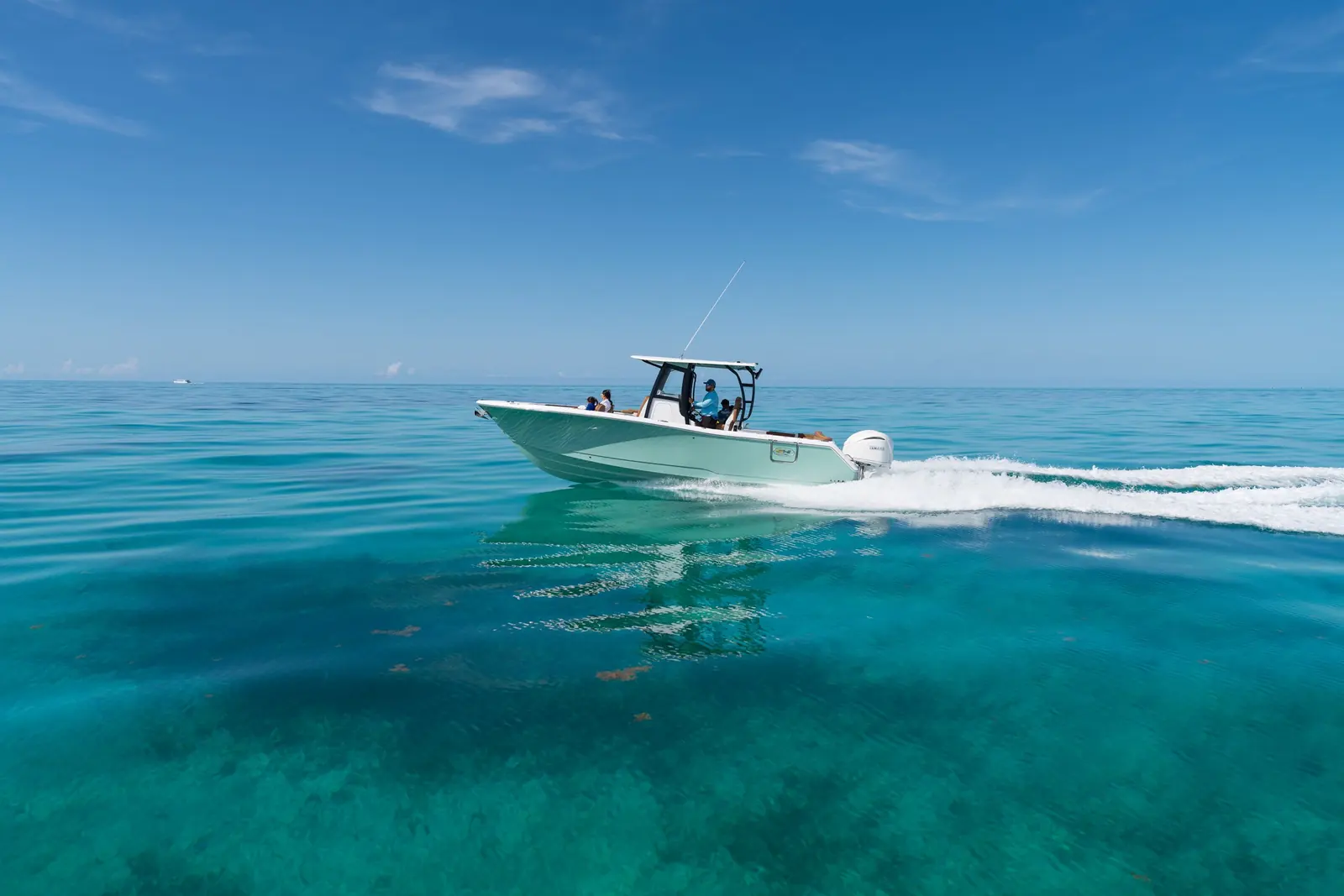
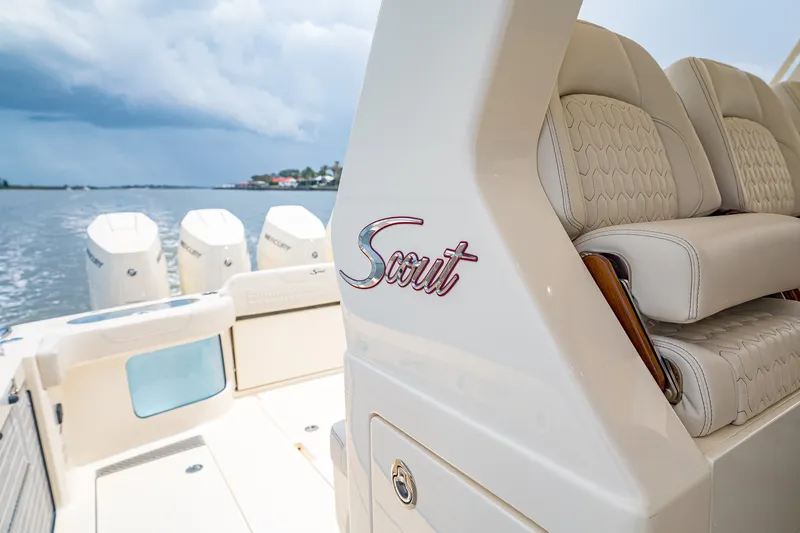
Six current Sea Hunt models offer the F350 as an optional upgrade over their standard power: the BX 25 FS, Ultra 255 SE, Gamefish 30 CB, Gamefish 30 FS, Ultra 305 SE and Ultra 305 SL. Each is rated for the total horsepower the F350s add up to. The table shows the main examples, plus two boats that don't offer it.
| Model | Max power | Standard power | F350 option | Fuel |
|---|---|---|---|---|
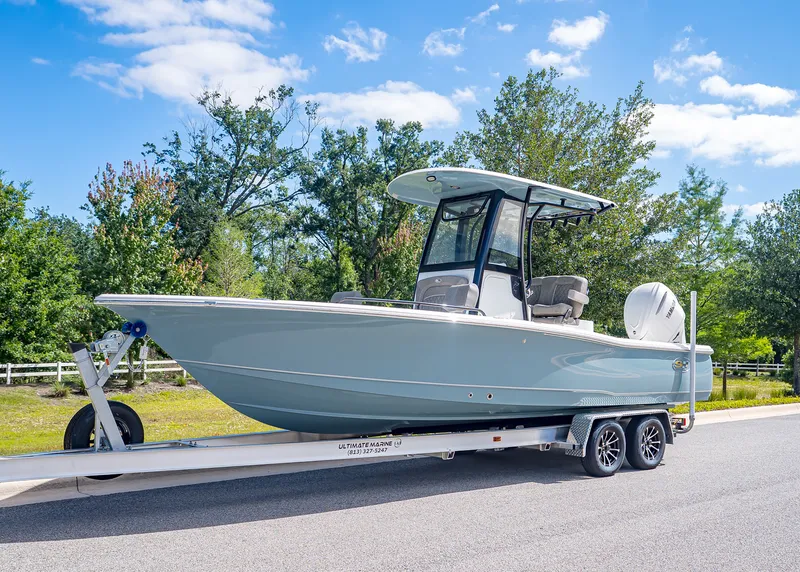
| Ultra 255 SE | 350 hp | Single Yamaha F300 | Single F350 | 120 gal |
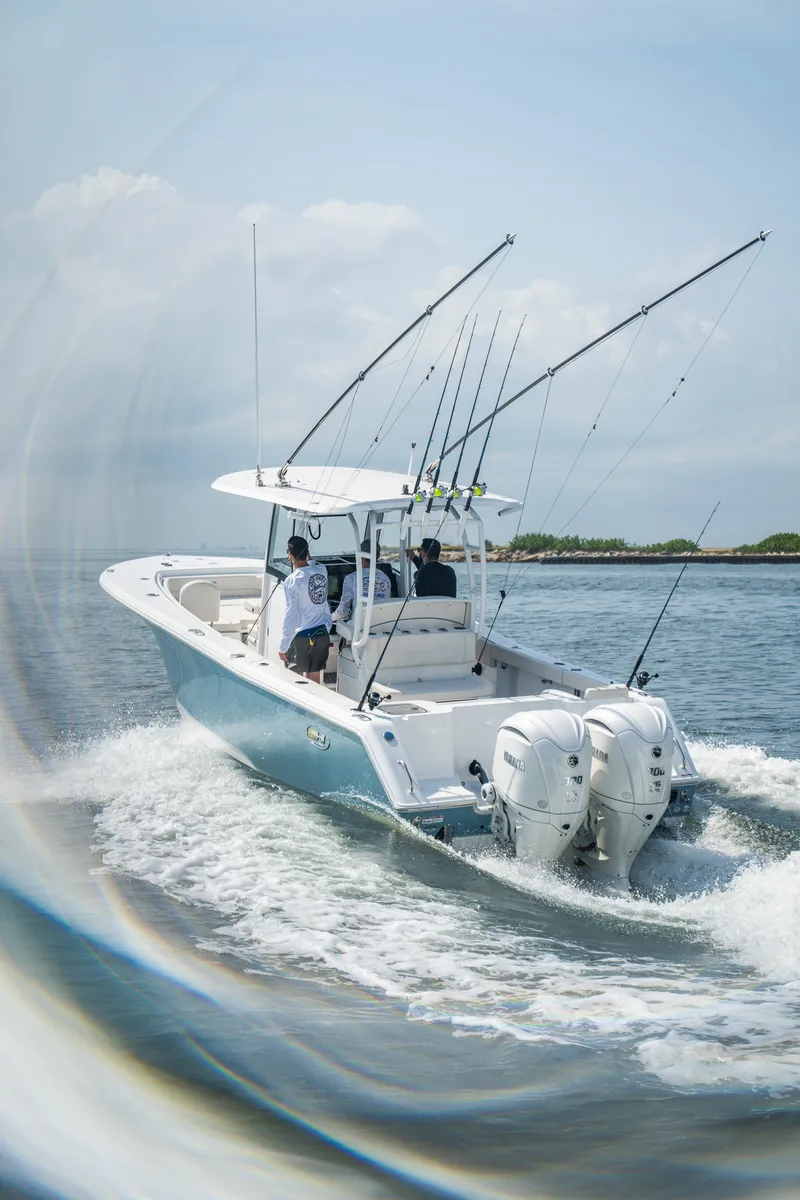
| Gamefish 30 CB and Ultra 305 SE | 700 hp | Twin Yamaha F300 | Twin F350 | 230 gal |
| Gamefish 28 CB | 600 hp | Twin Yamaha F300 | Not listed (over rating) | 180 gal |
| Ultra 275 SE | 500 hp | Twin Yamaha F200 | Not listed (over rating) | 180 gal |
From our model pages, checked Oct 31, 2026. Never exceed the maximum horsepower on the boat's capacity plate.
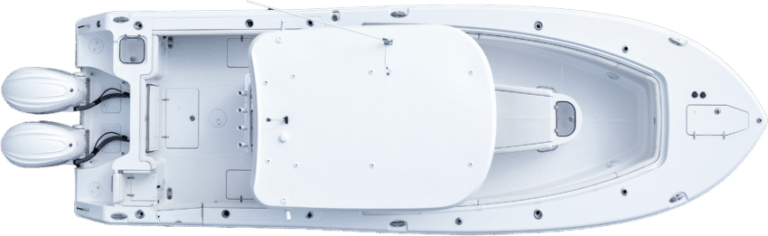
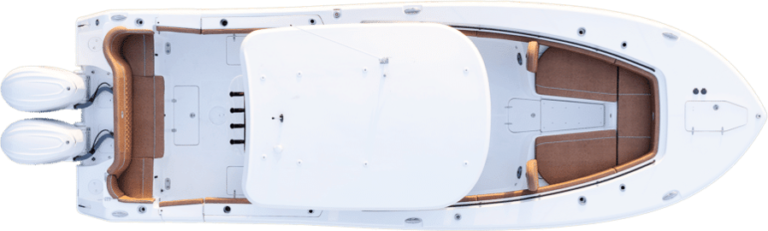
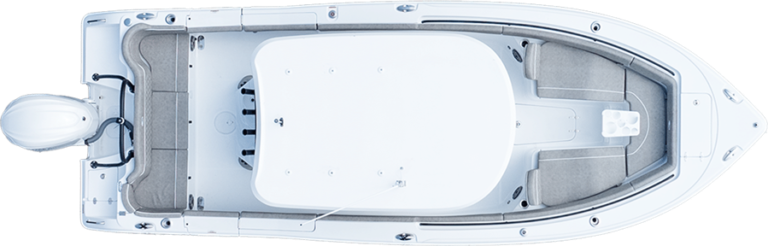
Yamaha publishes performance bulletins for two of these packages: the Ultra 255 SE with a single F350 and the Gamefish 30 CB with twin F350s. A bulletin is Yamaha's own speed and fuel-burn test of that exact boat and engine, which makes it the best thing to read before choosing power.
The Gamefish 28 CB (600 hp) and Ultra 275 SE (500 hp) are in the table for the opposite reason: twin F350s would exceed their ratings, so don't fit them on a repower either. The capacity plate is the limit.
F350 or F300: which should you choose on a Sea Hunt?
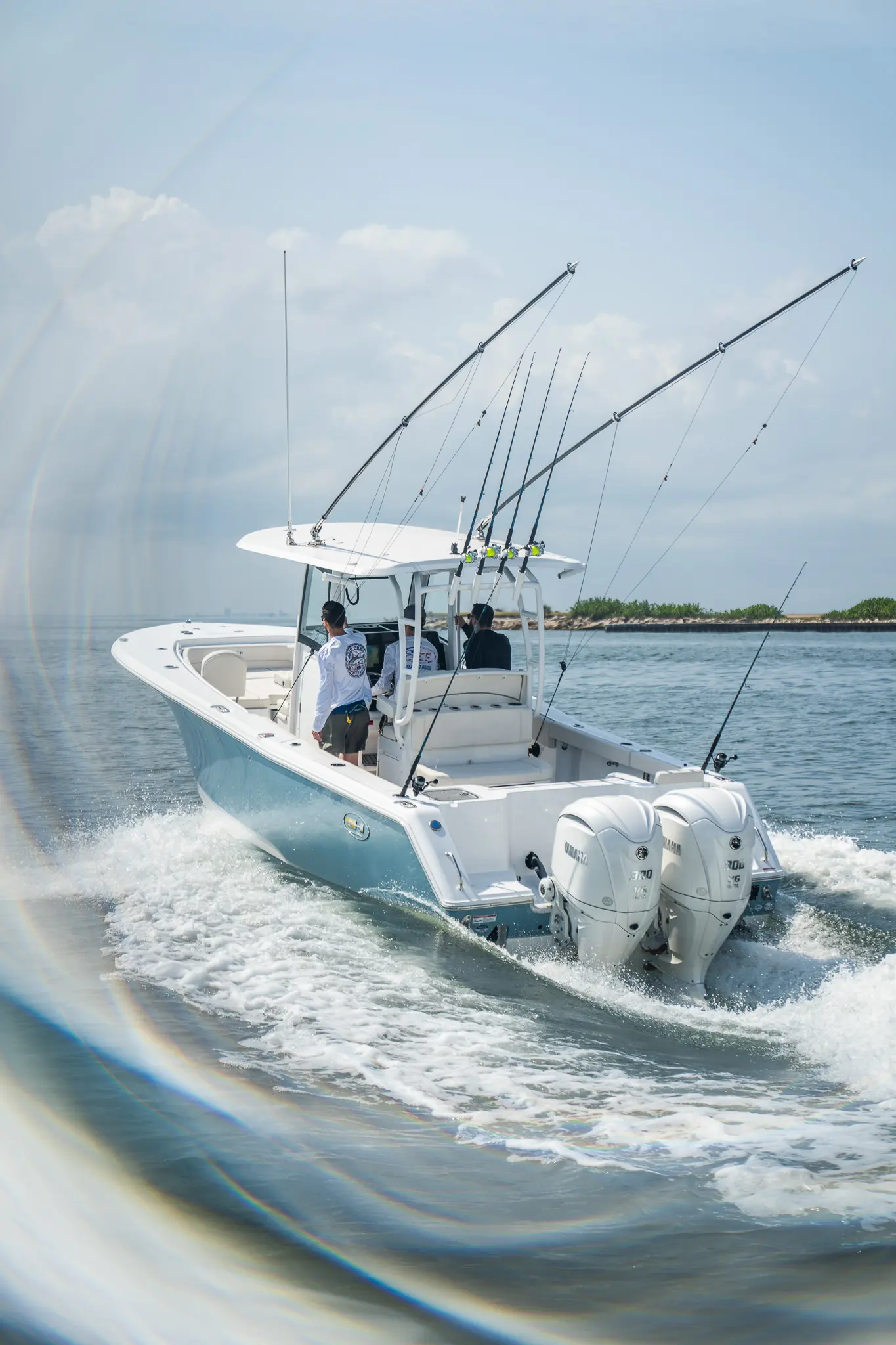
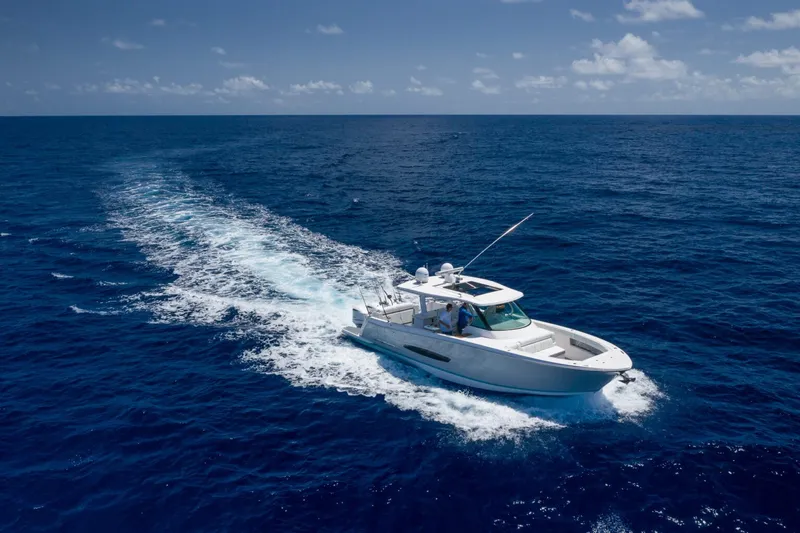
On every boat that offers the F350, the standard power is the Yamaha F300, so the real question is whether the extra 50 horsepower per engine earns its keep for how you use the boat. Think about load, distance and sea state rather than top speed. A Gamefish 30 CB carries 230 gallons of fuel, which is roughly 1,400 pounds when full, before ice, bait, tackle and crew. More power helps a heavily loaded boat get on plane, hold plane at a lower rpm and keep a steady speed into a head sea on the way home.
For example, a crew running 40 miles out of Port Canaveral for tuna and wahoo with full tanks and five anglers is the use case big power is built for. The same boat used mostly for family days and near-reef trips spends its life at mid-range rpm, where the gap between the two engines narrows.
Full tanks, a big crew and long offshore runs are where extra power shows.
The standard engines handle typical family and reef days with less to buy and maintain.
If you're between the two, read Yamaha's performance bulletin for the exact boat, then ask for a sea trial on a similar rig with a realistic load. Cruise speed and fuel burn at the rpm you'll actually run tell you more than wide-open numbers.
What does Helm Master EX add to a twin-engine boat?
Helm Master EX is Yamaha's joystick, autopilot and digital control system, and the F350 is compatible with it. Helm Master with SetPoint and autopilot is an option on the Gamefish 30 CB and Ultra 305 SE. On twins it changes docking most: you push the joystick the way you want the boat to go, including sideways, and the system shifts the engines for you. That's the win in a Florida marina with current and a crosswind. It also adds heading and course hold and more than ten fishing and cruising modes.
Is the F350 right for your boat?
- How far and how heavy do you run?Big power pays off on long offshore runs with full tanks and a big crew.
- What is your boat rated for?Stay at or under the capacity plate's horsepower rating.
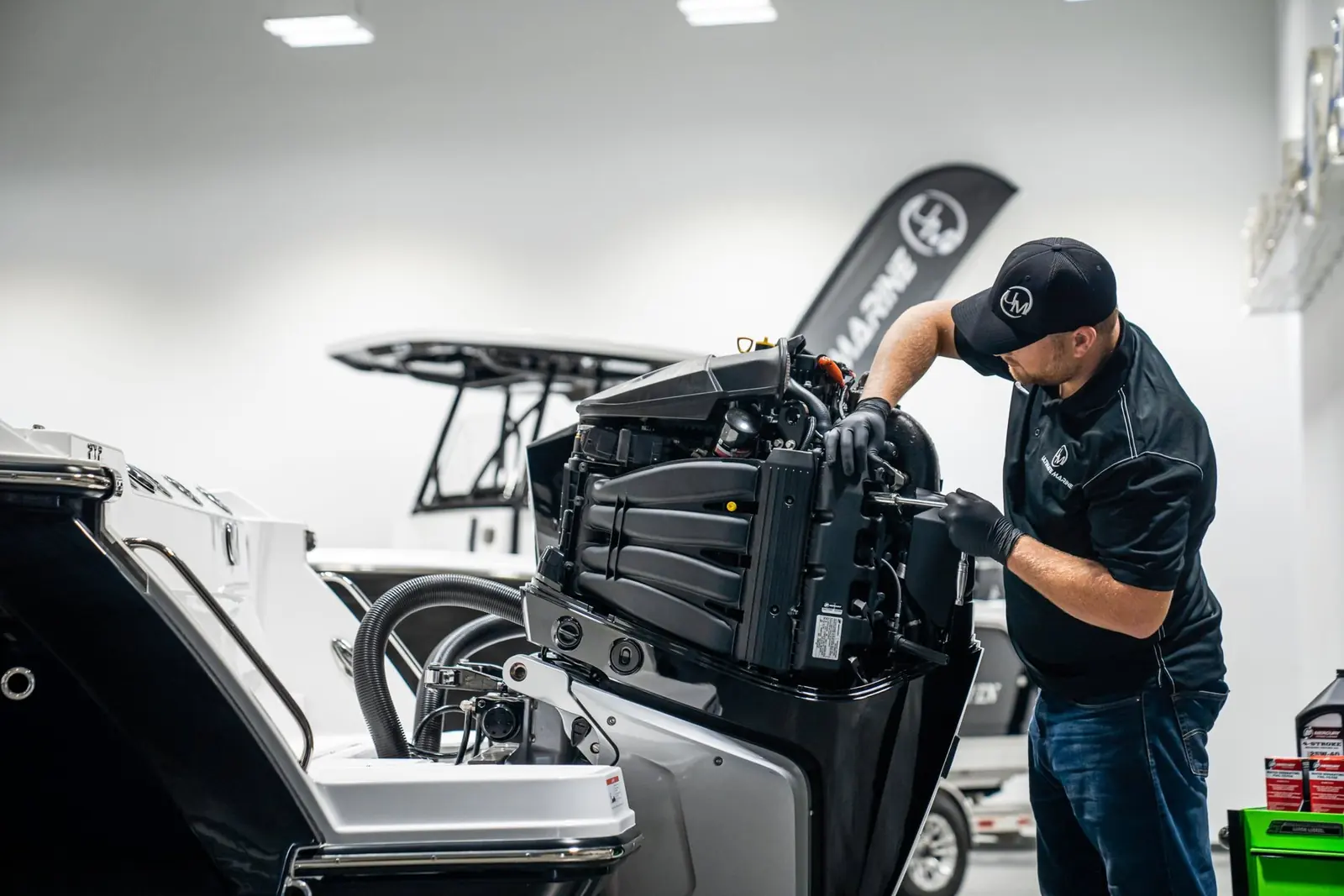
- What will it cost to keep?Two big outboards mean two of every service; see the Yamaha maintenance schedule.
If you can't name the trip you want the extra power for, the standard F300 is usually the right place to start.
Ask us what fits your boat
Tell us your model and how far you run, and we'll walk you through its power options and the Yamaha bulletin for that boat.
Questions we hear
How much does the Yamaha F350 weigh?
The 4.3L V6 Offshore F350 weighs 629 pounds with the 25-inch shaft, 642 pounds with the 30-inch shaft and 653 pounds with the 35-inch shaft. Those figures are measured without engine oil, gear oil or propeller. Yamaha says the engine has the best power-to-weight ratio in its class by more than 65 pounds. On a twin install, add both engines, rigging and fuel when you think about how the boat sits and how heavy it is to tow or lift.
Is the new Yamaha F350 a V6 or a V8?
The current F350 is a V6. It's the all-new 4.3L V6 Offshore F350, with 350 horsepower at 6,000 rpm, a full-throttle range of 5,000 to 6,000 rpm and an 11:1 compression ratio. Yamaha's V8 outboards are the separate XTO Offshore line. When you shop used boats with F350s, check the engine model and year, since earlier F350s may not match the new V6's specs.
Which Sea Hunt boats come with the Yamaha F350?
The F350 is an option rather than standard power. The Gamefish 30 CB, Gamefish 30 FS, Ultra 305 SE and Ultra 305 SL, all rated for 700 hp, offer twin F350s in place of the standard twin F300s. The BX 25 FS and Ultra 255 SE, each rated for 350 hp, offer a single F350 in place of their standard F300. Yamaha has published performance bulletins for the Ultra 255 SE and Gamefish 30 CB with F350 power.
What fuel does the Yamaha F350 need?
The F350's recommended fuel is 89 octane with an ethanol limit of 10%, so avoid E15. It also calls for Yamaha's 10-micron fuel/water separating filter, mounted externally, to catch water and debris before they reach the engine. In Florida's humidity, water in fuel is a real risk, so change that filter on schedule and use a marine fuel stabilizer if the boat will sit for more than a few weeks.
What warranty comes with the Yamaha F350?
The F350 carries a limited 3-year pleasure-use warranty, a 3-year government warranty and a 1-year commercial warranty. Read the warranty terms for what's covered and what maintenance records you need to keep, since following Yamaha's service schedule matters if you ever make a claim. If you plan to keep the boat for a long time, ask about extended coverage before delivery.