


Sea Hunt cleaning and maintenance schedule
In this article
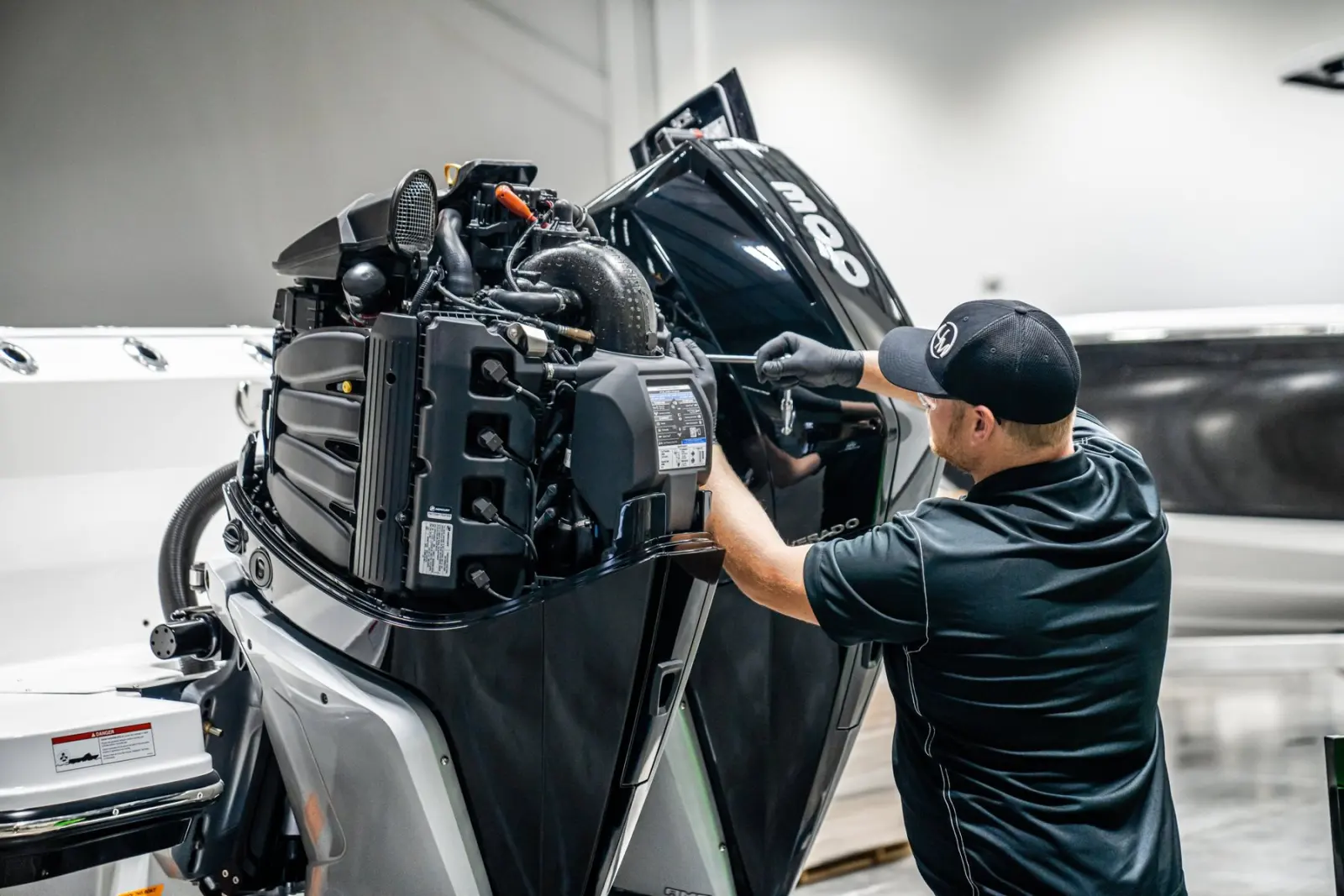
After every saltwater trip, rinse the whole boat with fresh water, wash it with a mild soap, dry it and flush the engine. Every week or two, clean the canvas and aluminum, protect the vinyl and check the stainless. Every month or so, check batteries, hinges, seals and the trailer, and wax the hull when it loses its gloss. Have the engine serviced on Yamaha's schedule: every 100 hours or once a year, whichever comes first.
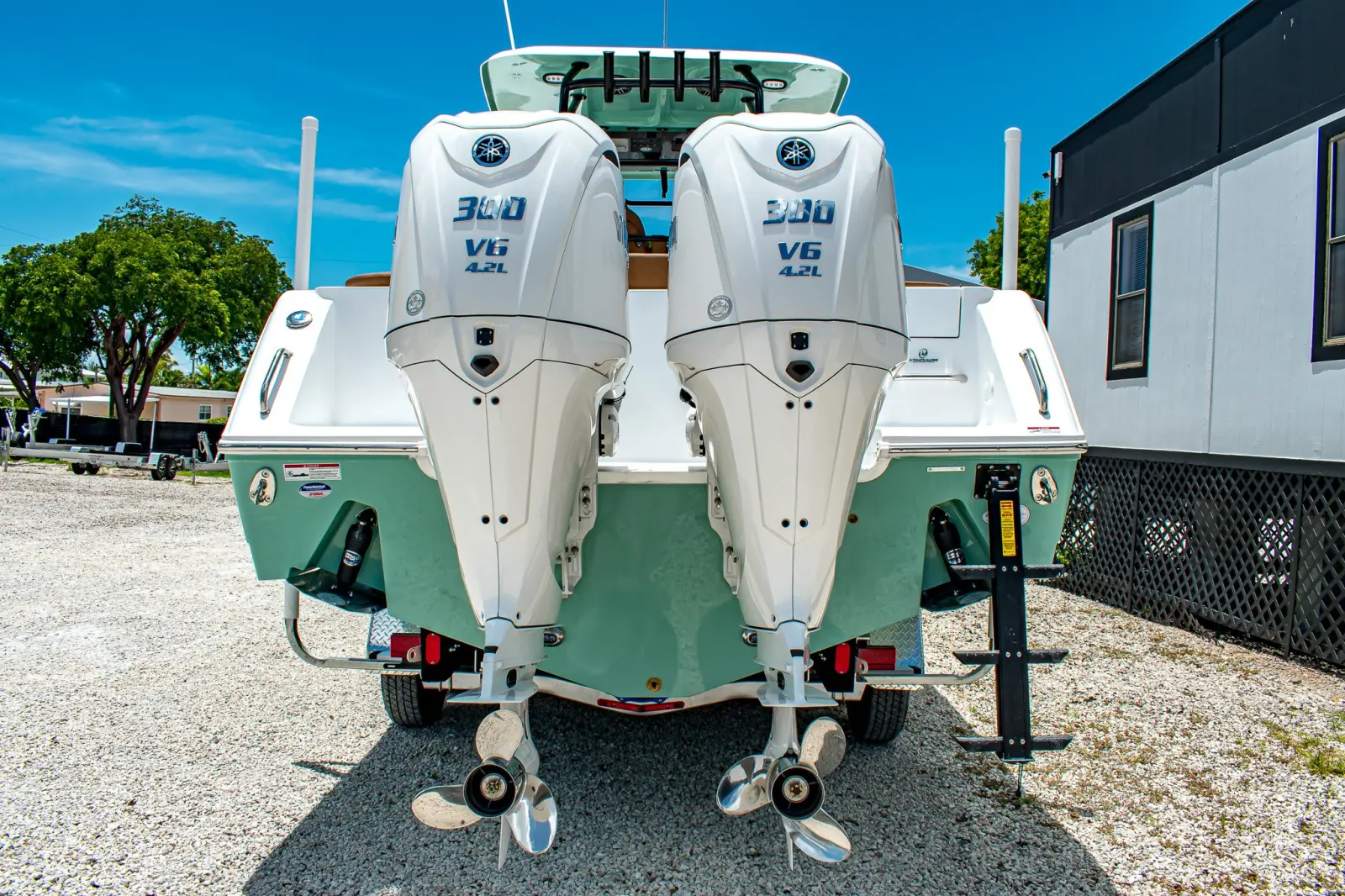
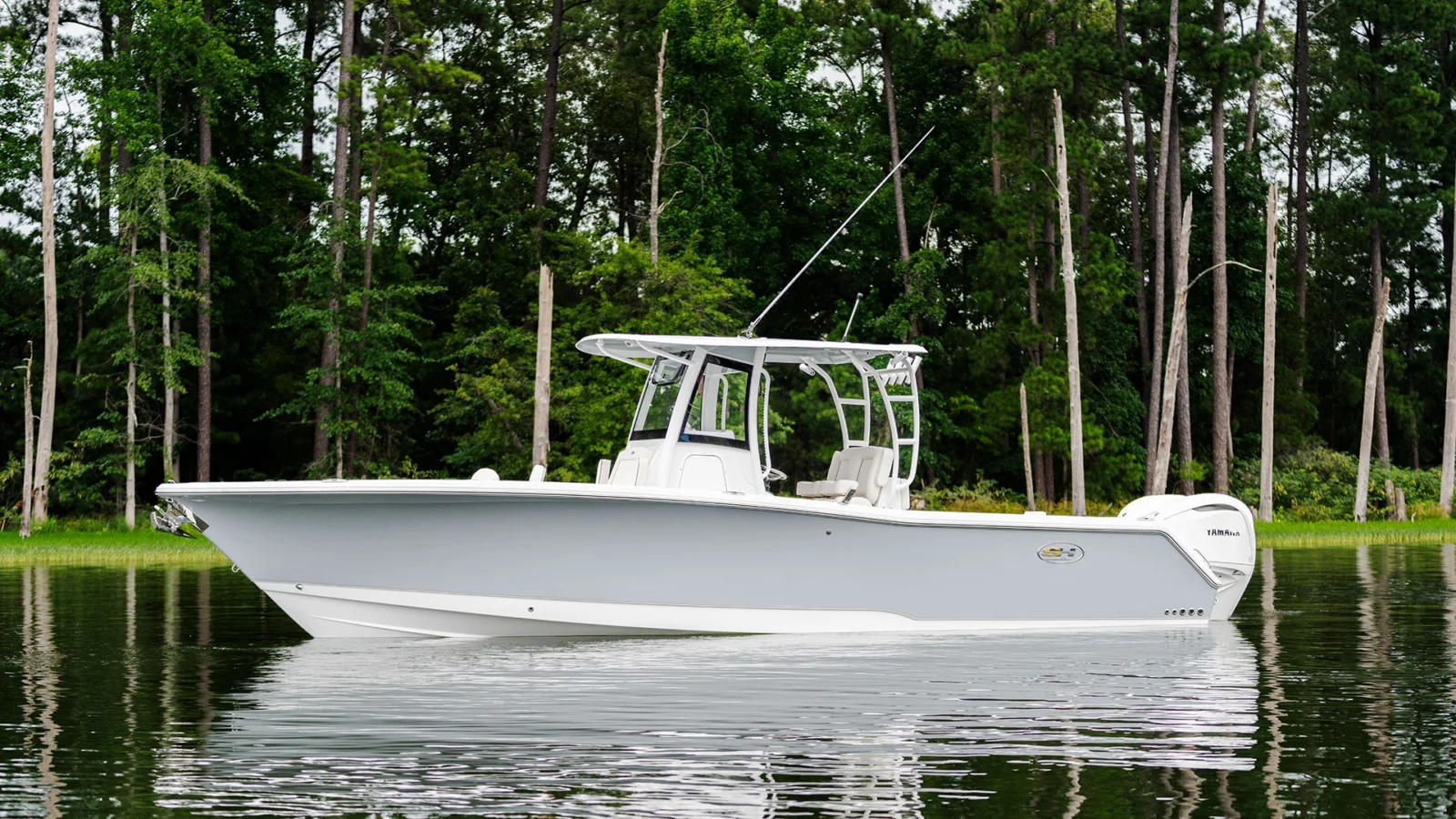
Salt, sun and humidity are hard on any boat in Florida, and most of the damage is slow: salt crystals under a hatch lid, chalky gelcoat on the side that faces south, a corroded battery terminal that leaves you at the ramp. This schedule follows Sea Hunt's owner's manual for the boat and Yamaha's for the engines, with notes on Florida conditions. The engine itself has its own page: our Yamaha engine maintenance guide.
What should you do after every trip?
- Flush the engineHook a hose to the flush port and follow the flushing steps in your Yamaha owner's manual. Yamaha calls for a flush after each use, especially in salt or brackish water.
- Rinse everything with fresh waterHull, deck, console, T-top, leaning post and upholstery. Hosing the boat after each outing is the best way to prevent discoloration and buildup.
- Wash with a mild soapA mild household detergent and plenty of fresh water, with a sponge on smooth surfaces and a brush on the non-skid.
- Rinse againGet every trace of soap and salt off, including under rails, cleats and rod holders.
- Dry the glass and stainlessA chamois or microfiber towel stops water spots on the windshield and hardware.
- Open up and drainDrain the livewells and fish boxes, prop hatches open to dry, and check that the scuppers are clear.
The order matters. Flush first so it never gets skipped, then wash top to bottom so dirty water runs off surfaces you haven't cleaned yet. Skip anything with ammonia, chlorine (bleach) or a strong alkaline base. Those can darken gelcoat, and chlorine cleaners can make stainless fixtures rust. Most marine boat soaps sold for gelcoat are mild enough; check the label.
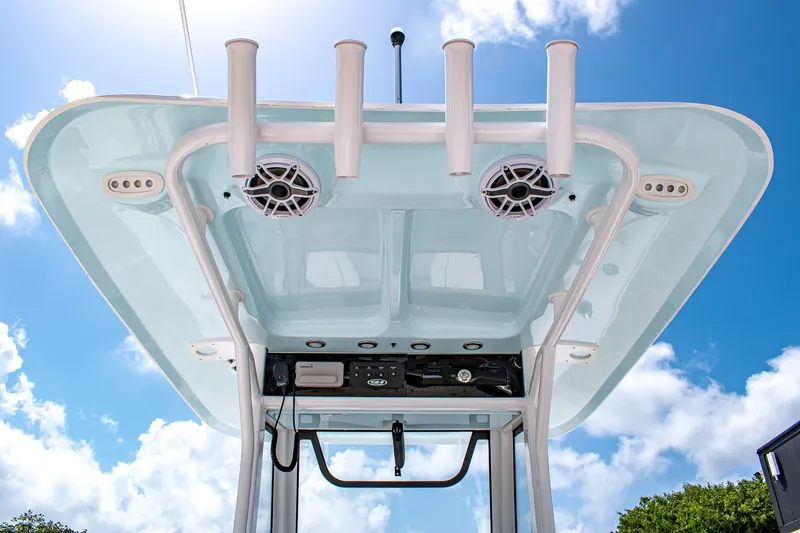
Don't forget the aluminum. Leaning posts, rod holders and T-top frames on a Sea Hunt are anodized aluminum, and Sea Hunt asks for them to be washed with a very mild soap after each use, and every two to three weeks if the boat lives outside. The upper tubes just under the T-top get no rain rinse, so salt sits there longest. Reach up with a soft brush every time.
What should you clean every week or two?
Every week or two
Each item has a specific method, and the wrong product does more harm than skipping a week. Canvas: brush off loose dirt, hose it down and clean with a mild soap, never detergent, in cool to lukewarm water no hotter than 100°F, then let it air dry. Clear vinyl (the enclosure windows on some tops) gets denatured alcohol and a clear wax; paste wax yellows it. Acrylic and plexiglass pieces, such as some windscreens and livewell lids, get mild soap and a soft cloth, never paper towels. The tempered glass enclosure on newer Gamefish, Ultra 239 SE and up, and the BX 25 FS takes regular glass cleaner.
Stainless is grade 316 on a Sea Hunt, but stainless is rust-resistant, not rust-proof. Regular fresh-water rinsing plus a commercial corrosion inhibitor keeps it bright. Upholstery seams aren't waterproof, so store cushions dry or keep them covered. In a Florida summer that matters: a cushion left damp under a cover can start to mildew quickly.
What should you check every month or two?
Every month or two
Waxing. Sea Hunt gives no fixed interval. Its manual says gelcoat loses gloss with sun, salt and pollution, to ask a local dealer which wax suits your region, and never to wax non-skid, which becomes slippery. In Florida sun, a boat stored outside will show it sooner than one in a dry stack. Inspect the gelcoat while you wax and get damage repaired early.
Batteries. The manual says to check fluid monthly on batteries with removable caps, topping up with distilled water. To clean terminals, switch the batteries off, remove the cables, scrub with a wire brush and a little baking soda and water, then reconnect and grease the bare metal. One detail every Sea Hunt owner should know: the automatic bilge pump float switch is wired directly to battery 1. If battery 1 runs flat, the float switch can't protect a boat sitting in a summer downpour. Sea Hunt also advises against running on the BOTH setting; alternate batteries about every 10 to 15 hours instead.
Seals, fuel and anodes. Normal hull flex slowly breaks down caulking around fittings and hatches, so look for leaks and re-caulk when needed. Salt crystals in the fuel compartment corrode metal, so rinse it with fresh water and replace worn O-rings on the access plates. The outboard and electric trim tabs carry sacrificial anodes that are meant to wear away; replace them before they're gone.
What needs doing once or twice a year?
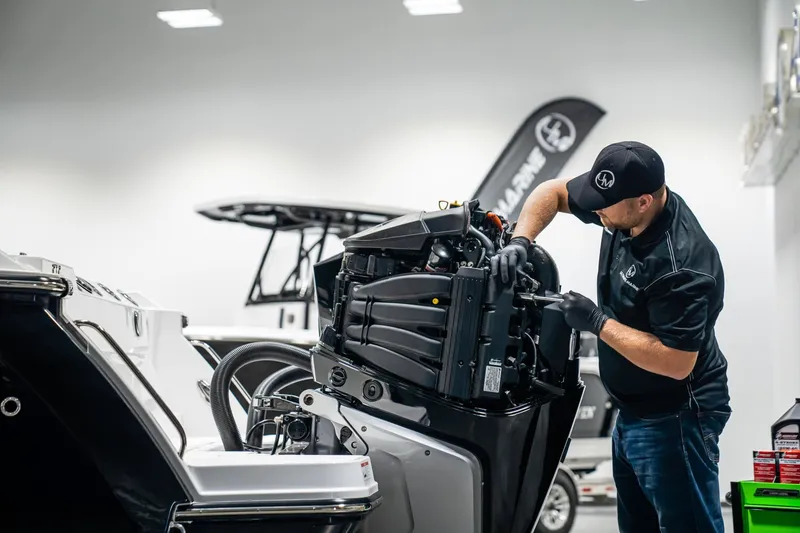
- Engine service on Yamaha's schedule: engine oil and gear oil every 100 hours or once a year, plus fuel filters and the other items in your owner's manual.
- A detailed fuel-system inspection every year: hoses, clamps and fittings, including the ones you can't see day to day.
- Deep clean and gelcoat restoration: compound and polish where the finish has gone chalky.
- Trailer bearings lubricated and repacked per the trailer maker.
- Bottom check: if the boat stays in the water more than a few days at a time, it needs anti-fouling paint, with the bottom inspected and cleaned at least once a season.
- Canvas re-treatment with a fabric guard after a thorough cleaning, or after about five years of use.
- Electrical check: batteries, navigation lights, electronics and connections.
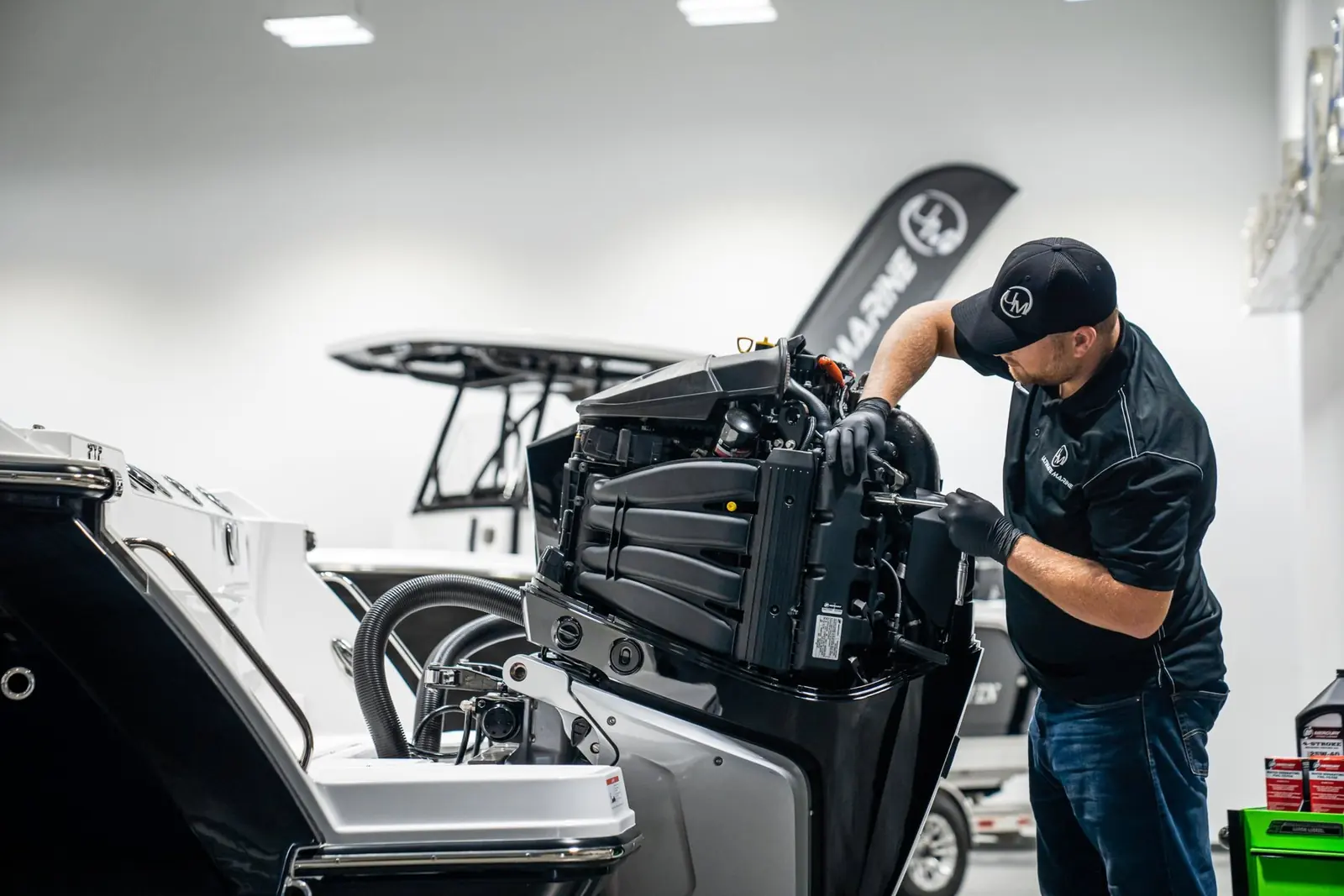
Florida boats can hit Yamaha's 100-hour mark before the year is out, because there's no winter layup. Keep a log of engine hours at each service so you don't miss it. New owners have one extra appointment: Sea Hunt's manual asks you to schedule a 20-hour inspection with the selling dealer after about 10 to 15 hours of running.
Know when to stop and call service. Restoring badly oxidized gelcoat means wet sanding with 600-grit paper and buffing with a polishing compound at a set speed; it's easy to burn through gelcoat on an edge. Anything structural, any fuel smell, a battery that won't hold a charge, or anodes that wear away unusually fast are jobs for a technician. Unusually fast anode wear in a marina slip can point to stray electrical current. Sea Hunt's manual warns that AC current leaking into the water near docks has injured and drowned swimmers. If you suspect it, tell the dockmaster and keep people out of the water.
Book a service visit
Our service team handles engine service and seasonal checks for Sea Hunt owners. Tell us what the boat needs and when.
Which cleaner should you use on each part of the boat?
| Area | Use | How often | Avoid |
|---|---|---|---|
| Hull and gelcoat | Mild soap and fresh water; marine wax | Wash after each trip; wax when gloss fades | Ammonia, bleach, strong alkaline cleaners |
| Non-skid deck | Mild soap and a brush | After each trip | Wax of any kind |
| Stainless steel | Fresh water, mild soap, corrosion inhibitor | Rinse after each trip | Chlorine cleaners |
| Anodized aluminum (T-top, leaning post) | Very mild soap or aluminum cleaner; metal protectant | After each use; every 2 to 3 weeks if stored outside | Abrasives, bleach |
| Vinyl upholstery | Mild detergent solution or vinyl cleaner; UV protectant | Weekly in season | Leaving cushions wet |
| Canvas | Mild soap, cool water, air dry | Every week or two | Detergent, heat, petroleum or ammonia cleaners |
| Clear vinyl | Denatured alcohol, then clear wax | As needed | Paste wax, folding |
| Acrylic and plexiglass | Mild soap, soft cloth | As needed | Paper towels, abrasives |
Methods from Sea Hunt's owner's manual. Follow each product maker's directions.
The pattern across the table is simple: mild soap, fresh water, and keep chlorine and ammonia off the boat. That one rule protects gelcoat, stainless, aluminum and canvas at once. The exceptions are about wax. Wax belongs on smooth gelcoat and clear vinyl (clear wax, not paste), never on non-skid. If a stain won't come off, chemical stains on gelcoat can usually be removed with rubbing compound followed by wax; for canvas, use the Sunbrella stain guide.
Keep a small kit aboard or in the truck: a soft deck brush with an extension pole, two buckets, boat soap, microfiber towels, a chamois and a spray bottle of corrosion inhibitor. With those, the after-trip rinse becomes a habit.
How do you protect a Sea Hunt between trips and in storage?
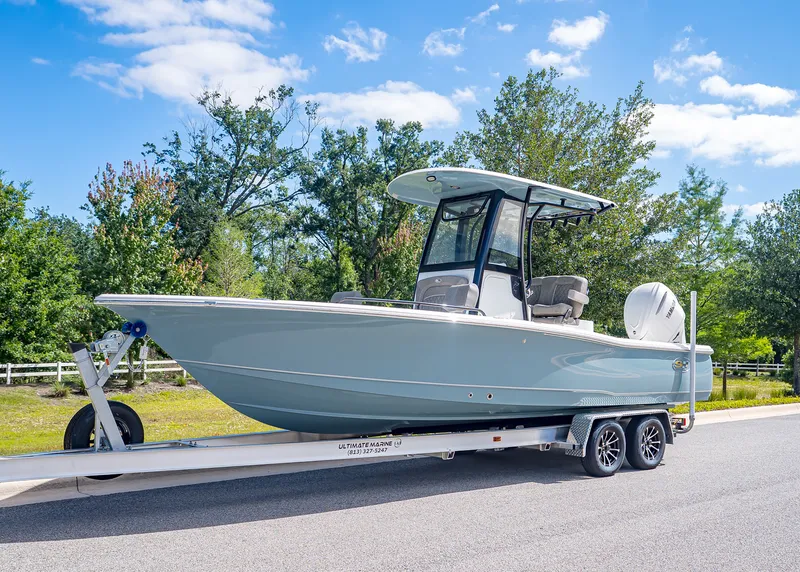
Where the boat lives decides most of your maintenance. On a trailer at home you control the rinse and the cover, but the boat takes full sun. On a lift it stays out of the water but still needs a cover and a check after every storm. In a dry stack it's shaded and handled by the marina, so ask what rinse and flush they do when they put it away. In a wet slip you add bottom paint, growth and stray current to the list.
- Cover it well. A canvas cover should be fastened so wind can't remove it or make it chafe, and outdoors it should let air pass so the boat doesn't sweat.
- Let it drain. For storage, the manual says to pull the drain plug and keep the bow higher than the stern so water runs out.
- Watch the fuel. Avoid ethanol fuel when possible, because it absorbs water. For longer layups, fill the tank to limit condensation and add a stabilizer.
- Spare the tires. On a trailer for long storage, raise and block the axle.
- Use rinse stations. Rinse off at the marina before the drive home so salt doesn't bake on during the tow.
Hurricane season (June 1 to November 30) adds one more job: know where the boat goes when a storm is forecast and who will move it if you're away. Our hurricane prep checklist covers the steps.
Questions we hear
How often should you wax a Sea Hunt?
Sea Hunt's owner's manual gives no fixed interval. It says gelcoat loses gloss with exposure to sun, salt and pollution, to ask a local dealer which wax suits your region, and never to wax non-skid surfaces because they become slippery. In Florida, a boat stored outside usually needs it more often than one kept in a dry stack. Wax when the finish starts to look dull, and inspect the gelcoat for damage while you do it.
Do you need to flush a Sea Hunt engine after every use?
Yes, after every saltwater or brackish trip. Yamaha calls for flushing the engine with fresh water after each use, especially in salt or brackish water, to clear salt from the cooling passages. Follow the flushing steps in your Yamaha owner's manual for your exact model. Flush while you're rinsing the rest of the boat so it becomes part of the same routine.
What should you not use to clean a boat?
Avoid cleaners with ammonia, chlorine or bleach, and caustic or highly alkaline cleaners. They can darken gelcoat and make stainless fixtures rust. Don't use detergent, heat, or petroleum- or ammonia-based cleaners on canvas, paste wax on clear vinyl, or abrasives and paper towels on acrylic. Mild soap and plenty of fresh water handle most of the boat.
How often should a Yamaha outboard on a Sea Hunt be serviced?
Yamaha calls for changing the engine oil and gear oil every 100 hours or once a year, whichever comes first, along with the other items in your owner's manual such as fuel filters. Florida boats can reach 100 hours before the year is out, so track hours. New Sea Hunt owners should also schedule the 20-hour inspection with their dealer after about 10 to 15 hours.
How do you clean Sea Hunt vinyl upholstery?
Use a mild solution of household detergent and fresh water, or a commercial vinyl cleaner, then rinse. A UV protectant helps slow fading in Florida sun. The seams on exterior upholstery aren't waterproof, so keep cushions covered or stored somewhere dry when the boat isn't in use, which also helps keep mildew away.
Sources
- Sea Hunt owner's manual 2025-26 (PDF).
- Yamaha Outboards, Maintenance Matters.
- NOAA National Hurricane Center.