
Hurricane prep checklist for Florida boaters
In this article
Make your plan before June 1 and get the boat out of the water if you can: BoatUS insurance claim files show boats are safer ashore. When a storm is forecast, strip everything that can blow away, double your lines with chafe gear, charge the batteries that run the bilge pumps, and photograph the boat before and after. Act before a watch is issued if you can, because the National Hurricane Center says the watch window can be too short to move a boat. Never stay aboard during a storm.
Storm surge accounts for major damage to boats, along with wind, rain and flying debris. How your boat fares depends on its size and weight, where it's kept and how early you act. This guide follows the season in order: the plan you make in spring, the choice of where the boat rides out a storm, the steps when one is coming, what to do if you evacuate, and the first days after.
Every step here comes from the agencies and groups that study storm damage: the National Hurricane Center (NHC), the Florida Fish and Wildlife Conservation Commission (FWC), BoatUS and Florida law. Adapt them to your boat, and ask a marine surveyor or your service team if you're unsure.
Hurricane prep timeline at a glance
Use this as the one-screen version of the plan. Each stage has its own section below.
- Review your insurance and marina contract
- Decide: haul out, trailer or stay in the water
- Photo the boat and gear for your records
- Confirm your haul-out or storage slot
- Get extra lines, chafe gear and fenders
- Top off the tanks; charge batteries
- Strip canvas, cushions and electronics
- Double lines; add chafe guards
- Disconnect shore power
- Wait for the all-clear before going aboard
- Photo all damage first
- Call your insurer, then service
The two NHC alerts drive the middle of the timeline. A hurricane watch means hurricane conditions are possible and is issued 48 hours before tropical-storm-force winds are expected. A hurricane warning means they're expected and comes 36 hours ahead. Those windows are shorter than they sound. The NHC's guidance for mariners says waiting for a watch may not leave enough time to move a boat safely, because tropical-storm-force winds and heavy rain arrive in outer rain bands hours before the center. Ramps, haul-out lifts and highways all fill up at once.
So the real deadline is earlier than the alert. If your plan involves a trailer, a haul-out or a drive inland, start moving when a storm first shows a credible track toward your coast. Securing a boat in its slip is slower than most owners expect, so start that early too.
What to do at the start of hurricane season
Spring is when you have time, contractors and storage space. Do these five things before June 1.
- Review your boat insurance.Check for hurricane haul-out, salvage, wreck removal and fuel-spill coverage. Some insurers pay part of the cost of having a professional move or prepare your boat once a watch is issued.
- Write a plan.Where will the boat ride out a storm, who moves it and how long does that take? Include contacts for your marina, insurer and service. Marinas and storage fill fast once a storm is named.
- Make a communication plan.Pick one point person to share updates with family or boating partners. A handheld VHF radio is a good backup.
- Document the boat.Photograph and video the boat and gear from every angle and save it online. It speeds up an insurance claim.
- Service the engine and check safety gear.Make sure the engine runs well and life jackets, flares, fire extinguishers and signals are in good shape.
If you keep the boat at a marina, get a copy of its hurricane plan and read your contract alongside it. Florida law (section 327.59) bars marinas from forcing owners to remove boats after a watch or warning. It does let a marina contract say that if you don't move your boat promptly after a watch, the marina may move or secure it and charge you a reasonable fee. Know which applies to you, and give the marina an emergency contact who can act if you're out of town.
If your plan depends on a trailer, treat the trailer as safety equipment. BoatUS warns that a boat won't get far on a neglected trailer with flat tires and rusted wheel bearings. Check tires, bearings, lights and the tow vehicle's hitch in spring, not the day a cone appears on the forecast map. Then gather the supplies below.
Supplies to have on hand
Where is a boat safest in a hurricane?
BoatUS has studied boat damage after every major hurricane since Alicia in 1983, and its insurance claim files show that in most cases boats are safer out of the water. The NHC agrees that boats hauled out generally suffer less damage than boats left in the water. Here is how the usual Florida options compare.
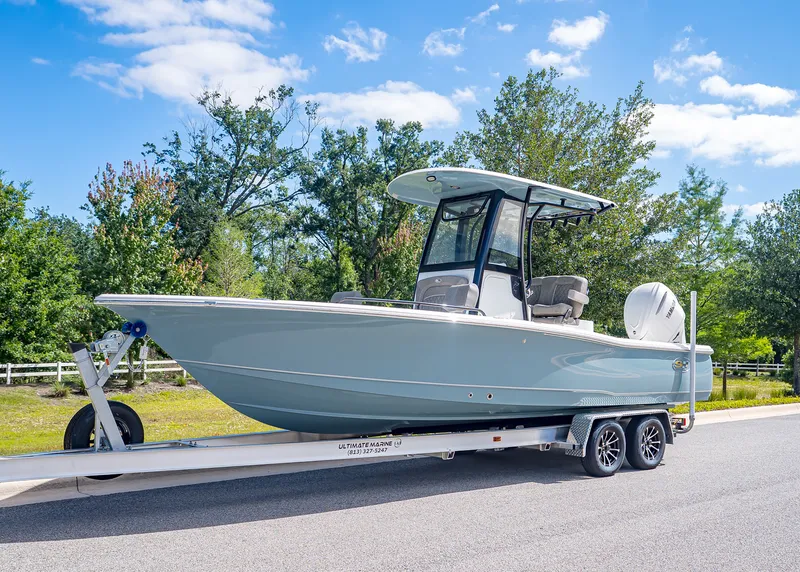
On a trailer, moved inland
For most small open boats, this is the best choice. The NHC notes that low freeboard on a small open boat will almost always be overcome by waves, spray and rain if it's left in the water. Tow it well away from tidal water and surge zones, and park it where it's sheltered from wind and falling trees. BoatUS even suggests a garage spot for the boat rather than the car, since a boat is lighter and more vulnerable to wind.
In dry stack
Better than the water, but not a guarantee. The NHC warns that marinas themselves can be destroyed, including vertical stacking, especially on barrier islands, and suggests considering moving small boats from racks onto trailers to be towed inland. Ask your dry-stack marina what it does when a storm approaches and whether you can pull your boat.
On a lift
When BoatUS asked its catastrophe team members where they wouldn't want their boat in a hurricane, nearly all said on a hoist or lift. Surge can float a boat off its cradle. If it must stay there, BoatUS advises removing the drain plug so rainwater doesn't build up enough weight to collapse the lift, and tying the boat securely to the lift so it can't swing or drift.
In a slip or at anchor
If the boat has to stay in the water, FWC advises doubling all lines, rigging cross-spring lines fore and aft and tying high on the pilings to allow for surge. At anchor, move to the most protected spot you can find and set multiple anchors at a scope of at least 10:1. A canal lined with mangroves usually beats an exposed dock.
What to do when a hurricane is coming
The earlier you act on a forecast, the better your odds. These steps assume you've already chosen where the boat rides out the storm; if that means hauling out or trailering inland, see the evacuation section below.
- Take valuables and safety gear off.Electronics, documents and anything you can't replace go somewhere dry ashore. FWC also says to remove EPIRBs, life rings and life jackets and store them indoors.
- Remove anything that can blow away.Canvas, cushions, loose gear, antennas and outriggers. Less on deck means less wind load and fewer flying objects.
- Double your lines and add chafe gear.Inspect every line and fender and add extra lines for surge and wind. FWC suggests wrapping lines where they pass through chocks with tape and rubber hose, and the NHC recommends garden hose over the line as a chafe guard.
- Seal it up.Close and secure hatches, windows and doors. Tape or shutters help keep water out.
- Top off the tanks.The NHC's guidance for marine interests says to fill fuel and water tanks and shut off the fuel valve nearest the tank. Store spare fuel ashore, not aboard.
- Disconnect shore power and power the bilge pumps.Unplug to avoid electrical damage. Charge batteries so they can run automatic bilge pumps through the storm, consider backup batteries and shut off everything else that draws power.
- On a trailer, tie it down.Let some air out of the tires and block the wheels, strip loose gear and canvas, lash the boat to the trailer and secure the trailer to trees or ground anchors. On a lighter outboard boat, consider leaving the drain plug in and adding water with a hose for weight, with wood blocks between the trailer frame and springs to carry it.
Chafe and windage go wrong most often. A line rubbing on a chock or piling through a long night will part, so protect every point of contact. Every cushion, canvas top and loose rod holder catches wind and can become a projectile, so take it all off.
Never stay aboard to ride out a storm, and don't go back to check the boat once the wind picks up. No boat is worth your safety.
What to do if you need to evacuate
If your county orders an evacuation, people come first and boats a distant second. Secure the boat only if there's time to do it and still leave safely.
- Plan early. Know your evacuation zone and route; expect traffic and fuel shortages.
- Move the boat first if that's the plan. Haul out to hurricane-rated dry storage or trailer it to a sheltered spot away from trees and surge, before evacuation traffic fills the roads and ramps.
- Otherwise secure it in place if there's time, using the steps above.
- Tell your marina where you're going and how to reach you.
- Follow local orders. Your county emergency management office sets evacuation zones and timing.
FWC is direct about this: never ride out a hurricane or tropical storm aboard an anchored, moored or docked boat, and don't venture out into rough conditions, which puts first responders at risk too. Hurricanes can bring winds over 100 mph, tornadoes, high water and waves. Find shelter information at FloridaDisaster.org.
Take with you when you leave
Leaving the boat is not the same as abandoning it. The NHC notes that insurance coverage could be questioned if you abandon a boat at a marina without trying to secure it. It also says money you spend protecting the boat is usually reimbursable, so keep receipts and take photos of what you did. If you hired a captain or caretaker to secure the boat, make sure the marina has their number.
What to do after the hurricane
The first days after a storm are often more dangerous on the water than the storm itself. FWC warns of floating and submerged debris such as pilings and trees, new shoals and sandbars, and missing or damaged navigation markers. Go slowly, stay clear of areas where first responders are working, and expect that your usual channel may have changed.
- Wait for the all-clear.Don't go to the boat until local officials say it's safe.
- Photograph before you fix.Document all damage and water intrusion before cleaning or moving anything.
- Check for leaks.Look for fuel and oil leaks and deal with them right away.
- Pump the bilge.Make sure the pump works and remove standing water.
- Don't start a wet engine.If you have any doubt about the engine or electrical system, have it inspected before you start it.
- Call your insurer.Start the claim with your photos and equipment list, then book a service inspection.
A few more points. Call 911 or use VHF channel 16 for distress; don't rely on social media for life-threatening emergencies. Report missing or damaged waterway markers, and report storm-damaged boats that may be lost or abandoned to local law enforcement or FWC. If a salvage company or marina wants to move your damaged boat, don't sign any contract yourself; tell your insurer and let them negotiate. If you plugged the engine's exhaust ports before the storm, remove the plugs before you start it.
Hurricane checklist
Questions we hear
When is hurricane season in Florida?
The Atlantic hurricane season runs from June 1 to November 30. Storms can form outside those dates, and Florida's busiest stretch is usually late summer into fall. Make your boat plan in spring, before the season starts, while storage space, haul-out slots and service appointments are still easy to book. Review the plan again before each season, since marinas and insurers change their rules.
Is it safer to keep my boat in or out of the water during a hurricane?
Out of the water, in most cases. BoatUS says its insurance claim files show boats are generally safer ashore, and the NHC agrees that boats hauled out suffer less damage. The best spot is usually a strapped-down trailer moved inland, away from surge and trees. Lifts are an exception: BoatUS's catastrophe team ranks them among the worst places to leave a boat in a hurricane.
Should I fill my boat's fuel tank before a hurricane?
Yes. The National Hurricane Center's guidance for marine interests says to fill fuel and water tanks and then shut off the fuel valve nearest the tank. Full tanks leave less room for water to get in. Keep any spare fuel ashore in approved containers, not aboard the boat, and add stabilizer if the boat may sit for a while afterward.
Can my marina make me move my boat before a hurricane?
Not by force. Florida law (section 327.59) bars marinas from requiring owners to remove vessels after a hurricane watch or warning. A marina contract can, however, say that if you don't move your boat promptly after a watch, the marina may move or secure it and charge you a reasonable fee. Read your contract and your marina's hurricane plan before the season starts.
What should I do with a boat on a lift before a hurricane?
Get it off the lift and onto a trailer or into storage if you can. BoatUS's catastrophe team ranks lifts as one of the worst places for a boat in a hurricane, because surge can float it off the cradle. If it must stay, BoatUS advises removing the drain plug so rainwater can't build up enough weight to collapse the lift, then tying the boat securely to the lift.