






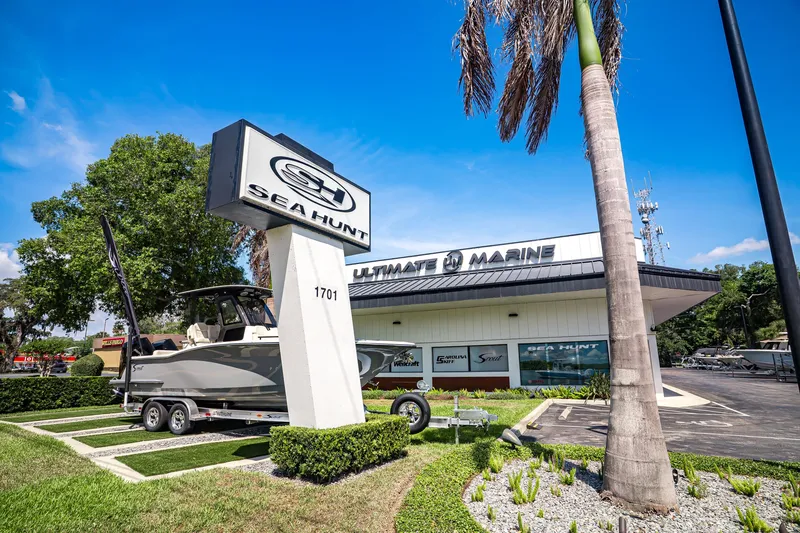
Which Sea Hunt Ultra size is right for you?
The Ultra runs from a 21-foot single-engine boat you can tow behind an SUV to a 30-foot twin-engine boat for offshore days. Here's what changes at each size, and how to match one to your crew, your water and your driveway.
In this article
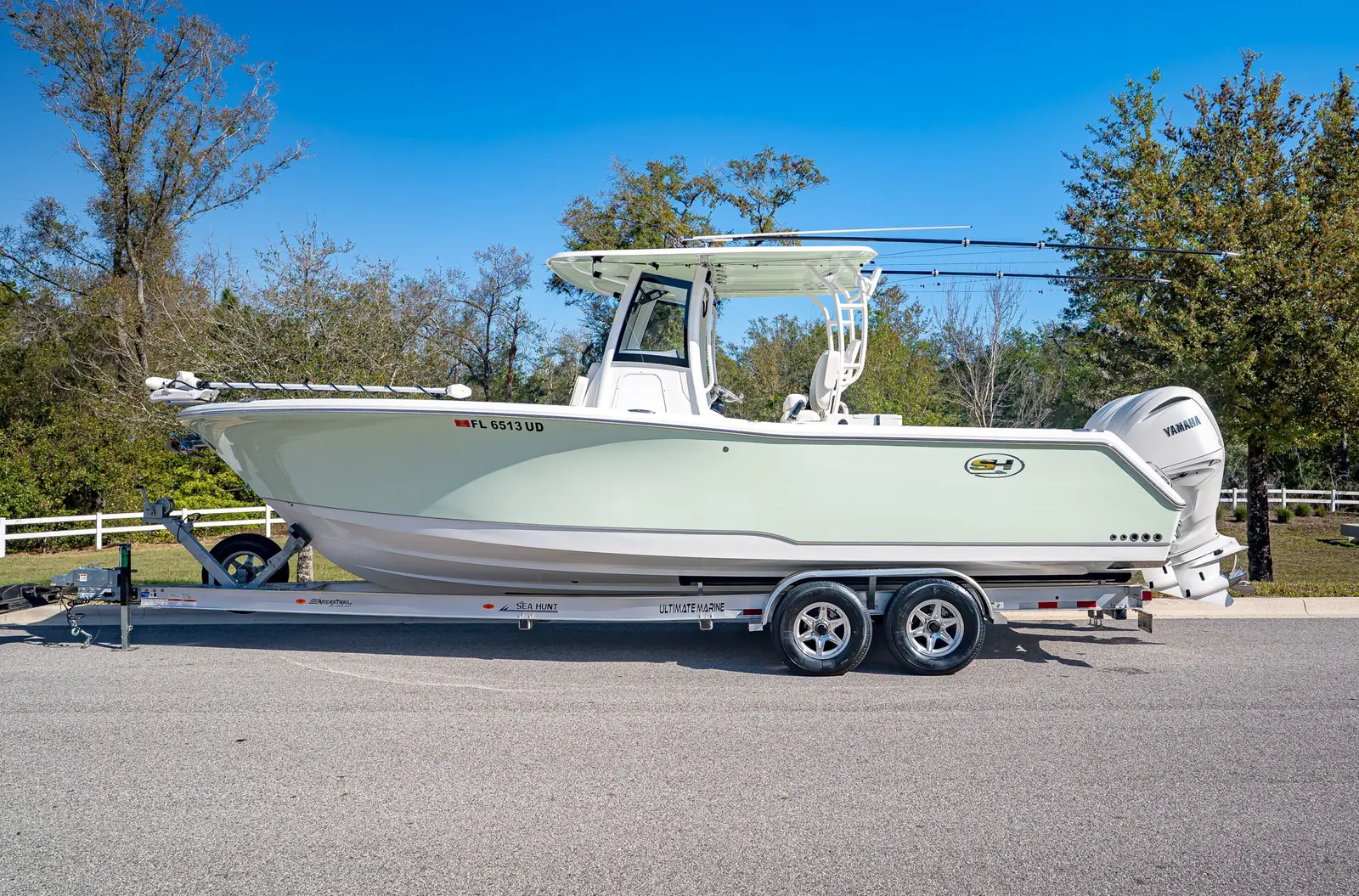
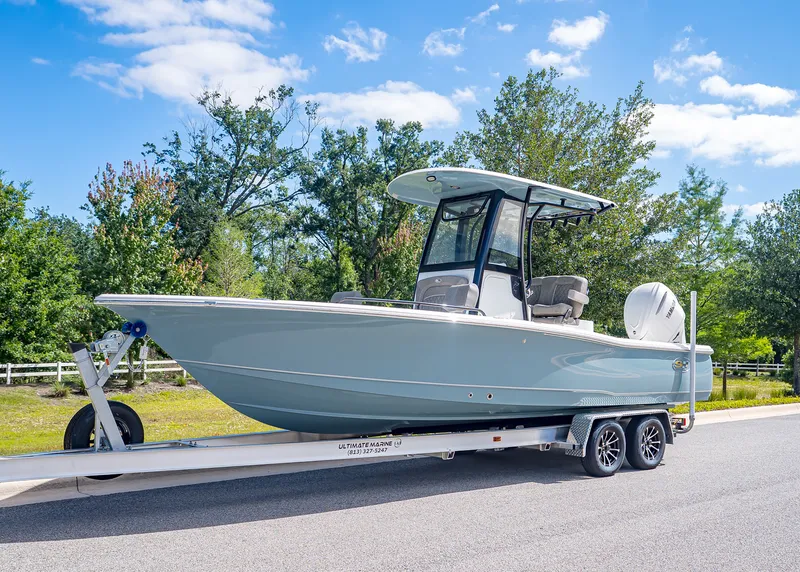
- Towing it yourself on a regular trailer? The 219 through the 245 SE are 8′ 6″ wide or less, inside Florida's 102-inch road limit.
- The 255 SE is the biggest single-engine Ultra. From the 265 SE up, every Ultra runs twin outboards and a sharper 21-degree-plus hull.
- Pick for the trip you take most weekends, then check beam, dry weight and draft against how you'll store and launch it.
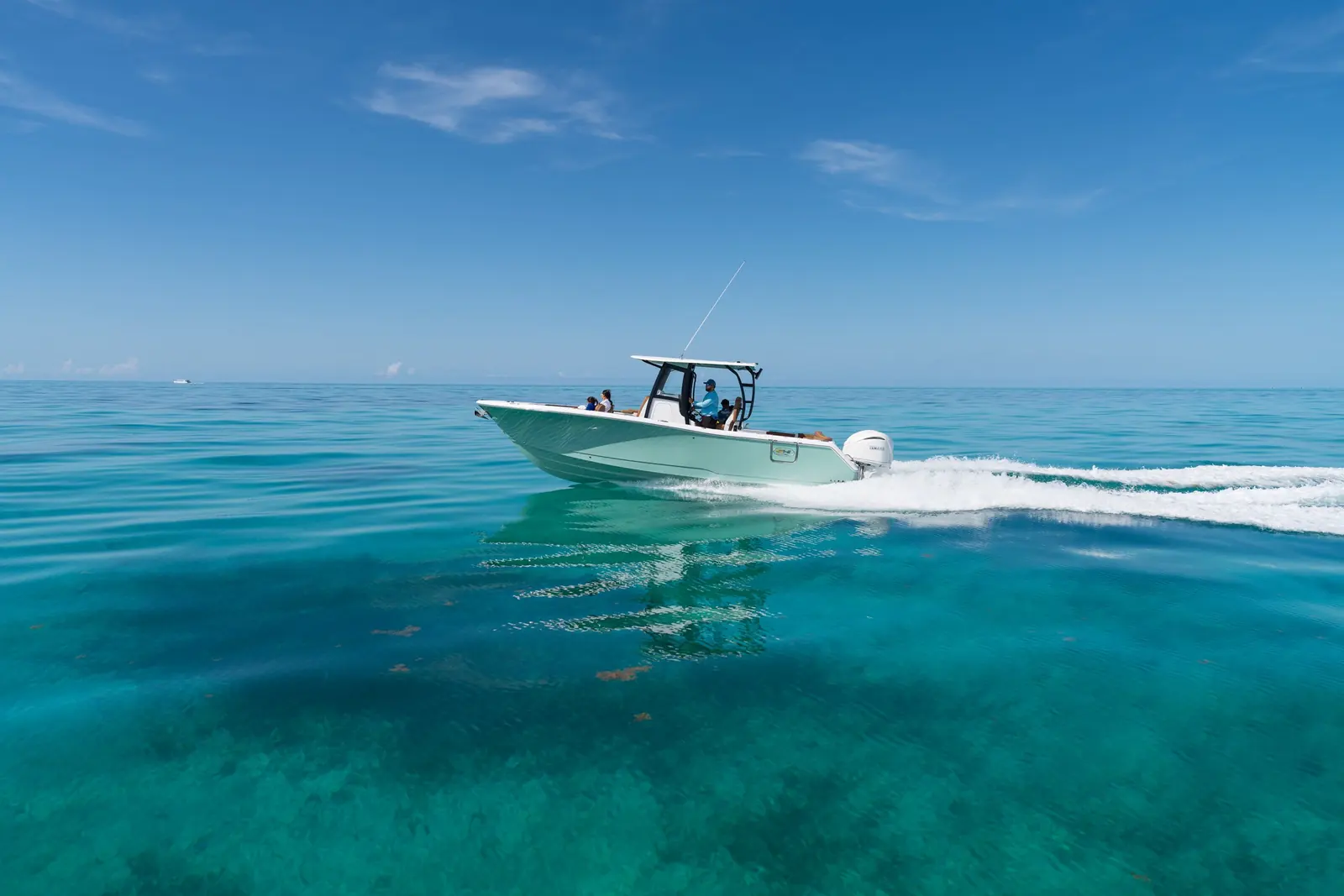
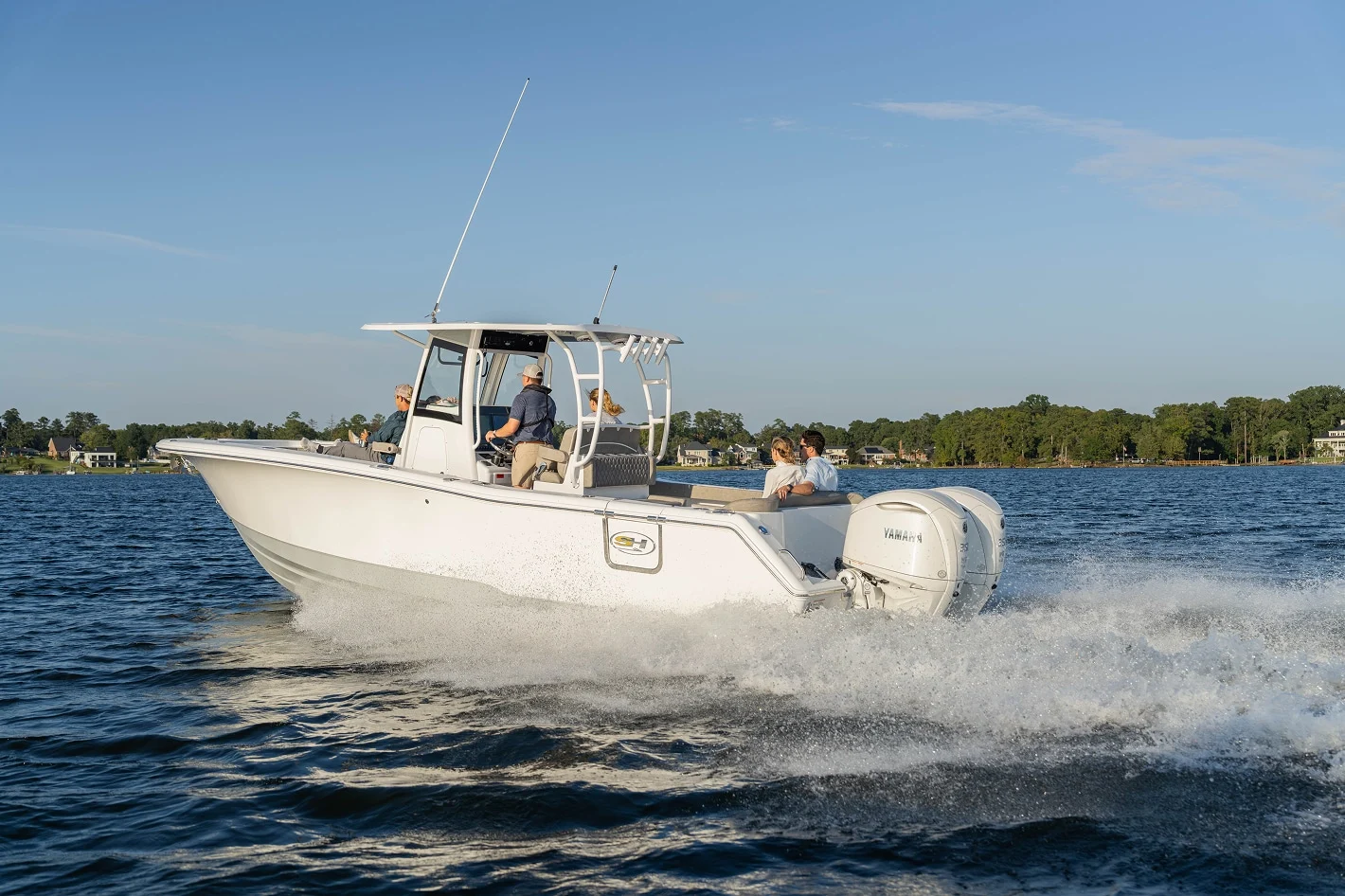
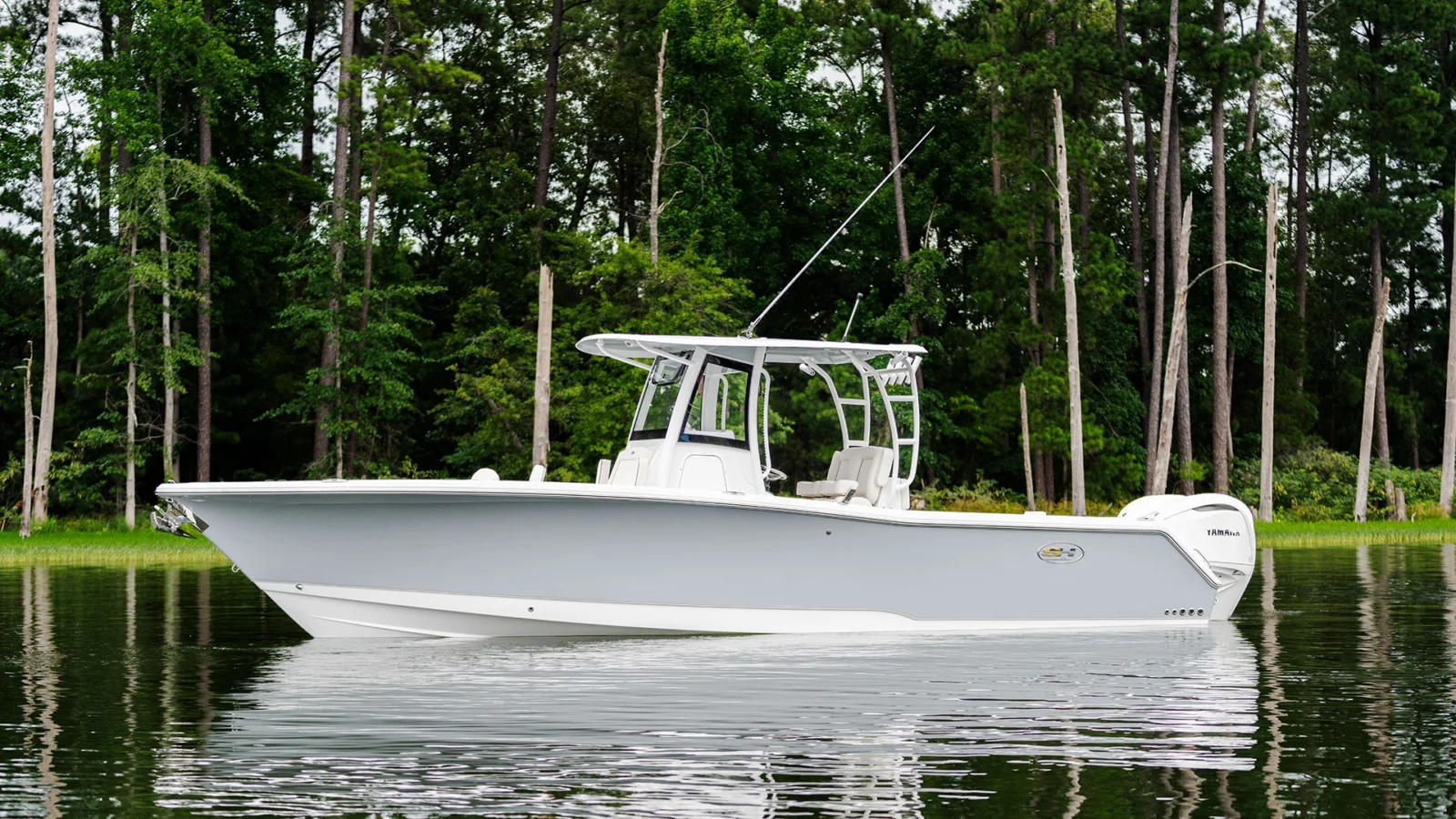
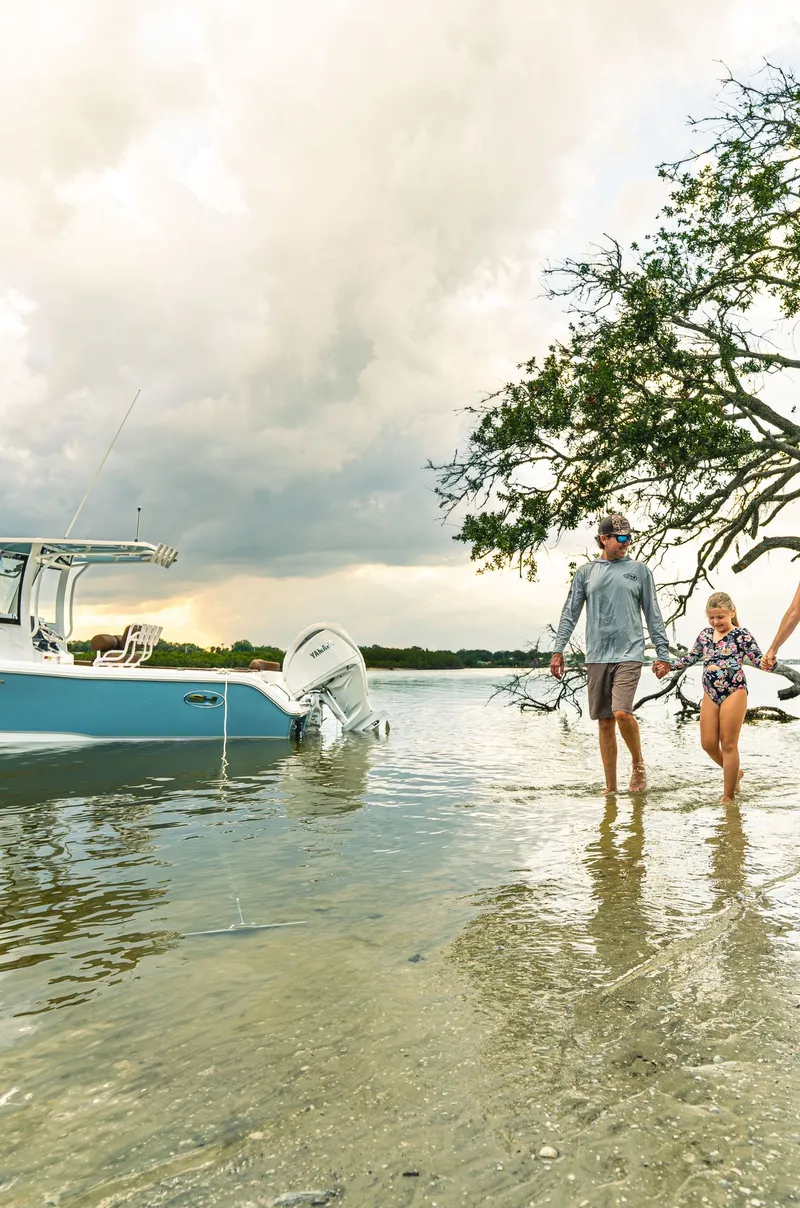
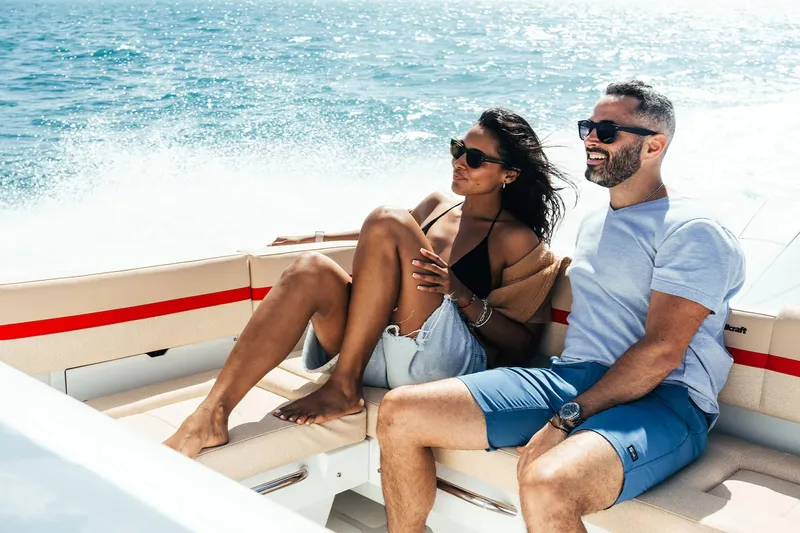
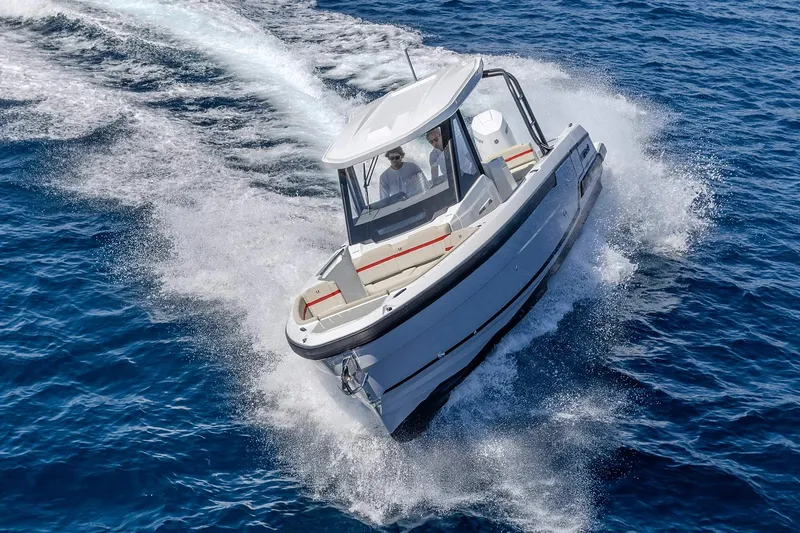
The Sea Hunt Ultra is Sea Hunt's family center console. Every Ultra has bow seating, a livewell and rod storage, so it can do a sandbar Saturday and a fishing Sunday. What changes with size is how many people fit without crowding, how much chop you can take on comfortably, how far you can run, and how you'll keep the boat between trips.
There are currently 15 Ultras: the eleven SE and base models below, plus a sun-lounge SL version of the 265, 275, 285 and 305 on the same hulls. Two pairs share a hull, so the table has nine rows, from the 21′ 4″ Ultra 219 to the 30′ 2″ Ultra 305 SE. Specs and standard equipment can change between model years.
A good family fishing boat has to do two jobs at once. For the family: seating with backrests, shade from a T-top, and a toilet once days get long. For the fishing: a livewell, rod storage and enough open deck for two or three people to cast. Most center consoles lean one way. The Ultra keeps both, and the balance shifts with size: the smaller Ultras favor sandbar days, while the 275 SE adds a second livewell and the 285 SE adds a 40-gallon livewell and two 200-quart fish boxes.
If your crew will rarely fish, read bowrider vs center console before you pick a size.
Compare every Sea Hunt Ultra size
| Model | Length | Beam | Draft | Max power | Fuel | Dry weight | Standard engine |
|---|---|---|---|---|---|---|---|
| Ultra 219 | 21′ 4″ | 8′ 3″ | 13″ | 200 hp | 60 gal | 2,350 lb | Yamaha F150 |
| Ultra 229 | 22′ 8″ | 8′ 6″ | 13″ | 250 hp | 83 gal | 2,600 lb | Yamaha F150 |
| Ultra 234 and 235 SE | 23′ 7″ | 8′ 6″ | 13″ | 250 hp | 96 gal | 2,800 lb (234), 3,800 lb (235 SE) | Yamaha F200 |
| Ultra 239 SE and 245 SE | 24′ 3″ | 8′ 6″ | 14″ | 300 hp | 96 gal | 3,900 lb | Yamaha F300 |
| Ultra 255 SE | 24′ 11″ | 8′ 9″ | 14″ | 350 hp | 120 gal | 4,600 lb | Yamaha F300 |
| Ultra 265 SE | 26′ 5″ | 9′ 2″ | 21″ | 400 hp | 145 gal | 5,800 lb | Twin F150 |
| Ultra 275 SE | 27′ 6″ | 9′ 6″ | 21″ | 500 hp | 180 gal | 6,600 lb | Twin F200 |
| Ultra 285 SE | 28′ 6″ | 9′ 9″ | 21″ | 600 hp | 180 gal | 6,800 lb | Twin F300 |
| Ultra 305 SE | 30′ 2″ | 9′ 9″ | 22″ | 700 hp | 230 gal | 7,000 lb | Twin F300 |
Specs from Sea Hunt's model pages, checked Oct 31, 2026. Max power is the total the transom is rated for. Dry weight leaves out fuel, gear and trailer.
Read the table in three bands. The four boats from 21 to 23 feet all draw 13 inches, weigh under 4,000 pounds dry and carry one outboard. They are the easiest to tow, launch and store at home. The 24- to 25-foot boats keep one engine but step up to a 300- or 350-horsepower rating and add more standard comfort. From the 265 SE on, the beam passes nine feet, the draft jumps to 21 inches or more, and every boat comes with twin Yamahas.
Two columns deserve a second look before you fall for a layout. Beam decides whether the boat fits Florida's 102-inch road-width limit on a trailer, and only the 219 through the 245 SE do. Dry weight is the starting point for your tow vehicle math, not the end of it: gasoline weighs roughly six pounds a gallon, so 96 gallons in a 234 adds close to 600 pounds before coolers, people and the trailer itself. Sea Hunt doesn't publish passenger capacity on these model pages, so check the boat's capacity information with us before you plan around a headcount.
What changes as an Ultra gets bigger?
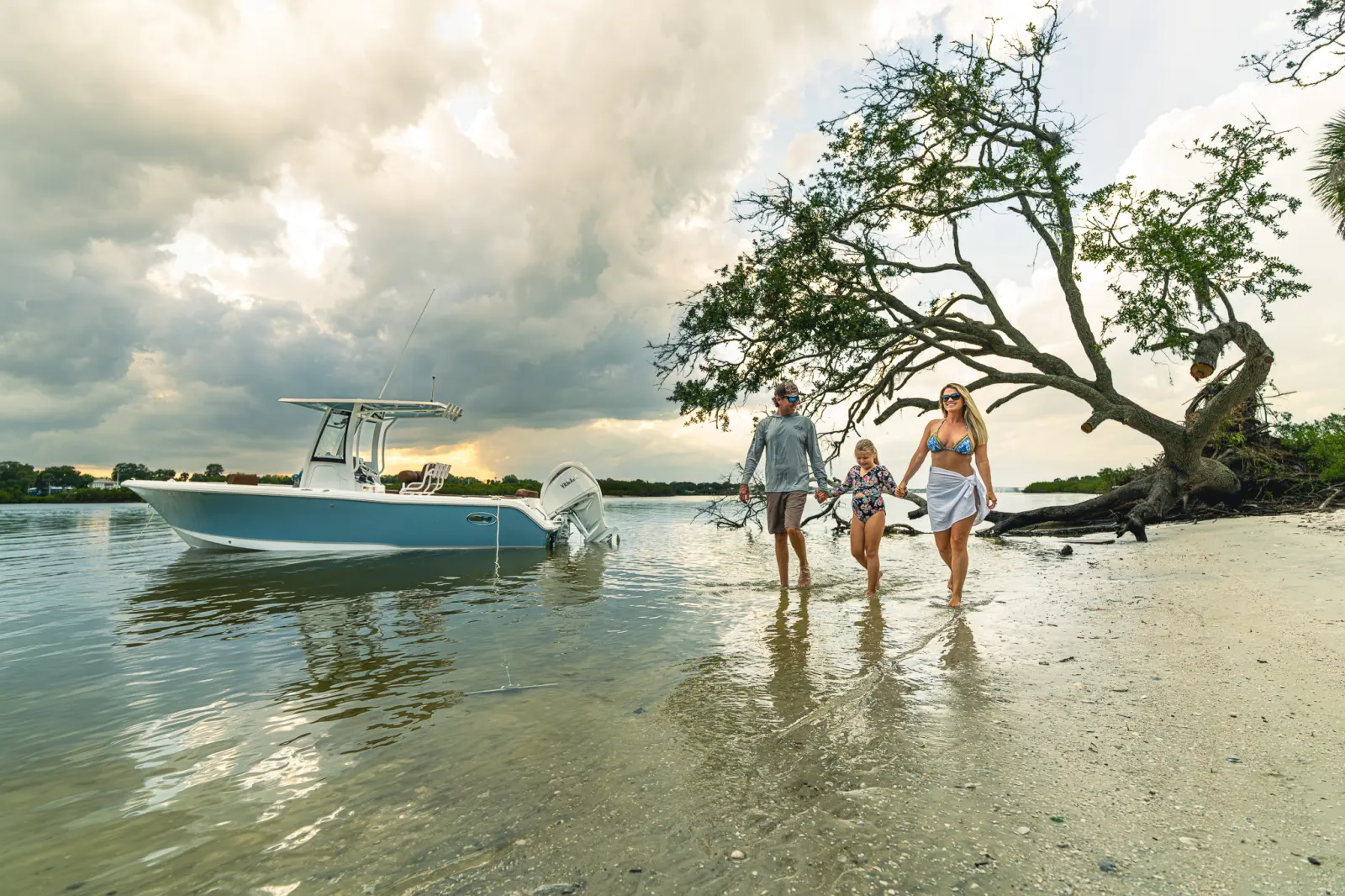
Hull shape. Each hull has three listed deadrise angles, and higher numbers mean a sharper V. The 219 lists 16/20/55. The 229 through the 245 SE list 18/22/55, the 255 SE 18/24/55, and the 265 SE and 275 SE 21/24/60. The 285 SE and 305 SE list 21/23/60. Here is what that feels like, as an example. On a glassy morning in the Indian River Lagoon, the 219 is quick onto plane, steady when two people stand at one rail and easy on fuel. Run it out Ponce Inlet into a 2-foot afternoon sea breeze chop and the flatter sections slap; you'll slow down and trim up. A 265 SE in the same chop cuts through with less pounding, but it rolls more at anchor and needs more power to get going.
Draft. Every Ultra up to the 255 SE draws 13 or 14 inches. That lets you nose into a sandbar at Disappearing Island or slide up to a lagoon spoil island on a falling tide. The twin-engine Ultras draw 21 or 22 inches, so you'll anchor off a little farther and wade in, and you'll pay closer attention to the tide chart at shallow ramps.
Fuel and range. Tank size grows faster than length: 60 gallons on the 219, 96 on the 234, 180 on the 275 SE and 230 on the 305 SE. More fuel doesn't mean you should run farther; it means you can run offshore with a proper reserve. Plan every trip by thirds: a third out, a third back and a third in reserve.
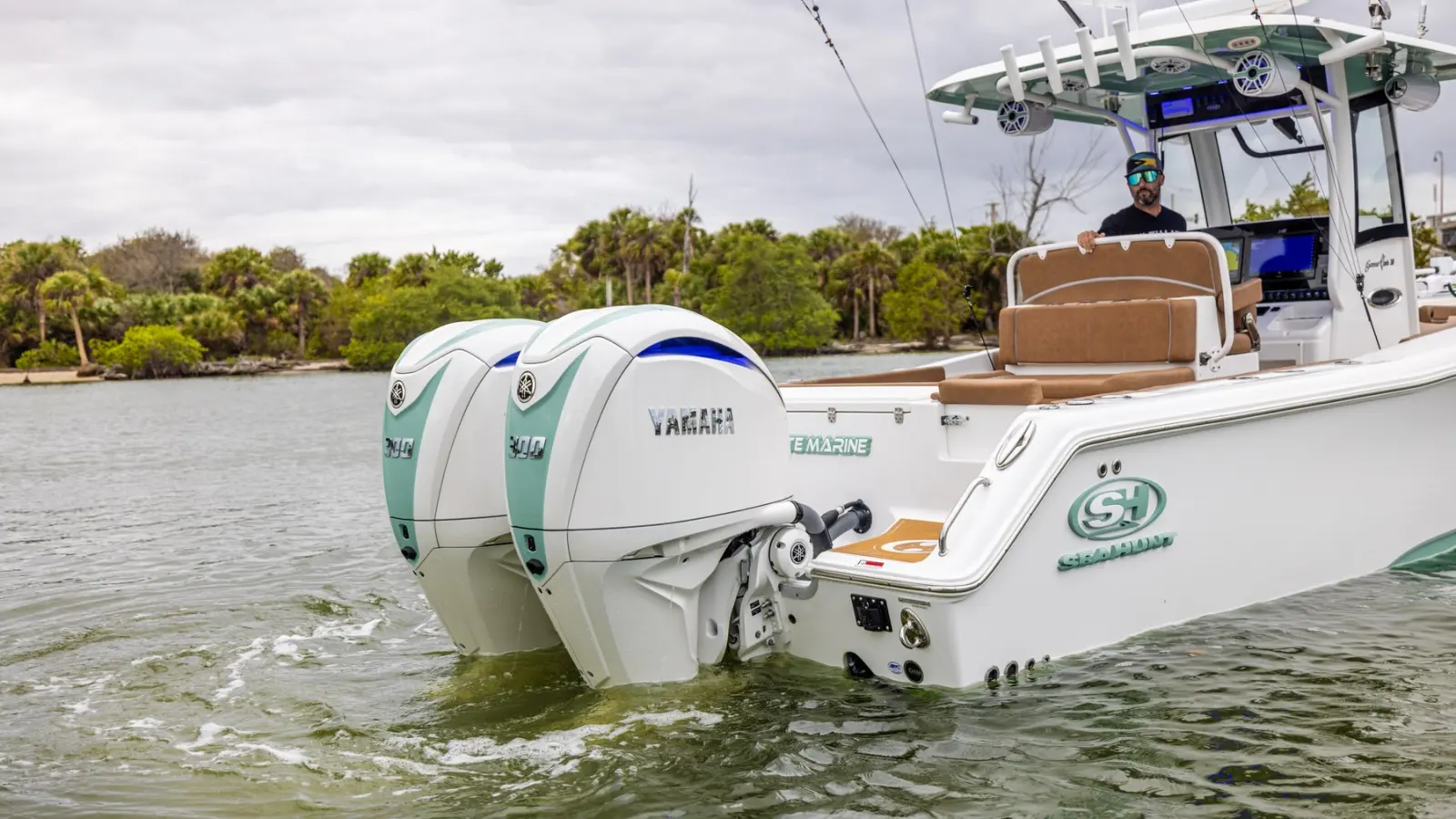
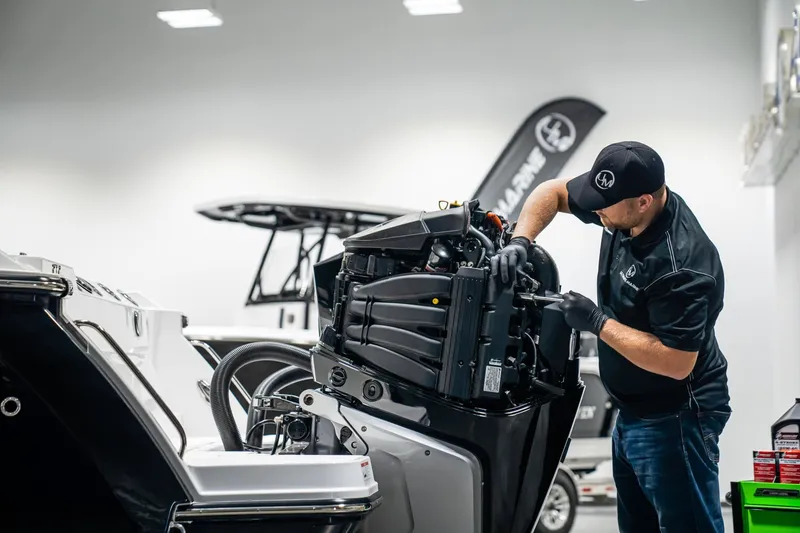
Engines. One outboard is simpler and cheaper to maintain, and the single-engine Ultras are easier for a new owner to dock. Twins give you a way home if one engine quits and let you pivot the boat in a tight marina by running the engines in opposite gears. They also double the service list.
21 to 23 feet: Ultra 219, 229, 234 and 235 SE
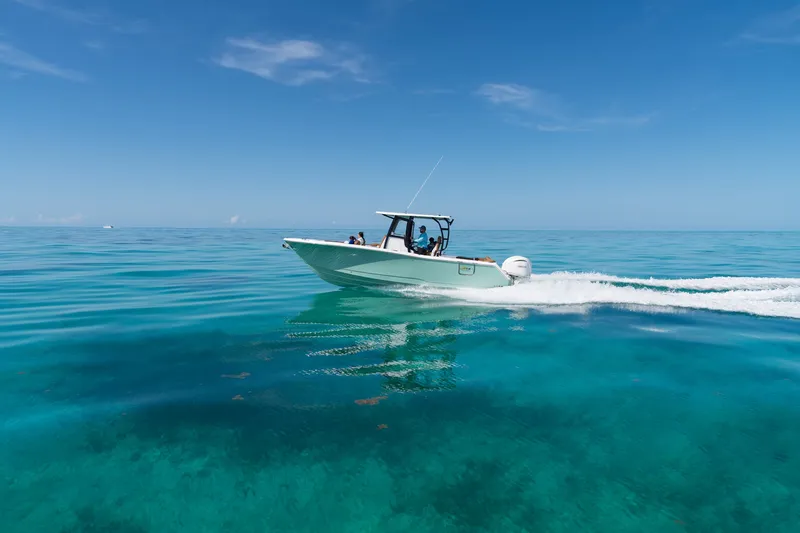
These are the Ultras most families start with. All four are 8′ 6″ wide or narrower, so they tow on a standard trailer without a width permit, and their 13-inch draft opens up the lagoon, the Intracoastal and the backcountry. They suit sandbar trips, bay fishing and nearshore runs on calm mornings. On a day with a small craft advisory, they stay inside.
1. Ultra 219
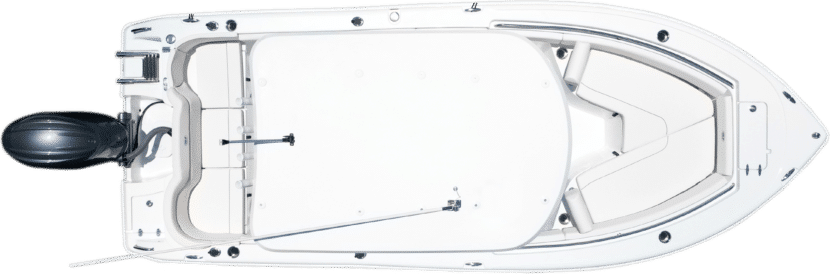
Layout. The smallest Ultra is 21′ 4″ with an 8′ 3″ beam. Bow cushions, backrests and bolsters turn the front of the boat into seating, and an aluminum leaning post with captain's chairs sits behind the console. Storage is 110 and 70 quarts under the bow seats plus a 48-quart console box, and there's a 15-gallon livewell.
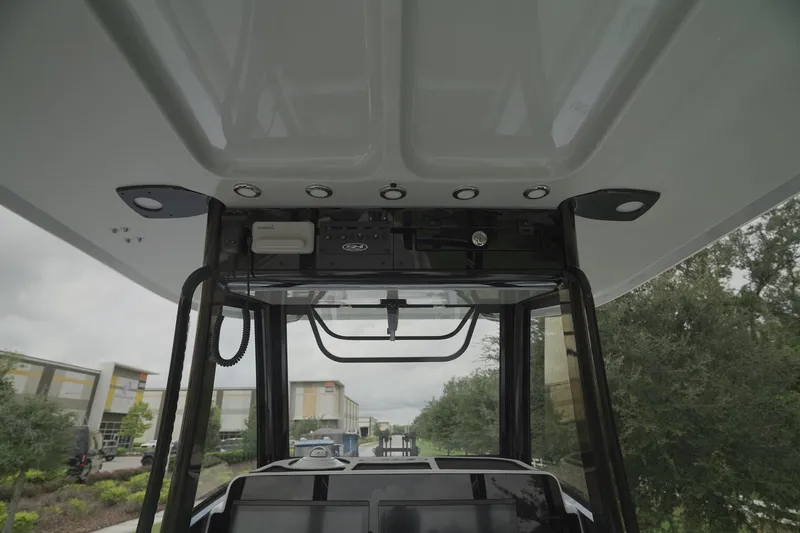
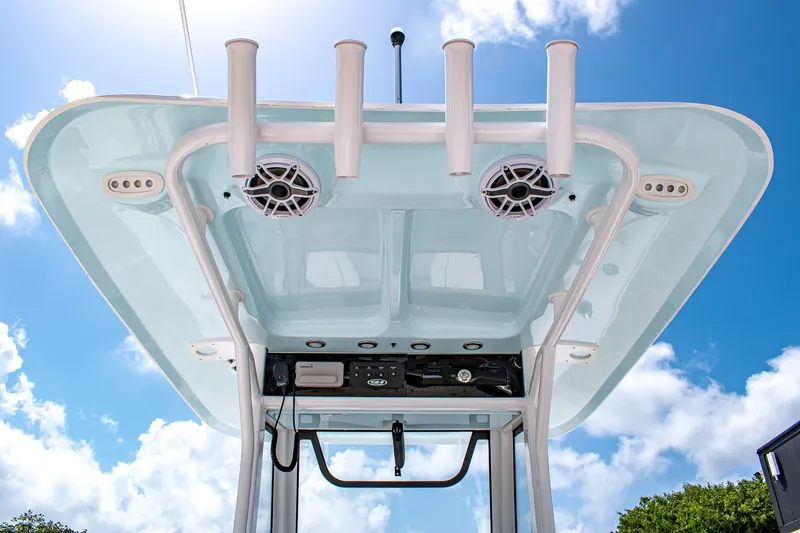
What comes standard. A Yamaha F150 (the transom is rated to 200 hp), hydraulic steering, a 9-inch Garmin with VHF, a Bluetooth stereo and a wireless phone charger. A fiberglass T-top, trim tabs, a Porta Potti, a freshwater system and a ski tow bar are options, so price the boat the way you'll actually use it. In Florida sun, most families add shade.
On Florida water. At 2,350 pounds dry, it's the lightest Ultra and the one a mid-size SUV or half-ton truck has the best chance of handling once the trailer and fuel are added. It's at home on Mosquito Lagoon, the Banana River and the protected parts of Tampa Bay. Its 60-gallon tank and flatter hull make it a fair-weather nearshore boat rather than an offshore one.
The lightest, narrowest Ultra, with one engine to learn and maintain.
A 234 or larger adds fuel and a sharper hull for the inlet.
2. Ultra 229
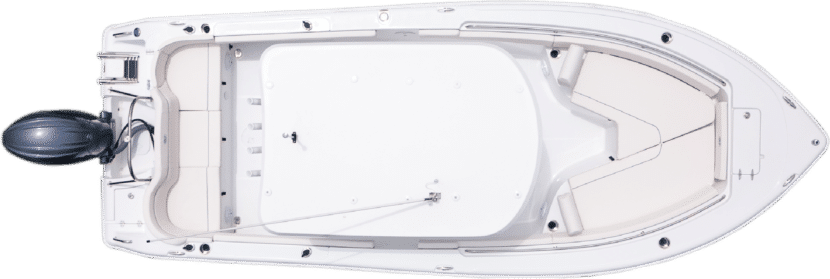
Layout and standard gear. The 229 is 22′ 8″ with an 8′ 6″ beam and the same bow storage, livewell, aluminum leaning post and electronics as the 219. It also starts with a Yamaha F150, but its transom takes up to 250 hp, and its fuel jumps to 83 gallons. The hull steps up to the 18/22/55 deadrise of the larger small-band boats. Sea Hunt offers a bait-tank leaning post on it, which matters if you fish live bait for snook and reds.
Next to its neighbors. It's the middle ground: more length, fuel and hull than the 219 at only 250 pounds more dry weight, but less deck than the 234. If you plan to repower or order a bigger engine, the 250-hp rating gives you room the 219 lacks.
3. Ultra 234
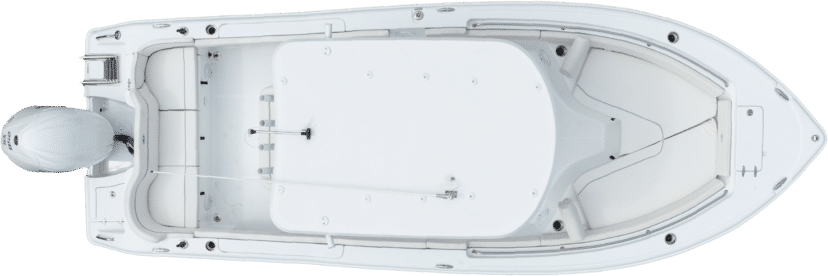
Layout. The 234 is 23′ 7″ long and 8′ 6″ wide, with bigger bow storage (140 and 92 quarts) and more open deck than the 229. That space is what three or four people casting at once will notice. Sea Hunt offers three leaning-post choices on it: an entertainment post, a bait-tank post and a fiberglass mezzanine post.
What comes standard. A Yamaha F200, 96 gallons of fuel, the 15-gallon livewell, a 9-inch Garmin with VHF and full bow cushions. Like the 219 and 229, the T-top and trim tabs are on the options list.
On Florida water. This is the most flexible boat in the small band. It still draws 13 inches for the flats, it carries enough fuel to fish the nearshore reefs off Sebastian Inlet on a decent day, and at 2,800 pounds dry it stays a realistic tow for a full-size truck or large SUV. It sits right at the 8′ 6″ width limit, so measure the whole rig, trailer fenders included.
Deck room, 96 gallons and a 13-inch draft in a towable package.
The 235 SE is the same hull with those included.
4. Ultra 235 SE
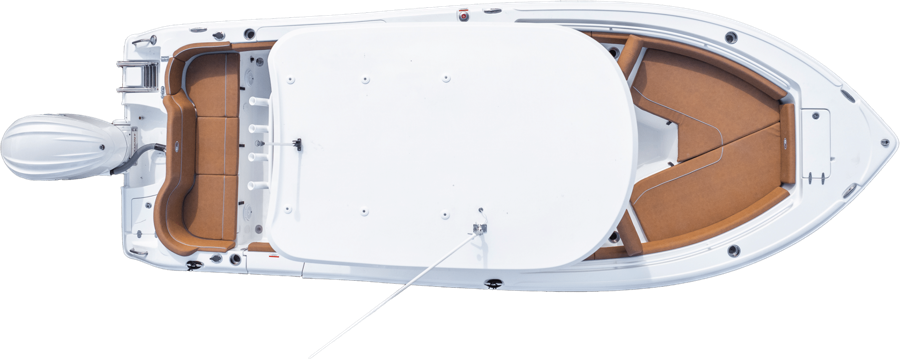
What SE adds. The 235 SE shares the 234's length, beam, draft and fuel, but it comes with a fiberglass T-top with a mister system, a side entry door, Bennett trim tabs, underwater LED lights and a 10-gallon freshwater system as standard. Sea Hunt lists its dry weight at 3,800 pounds, a full 1,000 pounds more than the 234, so it's worth asking us to confirm the figure for the model year you're looking at.
Who it suits. Families with young kids or older passengers get the most from it: shade from the first trip, a door for boarding from the water or a dock, and a freshwater rinse for sandy feet. Check your tow vehicle against that listed weight, and choose the 234 if you'd rather add equipment one piece at a time.
24 to 25 feet: Ultra 239 SE, 245 SE and 255 SE
The middle band is where the Ultra starts to feel like a step-up boat. Each of these comes with a Yamaha F300, electric steering, a 12-inch Garmin with VHF, Yamaha's CL5 touchscreen display, a T-top and trim tabs. They suit families who fish most weekends and want to handle a choppy day on Tampa Bay or a run outside to the nearshore reefs without changing boats.
5. Ultra 239 SE and 245 SE
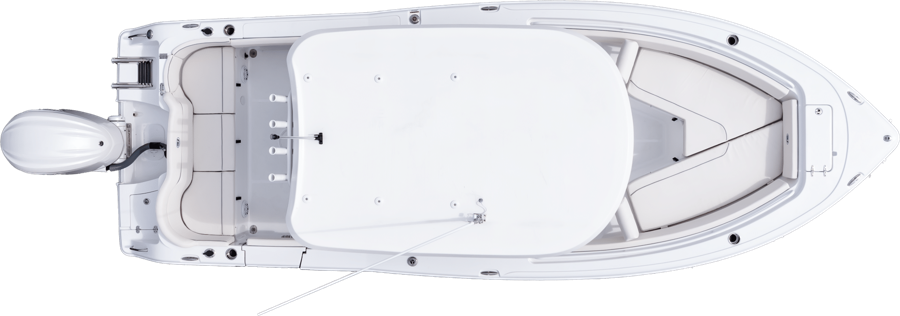
Layout. The two share the same 24′ 3″ by 8′ 6″ hull, with a 14-inch draft, 96 gallons of fuel, a 300-hp rating and a 3,900-pound dry weight. Both come with a mezzanine leaning post with captain's chairs, a side entry door, underwater lights, a dual battery switch and the 15-gallon livewell.
The difference. The 245 SE adds a China toilet and a windlass anchor to the 239 SE's standard list. A toilet decides more family boating plans than most buyers expect, especially on a long sandbar day. A windlass means nobody hauls the anchor by hand at the end of the day.
On Florida water. These are the longest Ultras that still fit the 8′ 6″ width limit, which makes them the biggest family Ultras you can tow without a permit. The F300 is a lot of engine for this size of hull; it gives you the reserve to get on plane with a full crew and keep a steady speed in a head sea.
Big power, full SE gear and an 8′ 6″ beam.
Both carry the same 96 gallons as the 234.
6. Ultra 255 SE
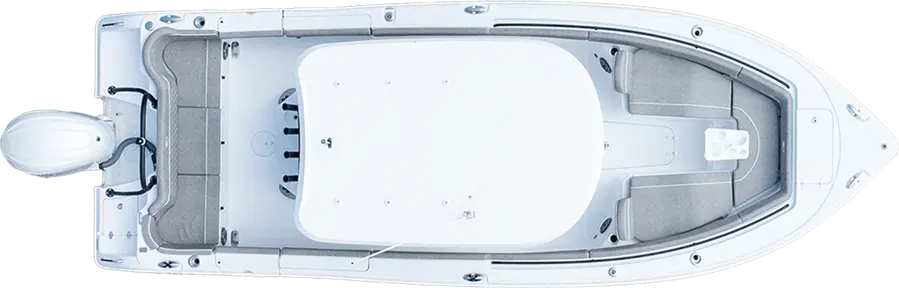
Layout. The 255 SE is 24′ 11″ with an 8′ 9″ beam and an 18/24/55 hull. The bow gets a contoured cushion, a beverage center and two 148-quart storage boxes, and there's a 188-quart in-floor locker. Dual side entry doors, a 60-quart mezzanine cooler, a 40-quart aft insulated box, a 10-gallon livewell and a 19-gallon freshwater system round it out.
What comes standard. A single Yamaha F300 (an F350 is optional on a 350-hp transom), 120 gallons of fuel, a toilet and a windlass anchor. It's the biggest Ultra on one engine.
On Florida water. The extra fuel and deeper V make it a comfortable nearshore boat for a family that also fishes the reefs off Port Canaveral on a good day. It still draws 14 inches. At 8′ 9″, though, it's wider than the road limit, and at 4,600 pounds dry it needs a truck rated for the loaded weight. Plenty of owners keep one on a lift or in a dry stack marina.
The roomiest single-engine Ultra, with 120 gallons.
Its 8′ 9″ beam needs an oversize permit on Florida roads.
26 to 30 feet: Ultra 265 SE, 275 SE, 285 SE and 305 SE
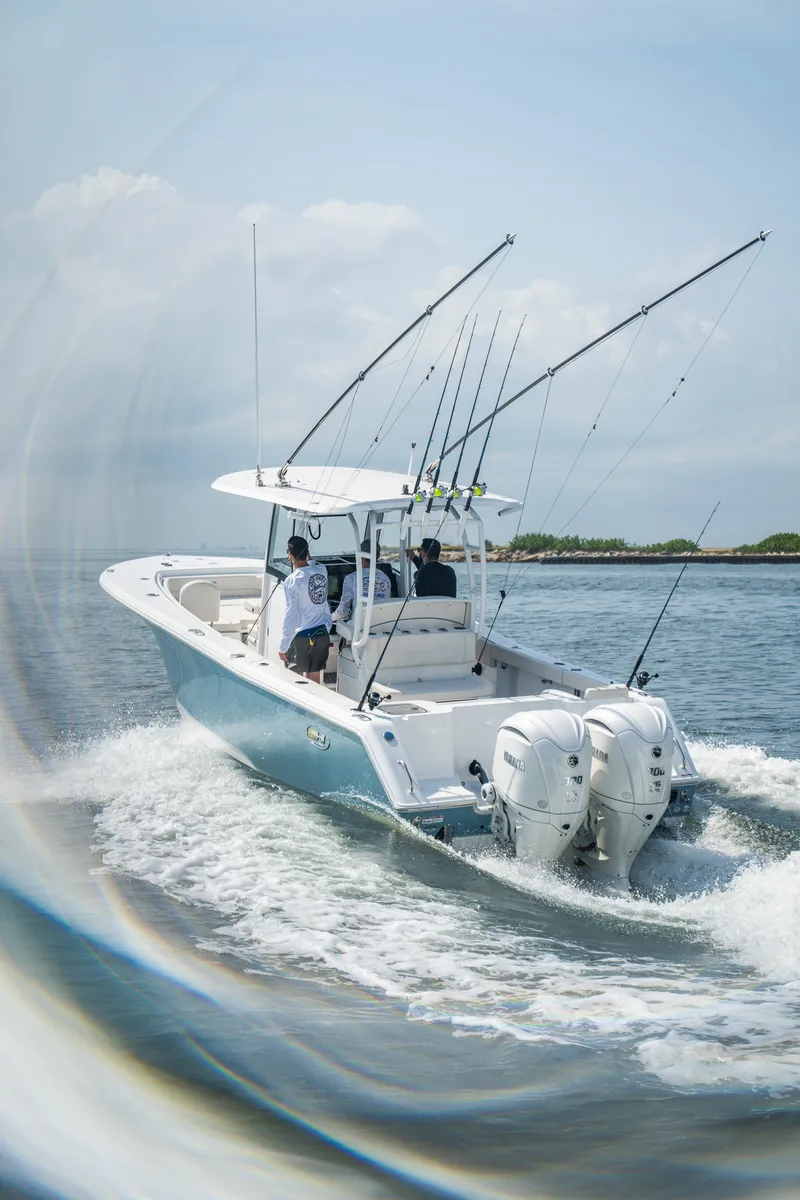
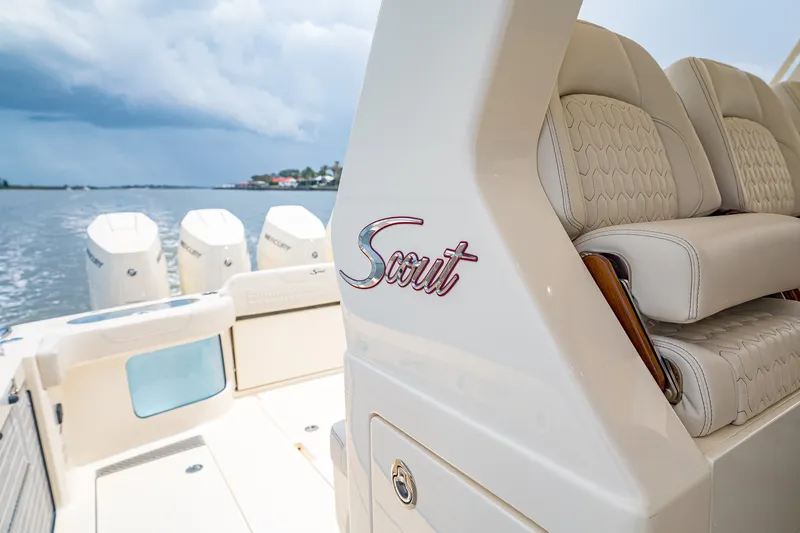
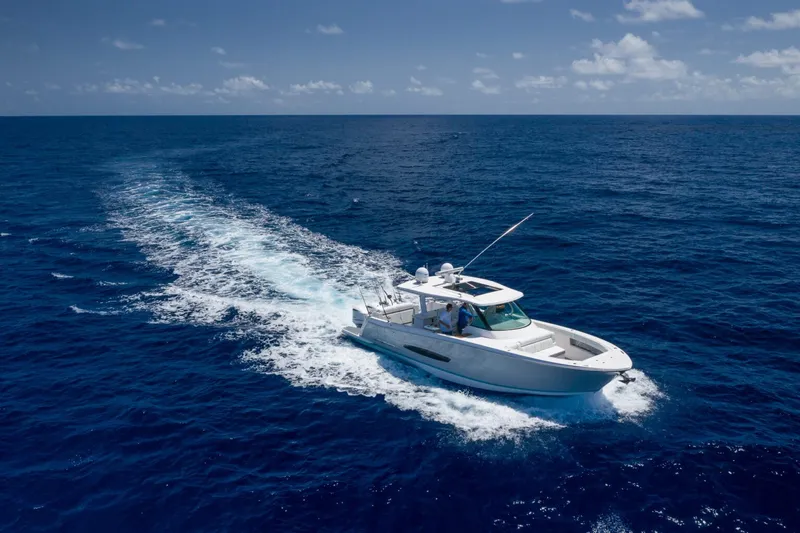
The four biggest Ultras come with twin outboards, a dual side entry door layout, a telescoping bow table, a toilet and a windlass. They also share a sharper 21-degree hull and a draft of 21 inches or more. These boats are for families who host bigger groups, run offshore when the weather allows, or want the security of a second engine.
7. Ultra 265 SE
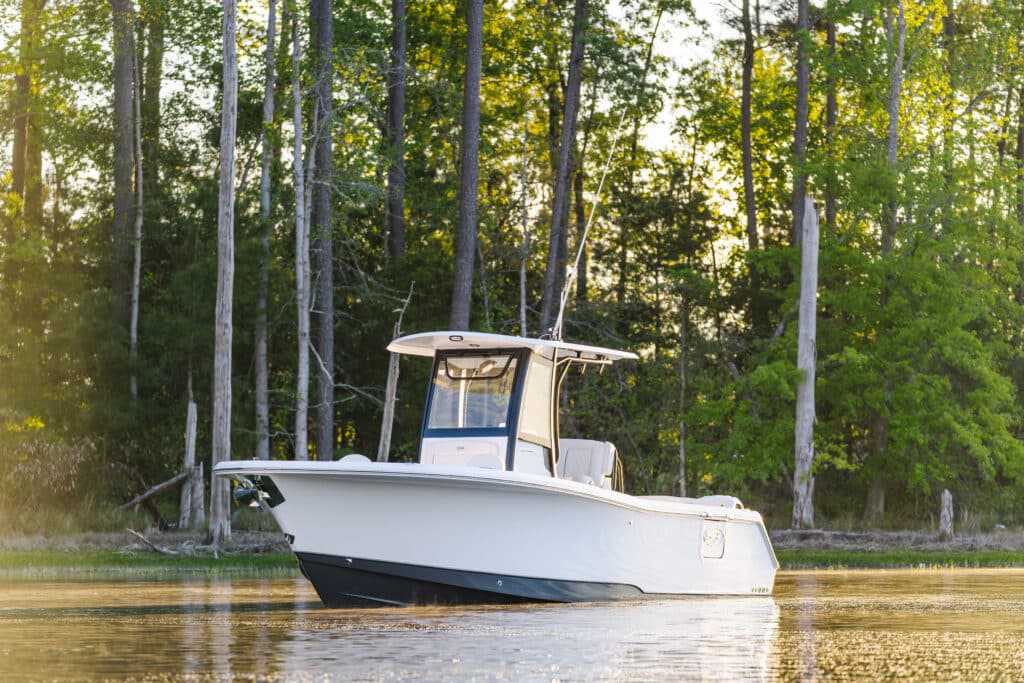
Layout. At 26′ 5″ with a 9′ 2″ beam, the 265 SE adds real width to the cockpit. Bow seating wraps two 148-quart storage boxes, the telescoping table turns the bow into a lunch spot, and the helm is backed by a mezzanine leaning post.
What comes standard. Twin Yamaha F150s (twin F200s are optional on a 400-hp transom), 145 gallons of fuel, a 10-gallon livewell, a 40-quart insulated box at the stern, a 12-inch Garmin with VHF and the CL5 display. Yamaha's Helm Master joystick system is optional.
On Florida water. It's the entry point to twin-engine Ultras and the size where a family can plan a calm-day run to the reefs off Port Canaveral or the Gulf ledges off Tampa Bay with a real fuel reserve. At 5,800 pounds dry and 9′ 2″ wide, most owners keep it on a lift, in a slip or in dry stack rather than in the driveway.
The smallest twin-engine Ultra.
It draws 21 inches; the 255 SE draws 14.
8. Ultra 275 SE
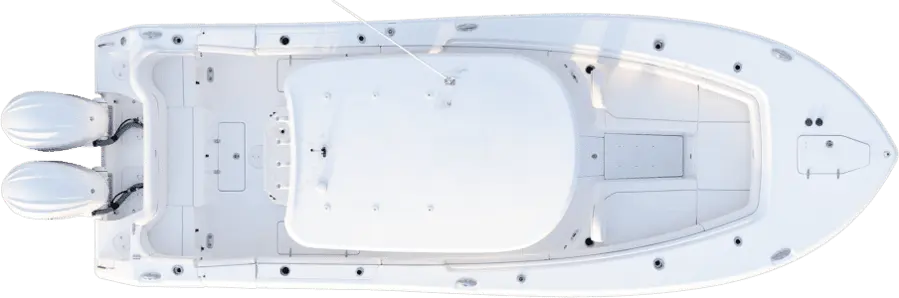
Layout and standard gear. The 275 SE is 27′ 6″ with a 9′ 6″ beam, on the same 21/24/60 hull angles as the 265 SE. It comes with twin Yamaha F200s (twin F250s optional), 180 gallons of fuel, and two livewells: the 10-gallon well plus a 20-gallon well in the mezzanine leaning post.
Who it suits. The extra length and fuel make it the Ultra for a bigger family that fishes offshore more than occasionally. The second livewell is the tell: it carries enough bait for a morning of kingfish off Port Canaveral and still has the bow table for lunch at the sandbar.
9. Ultra 285 SE
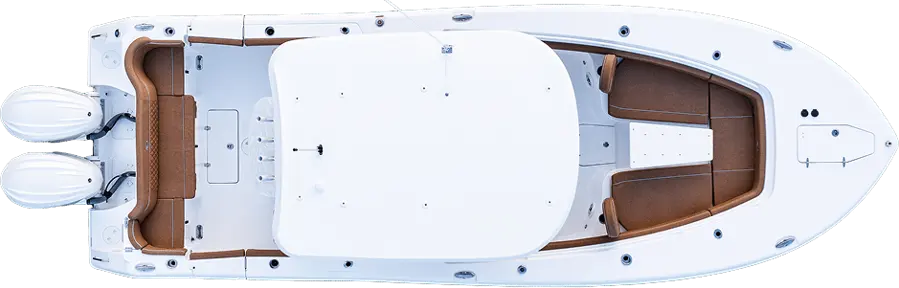
Layout and standard gear. At 28′ 6″ and 9′ 9″ wide, the 285 SE is the most fishing-focused Ultra. It has a fiberglass mezzanine leaning post with a 40-gallon livewell, two 200-quart fish boxes and 198-quart bow storage on each side. Twin Yamaha F300s, dual 17-inch Garmin displays with VHF and a Yamaha autopilot come standard.
Who it suits. A family where at least one person fishes offshore seriously. The fish boxes and big livewell put it close to a dedicated fishing boat, while the bow seating and table keep the family side. A battle-station leaning post is optional.
10. Ultra 305 SE
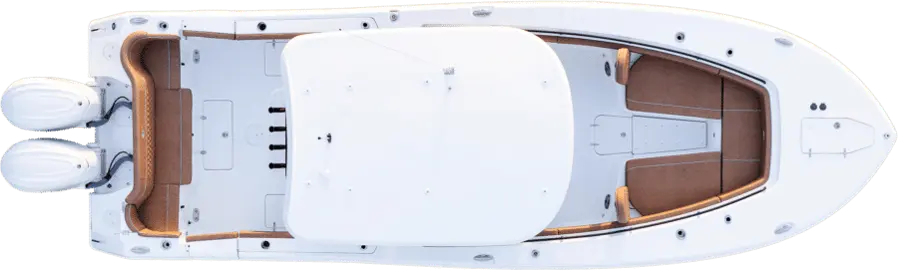
Layout and standard gear. The top of the line is 30′ 2″ with a 9′ 9″ beam, 230 gallons of fuel and a 700-hp rating. It comes with twin Yamaha F300s (twin F350s optional), dual 17-inch Garmin displays, a Yamaha autopilot and an Ultra Entertainment leaning post. A Seakeeper package is optional to reduce roll.
Who it suits. Families who entertain a full boat, take long runs along the coast or to the Keys, and want the most range in the line. It's also a dock or dry-stack boat for almost everyone: at 7,000 pounds dry before fuel, towing it is a serious undertaking.
230 gallons, twin power and a 30-foot deck.
The 285 SE has the bigger livewell and fish boxes as standard.
Which Ultra sizes can you tow at home?
| Size band | Beam | Dry weight | How most owners keep it |
|---|---|---|---|
| 219 to 245 SE | 8′ 3″ to 8′ 6″ | 2,350 to 3,900 lb | Trailer at home or a lift; no width permit needed |
| 255 SE | 8′ 9″ | 4,600 lb | Lift or dry stack; oversize permit to trailer |
| 265 SE to 305 SE | 9′ 2″ to 9′ 9″ | 5,800 to 7,000 lb | Lift, slip or dry stack; trailering needs an oversize permit |
Beam and dry weight from Sea Hunt's model pages. Width limit from Fla. Stat. 316.515.
Florida law caps a vehicle and its load at 102 inches (8′ 6″) wide, so anything from the 255 SE up needs an oversize permit to trailer; check FDOT's permit rules first. For a towable Ultra, add fuel, gear and the trailer to the dry weight and compare it to your vehicle's rating. Dry stacks set their own length, beam and weight limits, so call before you buy. Our storage guide, routine maintenance guide and hurricane prep checklist cover upkeep.
Which Ultra size fits your family?
- Count your usual crew, not your biggest day.Plan around the four or six people who come most weekends. A boat sized for the once-a-year crowd costs more to run every other trip.
- Name your water.Lagoon, Intracoastal and bay days point to the 13- and 14-inch drafts of the smaller Ultras. Regular runs out an inlet point to 24 feet and up.
- Decide how you'll store it.A home trailer means 8′ 6″ or less. A lift, slip or dry stack opens up the whole line.
- Choose one engine or two.One is simpler and cheaper to maintain. Two give offshore backup and easier docking.
Three examples show how this plays out. A couple with two young kids who launch at a lagoon ramp in Titusville and spend most days at a sandbar will be happy in a 234 or 235 SE; the SE's standard shade and side door get used every trip, as long as the tow vehicle handles its heavier listed weight. A family of five who fish the reefs outside Sebastian Inlet twice a month and keep the boat on a lift will get more from a 255 SE, with its 120 gallons and deeper V.
A family that hosts friends on Tampa Bay most weekends and chases kingfish offshore when the weather allows will feel the difference in a 275 SE: twin engines for peace of mind, a second livewell for bait and a bow table for the crowd. A common regret is buying one size too small for the water people actually end up running, or one size too wide for the driveway they actually have. Walk both questions before you sign.
Ask us which size fits
Tell us who comes along, where you launch and how you'll store it. We'll point you to two or three Ultras worth a look.
Questions we hear
What sizes does the Sea Hunt Ultra come in?
There are 15 Ultra models, from the Ultra 219 at 21′ 4″ to the Ultra 305 SE and 305 SL at 30′ 2″. The 219, 229, 234 and 235 SE run 21 to 23 feet; the 239 SE, 245 SE and 255 SE run 24 to 25 feet; and the 265, 275, 285 and 305, each offered as an SE and as an SL, run 26 to 30 feet. The models from the 265 up come with twin Yamaha outboards. Check the model page for current specs, since Sea Hunt updates equipment between model years.
What is the difference between the Sea Hunt Ultra and Gamefish?
Both are Sea Hunt center consoles. The Ultra is the family line: bow seating with backrests, a toilet and side doors on the SE models, and smaller livewells. The Gamefish line gives more of the deck to fishing, with larger livewells, coffin boxes and twin engines on every model. If your crew sandbars as often as it fishes, the Ultra usually fits better. If you fish offshore most weekends, compare the Gamefish of the same size.
What does SE mean on a Sea Hunt Ultra?
Sea Hunt's model pages don't spell out the letters, but the SE models come with more standard equipment. On the 235 SE, for example, a fiberglass T-top with misters, a side entry door, trim tabs, underwater lights and a freshwater system come standard, while they're options on the Ultra 234 with the same hull. Sea Hunt also lists the 235 SE heavier, at 3,800 pounds dry versus 2,800 for the 234. Compare the standard lists side by side before you choose.
Which Sea Hunt Ultra can you tow without a permit in Florida?
Florida limits a vehicle and its load to 102 inches (8′ 6″) wide. The Ultra 219 is 8′ 3″ wide and the 229, 234, 235 SE, 239 SE and 245 SE are 8′ 6″, so they fit within that limit on a properly sized trailer. The 255 SE and larger are wider and need an oversize permit to trailer on Florida roads. Also confirm that your vehicle's towing capacity covers the boat, fuel, gear and trailer combined.
What engine comes on the Sea Hunt Ultra 219?
The Ultra 219 comes standard with a single Yamaha F150, and a Yamaha F200 is optional. The transom is rated for 200 horsepower. The boat carries 60 gallons of fuel and weighs 2,350 pounds dry, making it the smallest and lightest Ultra. The F150 is plenty for lagoon and bay use with a family aboard; the F200 helps if you regularly run with a full load or into a head sea.