





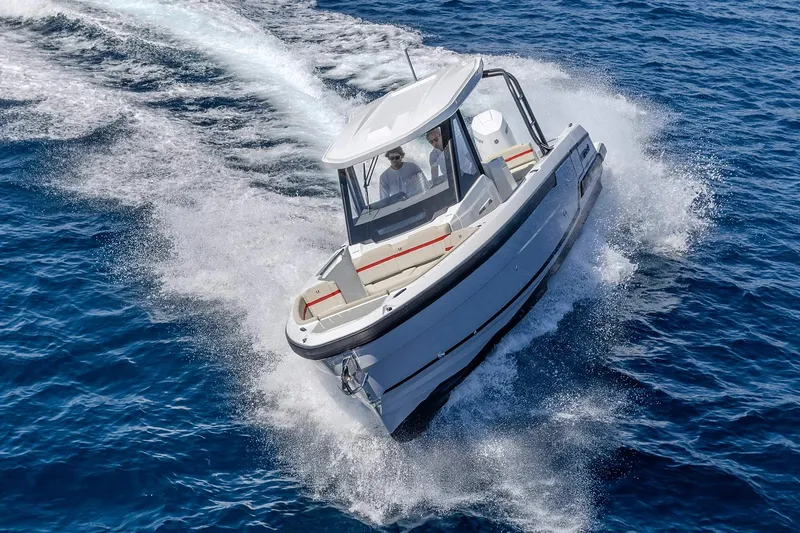

Bowrider vs center console: which fits you?
A center console puts the helm in the middle so you can walk all the way around. A bowrider puts seats in the bow for cruising with friends. Here's how to choose.
In this article
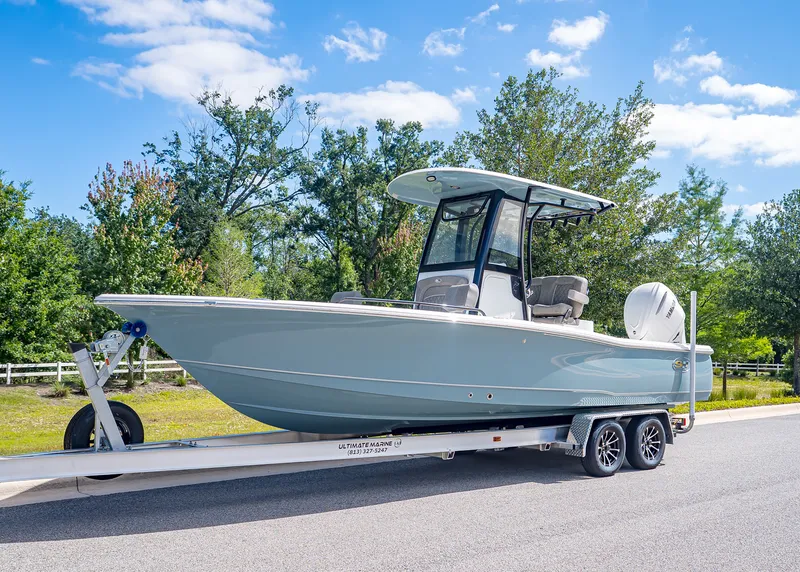
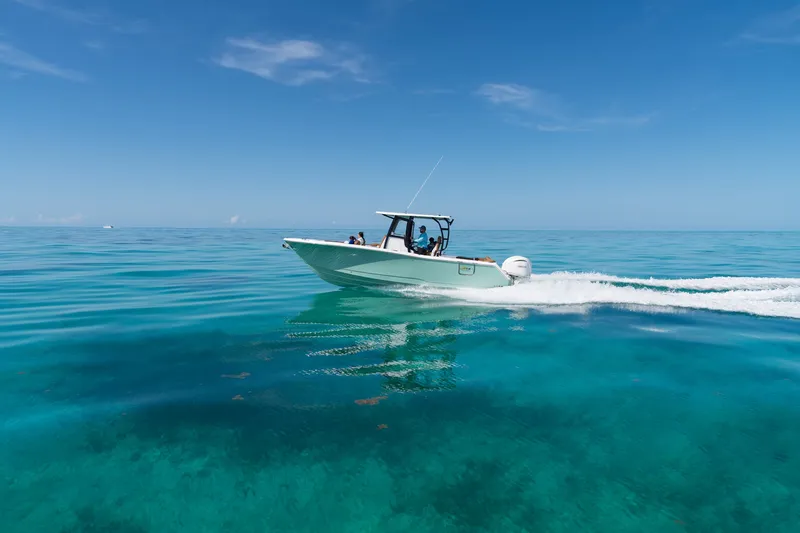
If you fish, dive or cross open water, a center console is usually the better fit: you can walk all the way around the boat, the deck is built for rods and livewells, and the hull is often designed for rougher water. If you mostly cruise, swim, tow a tube and spend the day with friends on calm water, a bowrider gives you more lounge seating up front, a windshield to sit behind and a big swim platform. If your weekends mix both, look at a family center console with bow seating.
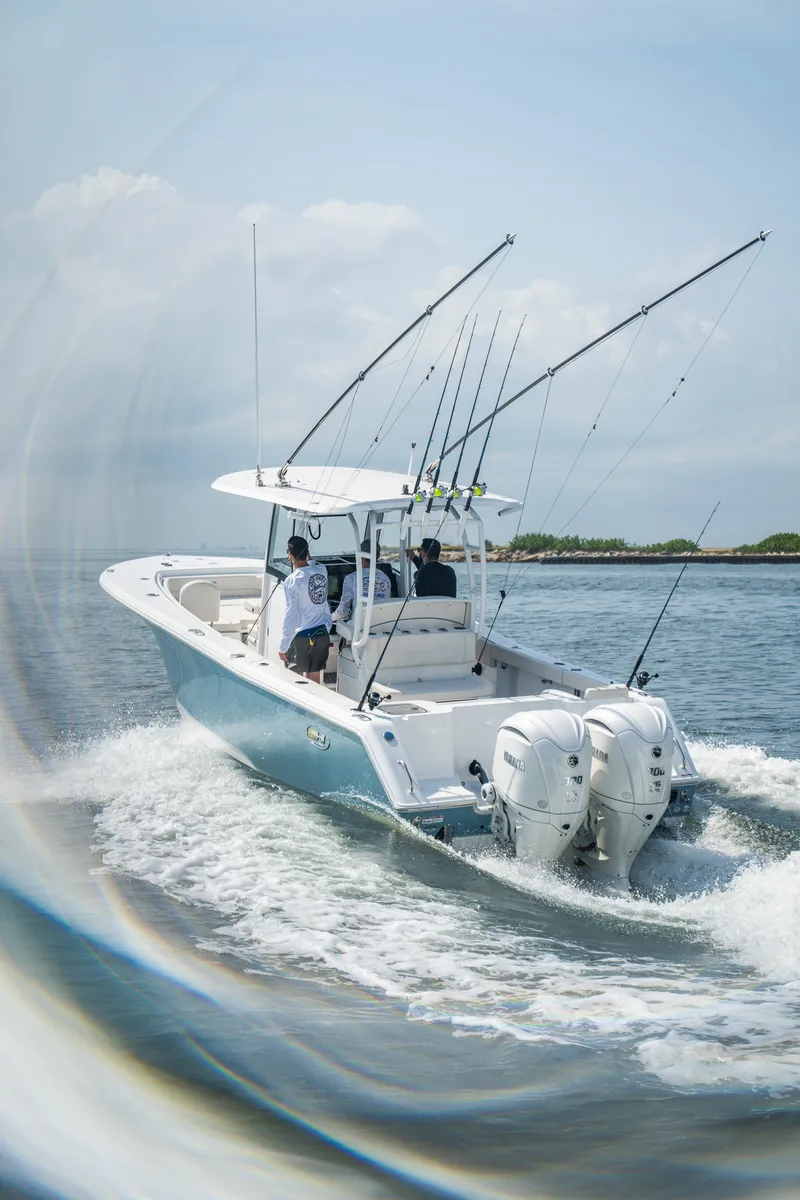
Walk-around deck, fishing gear built in, and hulls made for bigger water.
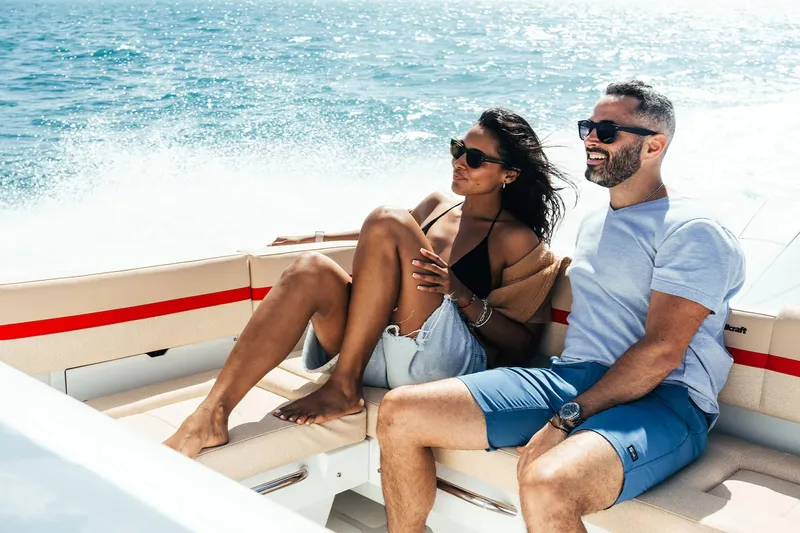
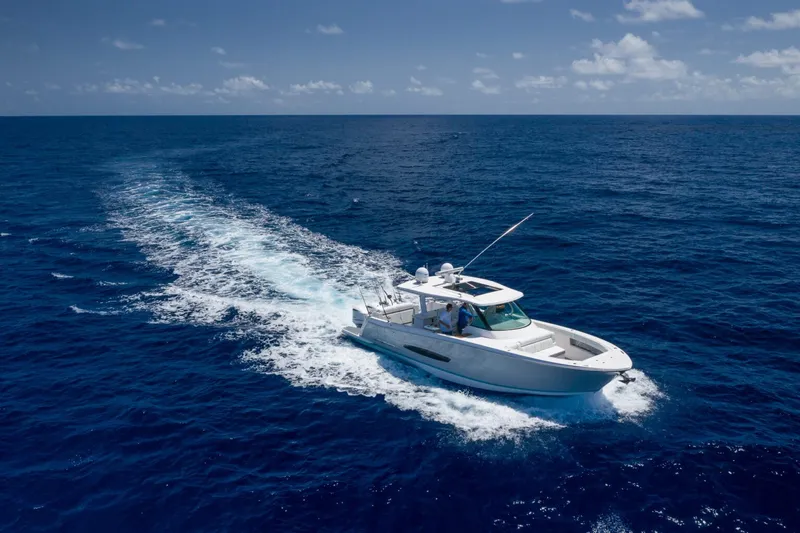
Forward lounge seating, a windshield and a swim platform for calm-water days.
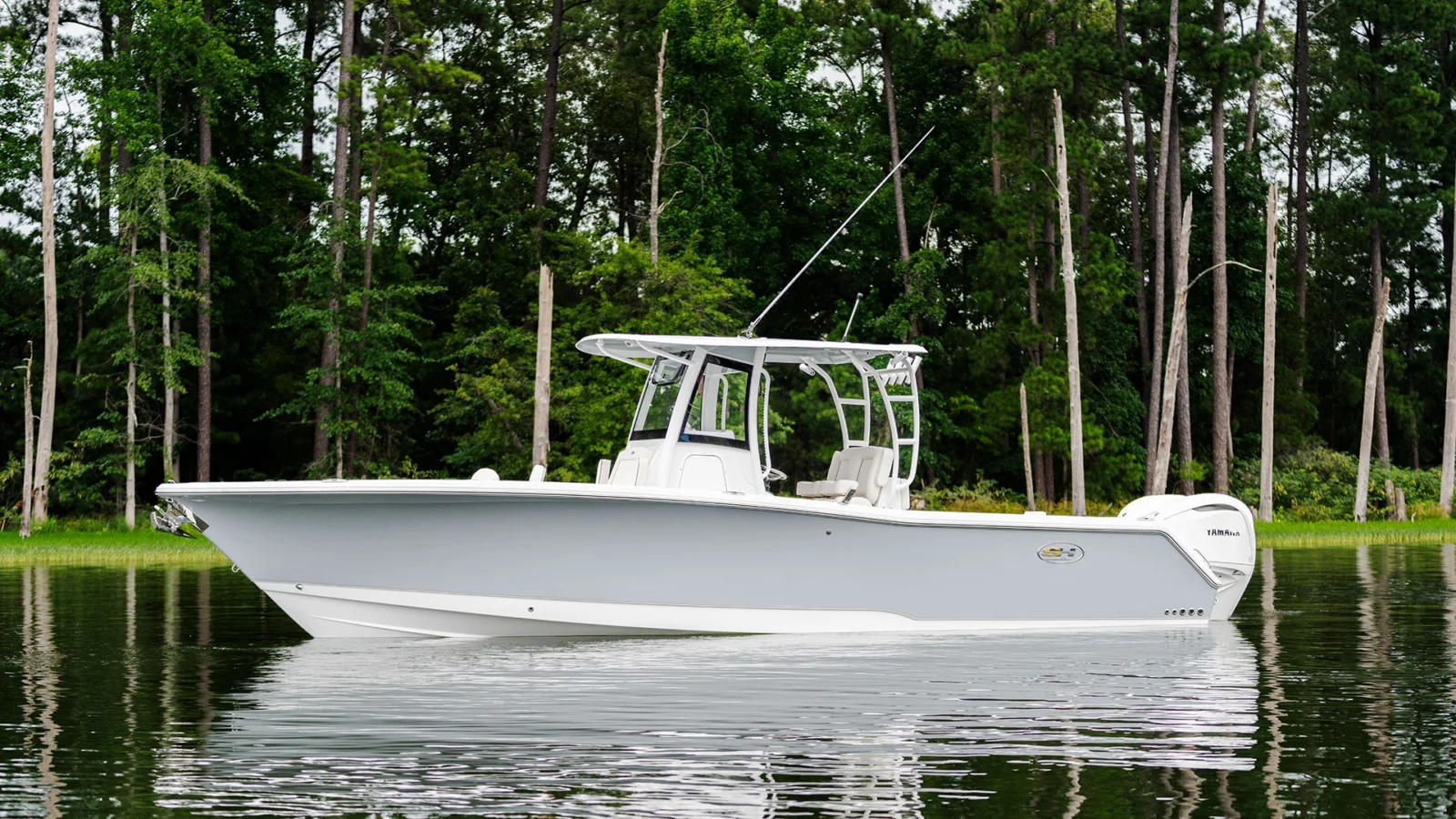
Both boats put people in the bow. The difference is where the helm sits and what the rest of the deck is built around. A center console centers everything on moving around the boat with a rod in your hand. A bowrider centers everything on sitting down with friends. This guide compares the two on fishing, family days, rough water and Florida weather, using a Sea Hunt Ultra 234 and a Regal LX4 as real, similar-sized examples with numbers from each builder.
What's the difference between a bowrider and a center console?
Center console
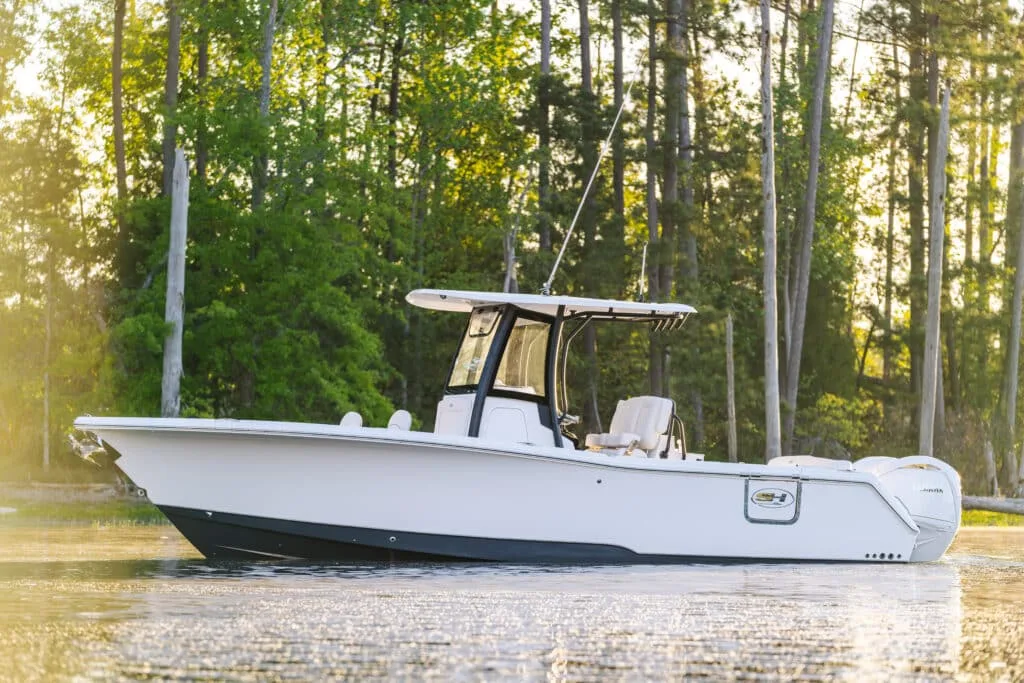
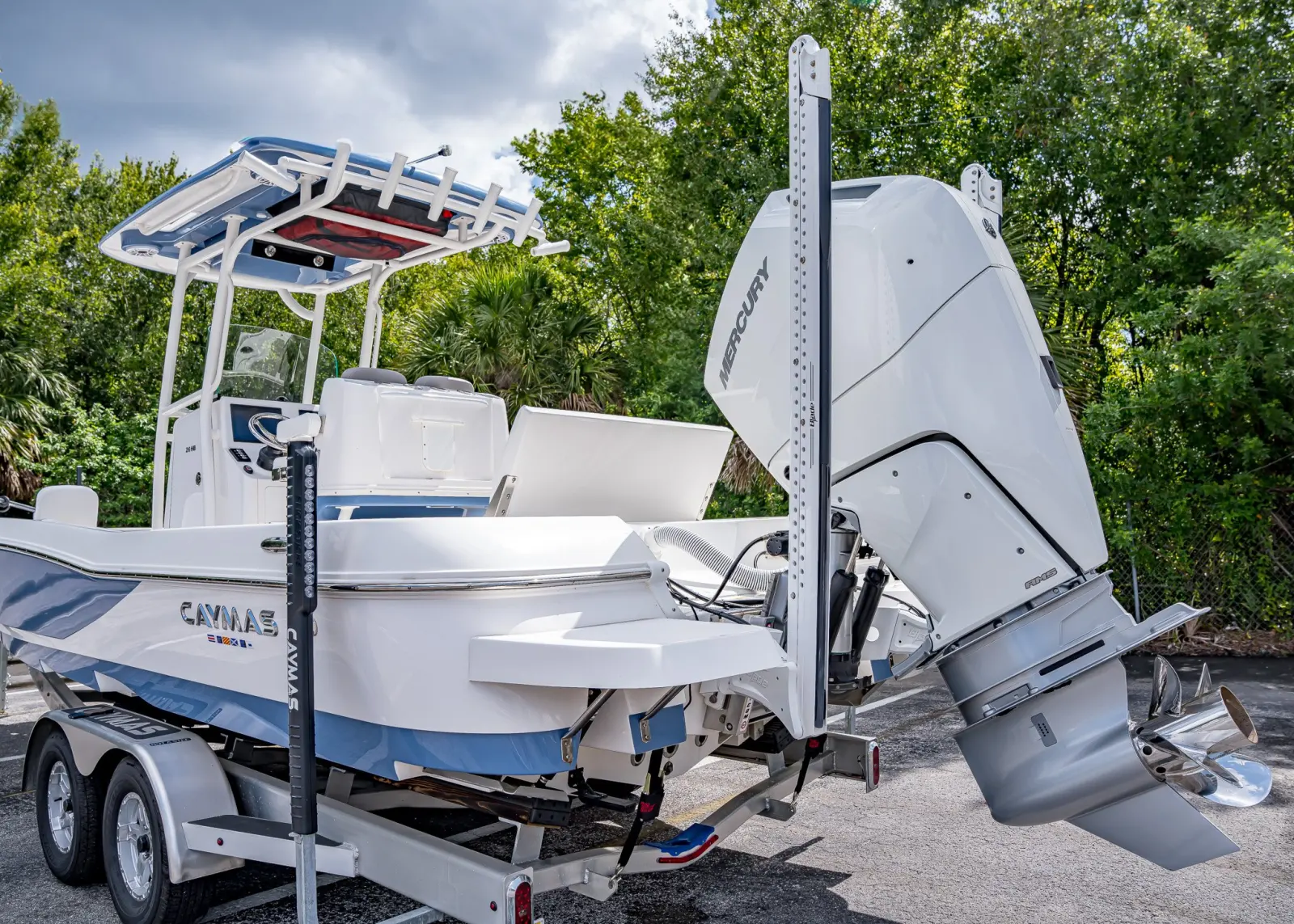
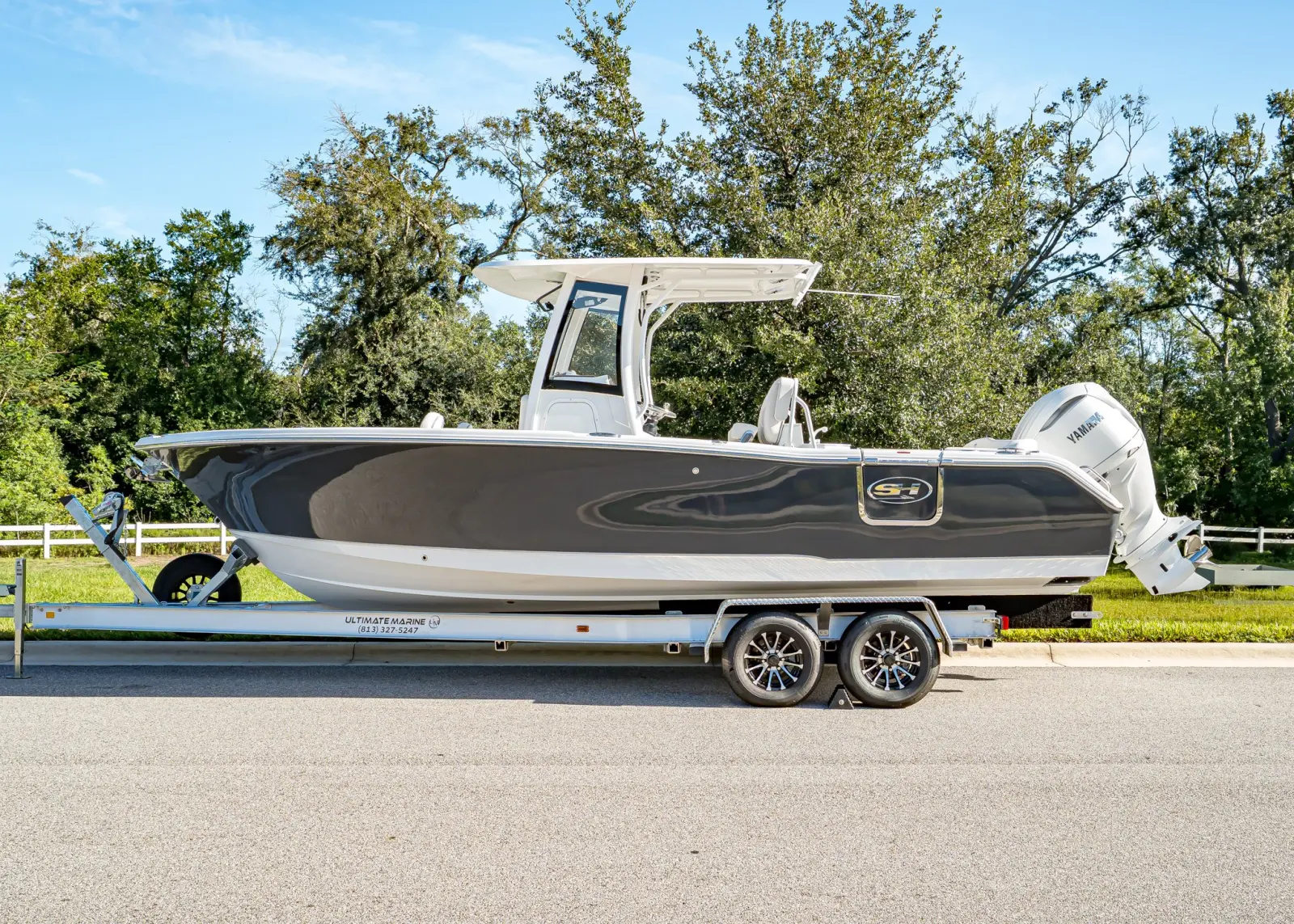
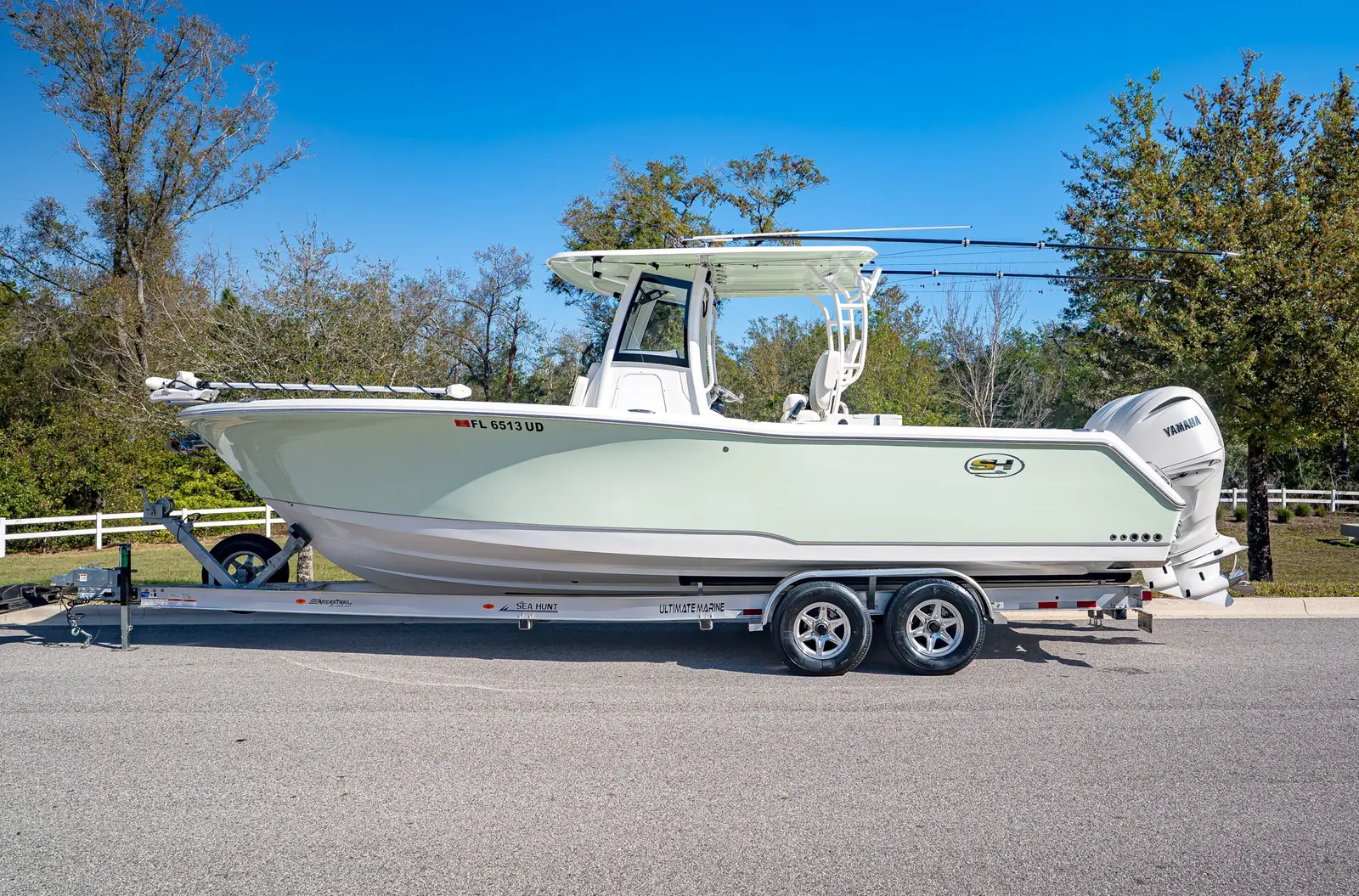
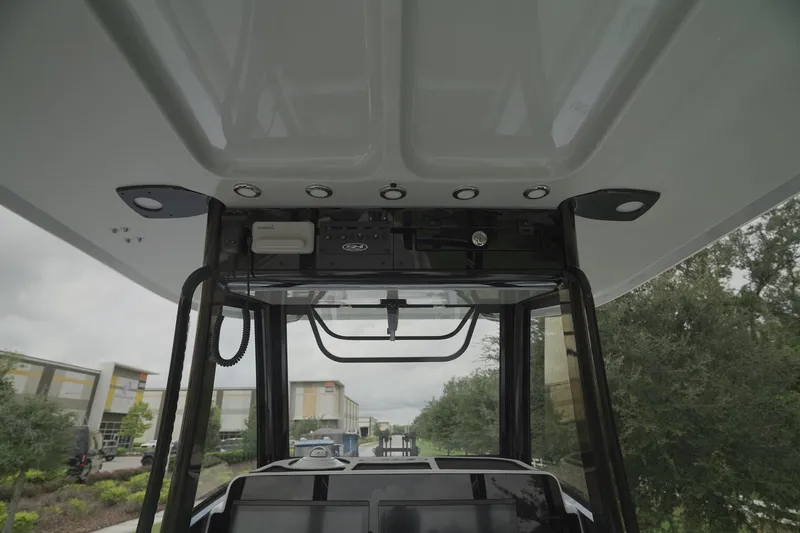
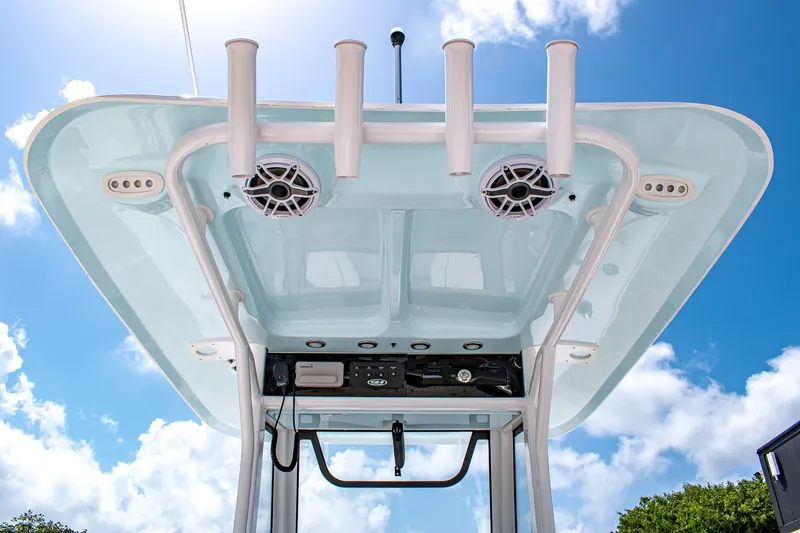
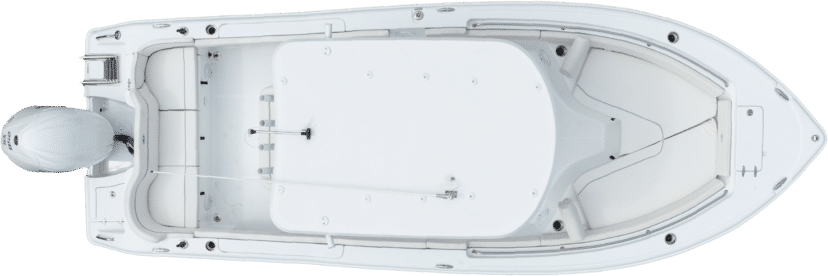
The helm sits in a console in the middle of the boat, with open deck on every side. You can walk from bow to stern down either side, which is why anglers and divers like it. Shade usually comes from a T-top over the helm. Most are outboard-powered and built for salt water, with self-draining decks you can hose out.
Bowrider
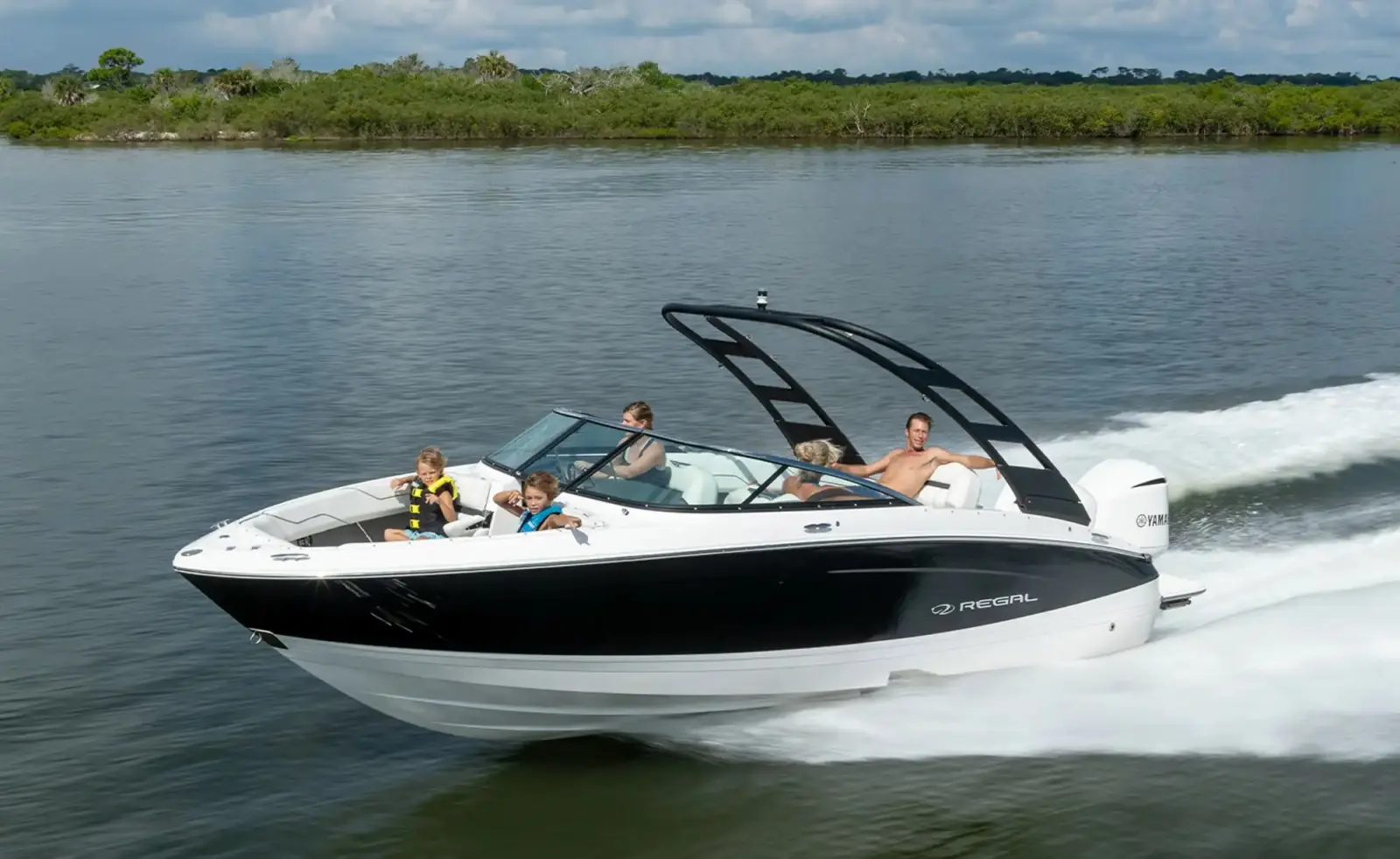
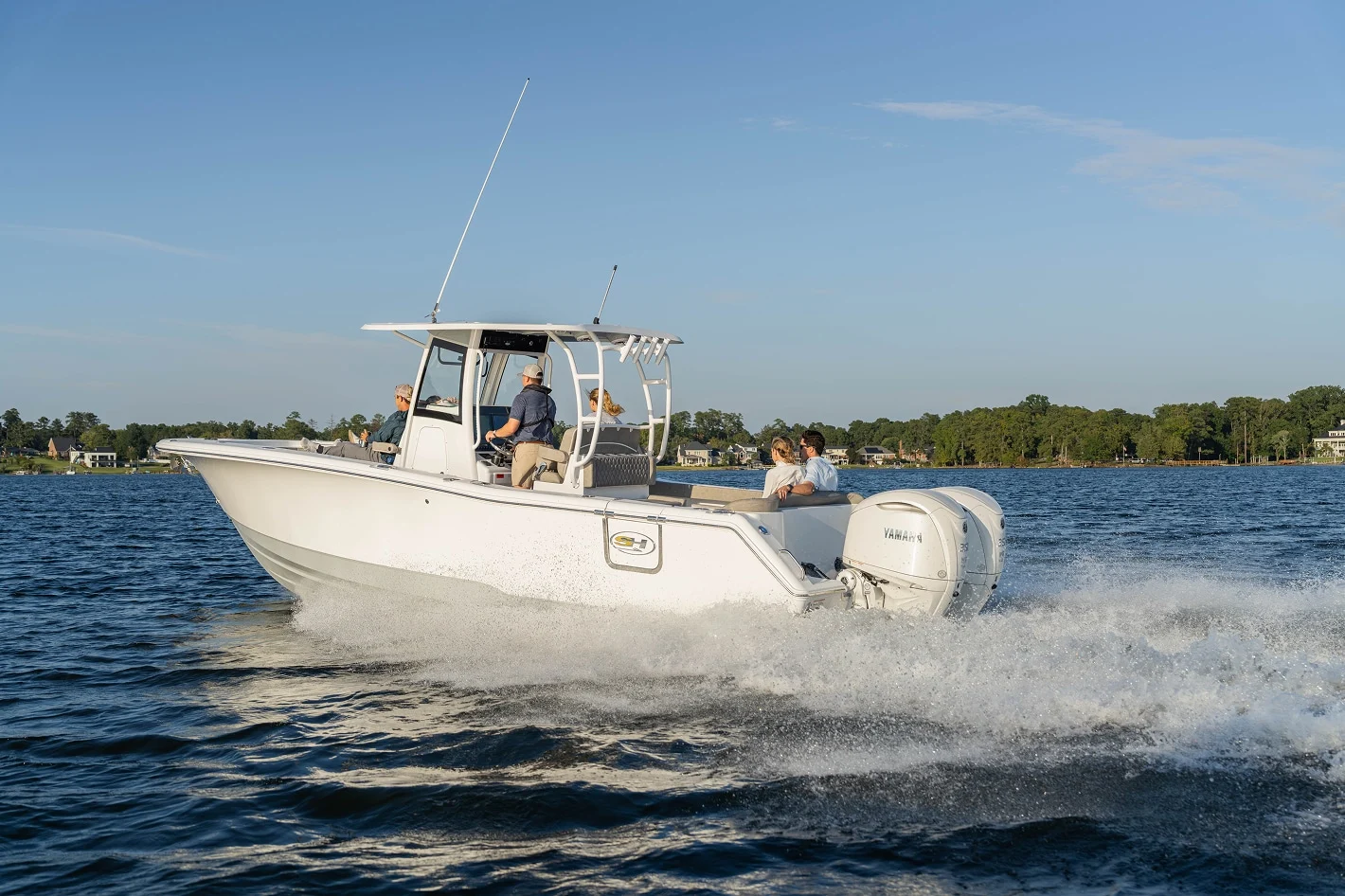
The helm sits off to one side behind a windshield, and the bow is an open seating area you reach through a walk-through in the middle of the windshield. The cockpit behind is ringed with seats and loungers, and there's usually a swim platform at the stern. Bowriders come with sterndrives or outboards. Regal, for example, builds its 24-foot LS4 with a sterndrive and the LX4 with an outboard on the same layout.
Between the two sits the dual console, which splits the helm and passenger seat into two consoles with a walk-through to the bow. It's closer to a bowrider in feel but often built on a fishing-capable hull. If you're torn, it's worth a look.
At the dock, the quickest test is to walk the boat. On a center console you can step from the stern to the bow on either side without climbing over anything. On a bowrider you go through the cockpit and the windshield opening. That one difference shapes who sits where, where the gear goes and how the boat fishes.
Bowrider vs center console at a glance: fishing, family days and water sports
| Center console | Bowrider | |
|---|---|---|
| Layout | Helm in the middle, walk-around deck | Helm behind a windshield, seating in the bow |
| Fishing | Built for it: rod holders, livewells, fish boxes | Possible, but less room to move and fewer fishing features |
| Seating | Bow seating and leaning post; more on family models | More lounge seating, especially up front and aft |
| Weather protection | T-top or shade over the helm | Windshield in front, bimini or tower for shade |
| Water sports | Works, especially with a ski tow bar | A natural fit, with a swim platform and lounges |
| Open water | Many are built with hulls for offshore days | Best on lakes, rivers, bays and calm coastal water |
| Power | Outboards | Sterndrive or outboard, depending on the model |
General differences between the two layouts. Exact features depend on the model.
Most of the rows come back to one design choice: what the builder did with the space in front of the helm. A center console keeps it open deck; a bowrider turns it into seating behind a windshield. The open-water row is the one buyers misread most. It's about the hull, not the console, which the rough water section below explains.
Fishing: a center console, for most anglers
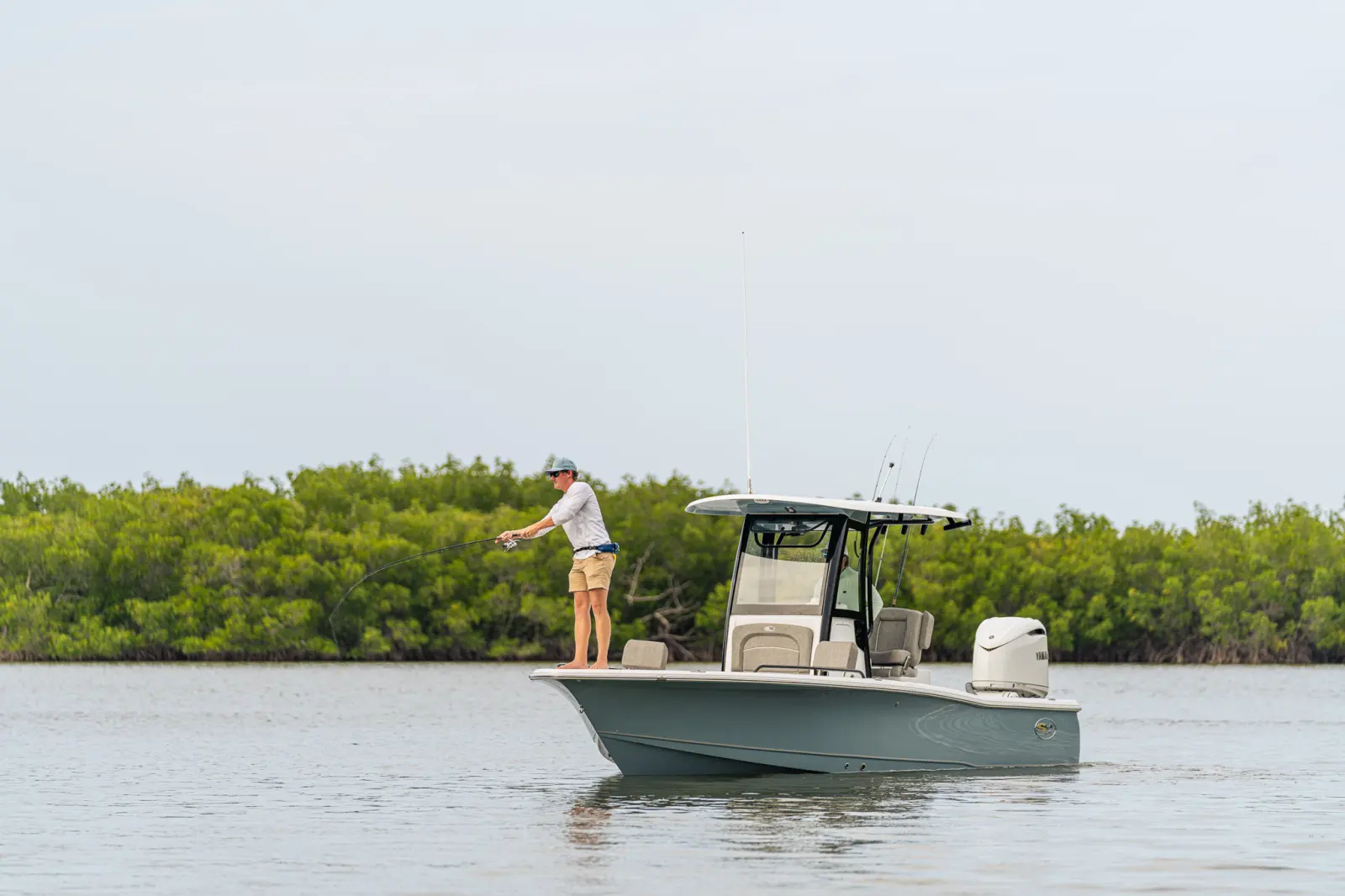
Being able to walk all the way around matters when a fish runs under the boat or around the bow. On an Indian River grass flat near Sebastian, as an example, two anglers on a center console cast from bow and stern and follow a fish around the trolling motor. On a bowrider, the bow is a cushioned seating well and you fish from the back. A bowrider handles simple fishing on a calm lake or at anchor, but live bait needs a livewell, and upholstery and fish blood don't mix. If anyone fishes seriously, start with a center console: shade and seating are easier to add later than fishing gear.
Family days and water sports: often a bowrider
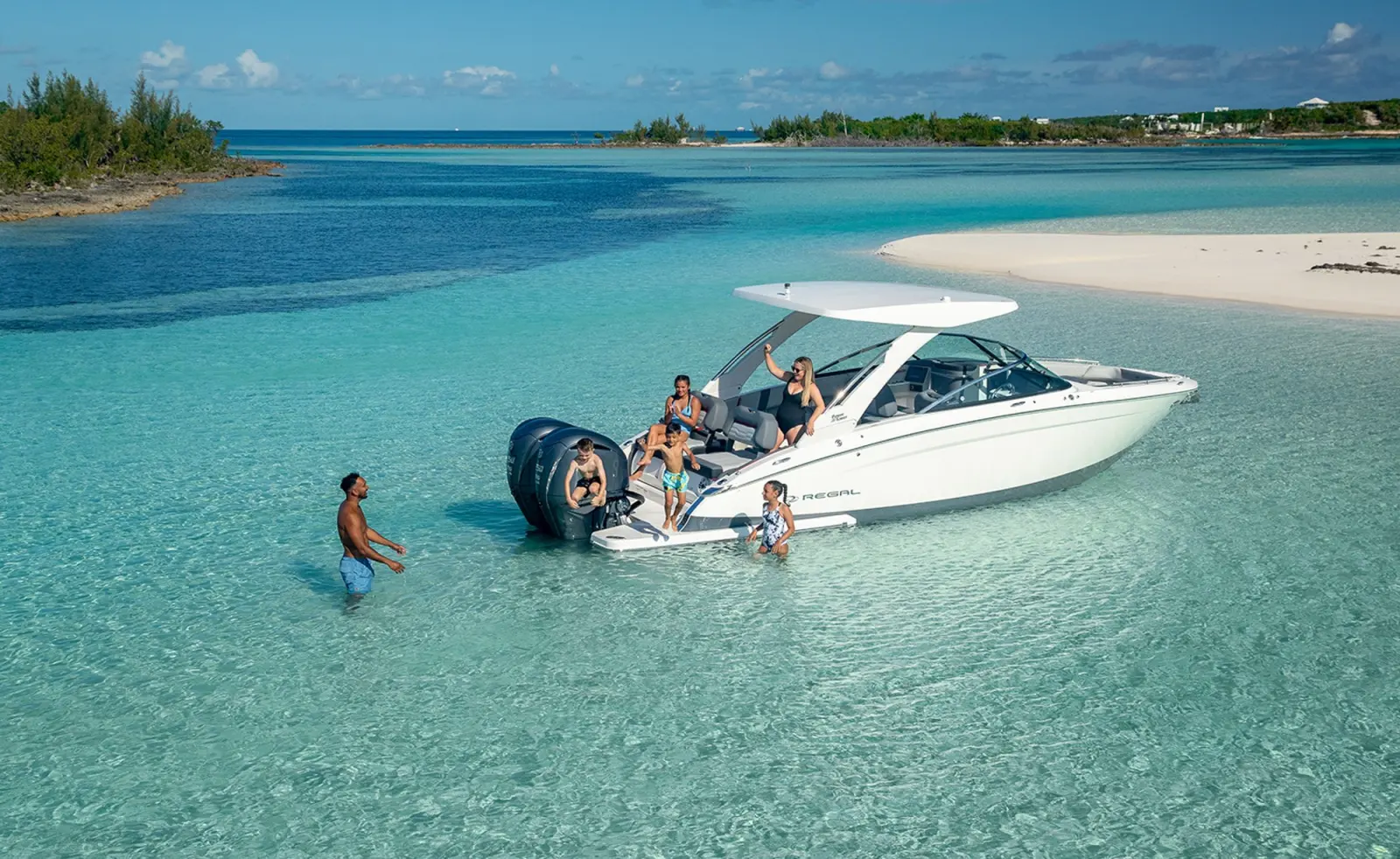
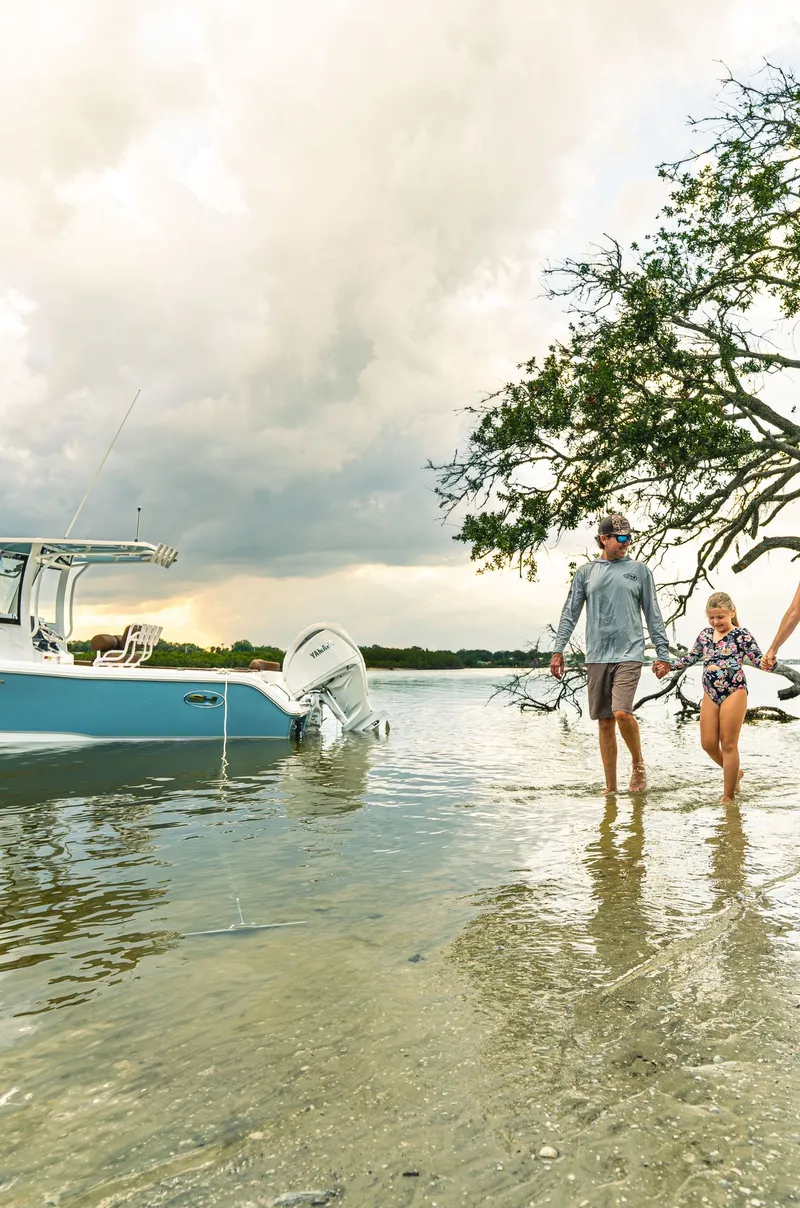
The seating faces inward, the bow is a lounge and the windshield keeps wind and spray off everyone behind it. The LX4 adds a low-to-the-water swim platform and lounges that face the water. Towing favors the bowrider too, with seats for the people waiting their turn and a clear forward view, though Sea Hunt offers a ski tow bar on the Ultra 234. Family center consoles like the Ultra line close much of the gap with bow seating and a shaded helm. Count seats with backrests and shade, and ask whether there's a head.
Two real examples: Sea Hunt Ultra 234 vs Regal LX4
| Sea Hunt Ultra 234 (center console) | Regal LX4 (bowrider) | |
|---|---|---|
| Length | 23′ 7″ | 24′ 4″ |
| Beam | 8′ 6″ | 8′ 6″ |
| Dry weight | 2,800 lb | 4,400 lb |
| Fuel | 96 gal | 74 gal |
| Deadrise | 18/22/55 | 21° |
| Draft | 13 in | 17 in drive up, 32 in drive down |
| Power | Single outboard; Yamaha F200 standard, 250 hp max | Single outboard |
| Shade | Fiberglass T-top or bimini optional | Bimini on a tower standard |
| Fishing | 15 gal livewell standard | Not a fishing layout |
| Electronics | 9-inch Garmin with VHF | Dual 9-inch Garmin displays |
Builder specs for each boat, checked October 2026. Each builder measures draft and deadrise its own way, so compare those rows with care.
These two boats are close in length and identical in beam, so the differences in the table come from the layouts. The Ultra 234 comes with bow cushions, backrests and bolsters, a 15-gallon livewell and an aluminum leaning post with captain's chairs, with a ski tow bar, a Porta Potti and a fresh water system on the options list. The LX4 comes with dual multi-position UltraLounges, slide-away seating, a low-to-the-water swim platform and a stainless windshield header as standard, and lists a PowerTower bimini among its canvas features.
The weight gap stands out. Per the two builders, the LX4 weighs about 1,600 pounds more dry than the Ultra 234. That's upholstery, windshield, seating and structure, and it shows up in your tow vehicle and fuel choices. The Ultra 234 also carries more fuel, which matters for range on a long day.
Draft numbers aren't directly comparable. Regal lists the LX4 with the outboard tilted up and down; Sea Hunt lists one figure for the Ultra 234. Ask for the boat's real draft with the engine down before you plan around a shallow ramp or a sandbar.
Which rides better in rough water?
That depends more on the hull and the size of the boat than on the layout. Deadrise, the angle of the V at the stern, is the number most builders publish. A deeper V cuts through chop more softly; a flatter bottom sits steadier at rest and planes more easily. Per the builders, the Ultra 234 lists 18/22/55 and the LX4 lists 21 degrees. Builders don't always measure it the same way, so treat those as a sign that both are moderate-V family hulls, not a ranking.
Where the layouts really differ is spray and water over the bow. A bowrider's open bow sits low, and in a steep chop a wave over the bow lands in the forward seating area. Most bowriders handle that with a drain in the bow well, but people sitting up front get wet. A center console's bow usually rides higher above the waterline, and the deck drains overboard.
Here's how that plays out, as an example. On a calm morning on Lake Monroe or the Intracoastal at New Smyrna, both boats are comfortable. On an afternoon run back across Tampa Bay with a 15-knot southwest breeze building a short, steep chop, the center console's crew stands behind the console and rides it out. On the bowrider, the people in the bow move aft and the driver slows down.
If you plan to run inlets or go offshore, look past the layout. Compare hull design, length, freeboard and fuel capacity, and the builder's intended use. Most bowriders are built for lakes, rivers, bays and calm coastal days. Many center consoles are built with nearshore and offshore water in mind.
How do sun, rain and salt in Florida change the choice?
Shade comes first under a Florida sun. Center consoles shade the helm with a T-top; the Ultra 234 offers a fiberglass T-top with a mister and a bimini as options. Bowriders use a bimini, and the LX4's PowerTower bimini shades the entire cockpit. On either boat, the bow seats usually sit in the sun. Both examples have self-bailing cockpits, so summer rain drains overboard.
Salt favors the center console by design: fewer fabrics, more open fiberglass, built to be hosed down. A bowrider in salt water needs more care for upholstery, stitching and the windshield frame. On an Orlando lake, that gap shrinks. The same Florida boating rules apply to both.
Does towing or upkeep differ?
Two things follow from the layout. Weight: the LX4 weighs 4,400 pounds dry against the Ultra 234's 2,800, before fuel, gear and trailer, so check the loaded trailer weight against your vehicle's rating. Power: an outboard tilts its whole lower unit clear of the water between trips, a real advantage in salt water and one reason outboards are the norm on Florida center consoles. Regal builds the same 24-foot layout as the sterndrive LS4 and the outboard LX4. For trailers, lifts and dry stack, see our boat storage guide.
How do you choose between them?
- What will you do most?Fishing, diving or offshore runs point to a center console. Cruising, swimming and water sports point to a bowrider.
- Where will you boat?Coastal and offshore water favors a center console. Lakes, rivers and calm bays suit both.
- Who comes along?Lots of non-fishing guests? A bowrider seats them more comfortably. Anglers? A center console.
- How will you store and tow it?Check loaded trailer weight against your vehicle's rating, and where the boat will live.
- Do you want both?Look at a family center console, or a dual console, which add seating to a fishing-capable hull.
If you're between the two, decide which day you'd hate to give up. If missing a morning on the flats would bother you more than a cramped sandbar day, the center console wins. If the opposite, it's the bowrider. Most regret comes from buying for the trip you take once a year instead of the ones you take every weekend.
Sea Hunt's Ultra line is the bridge from the center console side: bow seating, shade options and a ski tow bar on a boat that still has a livewell. From the bowrider side, an outboard bowrider like the LX4 tilts its engine clear of the water, which suits salt water storage. A short ride in each, on the same day and the same water, will tell you more than any spec sheet.
Tell us how you'll use the boat
We'll show you both layouts and help you narrow it down. Regal bowriders are at our New Smyrna Beach store.
Questions we hear
Is a center console or bowrider better for fishing?
A center console, for most anglers. You can walk all the way around the boat to follow a fish, cast from the bow or the stern, and the deck is built with rod holders, a livewell and fish boxes. The deck drains overboard, so cleanup is a hose-down. A bowrider can handle simple fishing on calm water, but the bow seating and windshield take the space you'd cast from, and there's usually no livewell.
Can a bowrider go in the ocean?
On calm days, close to shore, many bowriders do fine, especially larger ones. The limits are the open bow, which can take water over the front in a steep chop, and hulls that builders usually design for lakes, bays and calm coastal water. Check the marine forecast, watch for Florida's afternoon storms and sea breeze, and keep plenty of fuel in reserve. For regular trips offshore, a center console built for open water is the safer choice.
Which is better for a family, a bowrider or a center console?
If your family mostly cruises, swims and tows a tube on calm water, a bowrider seats everyone more comfortably, with lounges, a windshield and a swim platform. If someone in the family fishes, a family center console such as the Sea Hunt Ultra covers both, with bow seating and shade options plus a livewell. Count seats with backrests, check shade over them, and ask whether there's a head.
Can you pull a tube or skier with a center console?
Yes. Many center consoles have a tow point or offer one. Sea Hunt, for example, lists a ski tow bar as an option on the Ultra 234. A bowrider is still the more natural water sports boat, with more seating for people waiting their turn, a swim platform and a clear forward view for the driver. If water sports are a weekly thing, compare both layouts with your crew aboard.
Do center consoles ride better than bowriders in rough water?
Not automatically. Ride depends on the hull's deadrise, length, weight and design more than on where the helm sits. What does differ is spray: a bowrider's open bow sits lower, so people up front get wet in a chop. Many center consoles are built with deeper hulls for coastal and offshore water, which is why they're common in Florida. Compare the hull and the builder's intended use, not just the layout.