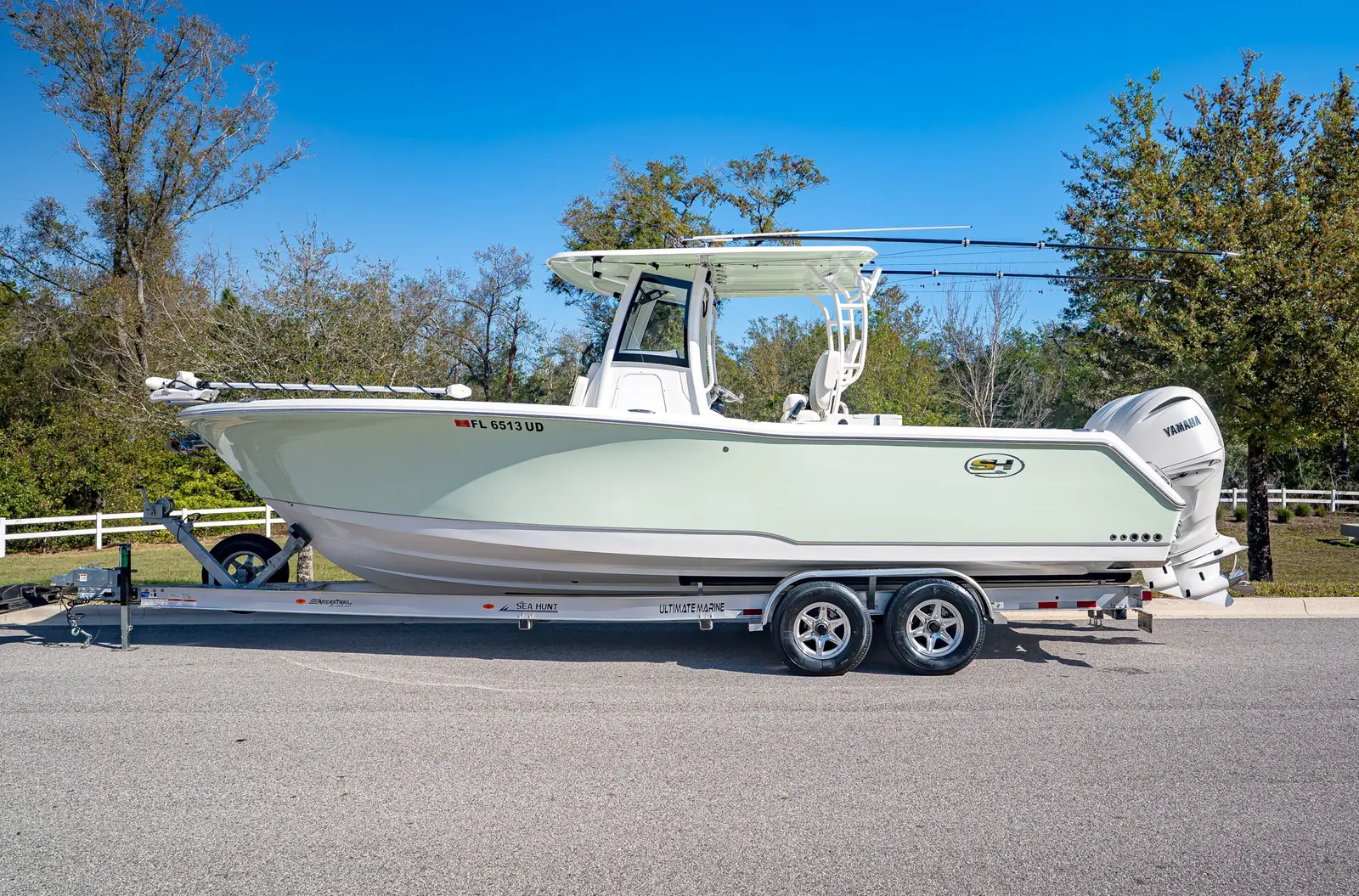

How do you buy a used boat in Florida?
In this article
Check the boat before the price: its hull, transom, engine records, wiring and trailer, then have an independent marine surveyor and an engine technician look at it. Make sure the seller can prove ownership and that the hull identification number (HIN) matches every document. After the sale you have 30 days to title and register the boat in Florida, and Florida sales or use tax applies.
This guide follows a used-boat purchase in the order it actually happens in Florida: deciding what you need, screening boats yourself, paying professionals to check the ones that pass, proving the paperwork is clean, and finishing the state's title, registration and tax steps. Every legal and tax point links to the Florida agency that sets it, so you can confirm the current rule before you sign.
Quick facts
| Topic | What to know |
|---|---|
| Title and registration deadline | 30 days from purchase. Carry proof of the purchase date aboard during that time. |
| Where to apply | A county tax collector or license plate agent. |
| Florida tax | 6% sales or use tax, plus county surtax on the first $5,000 of the price. The most tax charged on one boat is $18,000. |
| Trade-in at a dealer | Tax is figured on the difference between the sale price and your trade-in allowance. |
| Hull identification number (HIN) | A 12-character number on the starboard side of the transom. It should match the title, registration and bill of sale. |
| Trailer | Net weight of 2,000 lb or more: titled and registered. Lighter trailers: registered only. |
| Survey | BoatUS advises a marine survey on any boat costing a few thousand dollars or more. Lenders and insurers often ask for one. |
| Who can drive it | Anyone born on or after January 1, 1988 needs a Boating Safety Education ID card to run a boat of 10 hp or more in Florida. |
Sources listed below. Confirm current rates and fees with the state.
Two rows catch buyers out. The 30-day clock runs from the purchase date on your bill of sale, not the day the boat reaches your driveway. And on a private sale nobody collects tax at the handshake, so it comes due at the tax collector's counter. The HIN row matters before any money moves: it is the one number that ties the hull in front of you to the seller's papers.
What are the steps to buy a used boat in Florida?
Most bad used-boat purchases go wrong in the order of operations. Money changes hands before the inspection, or the inspection happens after the buyer is already emotionally committed. Work these steps in sequence and each one protects the next.
- Decide where you'll run it.A flats skiff for Mosquito Lagoon, a bay boat for Tampa Bay and a center console for nearshore runs out of Ponce Inlet are different boats. Write down your water, crew size and storage plan before you shop.
- Screen boats yourself.Use the hull, engine and trailer checks below to rule boats out quickly. You are screening here, not surveying.
- Make a written offer with contingencies.The contract should make the sale depend on a satisfactory survey and sea trial and on getting financing and insurance, and should list the HIN, engine serial numbers and trailer serial number.
- Survey, engine inspection and trial run.Hire the surveyor yourself, add an engine technician, and be there for it.
- Renegotiate or walk.Use the survey's priority list. If the seller fixes items first, have them re-inspected before closing.
- Check ownership and liens.Match the HIN to the title and confirm any lien is released before you pay.
- Close with a complete bill of sale.Full vessel description, HIN, length and price, with the trailer and any outboard itemized.
- Title and register inside 30 days.Keep proof of the purchase date aboard until the paperwork is done.
Scheduling is usually the slow part: a surveyor, a technician, a ramp or lift, the seller and decent weather all have to line up. The written survey report commonly takes three to four days, so set the contract's acceptance date at least a week after survey day. In summer, book morning slots; afternoon thunderstorms build fast over Central Florida.
How do you check the hull, stringers and transom?
Start with the structure, because it is the part you can't cheaply fix. BoatUS puts it bluntly: when stringers, decks, bulkheads or transoms go soft, the cost to repair almost always exceeds the finished value of the boat. Cosmetics are the opposite. Chalky gelcoat, tired cushions and faded canvas look bad in photos and are among the easiest things to put right.
Stringers are the long beams that run fore and aft under the deck and stiffen the bottom. The transom is the flat back of the hull that carries the outboard's weight and thrust. On many older boats both were built around wood sealed in fiberglass. Water creeps in through screw holes, badly bedded fittings or cracks, and the wood rots slowly out of sight. That's how a boat can look clean and still be structurally finished.
Structure walk-around
A walk-around can find obvious problems; it can't clear a boat. A surveyor sounds cored areas with a small hammer and reads them with a moisture meter, which finds wet or separated core before you can feel it underfoot. If your own check turns up a flexing transom or a soft sole across a large area, stop unless you want a rebuild project. A small soft spot beside one fitting is a different story and worth asking the surveyor to size up.
Ask for a fuel sample too. Aluminum fuel tanks can corrode where they sit in contact with water, water in a fuel sample calls for a closer look, and some tanks can't come out without cutting into the deck.
What do engine hours, compression and lower-unit oil tell you?
Hours are a clue, not a verdict. A modern outboard with 400 hours and a full service record can be a better buy than one with 150 hours that sat unused and unserviced. Salt, heat and long idle spells wear a motor too. A boat that spent three Florida summers on a side-yard trailer with stale fuel in the tank can need more work than a hard-used guide boat that saw the shop on schedule.
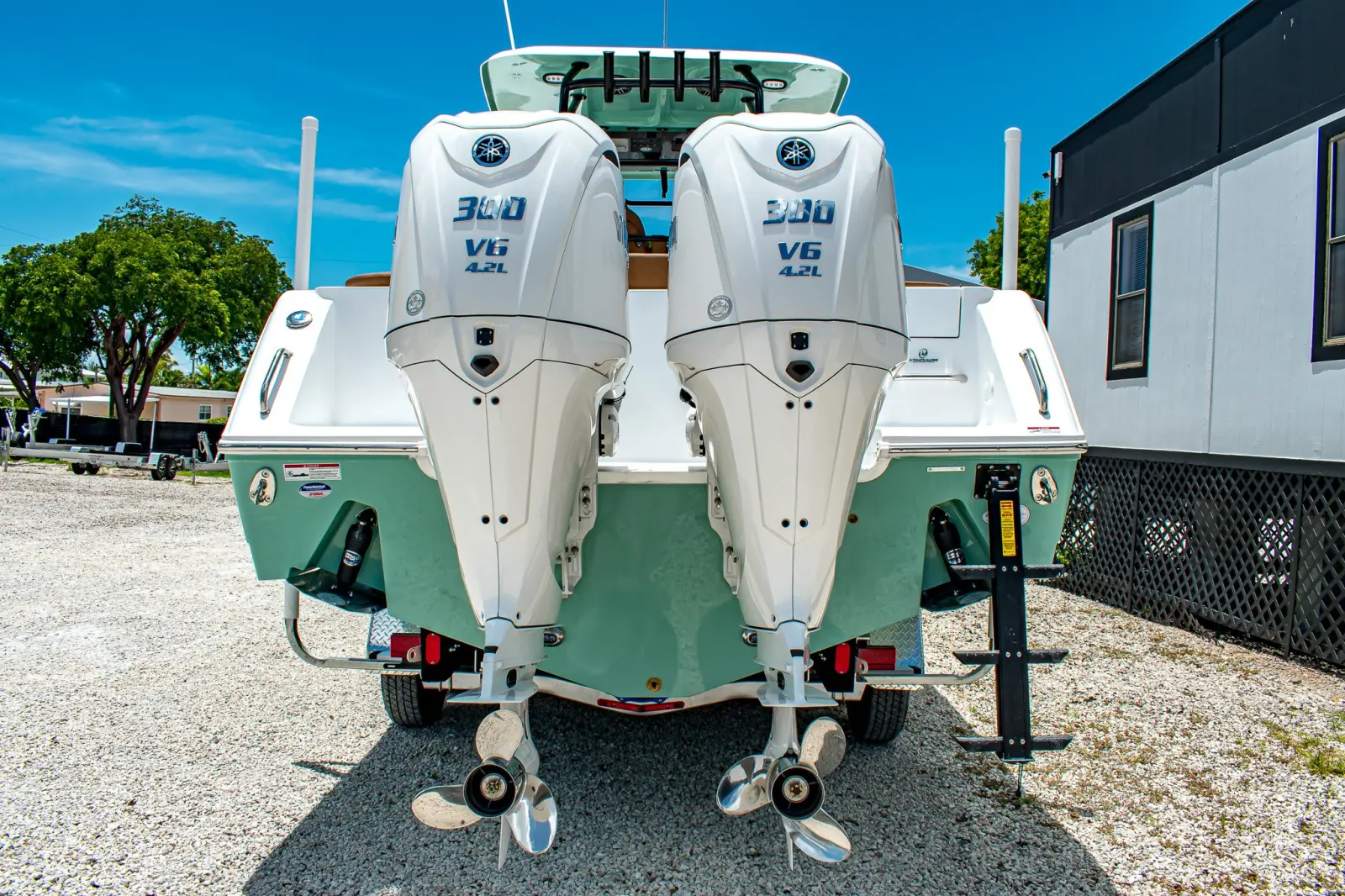
Read the hours against the maintenance that should have happened. Yamaha's published schedule calls for changing engine oil and lower-unit gear oil every 100 hours or annually, replacing fuel filters, guarding against corrosion and flushing the engine after each use, especially in salt or brackish water. Ask for receipts that line up with those intervals. A 300-hour engine owned for three seasons should show about three services, not one.
Tests worth paying a technician for
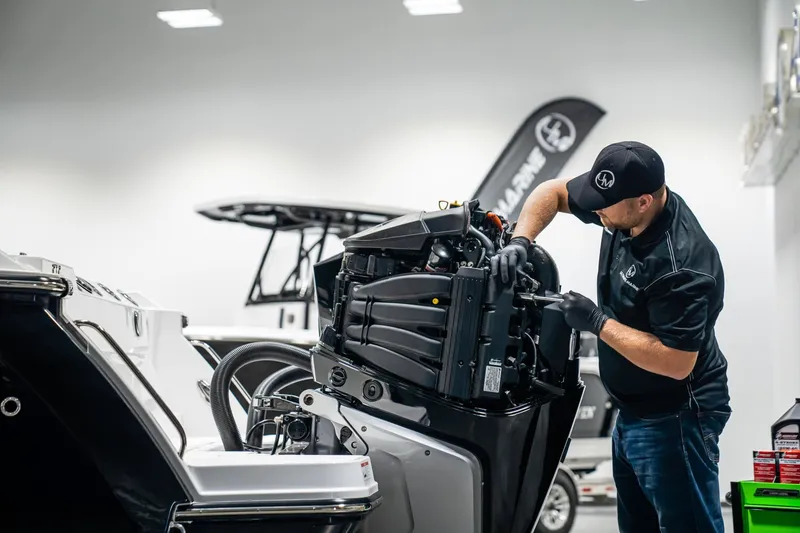
- Computer scan. Many larger engines built since about 2006 have computers a trained technician can read for fault codes and history the gauge can't show.
- Compression test. Compression is one of the standard engine-survey checks and is especially useful on older engines, since it shows the state of rings, cylinders and pistons. Cylinders should read close to one another and within the maker's spec; one low cylinder is the warning.
- Lower-unit oil. Have the technician pull the drain plug. Milky or discolored oil can mean water got past a seal. More than a fine film of metal on the magnetic plug is worth a question about gear wear.
- Oil analysis. For older or higher-value engines, you can send an oil sample to a lab that tests for metals and water.
- Cold start. BoatUS advises that the engine not be run for 24 hours before the survey, so you see a true cold start and any smoke at startup.
On your own visit, pull the cowling and look before anyone starts the motor. White crusty corrosion around the powerhead, green-stained wiring, a chewed propeller, a bent or ground-down skeg and fluid weeping from the trim rams all tell you how the engine lived. Once it runs, watch the cooling-water telltale: a weak or sputtering stream calls for a look at the water pump. Don't rely on any single number, including hours, to judge an engine. Reading the results is the technician's job, not the seller's.
What should you check on the trailer?
Most used center consoles, bay boats and skiffs in Florida sell with a trailer, and a tired trailer is a real cost. Salt water does its damage where you can't see it: inside hubs, inside box-section frames and around the axle springs. A trailer that fails on the interstate with your new boat on it is the most expensive way to find out.
Trailer checks
The trailer has its own paperwork. In Florida, a trailer with a net weight of 2,000 pounds or more must be titled and registered, while a lighter one is registered only. It also carries its own serial number, so list that number on the sales contract and price the trailer separately from the boat.
Then check your tow vehicle against the whole package. The BoatUS Foundation says 5 to 10 percent of the combined weight of boat, motor, trailer and gear should sit on the hitch ball, and that total should never exceed the hitch's rating. Florida ramps add their own test: many are shallow and slick at low tide, so a front-wheel-drive SUV that tows fine on the highway may spin its tires pulling out. Find that out before you pay, not on your first Saturday at the ramp.
Do you need a marine survey and a sea trial?
For most boats, yes. A marine survey is an independent report on the boat's condition and value on a given day. If you're spending a few thousand dollars or more, you need one, and lenders and insurers often require one. The report also gives you a market value and a ranked repair list, which is your strongest negotiating tool.
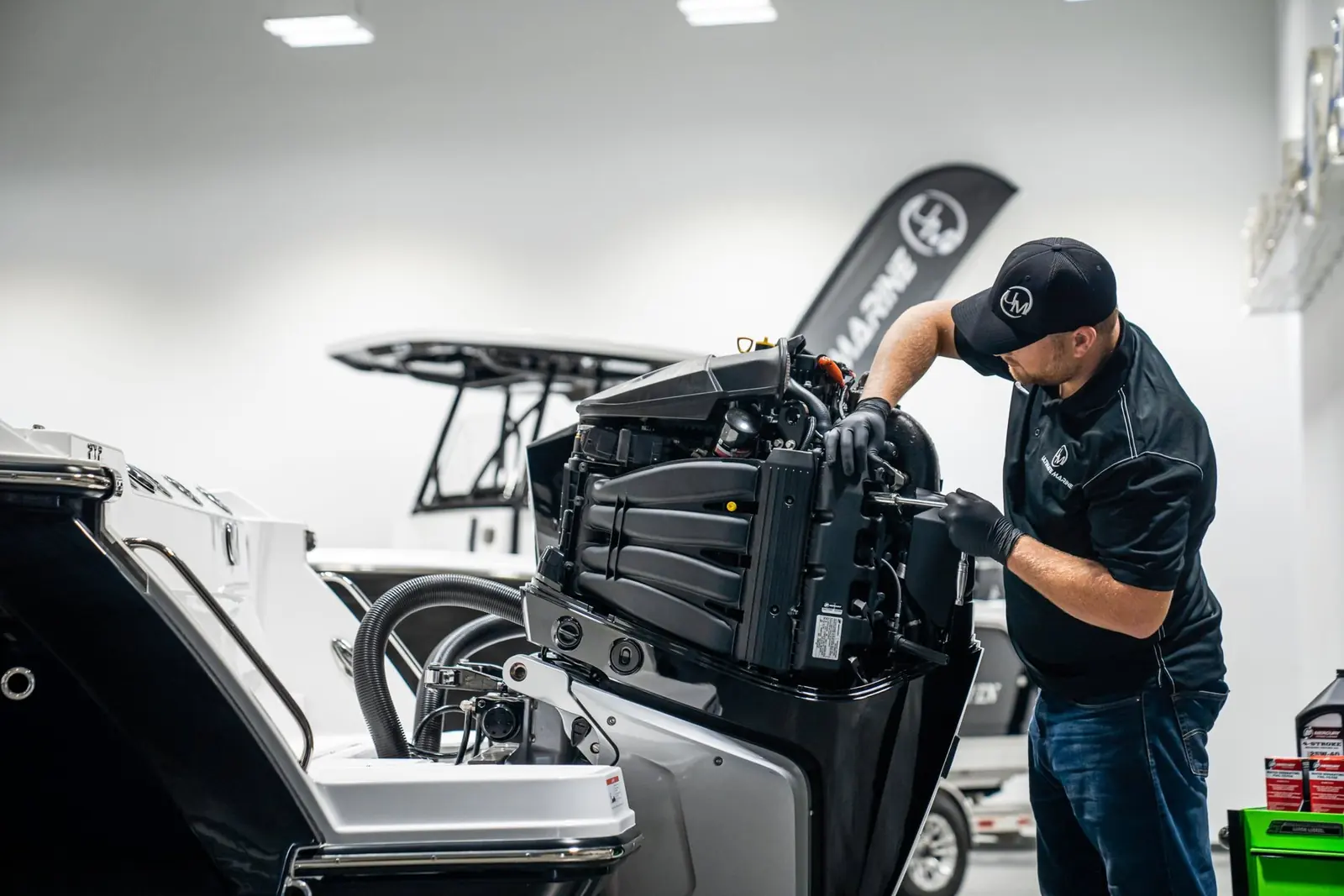
Choosing the surveyor is the step buyers rush. Marine surveyors are not licensed or regulated, so anyone can use the title. Look for membership in SAMS (Society of Accredited Marine Surveyors) or NAMS (National Association of Marine Surveyors), and ask your insurer and lender which they accept, since some work with only one. Never hire a surveyor the seller or broker refers, and pick one who knows the type of boat you're buying. Ask for a sample report before you book.
- Book it as soon as your offer is accepted.A survey on a smaller outboard boat, especially one kept on a trailer, often takes about half the time of a larger boat, but good surveyors' calendars still fill.
- Attend.Follow the surveyor, ask questions, take notes and video. You'll learn more about the boat in a day than in a season of owning it.
- Expect three parts.An inspection in the water, a haul-out to see everything below the waterline, and a short trial run.
- Let the seller drive.The boat still belongs to the seller, so the seller or their captain runs it, especially leaving and returning to the dock.
- Read the priority list.Findings are usually ranked A (fix before the boat is used), B (fix before they become hazards) and C (normal upkeep).
The trial run during a survey is short and focused. The surveyor watches for smoke at startup, takes temperature and rpm readings, and runs the engine up to full throttle to make sure it doesn't overheat or strain. You can ask for a few minutes at the helm once you're clear of the dock. Use them to judge what only you can: whether the boat suits your water. If you'll run nearshore out of an inlet, a glassy morning in the lagoon won't show you how the hull handles a two-foot chop. A survey lowers the risk; it doesn't remove it.
How do you check the HIN, title and liens?
The hull identification number is the boat's fingerprint. Federal rules (33 CFR 181.25) set it at 12 characters with no dashes or spaces. The first three identify the builder, the next five are the builder's serial number, the ninth and tenth give the month and year of manufacture, and the last two are the model year. So a listing that calls a boat a 2019 when the HIN ends in 17 deserves a question.
The primary HIN sits on the starboard (right) outer side of the transom, within two inches of the top, and an identical duplicate is hidden inside the boat, per 33 CFR 181.29. FLHSMV requires the characters to be at least a quarter inch high. If the transom number is missing, ground off, painted over or looks re-stamped, pause the deal until the seller can explain it with paperwork.
- Florida-titled boats. Ask to see the actual title. Liens are recorded on it, and a lien has to be released before the title passes cleanly to you. If the seller still owes a lender, arrange the payoff so the release and the title are in hand at closing.
- Documented boats. Vessels documented with the U.S. Coast Guard are exempt from Florida titling. The National Vessel Documentation Center can issue an abstract of title showing transactions and recorded liens. Documentation requires at least 5 net tons, which most boats over about 27 feet meet, and the seller signs a Coast Guard bill of sale (CG-1340).
- Boats from other states. Get that state's title or, if it doesn't title boats, its registration and a bill of sale describing the boat, HIN and length.
- The right signature. The person signing must be the owner named on the title. Someone selling for a friend needs the owner's signature, not a story.
Used-boat listings attract scams. Watch for cheap listings built from photos lifted out of real ads, sellers who insist on a particular escrow website, and parties who show no interest in the title or HIN. If the boat is out of town, send a local surveyor to confirm the boat exists and that the seller holds the real title before any deposit. After an active hurricane season, also ask plainly whether the boat was ever submerged or written off by an insurer, and put the answer in the bill of sale.
Dealer or private seller: what is actually different?
Both can be good. The differences are mostly about paperwork, how the tax is figured and who stands behind the boat after you leave.
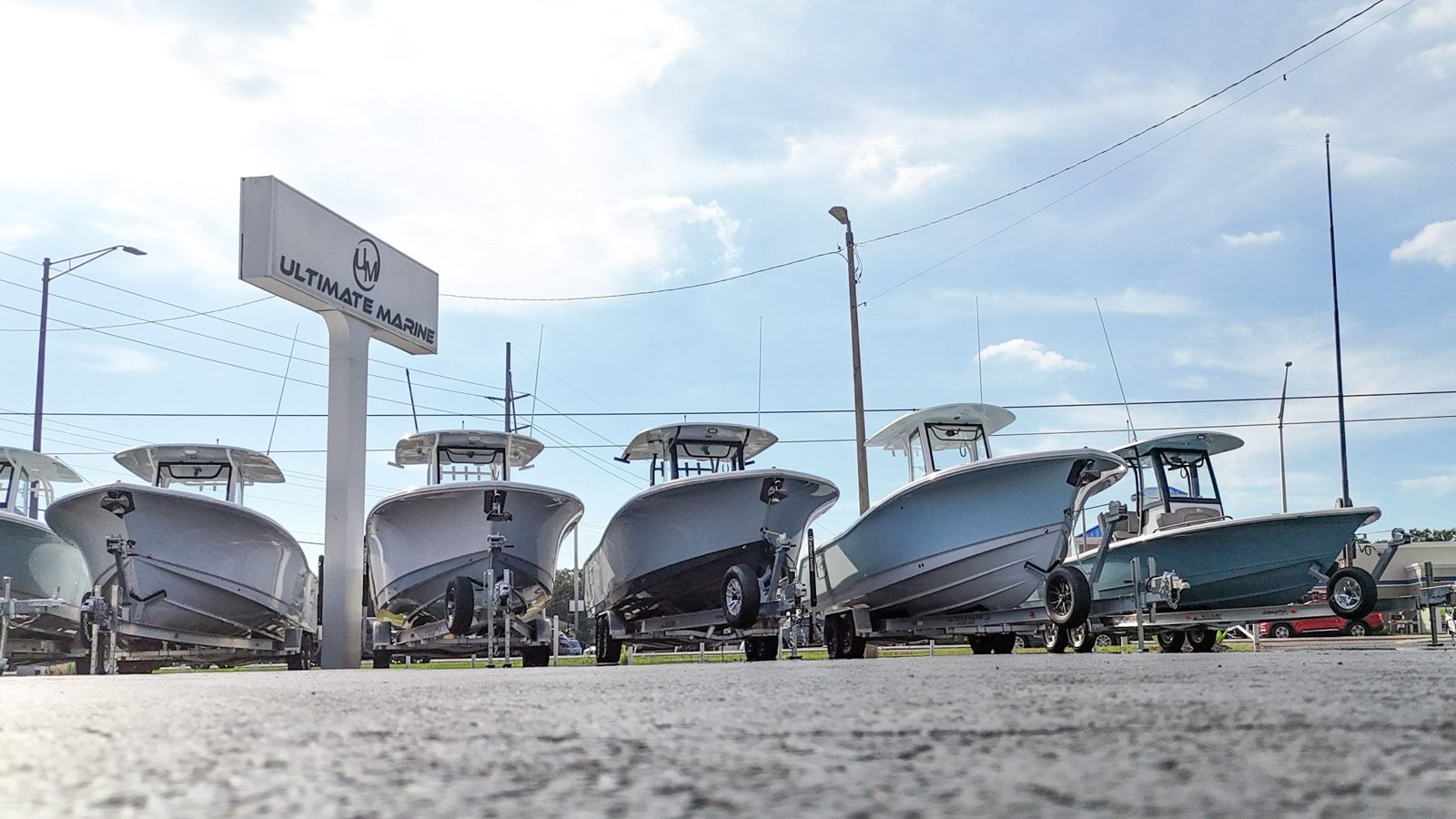
- Who collects the tax. A registered Florida dealer collects sales tax at the sale. On a private sale you pay use tax when you title and register.
- What gets taxed. In Florida, a dealer sale is taxed on the vessel, motor, trailer and accessories. A private (casual) sale is taxed on the vessel, any inboard motor and the trailer; an outboard motor and accessories may be exempt if they are itemized and priced separately on the bill of sale.
- Trade-ins. At a dealer you're taxed only on the price minus your trade-in allowance. Between individuals, the Department of Revenue allows that only when a boat, motor vehicle, mobile home or aircraft is traded in the same transaction.
- What is covered. Ask in writing whether the sale is "as-is" and what, if anything, is warranted. Don't assume either way.
- What happens after. Ask who services the boat, what records come with it, and who you call if something fails in the first month.
You're comfortable with as-is terms and handling the title, tax and lien checks yourself.
Tax is collected at the sale, records are on file, and you know who to call after delivery.
A first-time buyer who will trailer a bay boat from a Brevard driveway often values a service department more than a lower asking price. An angler who has rewired two boats may happily take an as-is private deal and survey it properly. Either way, get what was inspected, and by whom, in writing.
What do Florida title, registration and tax require?
Check the current rules with the state; fees and rates change.
FLHSMV issues vessel titles and registrations, the Department of Revenue sets the tax, and you handle both at your county tax collector's office or a licensed plate agent. The tax rate and cap are in the quick-facts table above.
- 30 days. Carry the dated bill of sale aboard until you've titled and registered. Operating an unregistered vessel after 30 days is a second-degree misdemeanor.
- Documents. Bring the Florida title, or another state's title, completed for transfer. If that state doesn't title boats, bring its current registration and a bill of sale with the full description, including the HIN and length.
- Bought out of state. Florida use tax applies if you bring the boat in within six months of buying it. Tax paid to another state counts as a credit: buy in a 4% state and you owe the 2% difference plus any surtax.
- Registration term. One year or two.
Under Florida rules, the registration number goes on both sides of the bow's forward half in contrasting block characters at least three inches high, with the year decal on the port side next to it. The number stays with the boat while it's kept in Florida, so on a used boat you'll usually keep the existing one.
Under Florida law, operators born in 1988 or later need a Boating Safety Education ID card to run a boat of 10 horsepower or more, but a new owner is exempt for 90 days after purchase with a qualifying bill of sale aboard. Use that window to take the course. For the wider rules, see Florida boating laws.
How do financing, insurance and trade-ins work on a used boat?
Line up the money before you sign. Lenders look at the boat's age, condition and value, check for a clear title, and usually want a survey and proof of insurance for the full value; on a used boat they often ask for a tax return too. A dealer trade-in lowers the taxable amount in Florida, so get the allowance and the purchase price written as separate lines. Compare boats on total cost: tax, title, survey, insurance, a first service and trailer work, not the asking price. See how boat financing works and how to trade in your boat.
What should you do in the first month after you buy?
- Finish the state paperwork.Title and register, then put the numbers and decal on the hull.
- Service the engine.Unless the records show it was just done, start fresh on the maker's schedule: engine oil, gear lube, fuel filters, water pump and anodes.
- Check the safety gear.Under Florida law, the owner and operator are responsible for carrying the safety equipment the Coast Guard requires. The surveyor's A-list will flag gaps.
- Plan for salt and storms.See our guides to saltwater corrosion and hurricane prep.
See used boats
Tell us what you're after and we'll help you search.
Questions we hear
How long do I have to register a used boat after buying it in Florida?
Thirty days. FLHSMV gives the buyer of a new or used vessel 30 days to title and register it at a county tax collector or license plate agent office. During that window, keep proof of the purchase date aboard, such as the dated bill of sale. Running an unregistered vessel after the 30 days is a second-degree misdemeanor. Bring the signed-over title, or from a state that doesn't title boats, its registration plus a full bill of sale, and payment for any tax due.
Do you pay sales tax on a used boat bought from a private seller in Florida?
Yes. When the seller isn't a registered dealer, Florida's 6% use tax plus any county surtax is paid when you title and register the boat. The surtax applies to the first $5,000 of the price, and the total tax on one boat is capped at $18,000. On a private sale an outboard motor and accessories may be exempt if they are itemized and priced separately on the bill of sale, so write the bill of sale carefully.
Does a boat trailer need a title in Florida?
It depends on weight. In Florida, a trailer with a net weight of 2,000 pounds or more must be titled and registered, while a trailer of 1,999 pounds or less is registered only. The trailer is separate from the boat and has its own serial number, so list it as its own line on the bill of sale. That also helps at the tax collector, since on a private sale the trailer is taxable along with the vessel.
How many hours is too many on a used outboard?
There's no single cutoff. Hours tell you how long the engine ran, not how well it was kept. A well-serviced outboard with several hundred hours can be a better buy than a low-hour motor that sat with old fuel. Compare the hours with the service records: Yamaha, for example, schedules engine and gear oil changes every 100 hours or annually. Then have a technician run a computer scan where the engine supports it, a compression test and a check of the lower-unit oil.
Can I drive a boat I just bought without a boating safety card?
For a short time, in some cases. Under Florida law, anyone born on or after January 1, 1988 needs a Boating Safety Education ID card to run a boat of 10 horsepower or more, but there is an exemption for someone operating within 90 days of buying the vessel with a qualifying bill of sale aboard. The card is good for life once you pass an approved course, so taking it during that window is the simple fix.
Is a marine survey required to buy a used boat in Florida?
A survey isn't part of Florida's title and registration requirements, but BoatUS advises one on any boat costing a few thousand dollars or more, and lenders and insurers often require one before they'll finance or cover the boat. Hire your own surveyor, ideally a SAMS or NAMS member, rather than one the seller suggests. Add an engine technician's inspection, since most hull surveyors don't run detailed engine diagnostics.
Sources
- Florida Department of Highway Safety and Motor Vehicles, Vessel Titling and Registrations..
- Florida Department of Revenue, Sales and Use Tax on Boats (GT-800005)..
- FLHSMV, Sales and Use Tax: Transfer of Motor Vehicles, Mobile Homes and Vessels (TL-08)..
- FLHSMV, Numbering and Decals..
- FLHSMV, Procedure RS-63: Trailers..
- 33 CFR 181.25, Hull identification number format..
- 33 CFR 181.29, Hull identification number display..
- U.S. Coast Guard National Vessel Documentation Center..
- Florida Fish and Wildlife Conservation Commission, Boating Regulations..
- FWC, Boater Education..
- Yamaha Outboards, Maintenance Matters..
- BoatUS, Boat Buyers Guide..
- BoatUS, The Boat Survey..
- BoatUS, The Value Proposition..
- BoatUS Foundation, Transportation and Trailering..
- BoatUS, Boat Evaluation Checklist..