
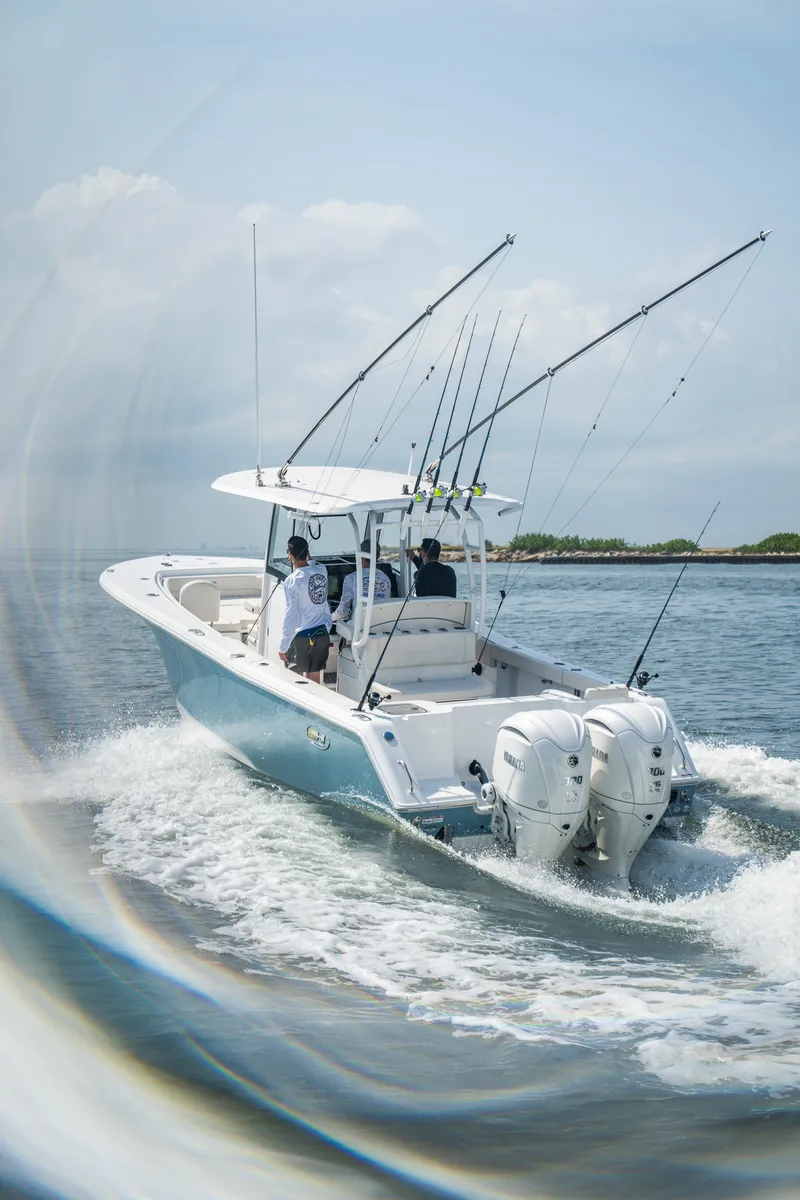
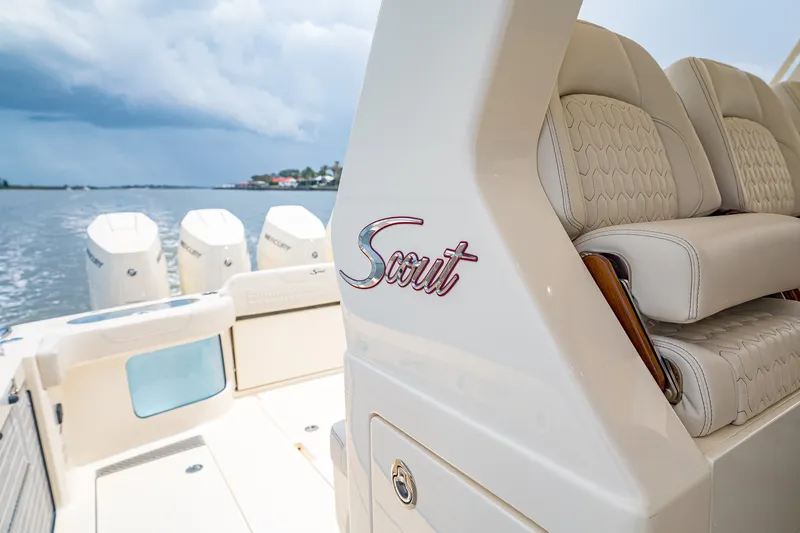
Scout 215 XSF vs 240 XSF: which one fits you?
The smallest and biggest boats in Scout's XSF series, side by side: size, ride, fuel, what comes standard, and what to know if you were looking for a 235 XSF.
In this article
- The 215 XSF is the light, simple entry to Scout's XSF series: 21′ 6″, 200 hp max, 82 gallons and a 15.75-inch draft.
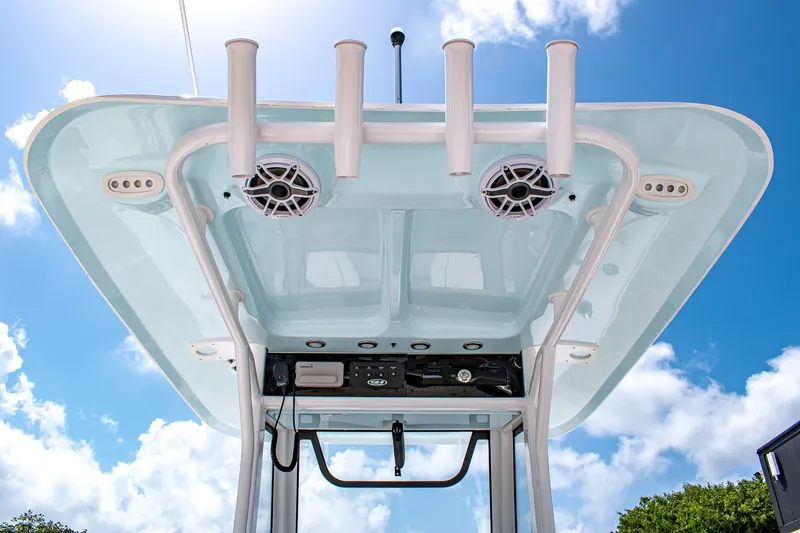
- The 240 XSF is the biggest XSF: 24′ 4″, 300 hp max, 100 gallons, with a hardtop, forward console seat, Garmin display and Seakeeper Ride standard.
- Both have an 8′ 6″ beam, so both can be towed on Florida roads without a width permit. Scout's current lineup has no 235 XSF; the 220 XSF sits between these two.
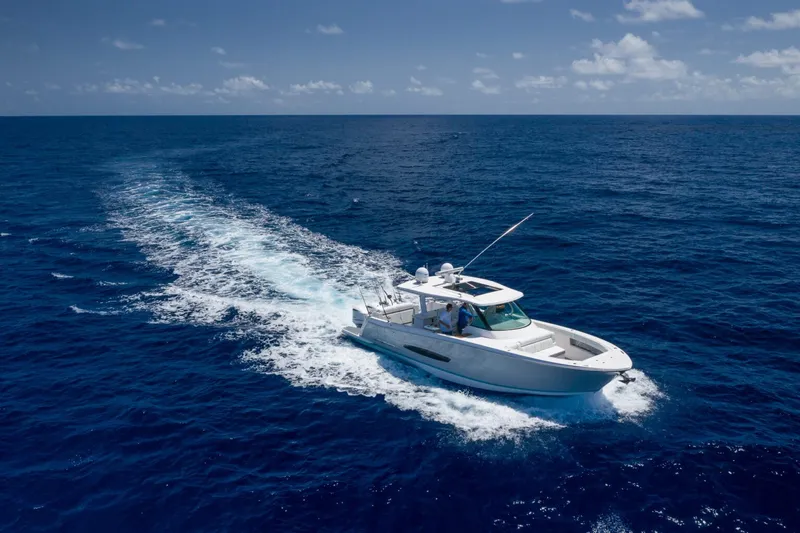
Scout's XSF series is its line of smaller center consoles, built to fish the bay and handle a fair day nearshore. The 215 XSF and the 240 XSF bookend the series. They share a beam and a 20-degree deadrise; length, weight, power, fuel, standard equipment and draft all change. The short version: the 215 is the light, shallow, simple boat; the 240 is the roomier, smoother one with more built in.
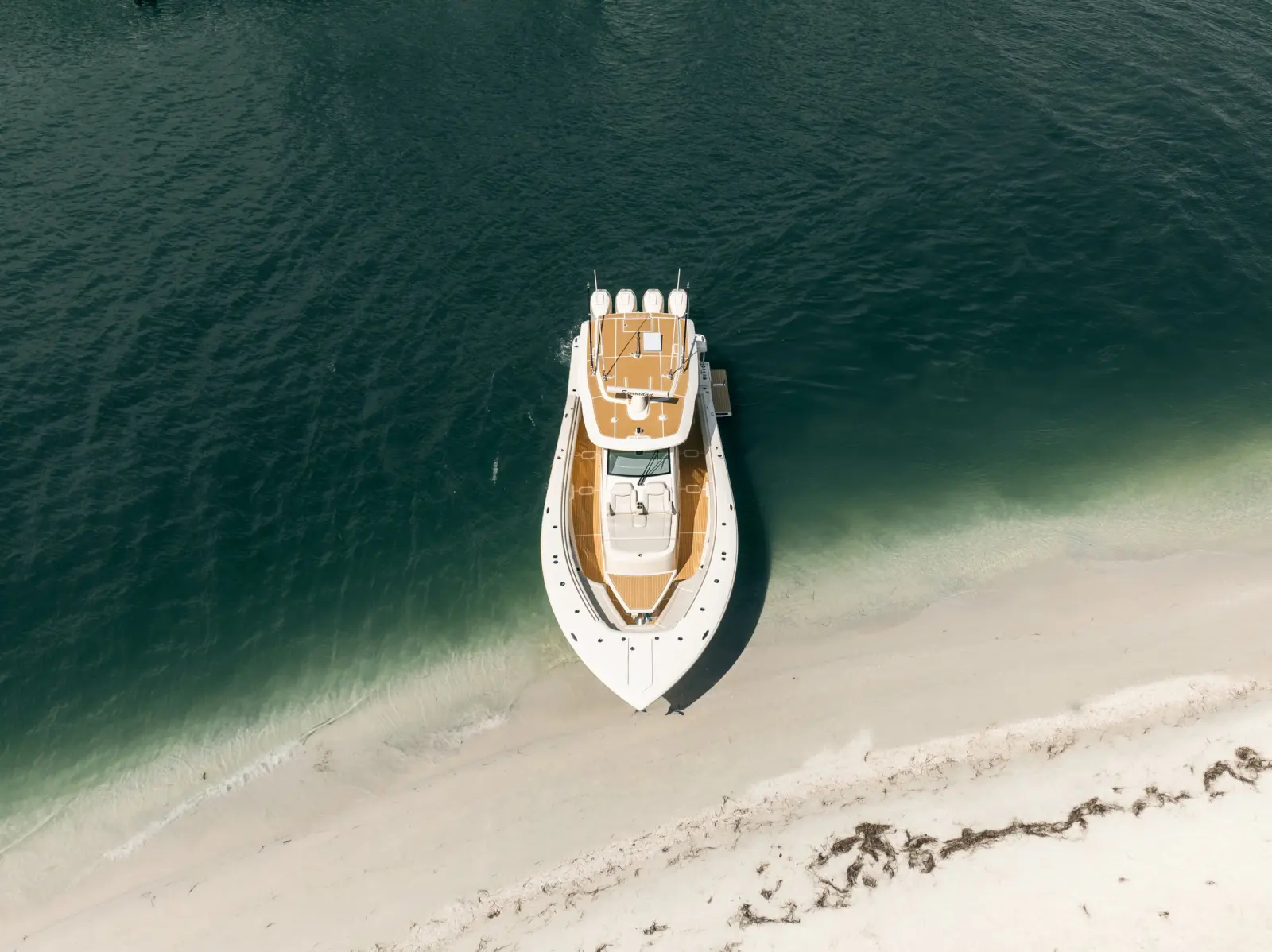
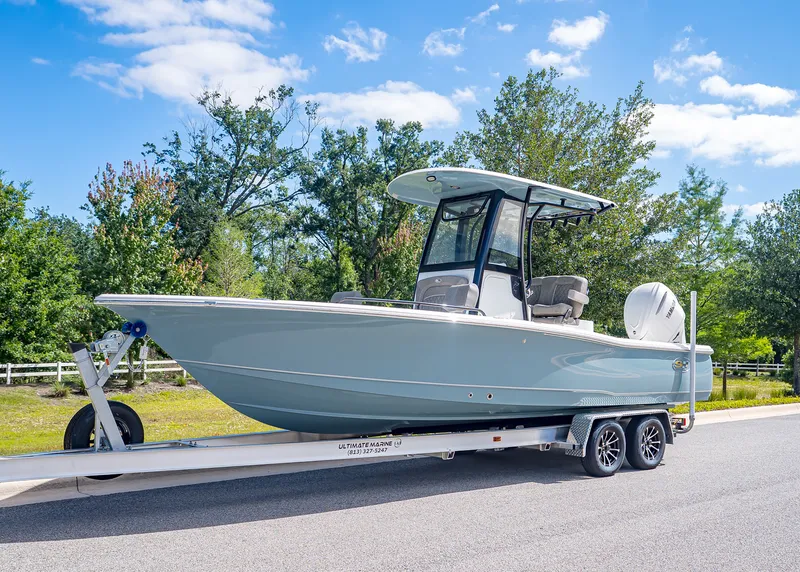
Light, shallow and quick to launch, for bay days and calm nearshore runs.
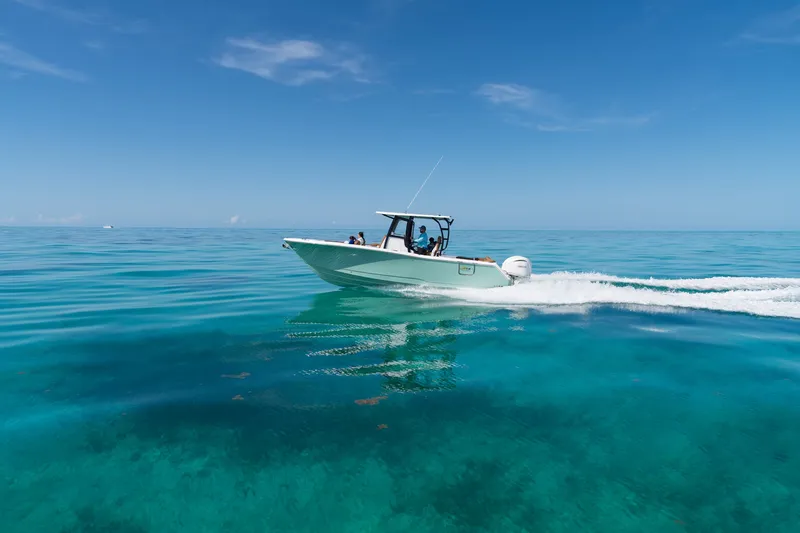
Nearly three more feet, 100 more horsepower, and shade, electronics and stabilization standard.
Scout 215 XSF vs 240 XSF: specs side by side
| Scout 215 XSF | Scout 240 XSF | |
|---|---|---|
| Length | 21′ 6″ | 24′ 4″ |
| Beam | 8′ 6″ | 8′ 6″ |
| Draft (approx.) | 15.75″ | 19.5″ |
| Dry weight without engine (approx.) | 2,776 lb | 3,655 lb |
| Deadrise | 20° | 20° |
| Max power | 200 hp | 300 hp (Yamaha) |
| Fuel | 82 gal | 100 gal |
| Fresh water | 13 gal | 15 gal |
| Baitwell | 21-gal aerated cockpit well | 15-gal aerated transom well |
| Person capacity | 9 / 1,500 lb | 11 / 1,600 lb |
Specs from Scout's model flyers for the 215 XSF and 240 XSF, current model year.
Start with what's the same. Both boats are 8′ 6″ wide with a 20-degree deadrise, so neither is a wider, softer-riding hull in the way a bigger beam would be. The 240's ride advantage comes from length, weight and equipment, not a deeper V.
Then read the weight and draft rows together. The 240 weighs about 880 pounds more before its engine, and it draws close to four inches more. Weight is what carries a boat through a chop instead of bouncing over it. Draft is what keeps you off a grass flat. You can't have more of one without the other, and that's the core trade between these two boats.
The 240 is rated for eleven people and the 215 for nine. Those are calm-water maximums; plan on fewer for a comfortable day with coolers and gear.
How fast are the Scout 215 and 240 XSF, and what do they burn?
| Scout test data | 215 XSF, Yamaha F200 | 240 XSF, Yamaha F300 |
|---|---|---|
| 3,500 rpm | 23.7 mph, 5.5 gph, 4.30 mpg | 31.0 mph, 8.9 gph, 3.48 mpg |
| 4,000 rpm | 29.8 mph, 7.6 gph, 3.95 mpg | 35.4 mph, 12.1 gph, 2.93 mpg |
| 4,500 rpm | 34.4 mph, 9.7 gph, 3.55 mpg | 40.8 mph, 15.8 gph, 2.59 mpg |
| Top speed | 48.3 mph at 6,000 rpm | 53.5 mph at 5,900 rpm |
| Time to plane | 4.5 sec | 3.6 sec |
Scout's test numbers, from its performance bulletins for the 215 XSF with a Yamaha F200 and the 240 XSF with a Yamaha F300. Both bulletins list a September 2017 test date, with two people aboard and a hardtop. Scout calls the figures approximate and a guideline only.
These are September 2017 factory tests, and the figures are approximate. A new boat's engine, prop and equipment can differ, and real days add people, ice and a sea. Use the table to compare the two boats, not to plan a trip to the gallon.
The pattern is clear, though. At the same engine speed, the 240 runs about 5 to 7 mph faster than the 215, because it carries 100 more horsepower. It also burns more fuel per hour and covers fewer miles per gallon at those settings. The 215's best mileage in the table is around 4 mpg at a mid-20s cruise; the 240 sits closer to 3 to 3.5 mpg at a low-30s cruise. The 240's estimated range is 348 miles with a Yamaha 300, measured at optimal cruise in good conditions.
What that means on the water: the 240 gets you to the spot faster and gets on plane quicker with a load, which helps when you're running out of an inlet against a short chop. The 215 stretches a tank further and costs less to run on a long day in the bay. Neither is a long-range offshore boat. Plan fuel by thirds either way: a third out, a third back, a third in reserve.
Scout 215 XSF: light, shallow and simple to own
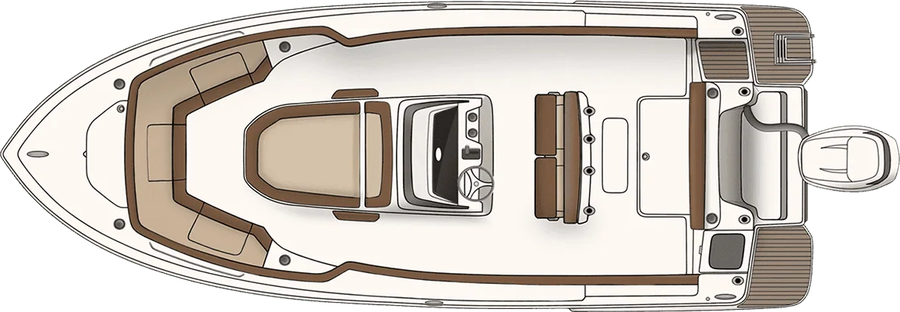
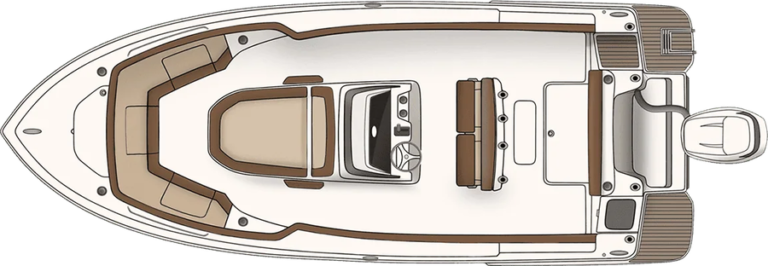
Layout. Scout builds the 215 XSF on its NuV3 hull, which it describes as fuel-saving, with 100% hand-laid fiberglass. The bow has forward seating with bolsters and a full cushion set, and a forward sun lounge that doubles as a coffin box. Behind the console is a powder-coated aluminum leaning post with a backrest and a 72-quart Igloo cooler, and the cockpit carries a 21-gallon aerated baitwell with a high-speed pickup. The cockpit is 22 inches deep.
What comes standard. Hydraulic steering (with the 150 hp engine), digital gauges, a compass, a Fusion Bluetooth stereo, four under-gunnel rod racks, four flush-mount rod holders, a raw-water washdown in the livewell, a transom door, and swim platforms on both sides with a ladder. A top, a toilet and Garmin displays are options, not standard: options include a Bimini or a powder-coated hardtop T-top, a Porta Potti and Garmin screens.
On Florida water. A 15.75-inch draft and a light hull make this a protected-water boat first. It fits the Indian River and Banana River, the edges of Mosquito Lagoon, Tampa Bay on a calm morning and the Keys' backcountry channels. On a fair day it reaches nearshore reefs and wrecks. When the afternoon sea breeze builds a 2-foot chop on open water, a 21-foot boat is the one you slow down in.
Shade. Budget for a top. A Florida summer without one is a long day, and the hardtop option also gives you a place for electronics and rod launchers. Availability on the 215 XSF is limited, so ask before you count on a particular build.
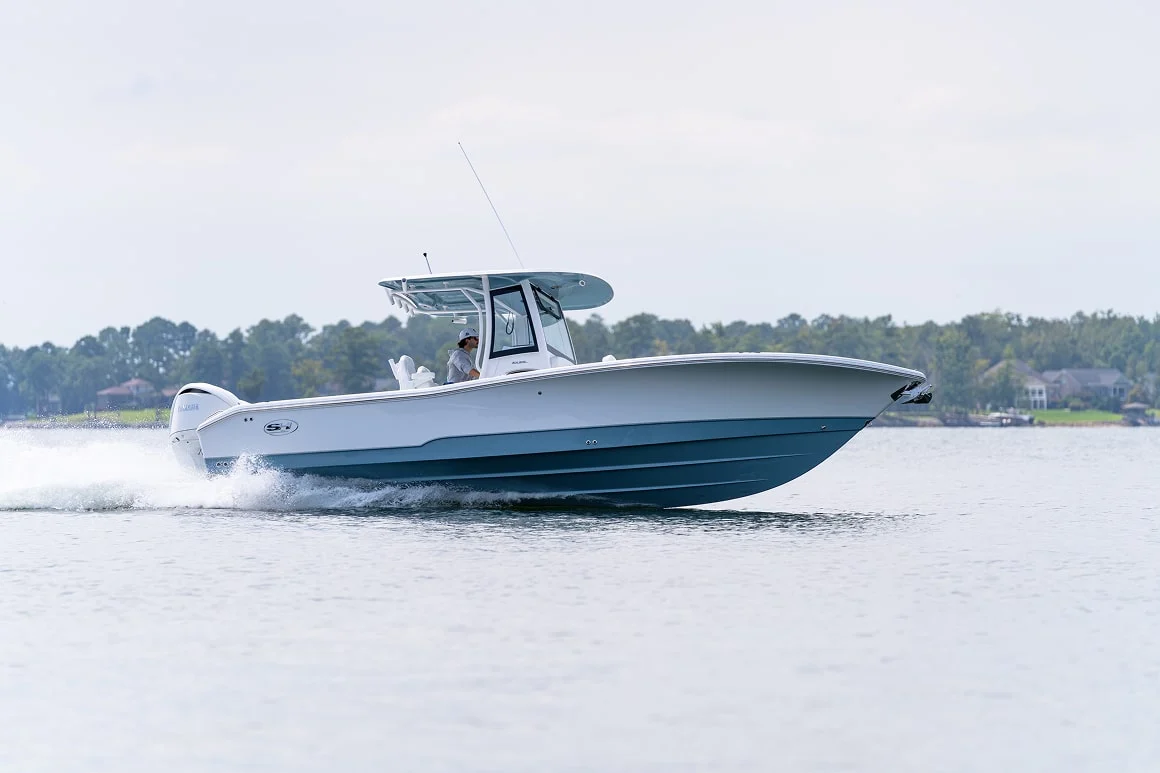
Light, shallow, easy to tow and launch, with a 21-gallon baitwell.
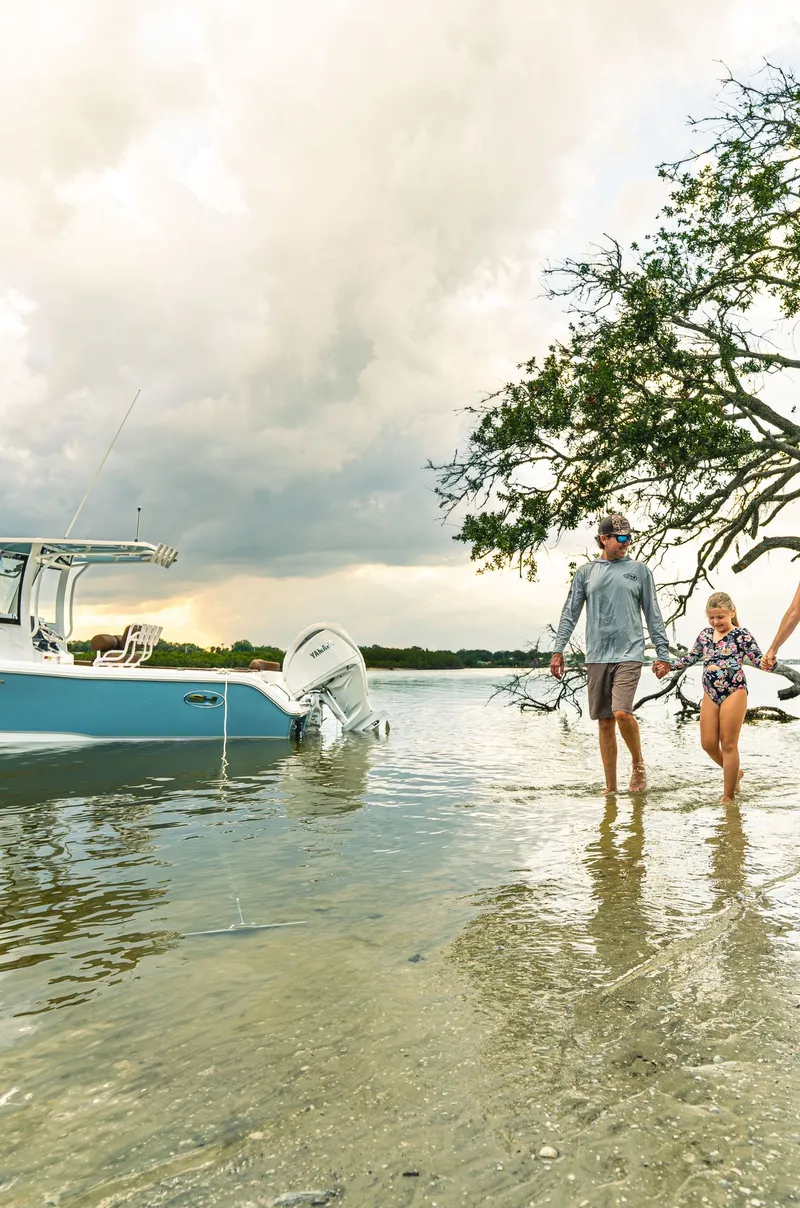
The 240 gives everyone a seat and more room.
Scout 240 XSF: more room, shade and electronics built in
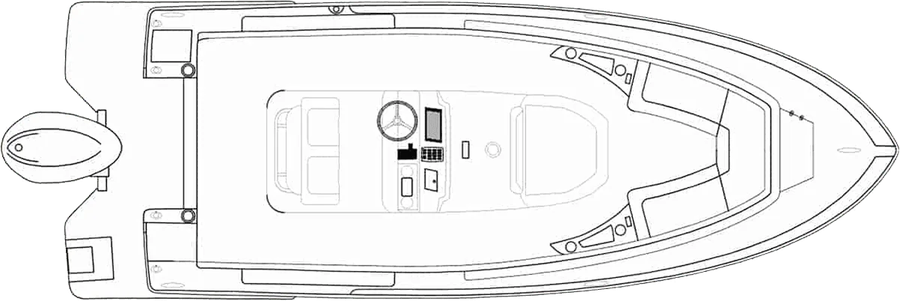
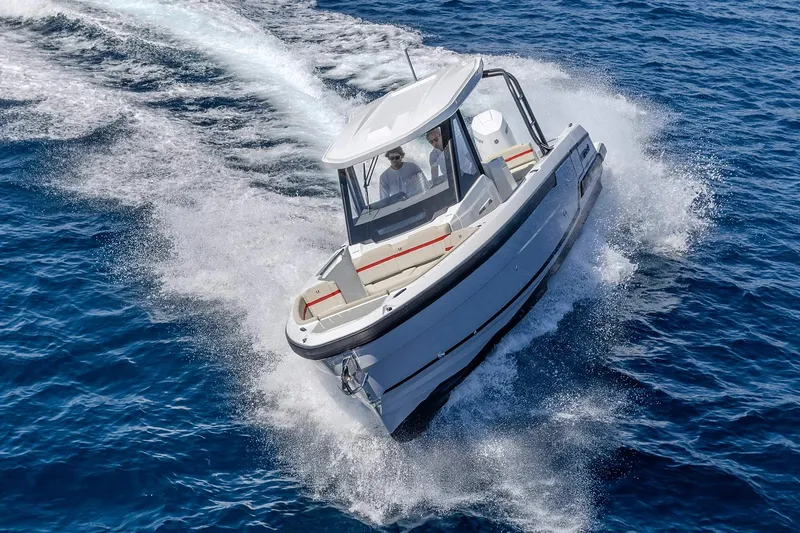
Layout. The 240 XSF is the biggest XSF, and it's a forward-seating center console: a lounge seat in front of the console, with cushions, plus bow seating with backrests. The forward lounge box doubles as a 61-gallon fish box with an overboard pump-out. Scout used a longer outboard shaft to get rid of the transom splash well, which gives a level, full-width swim platform, and there's a fold-away stern seat and a walk-through transom door.
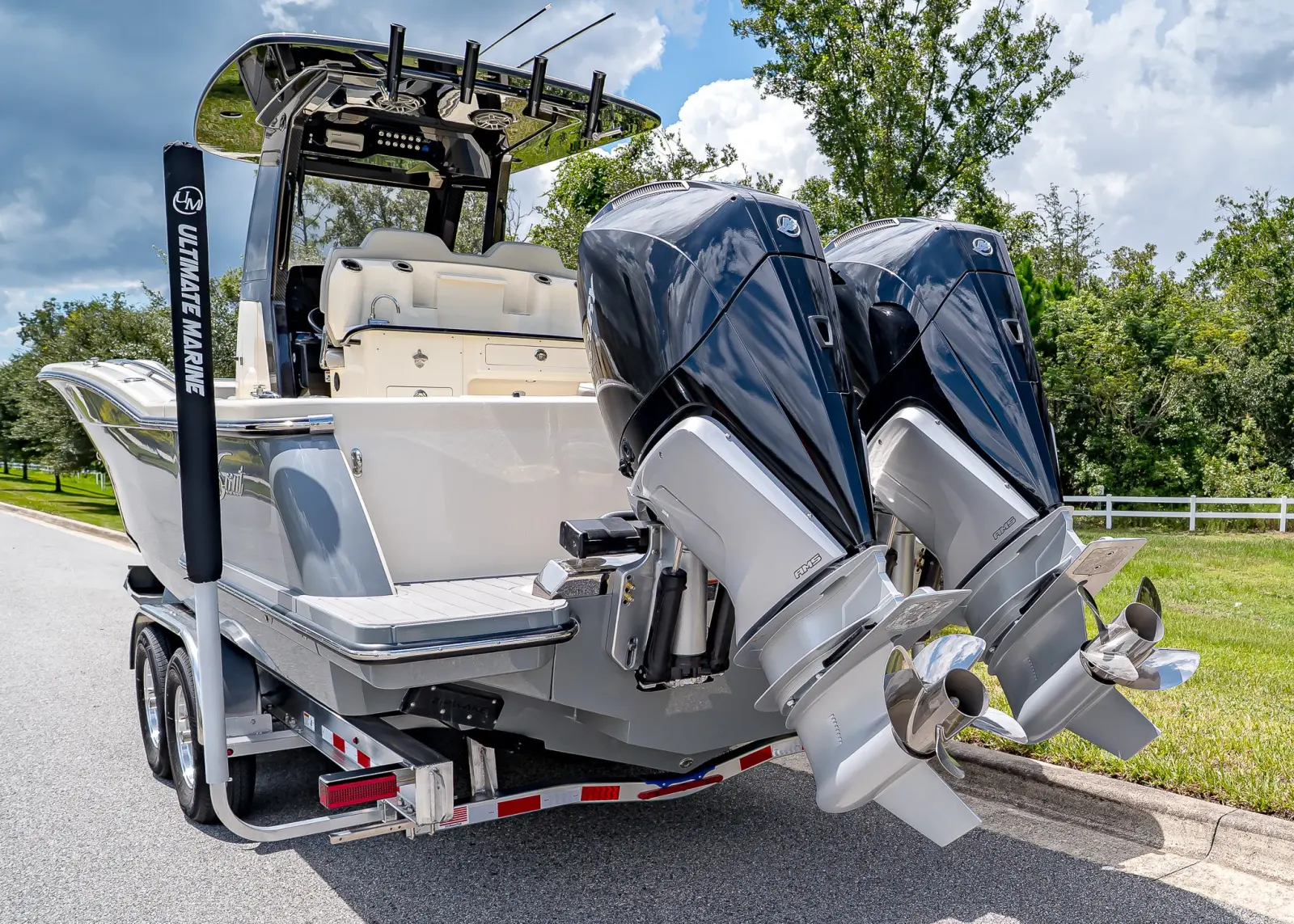
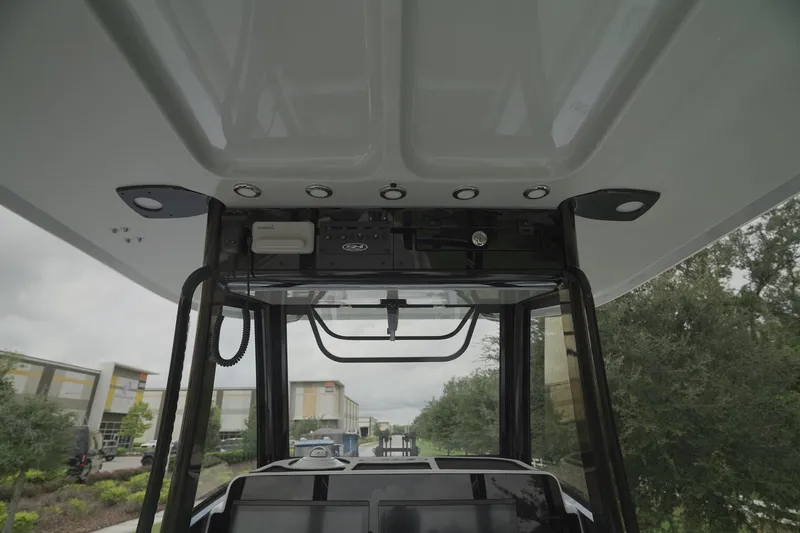
What comes standard. This is where the price gap shows up as equipment. The standard list includes a powder-coated hardtop with LED spreader lights and a full windshield, a Garmin 943XS display with a GT12M transducer, SeaStar hydraulic steering with tilt, house and cranking batteries, an elite leaning post with an Igloo cooler, rod and cup holders, rocket launchers on the hardtop, and Seakeeper Ride as standard. Seakeeper says Ride is an active system that cuts underway pitch, roll and yaw, by up to 70% by its own figures.
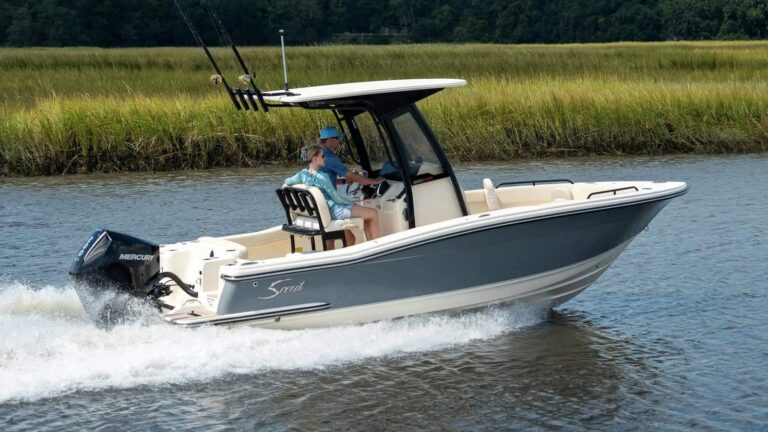
On Florida water. Length, weight and Seakeeper Ride all work on the same problem: a short, steep chop. That's the water you meet crossing Tampa Bay on a summer afternoon or coming back through Ponce or Sebastian Inlet with the tide against the wind. The 240 handles it more comfortably than the 215. The cost is a 19.5-inch draft, so the shallowest lagoon flats are off the list.
Head. A toilet is still optional: Scout offers a Porta Potti or a self-contained porcelain head. If you carry kids or guests, factor that in.
Forward seating, a hardtop, a Garmin and Seakeeper Ride standard.
Nearly 4 inches more draft than the 215.
What happened to the Scout 235 XSF?
The current XSF lineup includes the 215, 220 and 240 XSF, and no 235 XSF. If you were looking at a 235 XSF, the closest new boats are the 220 XSF and the 240 XSF. If you're set on a 235, a used one is the way to get it, and the used-boat buying guide covers what to check.
The 220 XSF is the middle step people often skip. It's 22′ 4″ on the same 8′ 6″ beam, rated to 250 hp, with 84 gallons of fuel and a hardtop standard. If the 215 feels small but the 240 is more boat than you need, sea trial the 220.
Which Scout XSF fits your Florida water?
| Where you boat most | What matters | Lean toward |
|---|---|---|
| Indian River, Banana River, Mosquito Lagoon | Draft, shallow ramps, slow-speed zones | 215 XSF |
| Tampa Bay and other big open bays | Afternoon chop, room for guests | 240 XSF |
| Nearshore Atlantic through Ponce or Sebastian Inlet | Inlet conditions, ride in a short chop | 240 XSF |
| Keys backcountry | Very shallow water | 215 XSF |
| Lakes and rivers around Orlando | Easy launching, light towing | 215 XSF |
A starting point for a sea trial.
The lagoon system rewards shallow draft and patience. FWC sets manatee protection zones with speed limits in parts of the Indian River Lagoon, so long runs can mean miles at idle, where the 215's light weight and lower fuel burn help. Open bays and inlets reward length and weight. A 24-foot boat with active ride control spans more of a short chop and pitches less, which keeps guests comfortable and the boat drier. If you split your time evenly, ride both on the kind of day you boat most, not on a glassy morning.
Can you tow and store a Scout XSF at home?
Usually, yes. Both boats are 8′ 6″ wide, right at Florida's 102-inch road limit, so measure the whole rig, fenders included. With the engine and a full tank, a 215 is near 3,750 pounds and a 240 near 4,800 before gear and trailer, using the engine weights from the test bulletins. Bridge clearance is about 7′ 9″ for the 215 and 7′ 2″ to the 240's T-top; check it against your garage door. For upkeep and storm season, see our saltwater corrosion guide and hurricane prep checklist.
Ask us which XSF fits
Tell us where you boat, who comes along and where the boat will live. We'll walk you through the 215, 220 and 240 XSF.
Questions we hear
What are the Scout 215 XSF specs?
The 215 XSF is 21′ 6″ long with an 8′ 6″ beam, a draft of about 15.75 inches and a 20-degree deadrise. It weighs about 2,776 pounds dry without the engine, carries 82 gallons of fuel and 13 gallons of fresh water, and is rated for up to 200 hp (150 hp recommended). It has a 21-gallon aerated baitwell and a rated capacity of nine people or 1,500 pounds.
Does Scout still make the 235 XSF?
The current XSF lineup includes the 215, 220 and 240 XSF, and no 235 XSF. For a new boat in that size range, look at the 220 XSF (22′ 4″, 250 hp max) or the 240 XSF (24′ 4″, 300 hp max). If you want a 235 specifically, shop used, and have the boat and engine checked before you buy.
What is the difference between the Scout 215 and 240 XSF?
The 240 is 2′ 10″ longer, about 880 pounds heavier before the engine, and rated for 300 hp against the 215's 200. It carries 100 gallons of fuel against 82. The 240 adds a forward console seat and comes with a hardtop, a Garmin display and Seakeeper Ride standard. The 215 draws about 4 inches less and is lighter to tow. Both are 8′ 6″ wide.
How fast is the Scout 240 XSF?
In Scout's performance bulletin from a September 2017 test with a single Yamaha F300 and two people aboard, the 240 XSF reached 53.5 mph at 5,900 rpm and ran 31 mph at 3,500 rpm, burning 8.9 gallons an hour (about 3.5 mpg). It got on plane in 3.6 seconds. The figures are approximate; a loaded boat in a sea will be slower and burn more. Estimated range is 348 miles with the Yamaha 300.
What is the difference between Scout XSF and LXF?
XSF boats are Scout's smaller center consoles, from 21′ 6″ to 24′ 4″ in the current lineup. LXF boats are its larger luxury center consoles, starting with the 260 LXF and running past 40 feet. XSF boats suit owners who trailer and spend their days between the bay and nearshore water. Moving up to an LXF means a bigger boat to store, tow or dock, and more boat for longer runs.