







Do Sea Hunt boats come with a trailer?
In this article
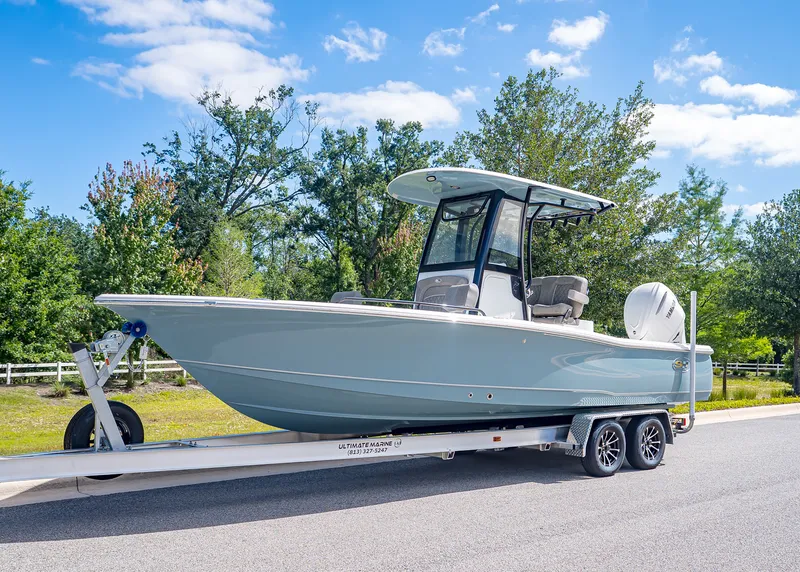
It depends on how you'll keep the boat. If you need a trailer, we add one matched to your boat as a separate line on the quote. Plenty of owners keep the boat at the water and never need a trailer, so you only pay for one if you'll use it. If you do trailer, size it for the loaded boat, not the dry weight, and expect Florida's brake, width and registration rules to apply.
A trailer decides which ramps you can use, which vehicle you need and how the hull is supported for years. This guide covers whether you need one, what it has to carry, how it's matched to a Sea Hunt, what Florida law requires and what to ask before adding one to a quote. Trailer guidance comes from BoatUS; Florida rules come from the statutes and FLHSMV. See current boats on the Sea Hunt page.
Do you need a trailer for your Sea Hunt?
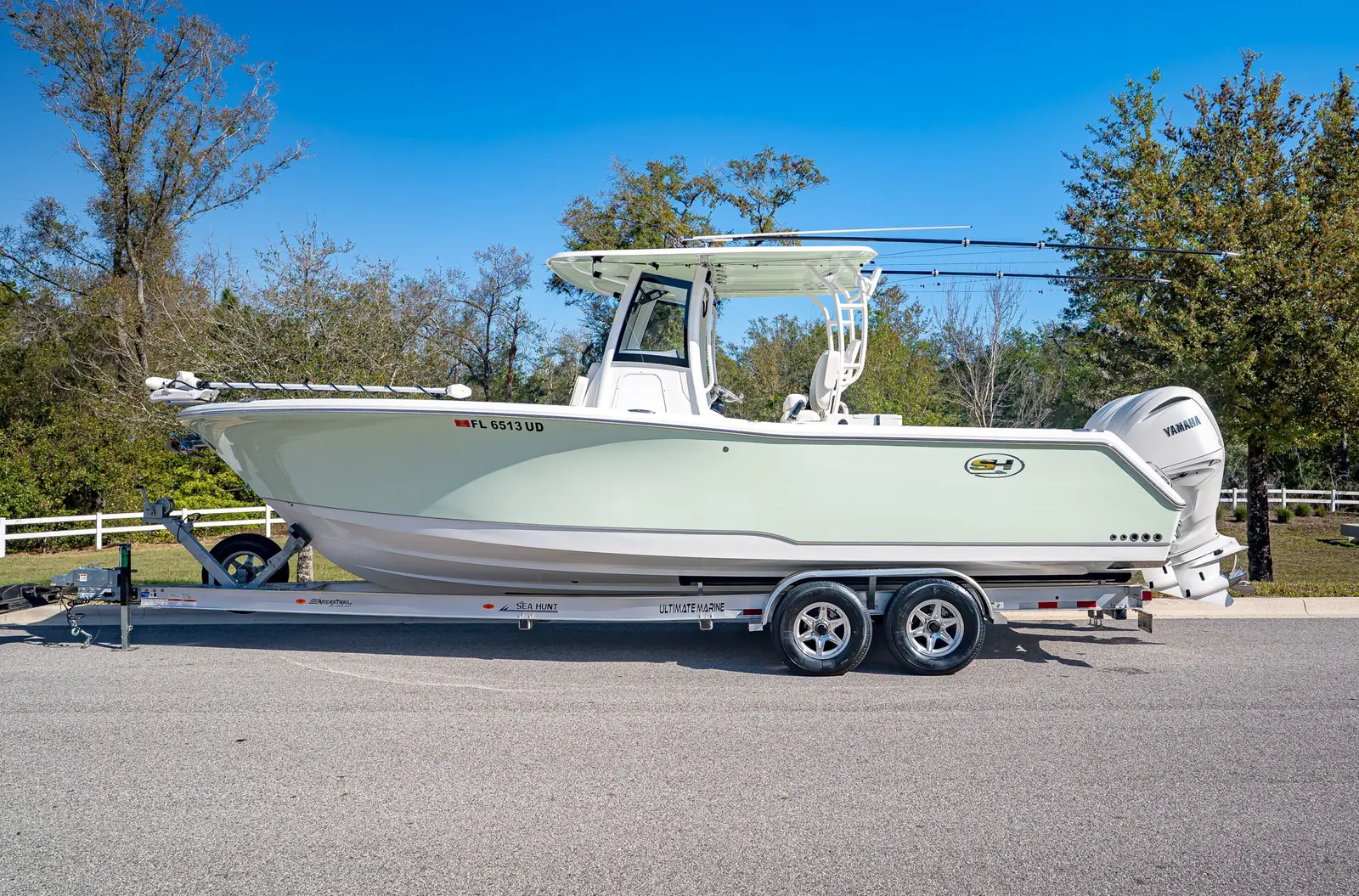
You launch at public ramps, trailer to different coasts, or store the boat in your driveway or garage.
You keep it on a lift, in a slip or in dry storage. Larger boats are often kept this way.
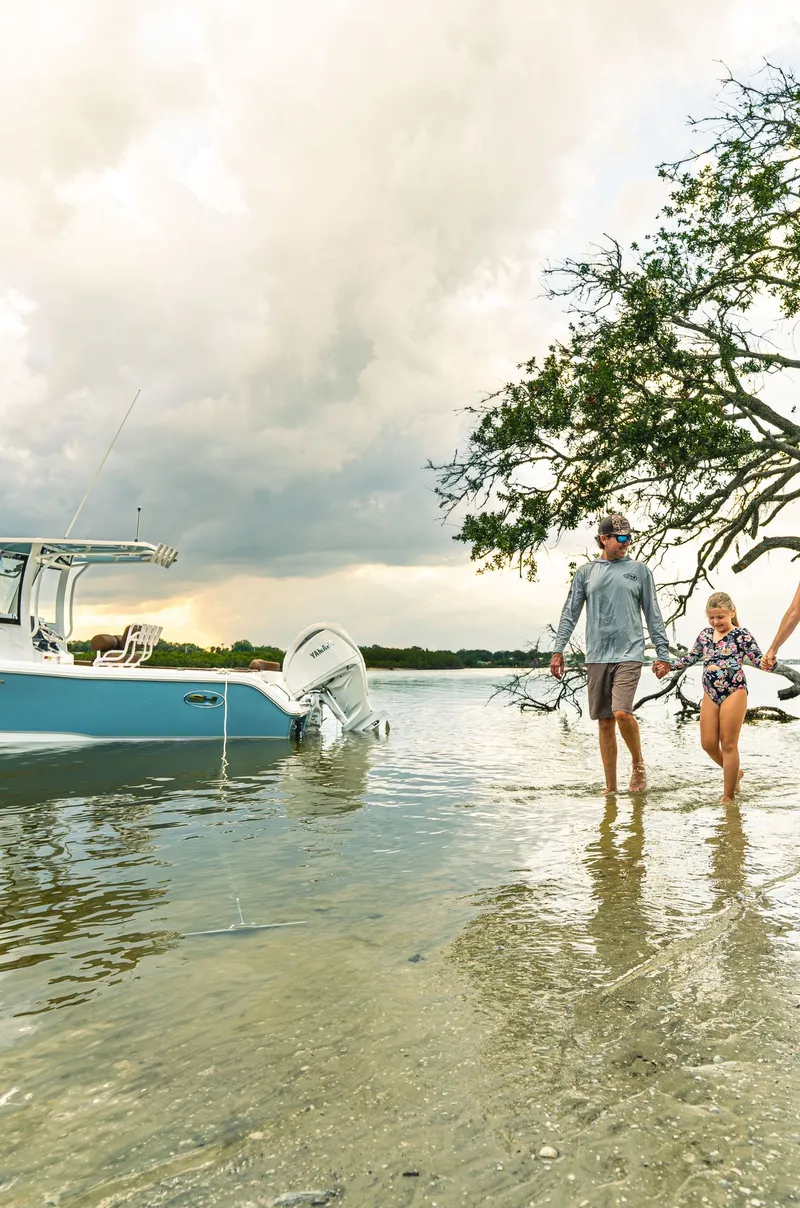
Trailer at home. You keep the boat in the driveway or garage and launch at public ramps. It's the most flexible option: an angler in Orlando can fish Mosquito Lagoon on Saturday and the Gulf off Crystal River the next weekend. It also means ramp time, towing and trailer maintenance on every trip.
Lift or slip. If you live on the water or rent a slip, the boat stays where you use it. A lift keeps the hull out of the salt between trips. You may still want a trailer for service visits and hurricane moves, or you can hire a hauler when needed.
Dry stack. A marina stores the boat on a rack and puts it in the water when you call ahead. No trailer, no ramp, but you're tied to that marina's hours and its size limits.
Ask yourself where the boat will sleep most nights. If the honest answer is the driveway, budget for a good trailer. If it's a lift or a rack, a trailer may be something you never use.
How much does a Sea Hunt trailer have to carry?
| Sea Hunt model | Beam | Listed dry weight | Within 102″ road width? |
|---|---|---|---|
| Ultra 219 | 8′ 3″ | 2,350 lb | Yes |
| BX 22 BR | 8′ 5″ | 2,700 lb | Yes |
| Ultra 234 | 8′ 6″ | 2,800 lb | Yes |
| BX 25 FS | 8′ 6″ | 3,700 lb | Yes |
| Ultra 255 SE | 8′ 9″ | 4,600 lb | No |
| Gamefish 25 | 9′ 2″ | 6,100 lb | No |
| Gamefish 27 CB | 9′ 6″ | 6,600 lb | No |
Beam and dry weight from our model pages, checked October 2026. Dry weight is before fuel, gear and the trailer; ask us for the rigged weight of the boat you're quoting.
Weight. Size the trailer for the loaded boat, not the brochure number: dry weight plus fuel at roughly six pounds a gallon, batteries, coolers and gear, plus the trailer itself. The Gamefish 25 weighs 6,100 pounds dry and carries 145 gallons; a full tank adds roughly 870 pounds before any gear.
Width. Florida caps a vehicle and its load at 102 inches (8′ 6″). Wider boats, from the Ultra 255 SE up through the Gamefish line, need an oversize permit; check FDOT's requirements. That's why owners of the bigger Sea Hunts lean toward lifts and dry storage, while most BX and smaller Ultra owners trailer.
How is a trailer matched to a Sea Hunt?
- Start with the loaded weight.The trailer has to carry the boat plus engines, fuel and gear, not just the dry weight.
- Match the hull.Bunks or rollers should support the hull where the builder recommends.
- Check your tow vehicle.Make sure its towing capacity covers the boat, trailer and gear together.
- Pick saltwater-ready parts.Ask about frame material, brakes and lights built for saltwater use.
With a new boat, the trailer choice is often left to the dealer, so the bunks or rollers are set to support the hull. That protects the warranty too: Sea Hunt's 10-year hull warranty doesn't cover hull damage caused by the boat's trailer.
- Bunks or rollers. Rollers make launching and retrieving easier; bunks give the hull better support. Many trailers combine the two (BoatUS).
- Single or tandem axle. Tandems track better, fishtail less, ride smoother and handle a blowout more safely.
- Frame. Painted steel is vulnerable in salt; galvanized needs less maintenance. Aluminum is also common; ask what yours is.
- Brakes. Surge brakes activate as the trailer pushes on the vehicle; electric brakes tie into its brake system. Both can be damaged by repeated dunking.
What does Florida require for a boat trailer?
A boat trailer is a road vehicle in Florida. Four rules matter most.
Brakes. Section 316.261, Florida Statutes, requires every trailer on a Florida highway to have brakes adequate to stop and hold it under any load, and brakes acting on all wheels. The exception is a trailer with a gross weight of 3,000 pounds or less that also meets weight-ratio and stopping-performance conditions. Gross weight includes the boat, so with Sea Hunt dry weights starting at 2,350 pounds before fuel, gear and the trailer itself, expect your trailer to need brakes on every wheel.
Title and registration. Florida requires trailers with a net weight of 2,000 pounds or more to be titled and registered; trailers of 1,999 pounds or less are registered only. Net weight here is the empty trailer. Ask us which applies to the trailer you're quoting, and keep the trailer's paperwork with the boat's.
Width. Section 316.515 sets the road limit at 102 inches, load included. Over that, you need an oversize permit.
Lights. Working brake lights, turn signals and tail lights, plus safety chains. Not all trailer lights are waterproof.
This isn't legal advice; for a permit or title question, ask FLHSMV or FDOT.
What tow vehicle and hitch do you need?
Your vehicle's towing capacity (owner's manual or door-jamb label) is the ceiling, and BoatUS advises a margin of several hundred pounds over what you'll pull. The hitch must be rated for boat, trailer and gear together:
| Hitch class | Maximum rating |
|---|---|
| Class I | 2,000 lb |
| Class II | 3,500 lb |
| Class III | 5,000 lb |
| Class IV | 10,000 lb |
BoatUS: the weight of boat, trailer and gear should never exceed the hitch's rating.
Keep 5 to 10 percent of the total weight on the hitch ball; too little makes a trailer sway, too much overloads the rear axle. A loaded small Ultra or BX can reach Class III; Gamefish and larger Ultras belong behind a Class IV hitch and a full-size truck. Practice backing in an empty lot before a busy weekend ramp; our boat ramp etiquette guide covers the launch.
How do you keep a trailer healthy in salt water?
Rinse the frame, axles, brakes and lights with fresh water after every salt launch, galvanized trailers included (BoatUS), check tires and lights before each trip, and carry a spare. Our guide to Florida saltwater corrosion covers the full routine for the trailer and the rest of the rig.
What should you ask before adding a trailer?
Ask us
Bring your vehicle's towing capacity and hitch class. Not sure you need a trailer yet? Quote the boat first; a trailer can be added later. For loans, see our financing guide.
Ask for a quote with or without a trailer
Tell us the model and how you'll store it. We'll quote the boat and, if you need one, the matching trailer as a separate line.
Questions we hear
Is a trailer included in the price of a Sea Hunt?
Ask us when you request a quote. If you need a trailer, it's added as its own line, matched to your boat's loaded weight and hull shape. If you'll keep the boat on a lift, in a slip or in dry storage, you may not need one at all, and you can always add a trailer later if your storage plans change.
Do boat trailers need brakes in Florida?
Usually, yes. Section 316.261, Florida Statutes, requires brakes acting on all wheels of a trailer. The exception is a trailer with a gross weight of 3,000 pounds or less that meets weight-ratio and stopping-performance conditions. Gross weight includes the boat, fuel and gear, so nearly any Sea Hunt on its trailer will be over that line and need brakes on every wheel.
Do I need to title and register a boat trailer in Florida?
Yes, at least register it. Florida requires trailers with a net weight of 2,000 pounds or more to be titled and registered; trailers of 1,999 pounds or less are registered only. Net weight is the empty trailer. Keep the trailer's title or registration with the boat's paperwork, and ask us which applies to the trailer on your quote.
Can you trailer a boat wider than 8 feet 6 inches in Florida?
Yes, with an oversize permit. Florida caps a vehicle and its load at 102 inches wide, which is 8 feet 6 inches. Sea Hunts up to that beam tow as normal loads; wider models, such as the Ultra 255 SE and the Gamefish line, need a permit for road travel. Many owners trailer them that way. Check FDOT's permit requirements before you plan to tow.
Can I finance a trailer with my boat?
Ask us and your lender whether a trailer can be included in the loan. Lenders set their own rules on what a boat loan can cover, so get the answer in writing before you sign. If the trailer isn't part of the loan, it can still go on the same quote as a separate line, and you can decide how to pay for each piece. See our financing guide for how boat financing works.