






Bay boat vs center console: what's the difference?
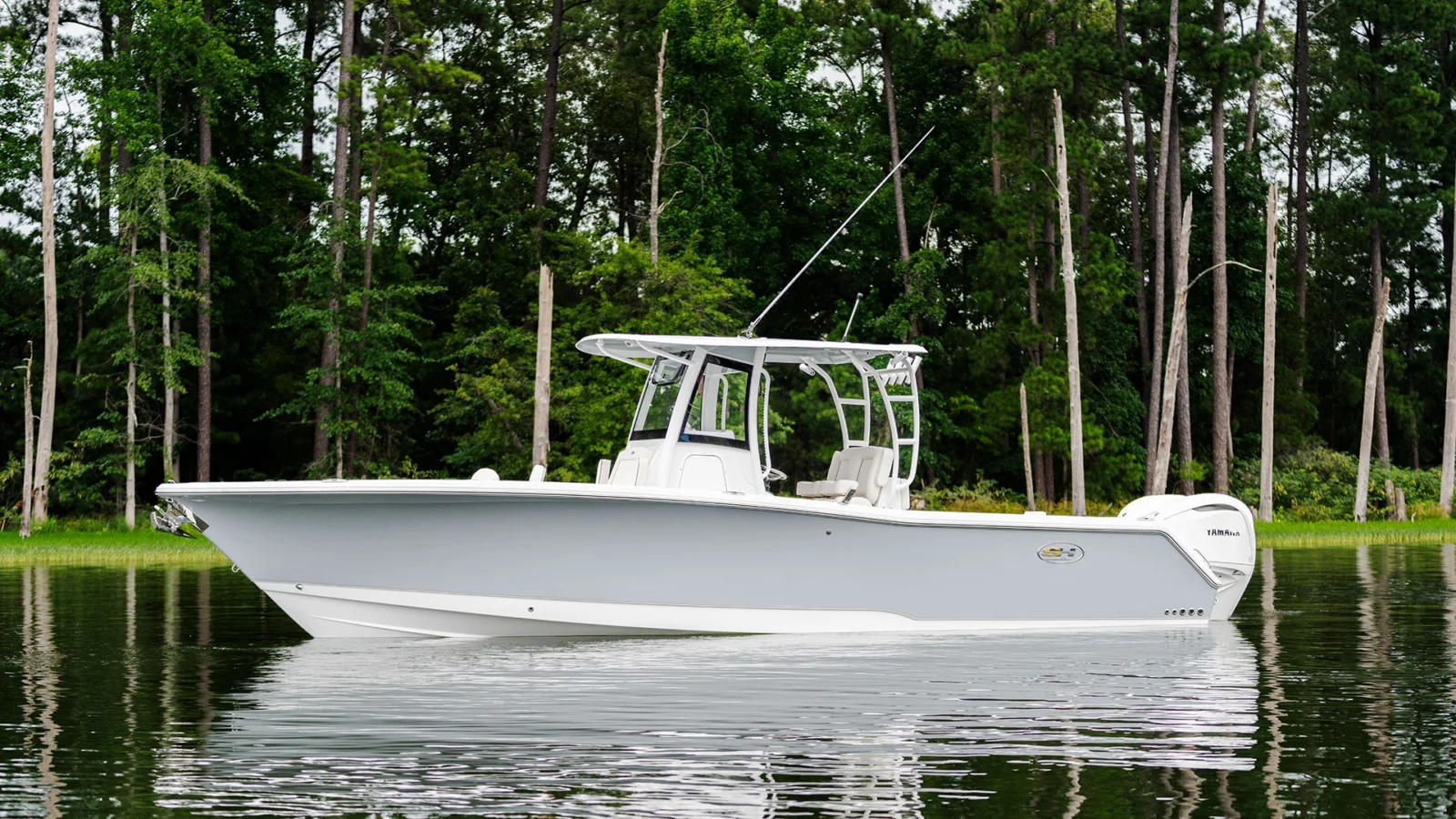
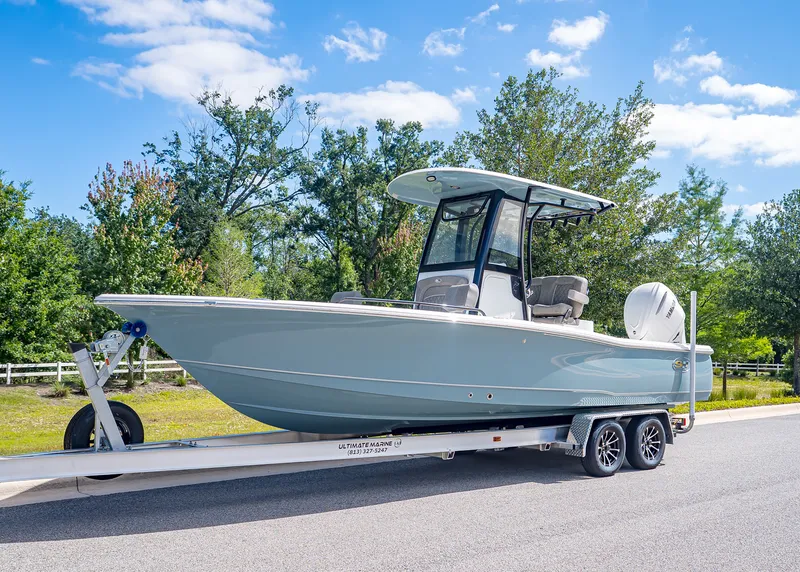
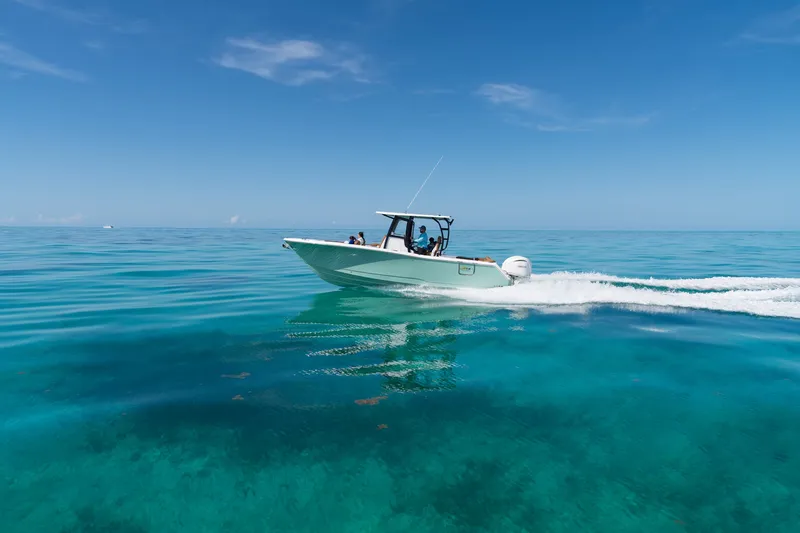
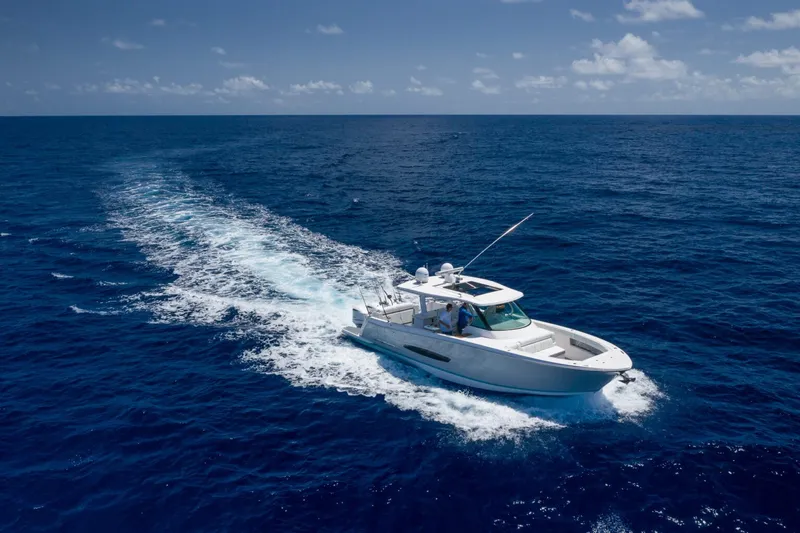
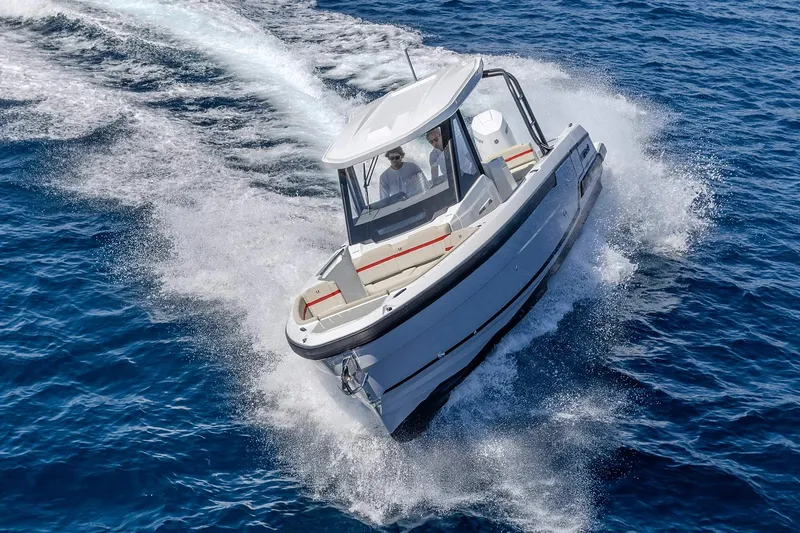
Both are center consoles. The hull underneath decides where each is happy: flatter and shallower for bays and flats, a deeper V for open water.
In this article
A bay boat is a center console built for shallow water: a flatter hull, less draft and big casting decks. An offshore center console has the same layout on a deeper V that rides better in chop, and it usually carries more fuel and higher sides. Fish the flats, creeks and bays most days? Get a bay boat. Run the inlet and fish offshore most weekends? Get an offshore center console. Split your time? Look at a big bay boat or a smaller family center console.
- A bay boat is a center console. The choice is the hull: shallow and flatter for bays and flats, or a deeper V for open water.
- Deadrise is the ride number. The BX 25 FS is 15/20/50 and the Gamefish 25 is 21/24/60, and you feel that gap in a 2-foot chop.
- Draft tracks size as much as hull type: the Ultra 234 lists 13 inches and the BX 28 bay boat lists 19, the same as the Gamefish 25.
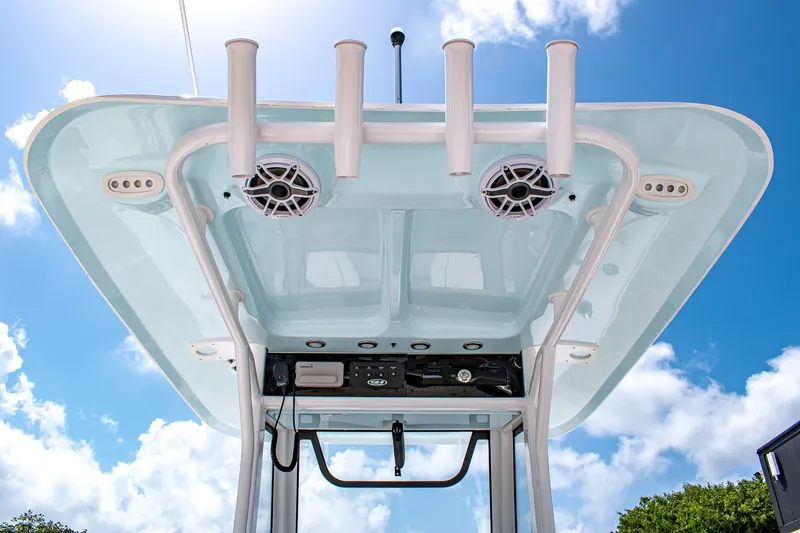
Both are center consoles. The hull underneath decides where each is happy: flatter and shallower for bays and flats, a deeper V for open water. Walk the docks at any Florida boat show and you'll see the same layout everywhere: helm in the middle, a walk-around deck, a T-top overhead. What differs sits below the waterline, and it decides how much water the boat needs and how wet your crew gets on the ride home.
The real examples here are three Sea Hunt lines, with numbers from Sea Hunt's own spec pages: the BX bay boats, the Ultra family center consoles and the Gamefish offshore boats.
Same layout, different hull: what actually changes?
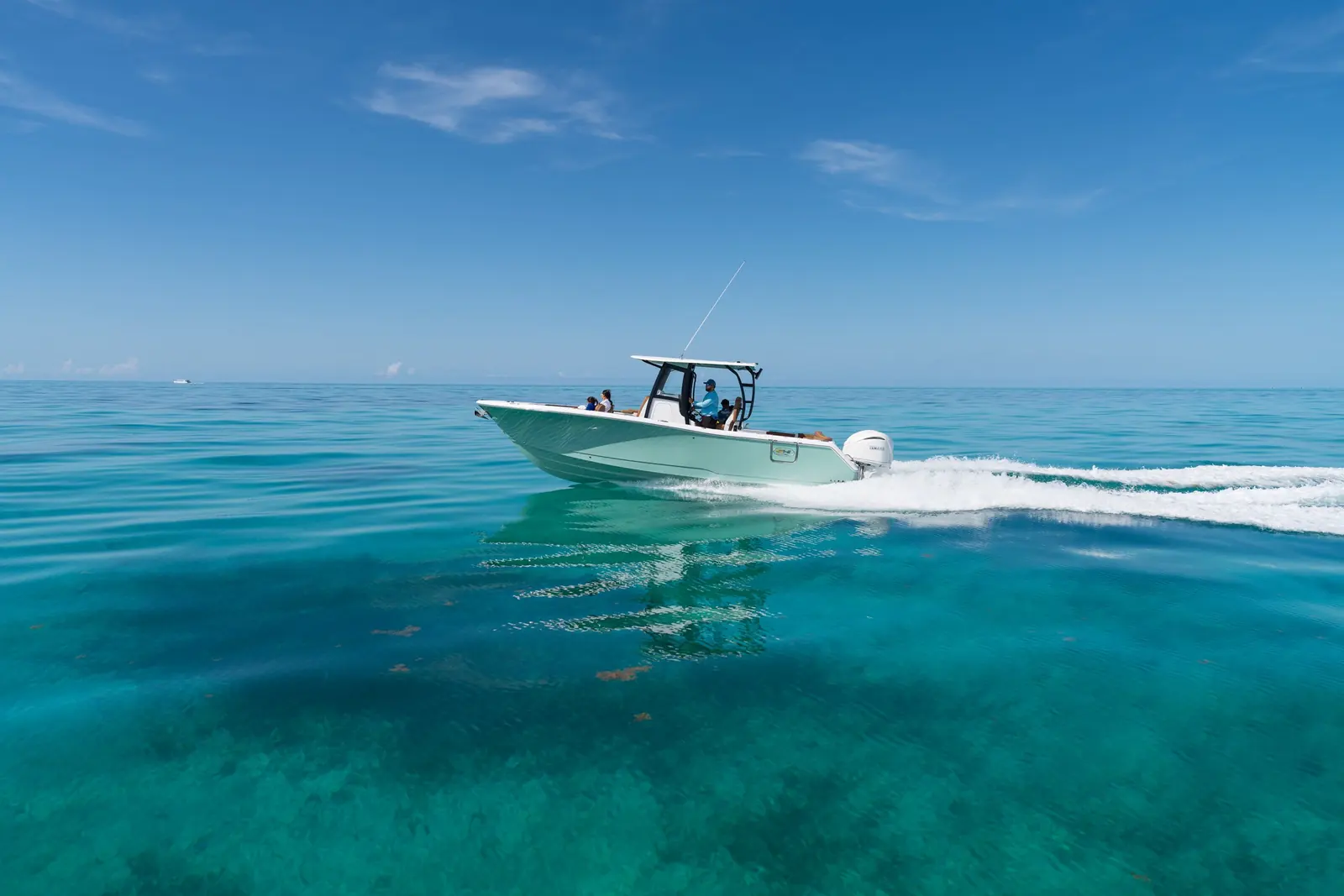
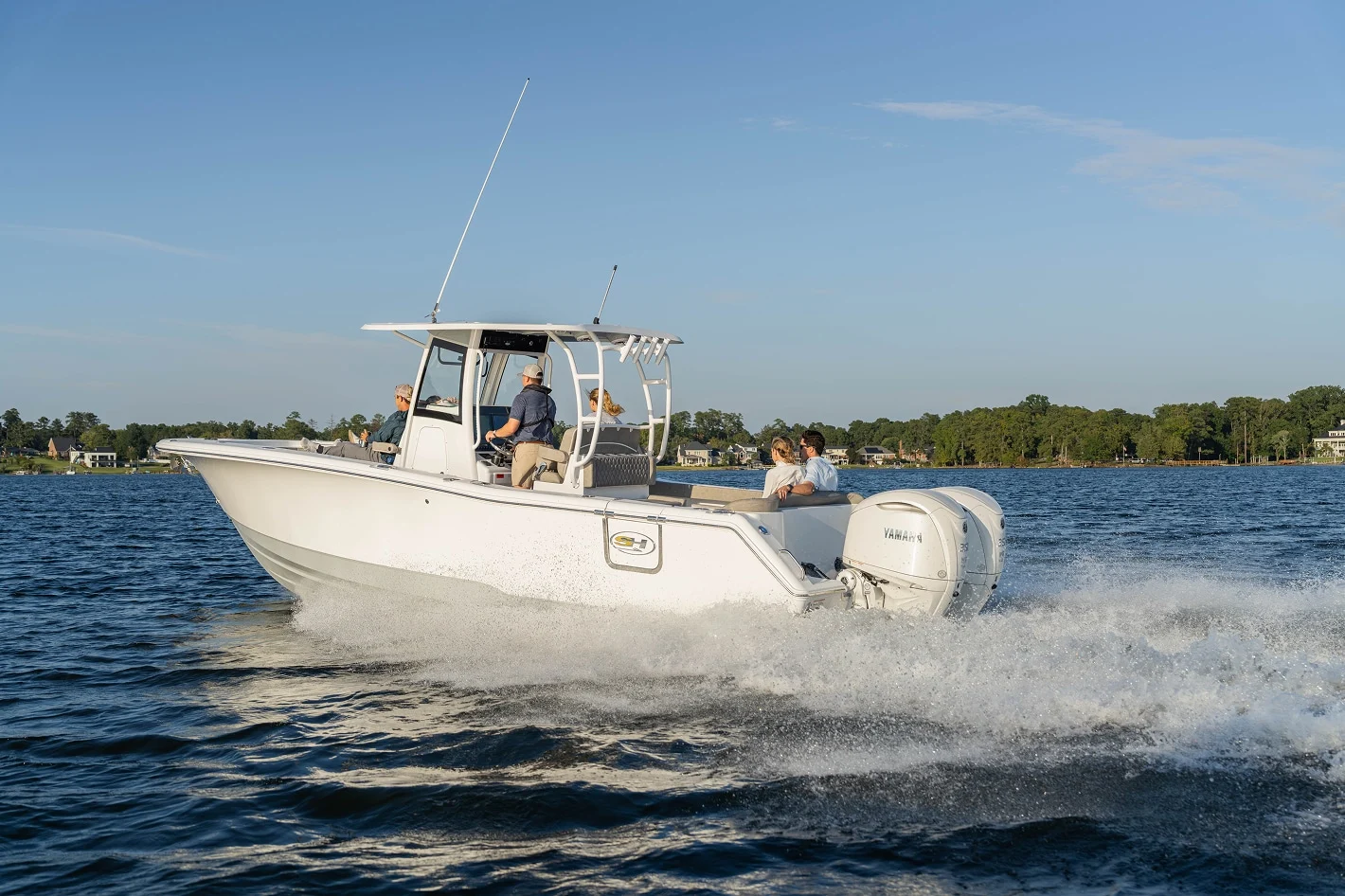
A bay boat is a center console. The helm sits in the middle, you can walk all the way around it, and you can fish from any side. "Bay boat" and "offshore center console" name two hull shapes under that one layout.
| Bay boat (shallow hull) | Offshore center console (deep V) | |
|---|---|---|
| Hull | Flatter, modified V | Deep V |
| Draft | Shallow: built for flats and creeks | Deeper: needs more water |
| Ride in chop | Fine in a bay; wetter and harder offshore | Softer and drier in open water |
| At rest | Steady when you stand at the rail | Rolls more in a beam swell |
| Sides | Low, for casting and wading | Higher, for open water |
| Fuel and range | Smaller tanks, inshore range | Bigger tanks, offshore range |
| Best for | Redfish, trout, snook on the flats | Grouper, snapper, mahi offshore |
General traits. Exact draft, deadrise and fuel vary by model; see the Sea Hunt numbers below.
A bay boat uses a flatter bottom. It floats in less water, sits steady when two people stand on one side, and gets on plane without much power. It gives up comfort when the water turns rough, because a flatter bottom meets each wave with more surface.
An offshore center console uses a deeper V that slices into waves. It needs more water and more horsepower, and it rocks more at anchor. In exchange it rides softer across an inlet bar or a choppy bay.
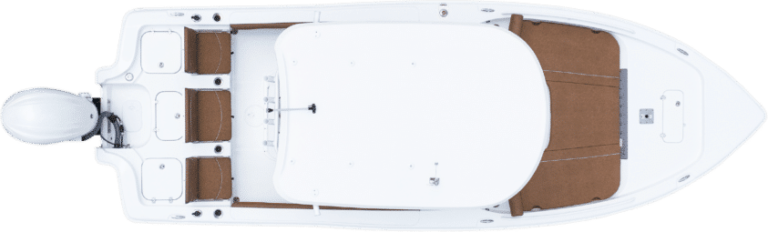
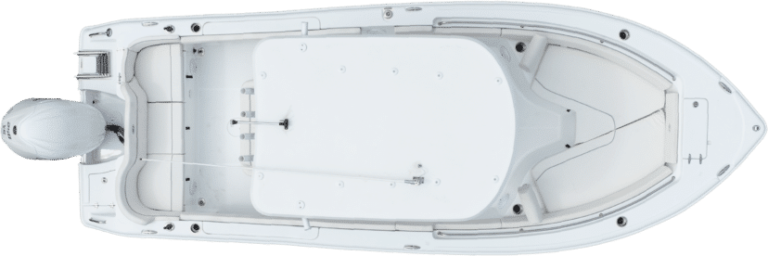
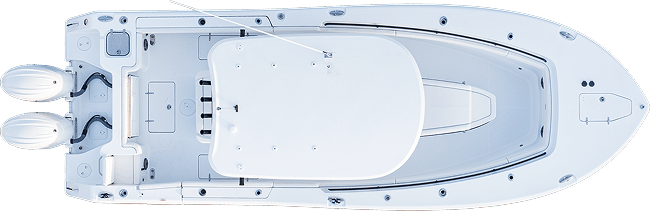
Sea Hunt builds across that whole range. The BX series is its bay boat line, the Ultra series covers family center consoles that also fish, and the Gamefish series is built for offshore fishing. The Ultra 234 sits between the extremes.
Why are center consoles so popular in Florida?
Because Florida water changes within one trip. Many boaters leave a calm Intracoastal or bay in the morning and cross an inlet into the open Gulf or Atlantic by noon, and a center console handles both. The walk-around layout lets you fight a fish from any side of the boat, the self-bailing deck sheds rain and spray, and outboard power is easy to reach and service. The same layout also comes on both hulls: a shallow bay boat for the lagoons and flats, a deep-V offshore boat for the reefs. That's why the real choice on Florida water is the hull, not the layout.
Sea Hunt BX vs Ultra vs Gamefish: specs side by side
| Model | Length | Beam | Draft | Deadrise | Dry weight | Max power | Fuel |
|---|---|---|---|---|---|---|---|
| BX 25 FS (bay boat) | 25′ 3″ | 8′ 6″ | 15 in | 15/20/50 | 3,700 lb | 350 hp | 68 gal |
| Ultra 234 (family center console) | 23′ 7″ | 8′ 6″ | 13 in | 18/22/55 | 2,800 lb | 250 hp | 96 gal |
| Gamefish 25 (offshore center console) | 25′ 8″ | 9′ 2″ | 19 in | 21/24/60 | 6,100 lb | 400 hp | 145 gal |
Specs from our model pages, checked October 2026. Dry weight excludes fuel, gear and trailer. Full specs for every size live on the series pages.
Deadrise follows hull type. The BX 25 FS lists the flattest bottom, the Ultra 234 sits in the middle, and the Gamefish 25 lists the sharpest V. That's what you feel in rough water.
Draft follows size as much as type. The Ultra 234 lists 13 inches, less than the bigger BX 25 FS. Across the BX line, draft runs from 13 inches on the BX 22 BR to 19 on the BX 28, the same as the Gamefish 25.
Weight and fuel climb with the offshore hull. The Gamefish 25 weighs more than twice the Ultra 234 dry and carries about twice the fuel of the BX 25 FS.
How shallow can a bay boat go? Draft on Florida flats
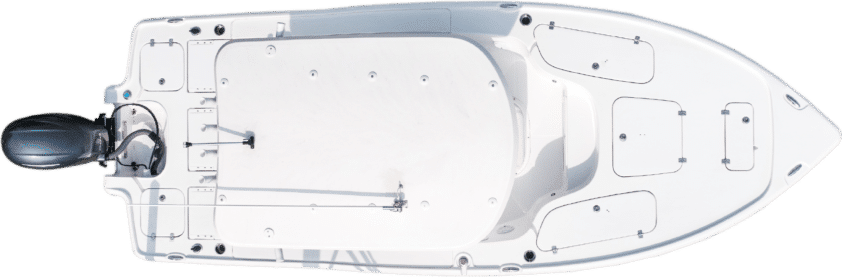
Draft is how deep the hull sits below the waterline. On Florida's flats it decides where you can fish. Mosquito Lagoon, the Indian River, the grass flats of Tampa Bay and the Keys backcountry all hold fish in water you could wade. A few inches are the difference between drifting the flat and watching it from the channel edge.
Sea Hunt's BX numbers run 13 inches (22 BR), 15 (25 FS) and 19 (BX 28). Treat those as a starting point. A full tank, a cooler of ice and four adults push any hull deeper, and the outboard's lower unit usually reaches below the hull. You also need water to get on plane and to come off plane without touching bottom.
That's why bay boat owners lean on tools for skinny water. Every BX comes with a trolling motor plug and wiring harness, and all three BX models offer a hydraulic jack plate as an option. A jack plate raises the outboard so you can idle and get on plane in shallower water.
Two Florida rules make draft more than a convenience. Florida law (Section 253.04, Florida Statutes) makes damaging seagrass in an aquatic preserve a violation that carries a penalty, and FWC tells boaters to know their operating depth and stay in marked channels. And in Mosquito Lagoon, the U.S. Fish and Wildlife Service bans gas engines and any vessel drawing more than 12 inches from the two pole-and-troll zones in Merritt Island National Wildlife Refuge. Even the BX 22 BR's listed 13 inches is over that line, so those zones belong to kayaks and push-pole skiffs.
Buy a bay boat for draft if your water needs it, then learn your own boat's real number with your normal load aboard.
Which rides better in chop? What deadrise means
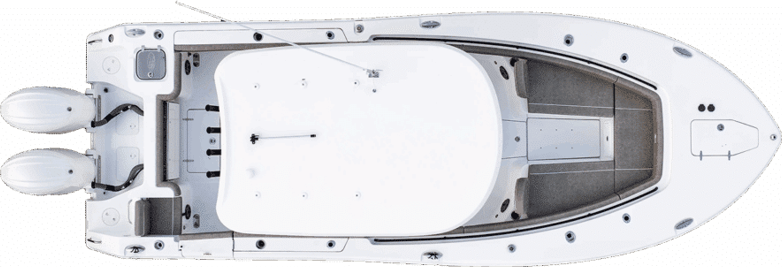
Deadrise is the angle between the hull bottom and a flat line drawn across it. A low angle gives a flatter bottom; a high angle gives a sharper V. Each hull has three listed angles: 15/20/50 for the BX 25 FS, 18/22/55 for the Ultra 234 and 21/24/60 for the Gamefish 25.
Here is how that plays out, as an example. On a glassy morning in the lagoon, the BX feels great. It sits flat when two anglers stand on one side, jumps on plane, and runs quietly over shallow grass. Take the same boat out Ponce Inlet into a 2-foot afternoon chop with the sea breeze up, and the flat sections of the hull slap down on every crest. You slow down, trim the bow up, lean on the tabs, and the spray finds you.
The Gamefish 25 in that same chop splits each wave with its sharper entry and carries its weight through instead of bouncing over. You hold a steadier speed and the crew stays drier. Sea Hunt says it designs its hulls to ride dry by pairing its "True Carolina Bow Flare" with a sharp-entry deadrise.
The trade-off reverses at rest. A deep V rolls more when you anchor over a wreck with the swell on the beam, it needs more power to plane, and it draws more water. A flatter hull is steadier for standing and sight casting.
Bennett trim tabs come standard on every BX and on the Gamefish 25 and are an option on the Ultra 234. On any of these boats, tabs and a patient throttle hand do more for comfort than most new owners expect.
How high are the sides? Freeboard and safety
Freeboard is the height of the hull side above the water. Sea Hunt doesn't publish it or cockpit depth on these spec pages, so check it in person.
Bay boats keep the sides low on purpose, so you can lip a redfish, climb back aboard after wading and cast without the rail in the way. The cost is margin: a low side takes water sooner in a steep wake, and a child at the rail has less to brace against.
Offshore center consoles carry higher sides because offshore water moves more. A taller gunwale gives you something to lean into while you fight a fish in a swell. The Gamefish 25 adds a standard side entry door so swimmers and divers don't climb over it.
- Stand at the rail where you'd fight a fish and note where the gunwale hits your leg.
- Have the shortest person who fishes with you do the same.
- Look for bolsters, grab rails and handholds along the console and T-top.
Which hull is easier to fish from?
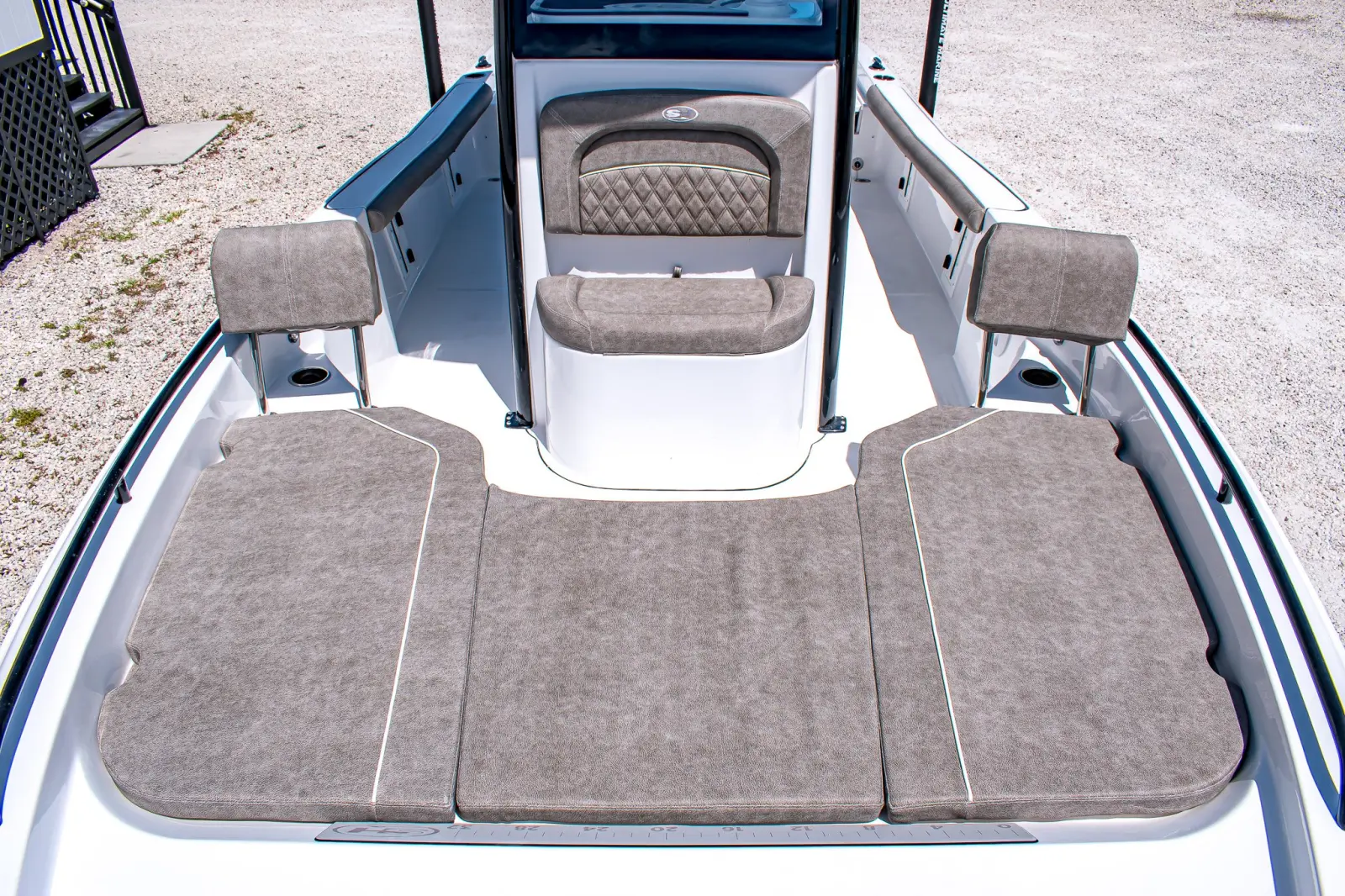
A bay boat is a casting platform. The BX layout opens the decks at the bow and stern, so two anglers can work a mangrove shoreline from both ends. Trolling motor wiring comes from the factory, lockable rod racks run along both sides, and two livewells keep pilchards and shrimp apart.
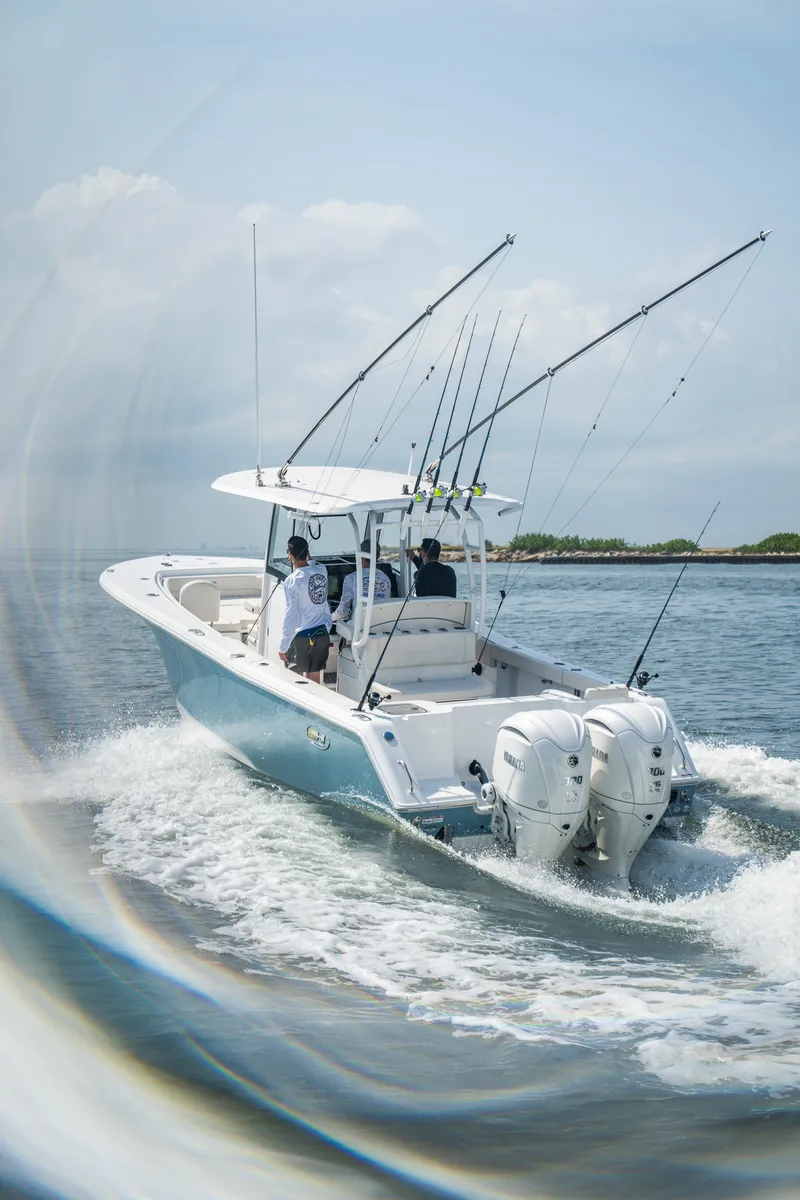
An offshore center console is a fighting platform. The Gamefish 25's 35-gallon leaning post livewell holds bait for a morning of slow-trolling kingfish, and twin Yamaha F150s are standard, so you have a second engine to get home on well offshore.
Compare livewells, fish boxes and rod storage in Gamefish vs BX
How far can you run? Fuel and range
Fuel capacity is the honest range number on a spec sheet. The BX 25 FS carries 68 gallons, the Ultra 234 96 and the Gamefish 25 145. Sea Hunt doesn't publish fuel burn, and burn changes with engine, load and sea state, so treat any range figure as an estimate until you've logged your own.
Plan with the rule of thirds: one third out, one third back, one third in reserve. Rough water burns more, and that reserve matters when the sea breeze builds or a storm pushes you to a different inlet.
Inshore, a bay boat's smaller tank goes a long way, because most lagoon days are short runs and long stretches on the trolling motor. A run to deeper reefs plus hours of trolling is where a big tank and twin engines earn their place.
Does the hull change how you tow and store it?
Often, because offshore hulls run wider and heavier: the BX 25 FS and Ultra 234 are 8′ 6″ wide, inside Florida's 102-inch road limit, while the Gamefish 25 (9′ 2″) and BX 28 (9′ 6″) are over it and fall under oversize towing rules. Dry weight runs from 2,800 pounds for the Ultra 234 to 6,100 for the Gamefish 25 before fuel, gear and trailer, so compare the loaded trailer weight with your vehicle's rating. For the rest, see how a trailer is matched to your boat and our hurricane prep checklist.
Bay boat or offshore center console: which hull should you buy?
Flats, creeks and lagoons are your water, you launch at small ramps, and you want a steady casting platform that's easy to tow. Start with the BX 22 BR or BX 25 FS.
Reefs, wrecks and blue water are the goal, and you want a softer, drier ride in chop plus the fuel for long days. Start with the Gamefish 25.
A common bay boat regret is buying for the one offshore trip a year, then taking a beating on the run home. The reverse regret is the deep-V owner who keeps seeing redfish tail on flats the boat can't reach.
A bay boat is the wrong pick if you plan to cross big open water often: Tampa Bay on a windy afternoon, the Gulf off Clearwater, or Hawk Channel on a breezy day. An offshore center console is the wrong pick if most of your fishing happens in water under three feet, or if you can't tow and store a beam over 9 feet.
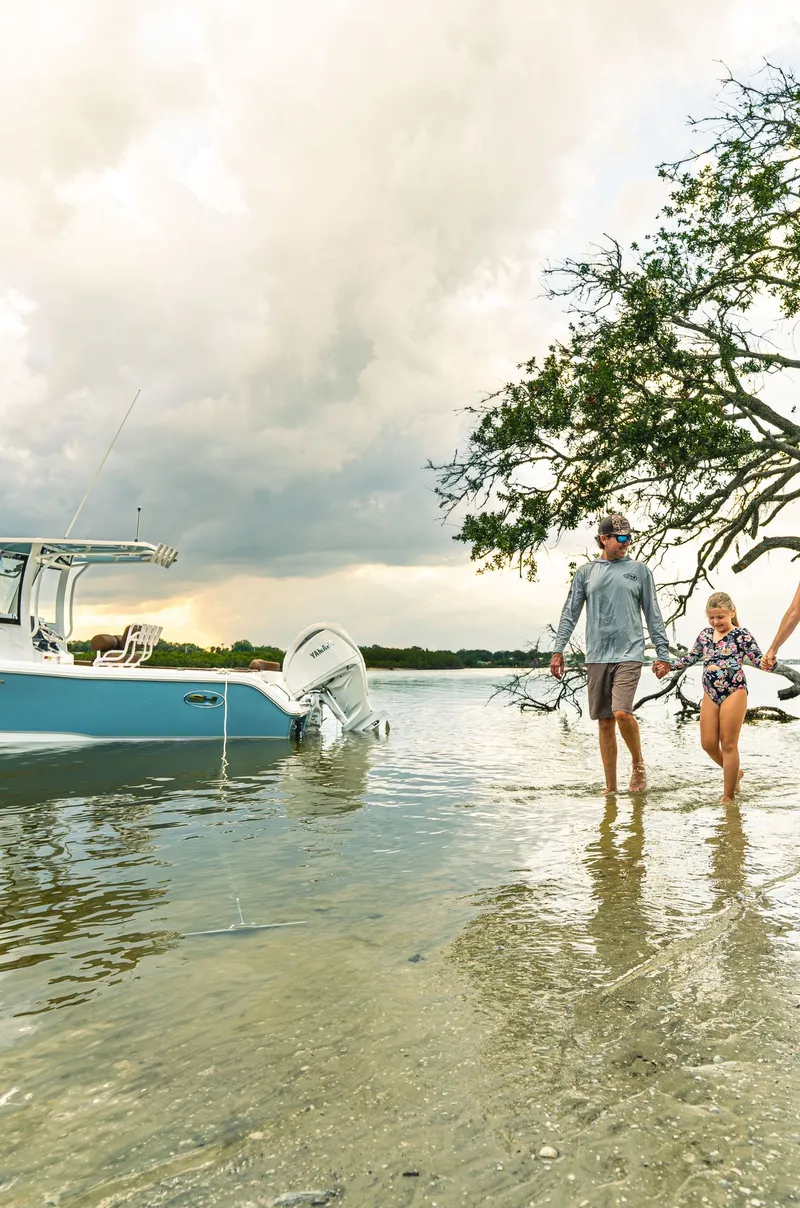
If the family comes along. Either hull handles a sandbar Saturday. A bay boat's low sides make it easy to step off into knee-deep water, but the BX 22 BR lists its T-top, bimini and Porta Potti as options, and shade is the first thing a family misses. The Ultra 234 comes with bow cushions and bolsters standard, and the Gamefish 25 with a China toilet, a T-top and the side door. Young kids and a restroom point to the Ultra; family plus offshore fishing points to the Gamefish.
Neither hull is better in general. The right one is built for the water you run most often, with margin for the worst day you're likely to see on it.
Not sure you need a fishing boat at all? Our bowrider vs center console guide compares the two for family days.
If you're between the two
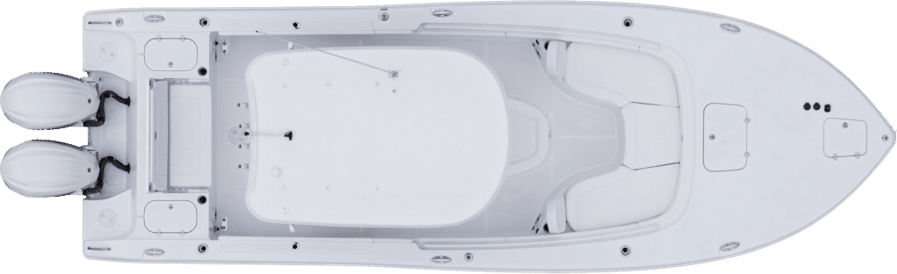
Plenty of Florida anglers split their time between the flats and the nearshore reefs. Sea Hunt's lineup gives you two ways to bridge the gap, from opposite directions.
Go big on the bay boat. The BX 28 keeps the bay boat layout and trolling motor wiring and adds 157 gallons of fuel, twin Yamaha F300s, a 19/20/56 deadrise, a fiberglass T-top and a China toilet as standard. It draws 19 inches, so you give up the skinniest water for a boat that can run nearshore on a fair day.
Go small on the offshore side. The Ultra 234 lists the same 13-inch draft as the BX 22 BR, with a sharper 18/22/55 deadrise and 96 gallons of fuel. It won't work a skinny flat like a bay boat, but it handles family days, the Intracoastal and calm nearshore runs.
- Count your tripsList where your last 20 days on the water went. As a rule of thumb, if most stayed inside the inlet, lean bay boat.
- Name your roughest regular runPick the run that turns nasty most often, like Ponce Inlet on an outgoing tide or Tampa Bay in a west wind, and buy the hull for that run.
- Check tow and storageA beam over 8′ 6″ or a loaded weight over your vehicle's rating narrows the list fast.
- Ride bothA short sea trial of each, on the same day in the same water, tells you more than any spec sheet.
Once you know the hull, size the boat. Count your usual crew, not your biggest day. Decide where the boat will live, on a trailer at home or in a slip or dry stack, and what you can tow. Then think about the speed you like to cruise at and how often you'll really run offshore: regular offshore trips point to more length, more fuel and twin outboards, while inside days are simpler on a single engine. Compare models in our Sea Hunt and Scout lineups.
New or used? A new boat comes with the manufacturer's warranty (on a Sea Hunt, a ten-year limited structural hull warranty, with the engine maker covering the outboards), the latest hull and current electronics. A used boat costs less to get into. Our used-boat buying guide covers what to check before you buy one.
If your answers split down the middle, the BX 28 and the Ultra 234 are the two boats to compare first.
Tell us where you fish
Tell us where you fish and who comes along, and we'll point you to a bay boat and a deeper-V center console worth comparing.
Questions we hear
Is a bay boat a center console?
Yes. A bay boat is a type of center console: the helm sits in the middle and you can walk around it to fish from any side. The difference is the hull. A bay boat has a flatter bottom that floats in less water and sits steady for casting. An offshore center console has a deeper V that rides better in rough water. Sea Hunt's BX bay boats and Gamefish offshore boats show both ends of that range.
What is a bay boat?
A bay boat is a shallow-draft center console made for bays, lagoons and flats. Typical features are low sides, open casting decks at the bow and stern, a trolling motor setup and room for a few rods and a livewell or two. Many offer a jack plate so the outboard can run in thin water. Sea Hunt's BX series is an example.
Can you take a bay boat offshore?
On calm days, nearshore, many bay boats do fine, and bigger ones with more fuel handle it better. The limits are ride and range. A flatter hull pounds and throws more spray in chop, and smaller tanks cut your reserve. Check the marine forecast, watch for afternoon sea breeze and storms, and keep a third of your fuel in reserve. If you plan regular trips well offshore, a deep-V center console is the safer, more comfortable choice.
How much draft does a bay boat have compared to an offshore center console?
It depends on size more than many buyers expect. The BX 22 BR bay boat lists 13 inches of draft, the BX 25 FS 15 and the BX 28 19. The Ultra 234 family center console also lists 13 inches, and the Gamefish 25 offshore boat lists 19. Real draft runs deeper with fuel, gear and people aboard, and the outboard's lower unit often reaches below the hull, so learn your boat's number with a normal load.
Which hull is better for fishing in Florida, a bay boat or an offshore center console?
Match the boat to the water you fish most. Lagoons, grass flats, mangrove shorelines and the backcountry favor a bay boat, with its shallow draft, casting decks and trolling motor setup. Reefs, wrecks and blue water off the Atlantic and Gulf coasts favor an offshore center console, with its deeper V, bigger fuel tanks and higher sides. If you split your time, a large bay boat or a smaller family center console can cover both.