


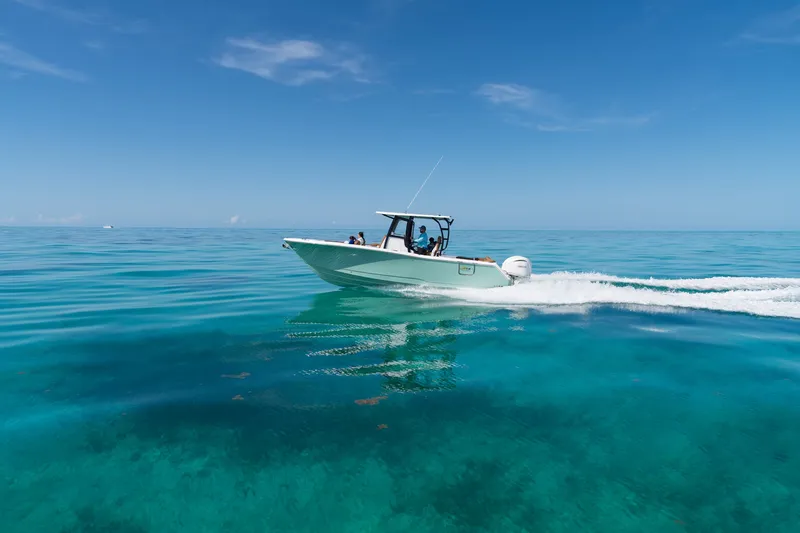

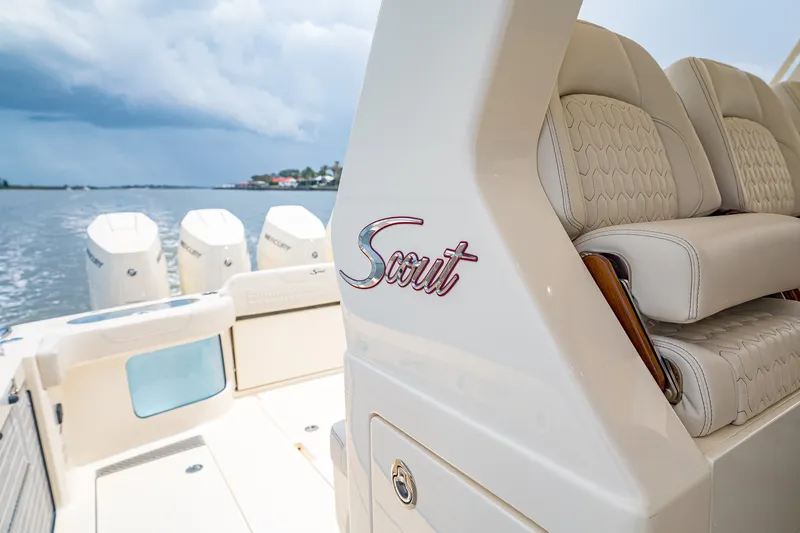

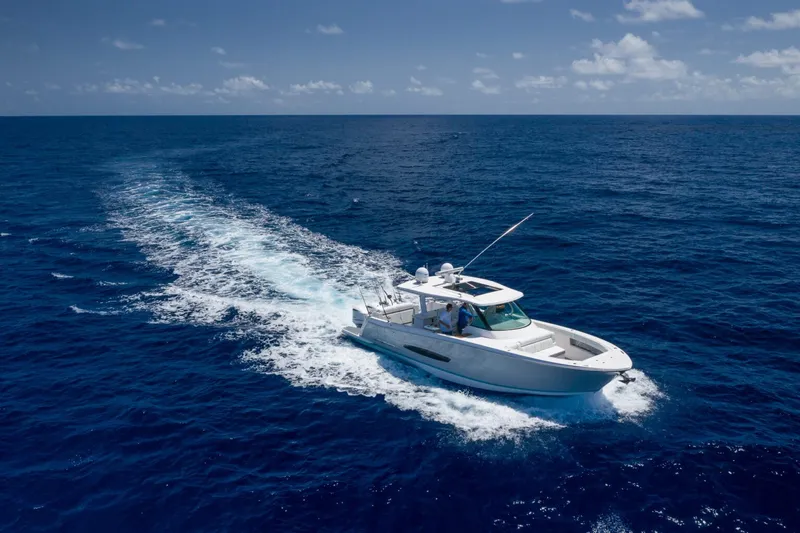

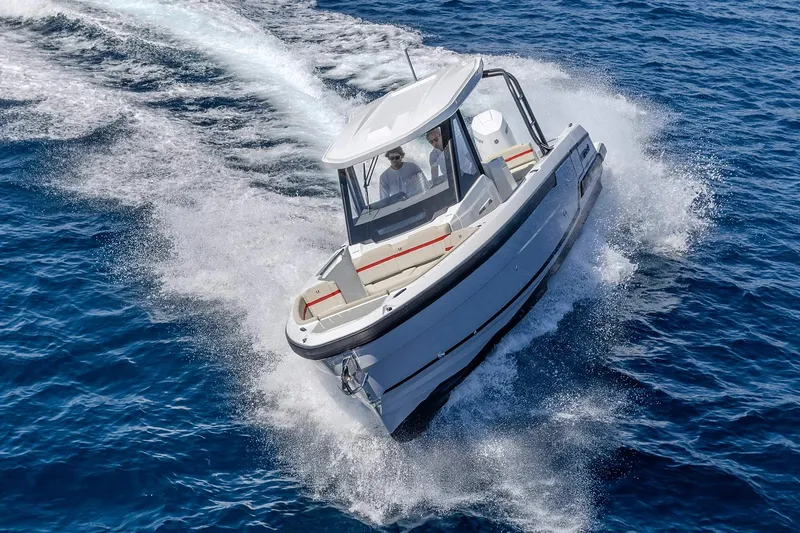

Sea Hunt center consoles under 30 feet
This guide covers 13 Ultra and Gamefish center consoles under 30 feet, from the 21-foot Ultra 219 to the 28-foot Ultra 285 SE and Gamefish 28 CB. Here's how they differ, what they're like to own in Florida, and how to narrow the list to two or three.
In this article
- Family days with some fishing point to the Ultra. Fishing offshore most weekends points to the Gamefish 25, 27 CB or 28 CB.
- At 27′ 6″ and 28′ 6″, an Ultra and a Gamefish share length, beam, power and fuel. The difference is the deck.
- Only the Ultras up to the 245 SE fit Florida's 8′ 6″ trailer width without a permit; everything else is usually a lift or dry-stack boat.
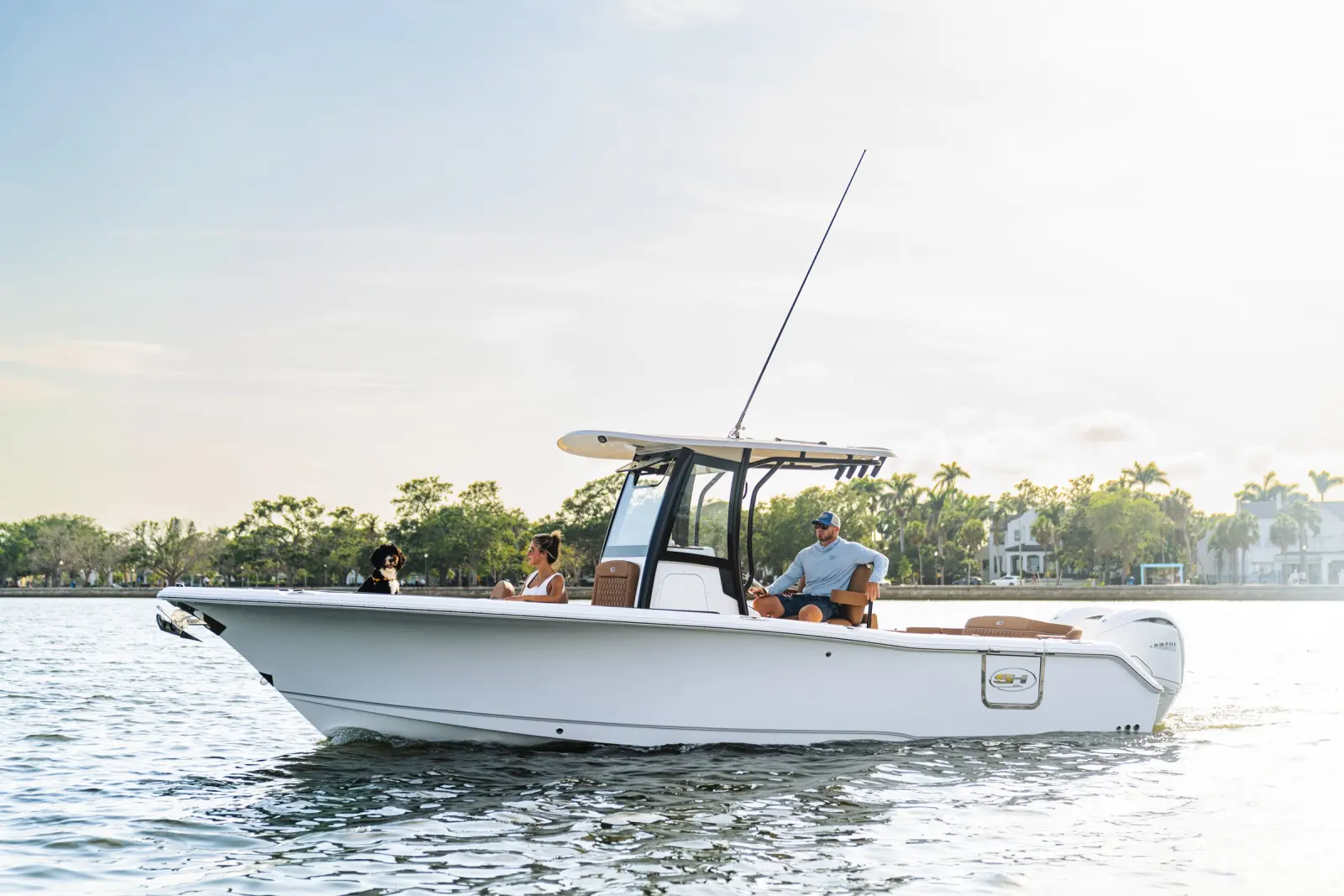
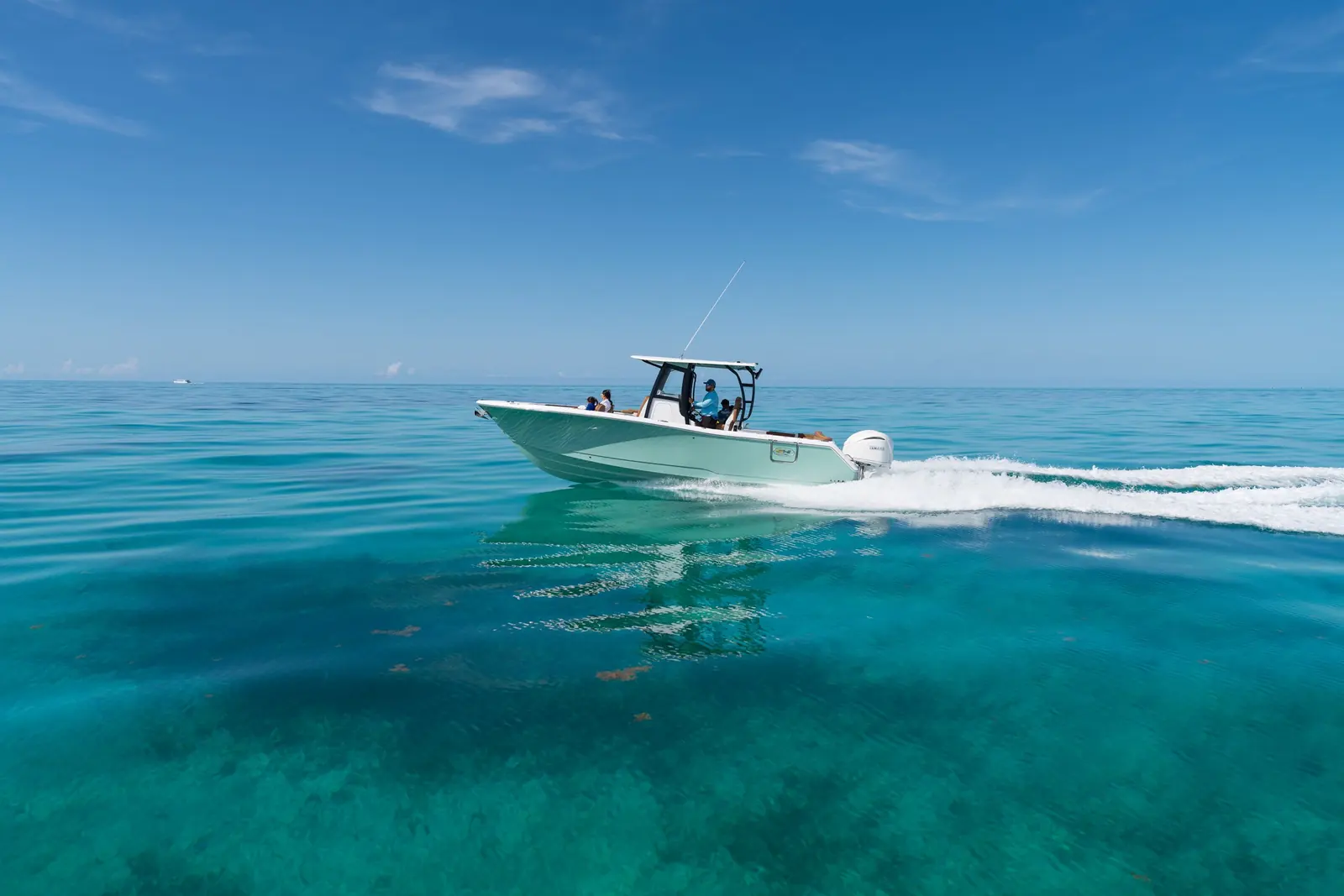
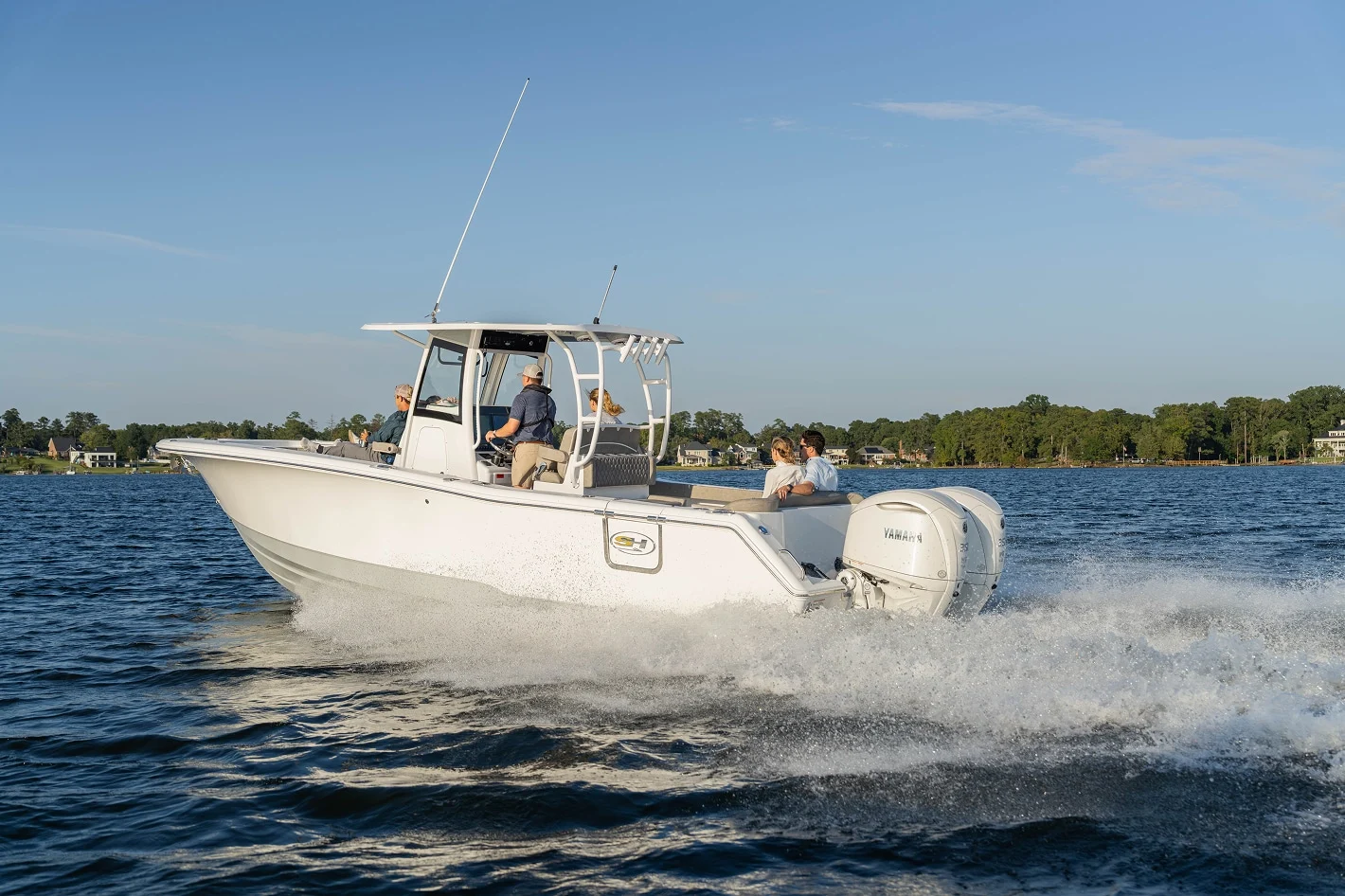
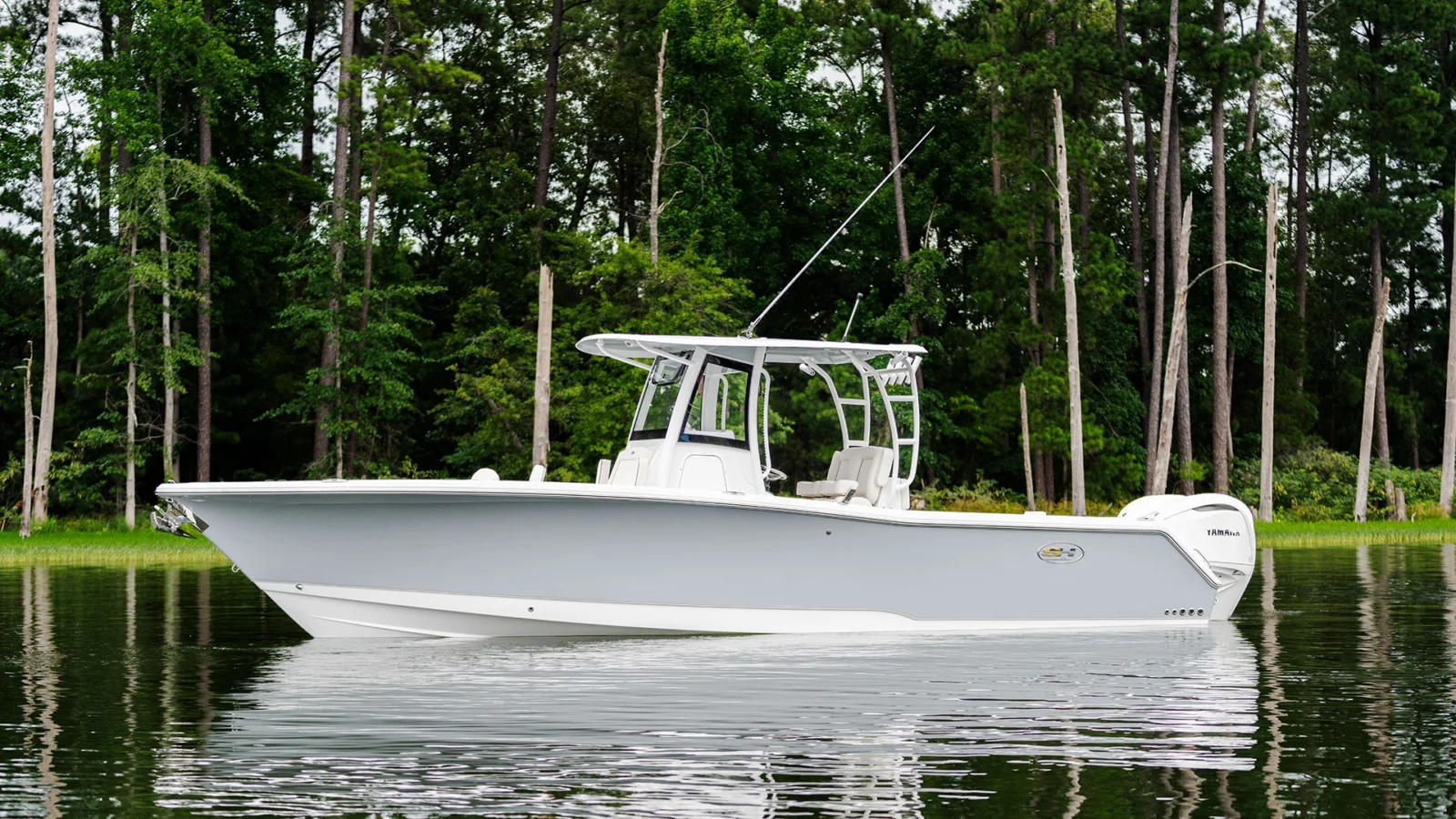
A center console puts the helm in the middle of the boat, so you can walk all the way around it and fish from the bow, the sides and the stern. Sea Hunt builds two center console lines: the Ultra, a family boat that fishes, and the Gamefish, a fishing boat with room for family. Under 30 feet, Sea Hunt builds 18 of them once you count the Ultra SL and Gamefish FS layouts, which share the length, power and fuel of the SE and CB models covered here.
This guide covers 13 models, smallest to biggest, using the numbers on Sea Hunt's model pages. It shows where the two lines overlap, what changes at each step up, and what each size means for towing, storage and upkeep in Florida. For a deeper look at every Ultra, see our Ultra size guide; this page is about choosing a Sea Hunt center console across both lines.
Compare Sea Hunt center consoles under 30 feet
| Model | Length | Beam | Max power | Fuel | Dry weight | Engines |
|---|---|---|---|---|---|---|
| Ultra 219 | 21′ 4″ | 8′ 3″ | 200 hp | 60 gal | 2,350 lb | Single |
| Ultra 229 | 22′ 8″ | 8′ 6″ | 250 hp | 83 gal | 2,600 lb | Single |
| Ultra 234 / 235 SE | 23′ 7″ | 8′ 6″ | 250 hp | 96 gal | 2,800 / 3,800 lb | Single |
| Ultra 239 SE / 245 SE | 24′ 3″ | 8′ 6″ | 300 hp | 96 gal | 3,900 lb | Single |
| Ultra 255 SE | 24′ 11″ | 8′ 9″ | 350 hp | 120 gal | 4,600 lb | Single |
| Gamefish 25 | 25′ 8″ | 9′ 2″ | 400 hp | 145 gal | 6,100 lb | Twin |
| Ultra 265 SE | 26′ 5″ | 9′ 2″ | 400 hp | 145 gal | 5,800 lb | Twin |
| Ultra 275 SE / Gamefish 27 CB | 27′ 6″ | 9′ 6″ | 500 hp | 180 gal | 6,600 lb | Twin |
| Ultra 285 SE / Gamefish 28 CB | 28′ 6″ | 9′ 9″ | 600 hp | 180 gal | 6,800 lb | Twin |
Specs from our model pages, checked Oct 31, 2026. Max power is the transom rating. Dry weight excludes fuel, gear and trailer.
The table splits at about 25 feet. Below that line every boat is an Ultra with one outboard, a draft of 13 or 14 inches and a dry weight under 5,000 pounds. Above it, every boat comes with twin Yamahas, a beam over nine feet and a draft of 19 to 21 inches. That jump is the biggest decision on this page: it changes how you store the boat, where you can take it, and how much engine service you sign up for.
Notice the Gamefish 25 sitting between the 255 SE and the 265 SE. It's shorter than the 265 SE but heavier, with the same 400-hp rating and 145 gallons. Further up, the Ultra 275 SE and Gamefish 27 CB match on every number in the table, and so do the Ultra 285 SE and Gamefish 28 CB. When the hull numbers match, the choice comes down to how the deck is laid out, which is covered in its own section below.
Why does 30 feet matter for a center console?
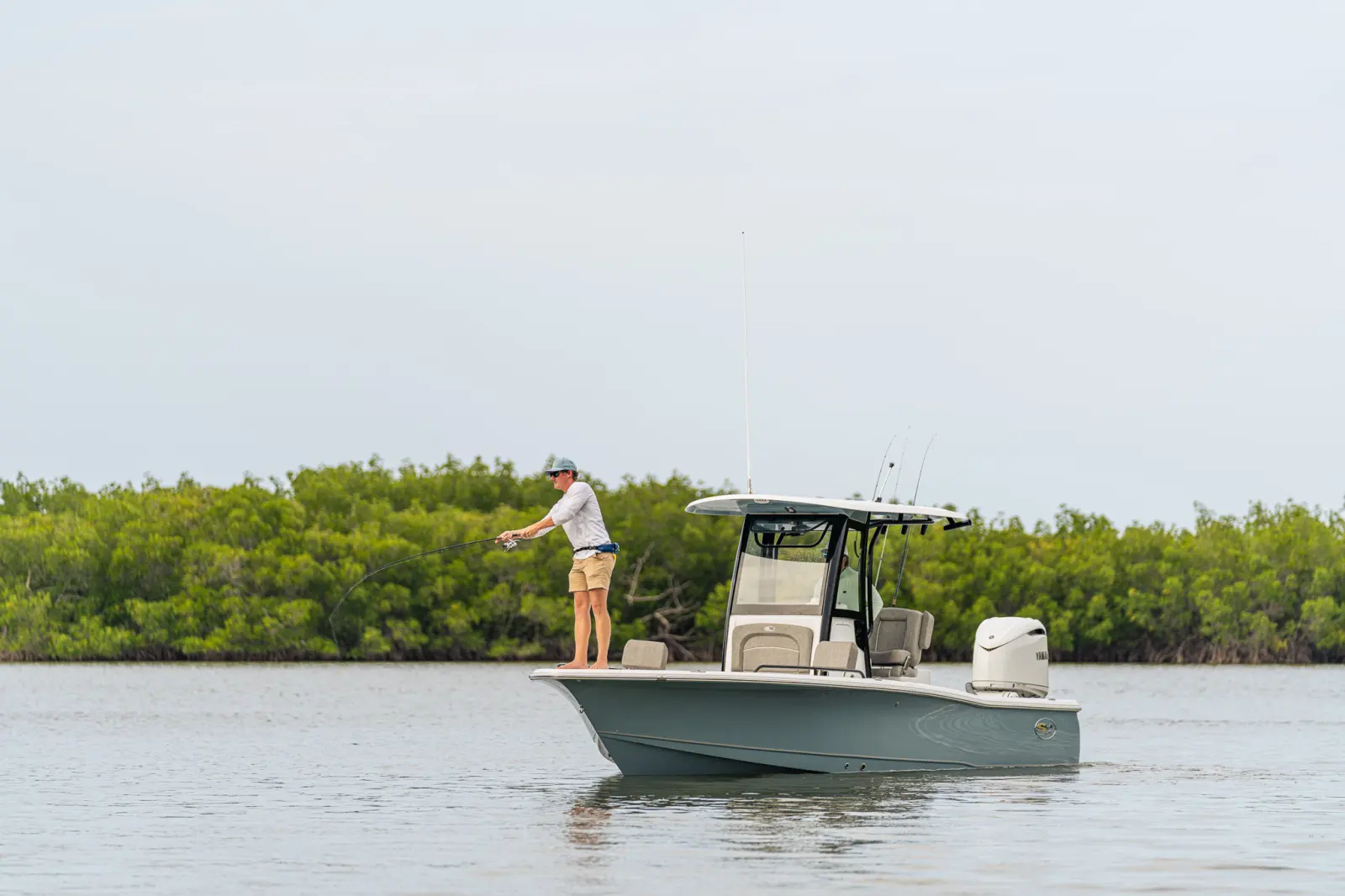
Thirty feet is roughly where a center console stops being a boat that one family can run, store and maintain without much help. Below it, you can still choose between a trailer, a lift and a dry-stack rack, and one person can dock most of these boats on a calm day. Sea Hunt's 30′ 2″ models, the Gamefish 30 CB and Ultra 305 SE, step up to 230 gallons, 700-hp transoms and 7,000 pounds dry. They're capable boats, but they're a different kind of commitment.
The open layout is why Floridians buy center consoles in the first place. With the console in the middle, two anglers can fight fish on opposite sides of the boat without tangling, and the bow is free for casting to tailing reds or sight fishing a beach. The T-top shades the helm through a July afternoon, and a self-draining deck rinses down with a hose. The trade-off is weather protection: there's no cabin, so when a summer thunderstorm builds over the Everglades or the Banana River, you head in early rather than ride it out.
Under 30 feet, Sea Hunt gives you two ways to spend the deck. The Ultra puts seating, a bow table and storage forward. The Gamefish puts fish boxes, bigger livewells and, on the CB models, a coffin box in the bow. Everything else on this page follows from that split.
Sea Hunt Ultra under 25 feet: 219 to 255 SE
These are the single-engine Sea Hunt center consoles. They draw 13 or 14 inches, which keeps the Indian River Lagoon, the Intracoastal and the backcountry open to you. What changes as you move up is shade, comfort and range. The Ultra size guide linked above covers each one in depth; here's the short version.
1. Ultra 219 and 229
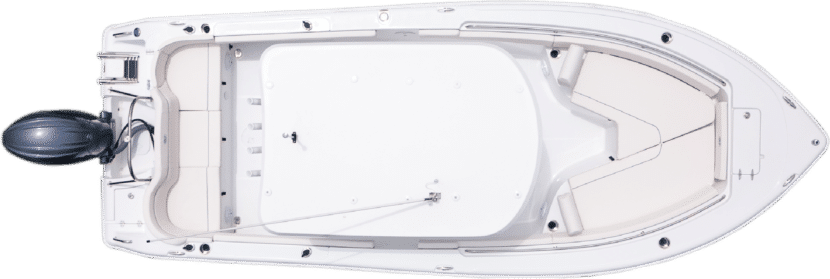
What they are. The two entry Ultras share a Yamaha F150 as standard, a 15-gallon livewell and a 9-inch Garmin with VHF. The 219 is 21′ 4″ and 60 gallons; the 229 is 22′ 8″, holds 83 gallons and has a 250-hp rating. Shade is an option on both. They're the lightest, easiest-to-tow Sea Hunts here: strong first boats for bay fishing and sandbar days, not regular offshore runs.
2. Ultra 234 and 235 SE
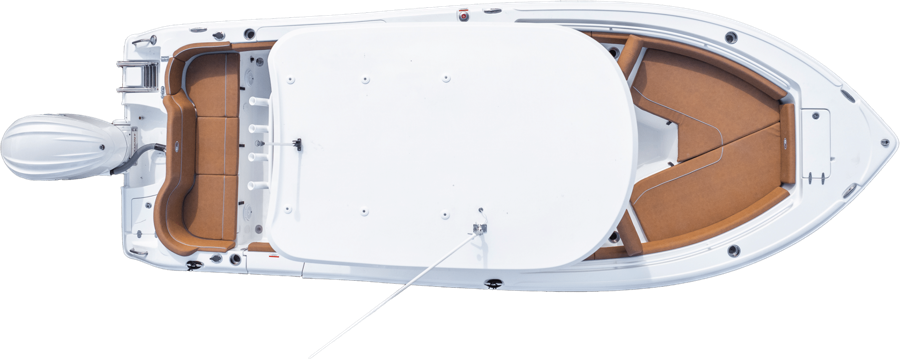
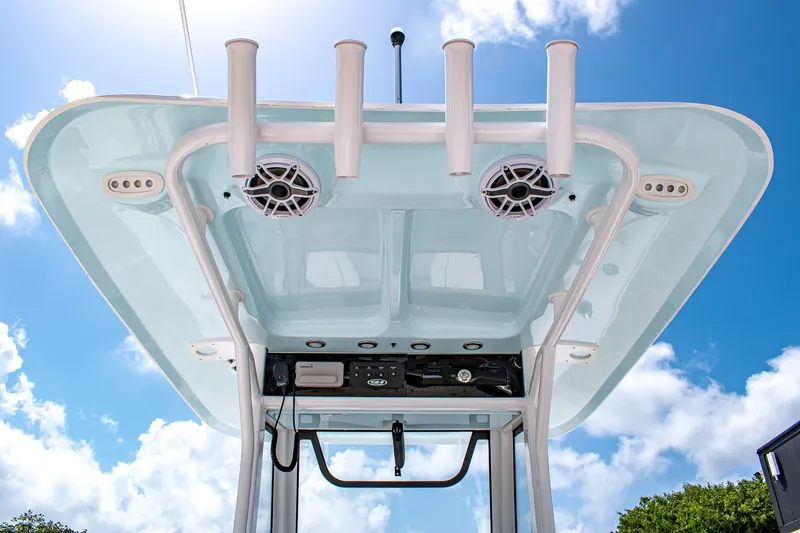
What they are. Same 23′ 7″ hull, Yamaha F200 and 96 gallons. The 234 keeps things open and simple, with the T-top on the options list and three leaning-post choices, including a bait-tank post. The 235 SE adds a fiberglass T-top with misters, a side entry door, trim tabs, underwater lights and a freshwater system as standard. For an angler who wants a clean deck, the 234 is the better start; for a family who wants shade from day one, the SE.
3. Ultra 239 SE, 245 SE and 255 SE
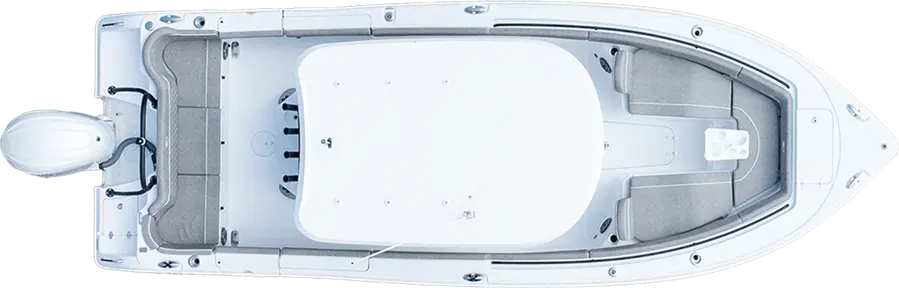
What they are. The 239 SE and 245 SE are 24′ 3″ with a Yamaha F300, electric steering, a 12-inch Garmin and a mezzanine leaning post; the 245 SE adds a toilet and windlass. The 255 SE is 24′ 11″ with 120 gallons, an 18/24/55 hull, a 60-quart mezzanine cooler and a bow beverage center. That makes it the most comfortable single-engine Sea Hunt for a nearshore day. Those two 24-footers are as wide as you can tow at 8′ 6″; the 255 SE, at 8′ 9″, needs a permit.
Sea Hunt Ultra 26 to 28 feet: 265 SE, 275 SE and 285 SE
The three biggest Ultras under 30 feet all come with twin Yamahas, dual side entry doors, a telescoping bow table, a toilet and a windlass anchor. Their hulls step up to 21-degree angles at the first deadrise figure, which softens the ride in an inlet chop and costs a little stability at anchor. They're the Ultras for families who run offshore on good days and want a second engine for the trip home.
4. Ultra 265 SE
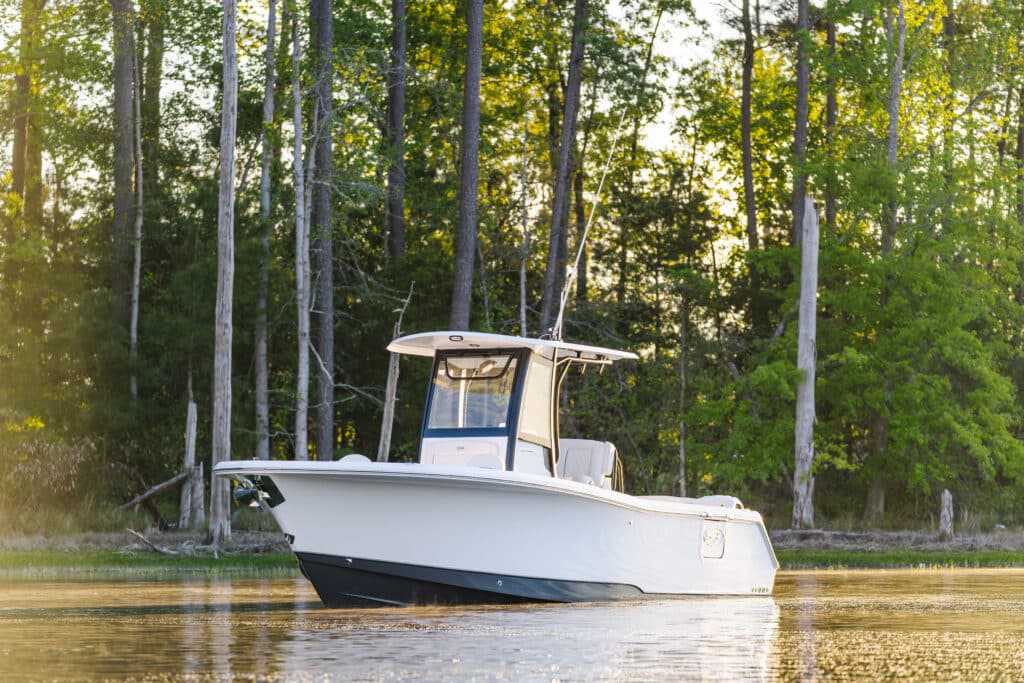
What it is. 26′ 5″ with a 9′ 2″ beam, twin Yamaha F150s and 145 gallons. It carries a 10-gallon livewell and a 40-quart insulated box. It's the most family-leaning twin-engine boat here: the livewell is modest, the seating generous. Next to the Gamefish 25, which has the same power rating and fuel, it trades the Gamefish's 35-gallon bait-tank leaning post and 200-quart fish boxes for more lounging room.
5. Ultra 275 SE
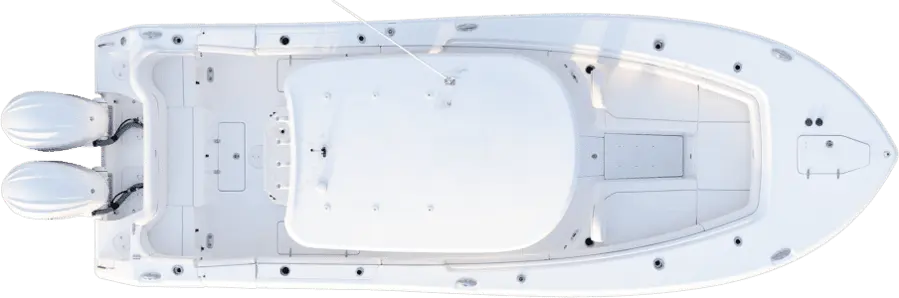
What it is. 27′ 6″, twin Yamaha F200s and 180 gallons, with a 20-gallon livewell in the mezzanine leaning post on top of the 10-gallon well. It's the Ultra for families who fish offshore more than now and then and want the range to reach the reefs off Port Canaveral or the ledges west of Tampa Bay with plenty in reserve.
6. Ultra 285 SE
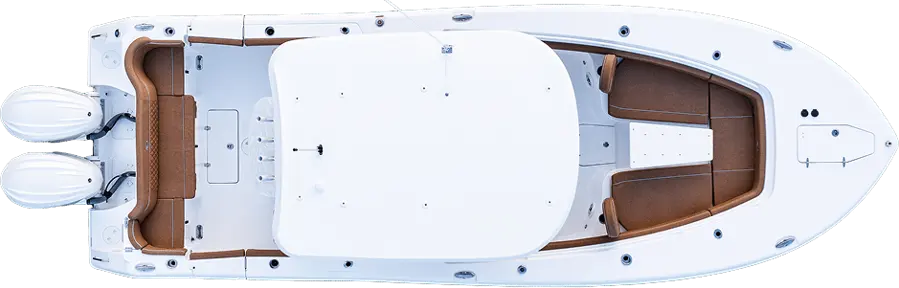
What it is. 28′ 6″, 9′ 9″ wide, with twin Yamaha F300s, a 40-gallon mezzanine livewell, two 200-quart fish boxes, dual 17-inch Garmin displays and a Yamaha autopilot as standard. It's the most fishing-capable Ultra and the closest to a Gamefish; the bow keeps cushions, backrests and a table.
Sea Hunt Gamefish under 30 feet: 25, 27 CB and 28 CB
Gamefish boats put fishing first. Every model has twin outboards and big livewells, and the CB models give the bow to a coffin box rather than seating. Five Gamefish are under 30 feet: the 25, 27 CB, 27 FS, 28 CB and 28 FS; the FS versions swap the coffin box for bow seating. Our Gamefish lineup post walks through each one in depth.
7. Gamefish 25
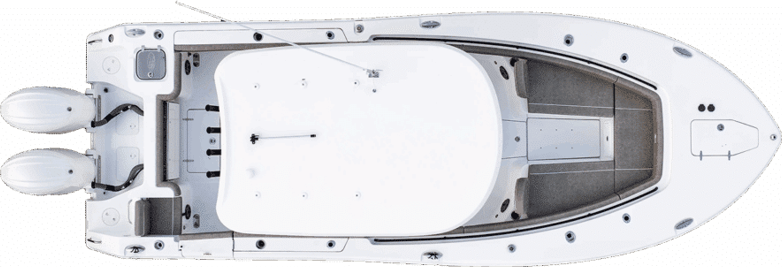
Layout. 25′ 8″ with a 9′ 2″ beam and a 21/24/60 hull. Behind the console is a bait-tank leaning post with a 35-gallon livewell, there's a 16-gallon transom well, and two 200-quart fish boxes sit in the deck. Up front, the 25 keeps bow cushions, backrests and a telescoping table, which makes it the most family-friendly Gamefish.
What comes standard. Twin Yamaha F150s (F200s optional), 145 gallons, a 12-inch Garmin with VHF, a misting T-top, a side door, a toilet and a rear bench seat. On Florida water, it's a true nearshore and offshore boat, kingfish off Ponce Inlet or snapper on the near ledges, though its 19-inch draft keeps it off the shallowest flats.
8. Gamefish 27 CB
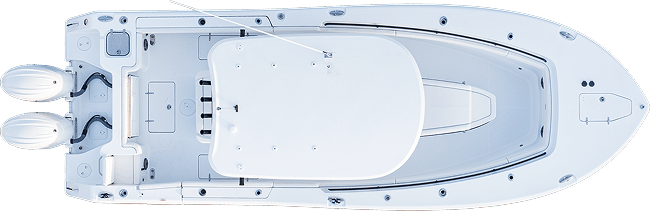
Layout and gear. Same length, fuel and F200 twins as the 275 SE. The mezzanine leaning post holds a 40-gallon split livewell, there's a 10-gallon pitch-bait well and a 16-gallon transom well, and a 256-quart coffin box fills the bow. Two 200-quart fish boxes, a toilet, a windlass and a side door are standard. Who it suits: crews who fish offshore most weekends and want enough bait and ice for a full day on the edge.
9. Gamefish 28 CB
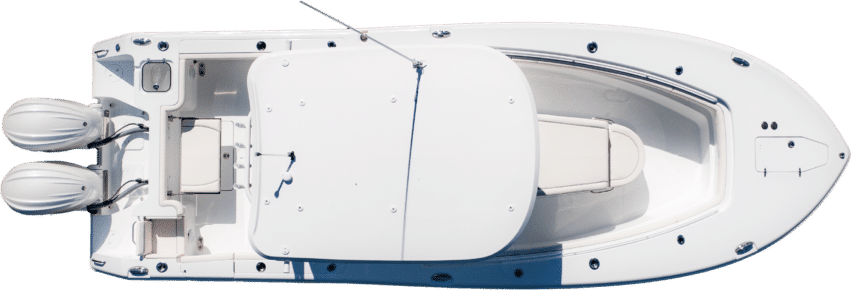
Layout and gear. 28′ 6″ with a 9′ 9″ beam, twin Yamaha F300s, 180 gallons and a 600-hp transom. The coffin box grows to 320 quarts and the pitch-bait well to 15 gallons, and two 17-inch Garmin screens plus Yamaha's autopilot are standard. Who it suits: the angler who runs farther and in rougher water, and wants the extra beam and power when the forecast turns.
Ultra or Gamefish at the same length: what's different?
| Spec | Ultra 275 SE | Gamefish 27 CB | Ultra 285 SE | Gamefish 28 CB |
|---|---|---|---|---|
| Length / beam | 27′ 6″ / 9′ 6″ | 27′ 6″ / 9′ 6″ | 28′ 6″ / 9′ 9″ | 28′ 6″ / 9′ 9″ |
| Standard power | Twin F200 | Twin F200 | Twin F300 | Twin F300 |
| Livewells | 10 + 20 gal | 40 + 10 + 16 gal | 40 gal | 40 + 15 + 16 gal |
| Bow | Seating, table, 148-qt boxes | 256-qt coffin box | Seating, table, 198-qt boxes | 320-qt coffin box |
| Fish boxes | None listed | Two 200-qt | Two 200-qt | Two 200-qt |
From our model pages. Dry weight is the same within each pair.
At 27′ 6″ the hull, engines, fuel and weight are the same, so the choice is purely about the deck. The 275 SE carries 30 gallons of livewell and no listed fish boxes, while the 27 CB carries 66 gallons of bait wells, two fish boxes and a coffin box big enough for a day's catch of kingfish. If your crew spends more hours at the sandbar than on the edge, the Ultra's bow seating gets used and the Gamefish's coffin box sits empty. If you're running 20 miles out most Saturdays, it's the other way around.
At 28′ 6″ the gap narrows. The 285 SE already has the 40-gallon mezzanine well and both 200-quart fish boxes, so it fishes much like the 28 CB and adds bow seating. The 28 CB gives up that seating for a 320-quart coffin box and two more livewells. If you're between them, look at the Gamefish 28 FS too: it has bow seating and a table on the same hull.
Bow seating and a table, with enough livewell for a morning of fishing.
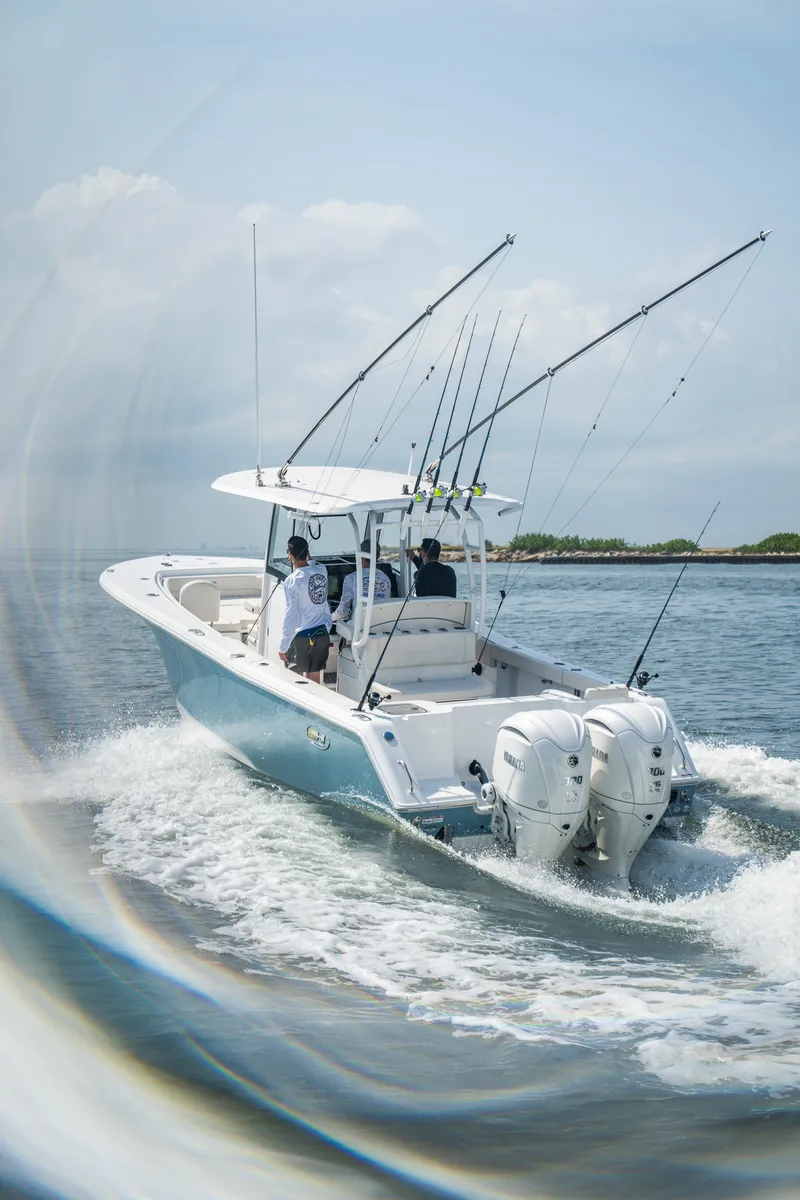
More bait capacity, fish boxes and a coffin box for the catch.
Can you tow a Sea Hunt center console under 30 feet?
Only some of them without a permit. Florida law limits a vehicle and its load to 102 inches wide, or 8′ 6″, and of the boats here only the Ultra 219 through 245 SE fit. The rest need an oversize permit to trailer, so many owners keep them on a lift or in dry storage; every dry stack sets its own length, beam and weight limits, so ask before you buy. Twins also double the engine service. Our storage guide, routine maintenance guide and hurricane prep checklist cover the rest.
Which Sea Hunt center console should you choose?
- Where will you boat most?Lagoon, bay and calm nearshore days: an Ultra up to the 255 SE. Regular offshore runs: the 265 SE and up, or a Gamefish.
- Who comes along?A couple of anglers or a young family fit the smaller Ultras. A regular crew of five or more points to 26 feet and up.
- How will you store it?Trailering at home without a permit means the Ultra 245 SE or smaller. A lift or dry stack opens up everything here.
- Family or fishing first?Family days with some fishing: Ultra. Fishing is most of the plan: Gamefish.
Two examples. A retired couple in New Smyrna Beach who fish the lagoon for reds and trout, plus the occasional calm day out Ponce Inlet, will be well served by a 234 or 239 SE on a trailer: shallow draft for the flats, enough fuel for the nearshore wrecks and one engine to maintain. Three friends in Tampa who split a boat to chase grouper on the offshore ledges every other weekend will want twin engines and 180 gallons, and a Gamefish 27 CB or 28 CB on a lift.
The most common mistake is choosing on the boat-show floor rather than on your real Saturday. Before you narrow the list, write down your home ramp or marina, your usual crew and the farthest spot you'll realistically run. Most of the time that rules out half this page.
Ask us which size fits
Tell us where you boat and who comes along. We'll suggest two or three models to look at.
Questions we hear
What's the biggest Sea Hunt center console under 30 feet?
The 28′ 6″ models: the Ultra 285 SE and 285 SL and the Gamefish 28 CB and 28 FS. All four have a 9′ 9″ beam, 180 gallons of fuel, a 600-hp transom rating and twin Yamaha F300s as standard. The next size up is 30′ 2″ (Gamefish 30 CB and Ultra 305 SE), which steps to 230 gallons and a 700-hp rating. For most owners, the 28-footers are lift or dry-stack boats rather than trailer boats.
What's the difference between Sea Hunt Ultra and Gamefish?
The Ultra is Sea Hunt's family center console: bow seating, a table on the bigger models and smaller livewells. The Gamefish is its fishing line: twin engines on every model, livewells of 35 to 40 gallons in the leaning post, 200-quart fish boxes and, on the CB models, a coffin box in the bow. At 27′ 6″ and 28′ 6″ the two lines share the same hull dimensions, power and fuel, so the choice is about the deck.
What's the difference between the Sea Hunt Gamefish CB and FS?
They share a hull. The Gamefish 27 CB and 27 FS are both 27′ 6″ with twin Yamaha F200s and 180 gallons; the 28 CB and 28 FS are both 28′ 6″ with twin F300s. The CB fills the bow with a coffin box (256 quarts on the 27, 320 on the 28) and adds a pitch-bait livewell. The FS puts bow seating, backrests and a telescoping table there instead. Pick the CB if the bow is for fish, the FS if it's for people.
Can you trailer a Sea Hunt center console in Florida?
Yes, though width matters. Florida limits a vehicle and its load to 102 inches (8′ 6″). The Ultra 219 is 8′ 3″ wide and the 229 through 245 SE are 8′ 6″, so they fit on a suitable trailer. The Ultra 255 SE and every Gamefish are wider and need an oversize permit to trailer on Florida roads. Many owners of those boats use a lift or dry stack instead. Always check your vehicle's towing rating against the loaded weight.
Do Sea Hunt center consoles come with one engine or two?
It depends on size. Every Ultra up to the 255 SE comes with a single Yamaha outboard, from an F150 on the 219 to an F300 on the 239 SE, 245 SE and 255 SE. The Ultra 265 SE and up and every Gamefish come with twin Yamahas. One engine is simpler and cheaper to maintain; twins give you a way home offshore and easier docking, with twice the service work.