






Scout LXF: luxury that fishes
From the 26-foot 260 LXF to the 66-foot 670 LXS: what the LXF line is, how these boats fish, and which size fits your crew.
In this article
- LXF is Scout's luxury center console line: finished helms, heads and lounges on boats that carry real baitwells, fish boxes and rod storage.
- The current lineup runs from the 26-foot 260 LXF to the 66′ 9″ 670 LXS; from 33 feet up, the S-Class models get epoxy-infused stepped hulls.
- Plan around draft and beam: 20 to 31 inches of draft and 8′ 11″ to 14′ 8″ of beam make these lift, slip or dry-stack boats, not flats boats.
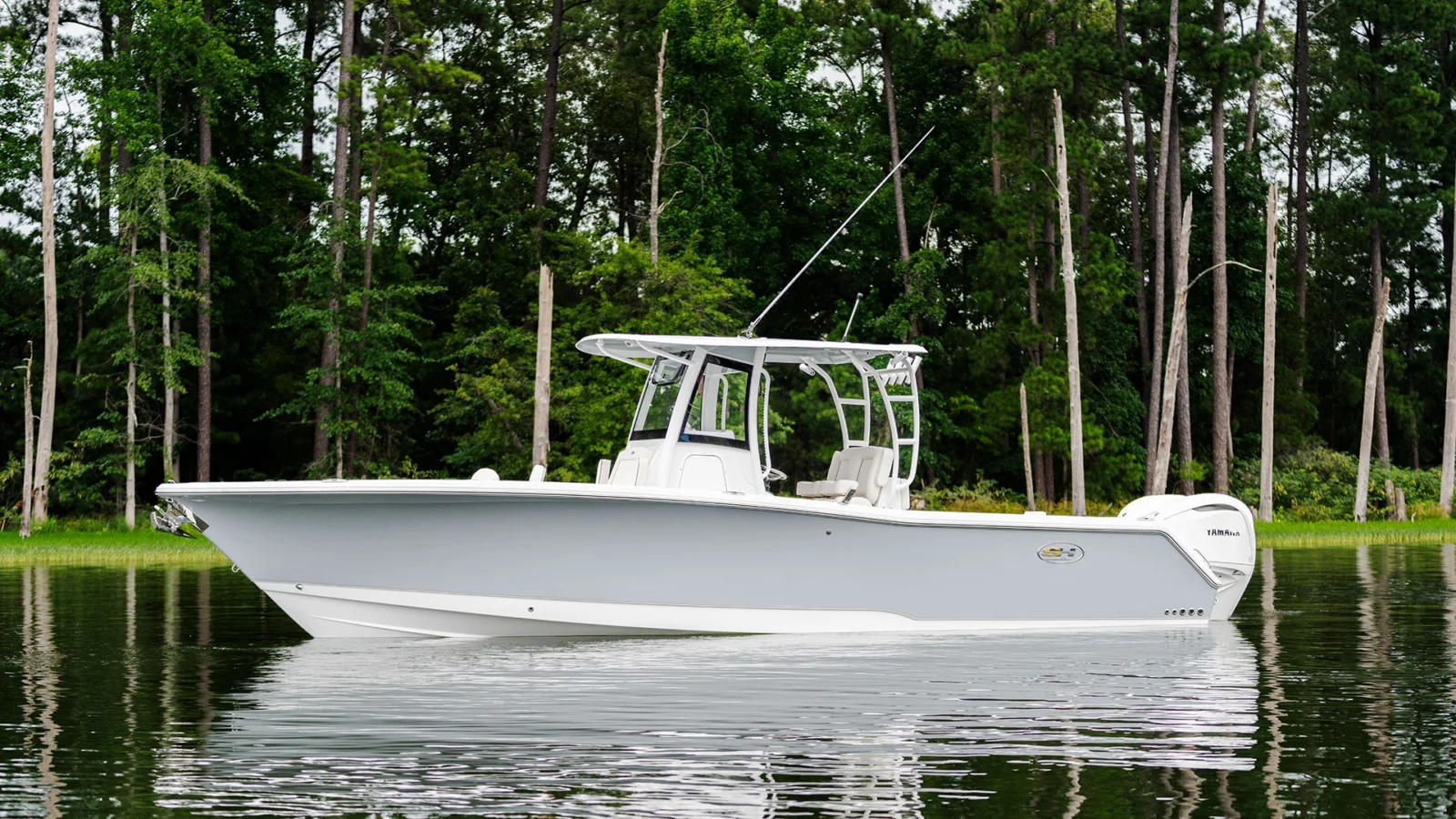
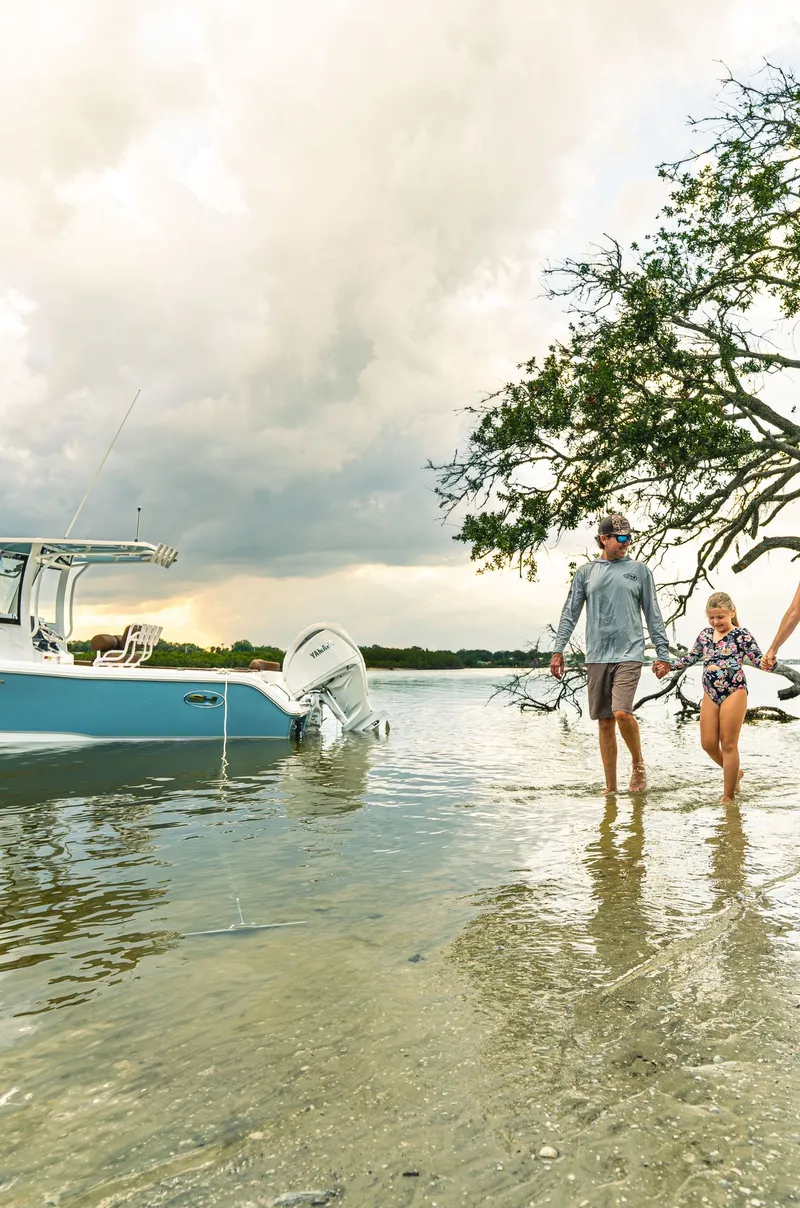
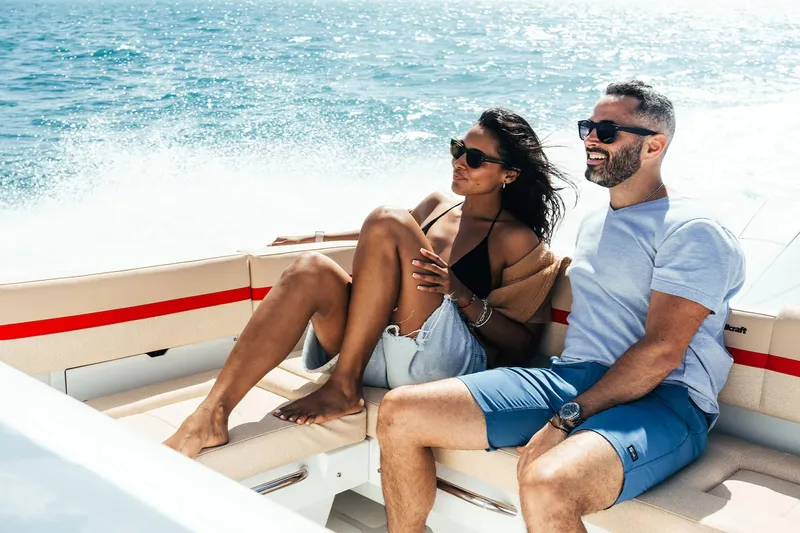
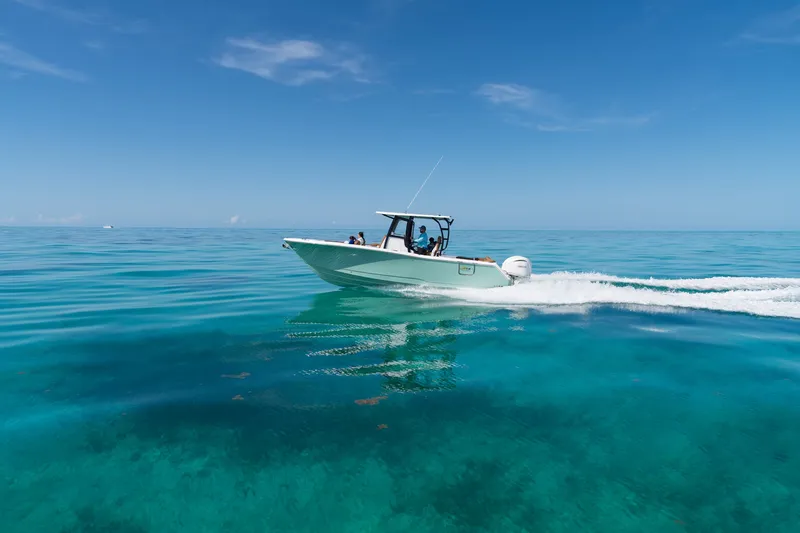
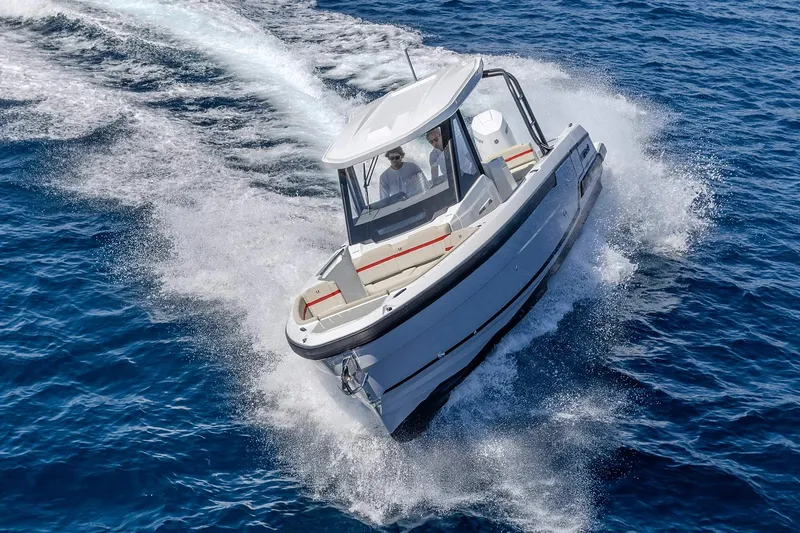
A Scout LXF is built for a day that changes plans: offshore at sunrise, a sandbar at lunch, dinner at a waterfront restaurant at sunset. These are Scout's luxury center consoles. They carry the finish you'd expect on a cruiser (a private head, heated helm seats on the bigger models, a full stereo) on a hull and cockpit set up to fish. See the Scout LXF series.
This guide covers what sets an LXF apart, how well these boats actually fish, a write-up of each size from the 260 to the 530, and how an LXF fits Florida water. Specs and standard equipment come from Scout's model pages and model flyers.
Compare the Scout LXF lineup
| Model | Length | Beam | Draft | Max power | Fuel |
|---|---|---|---|---|---|
| 260 LXF | 26′ | 8′ 11″ | 20″ | 450 hp | 146 gal |
| 288 LXF | 28′ 9″ | 9′ 9″ | 24″ | 600 hp | 188 gal |
| 305 LXF | 30′ 1″ | 9′ 10″ | 20.5″ | 800 hp | 212 gal |
| 315 LXF | 31′ 5″ | 10′ 4″ | 20.5″ | 700 hp | 253 gal |
| 330 LXF | 32′ 9″ | 10′ 6″ | 31″ | See model | 265 gal |
| 357 LXF | 35′ 3″ | 10′ 9″ | 24″ | 1,200 hp | 319 gal |
| 377 LXF | 37′ 7″ | 11′ 5″ | 26″ | 1,350 hp | 363 gal |
| 425 LXF | 42′ 2″ | 13′ 1″ | 28″ | 1,800 hp | 545 gal |
| 435 LXF Li-Ion | 43′ 4″ | 13′ 1″ | 28″ | 1,800 hp | 605 gal |
| 530 LXF | 53′ 5″ | 14′ 8″ | 31″ | 2,400 hp | 875 gal |
Specs from Scout's model pages; draft is approximate. Scout also builds the 277, 400 and 400 Li-Ion LXF and the 670 LXS (66′ 9″). Looking for the 255 LXF? It isn't in Scout's current lineup; the 260 LXF is the current LXF at that size.
Read the table as a ladder with three rungs. From 26 to about 31 feet, the LXF is a day boat with a private head in the console, and the 305 and up add a berth below. From 33 to 38 feet, Scout's S-Class models add epoxy-infused stepped hulls, heated helm seats and real cabin space. From 42 feet up, Scout makes a Seakeeper gyro standard and the boat becomes a sportfish yacht with outboards. Draft barely changes along the way (20 to 31 inches), but beam and weight do, and those two numbers decide where the boat lives and which inlets feel routine. Fuel climbs with size too, from 146 gallons on the 260 to 875 on the 530, which is the real measure of how far offshore each boat is meant to go.
What makes a Scout LXF different from other center consoles?
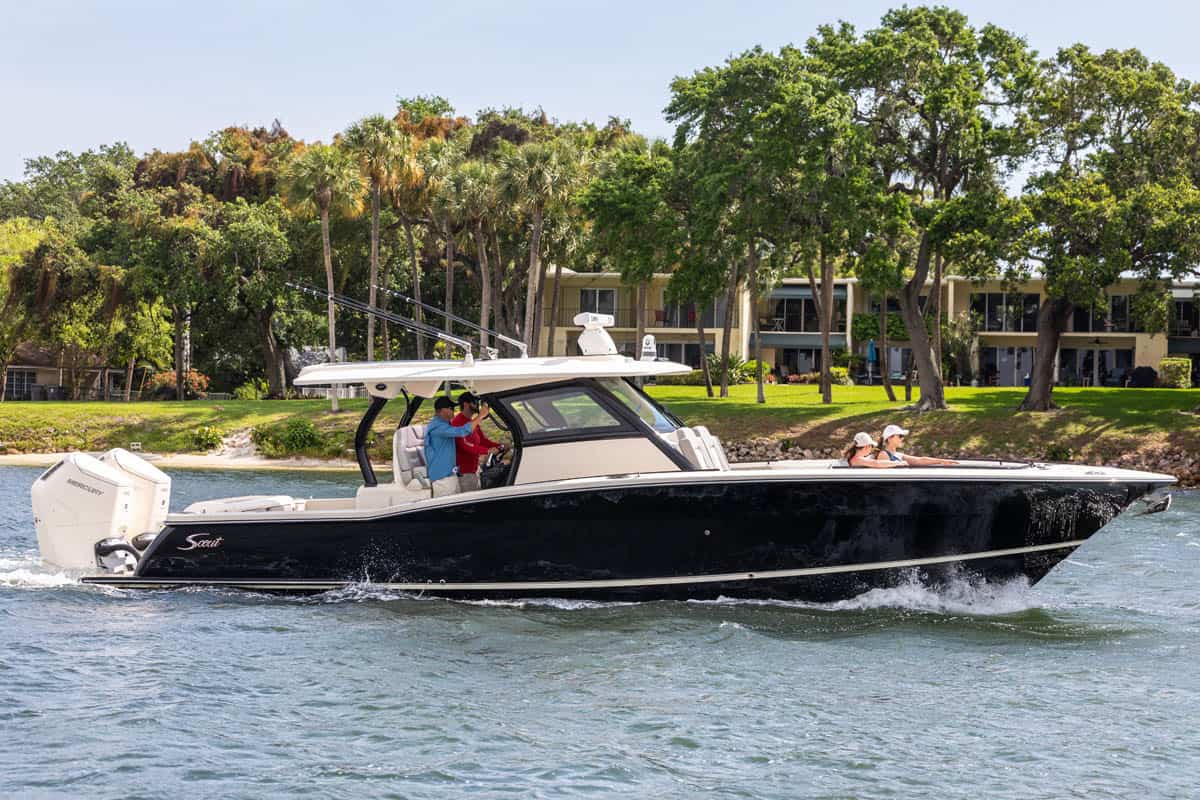
Who builds it. Scout is a family-owned builder in Summerville, South Carolina, and labels its boats "Proudly Made in the USA". Every LXF gets 100% hand-laid construction and completely finished bilges, lids, doors and hatches. Open any hatch on an LXF and you see the difference that last point makes.
The hull. From the 330 LXF up, Scout calls the models S-Class and builds them with epoxy-infused construction on its dual Scout Stepped Hull Technology. The 377, 425, 435 and 530 use carbon fiber and E-glass in that epoxy infusion. Steps in a hull let air under the running surface, which cuts drag at speed. Epoxy resin is generally stronger for its weight than the polyester resins common in production boats. Scout says the result is structural stability, strength and a Class-A finish.
Stability systems. Scout puts motion control on the whole line. The 260 LXF comes standard with Seakeeper Ride, a vessel attitude control system that trims out roll and pitch underway. The 425 LXF, 435 LXF and 530 LXF come standard with Seakeeper gyro stabilizers (models 4.5, 5 and 6), and the 357 and 377 offer a Seakeeper 3 as an option. A gyro steadies the boat at rest, which is when a deep-V center console rolls most: drifting a wreck, or anchored at the sandbar.
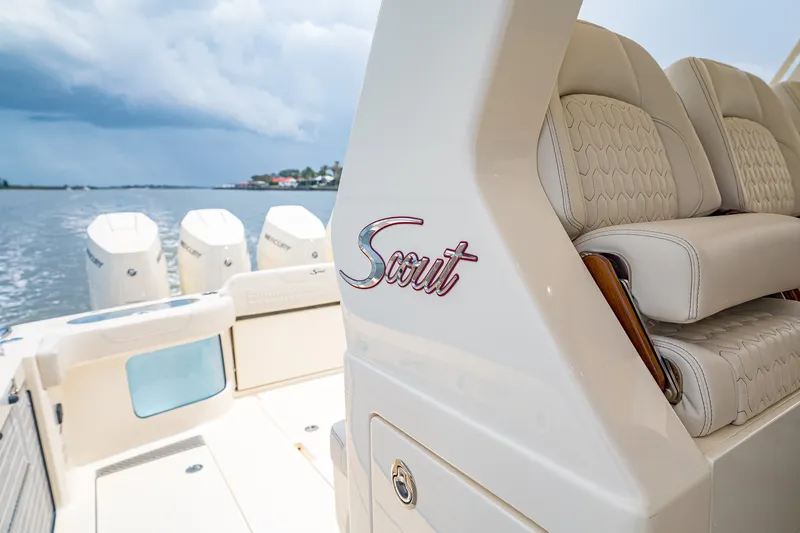
The finish. Think heated helm seats (the 330, 357, 425 and 530 list them as standard), electric heads, air conditioning on the cabin models, a forward-facing anchor camera you view on the helm screens, and on the 377 and 435 a lithium-ion house battery system designed to do away with the generator.
Can you really fish a Scout LXF?
| Model | Live bait | Fish storage | Rod storage |
|---|---|---|---|
| 260 LXF | Aerated, recirculating baitwell (port) | Port and starboard in-floor fish boxes | 6 flush mount, 2 under gunnel |
| 288 LXF | 45-gal aerated aft baitwell | Port and starboard in-floor fish boxes | 6 flush mount, 4 in leaning post, 2 under gunnel |
| 305 LXF | Baitwell in leaning post | Port and starboard aft floor fish boxes | 6 gunnel, 2 under gunnel |
| 357 LXF | 47-gal cockpit baitwell plus transom baitwell | Fish boxes of 43 gal each; 60-gal transom fish box/storage | 10 flush mount, 2 under gunnel |
| 435 LXF Li-Ion | Dual 45-gal baitwells at the transom | See model | Articulating rocket launchers optional |
Standard equipment from Scout's model pages and model flyers. Outriggers are optional across the line.
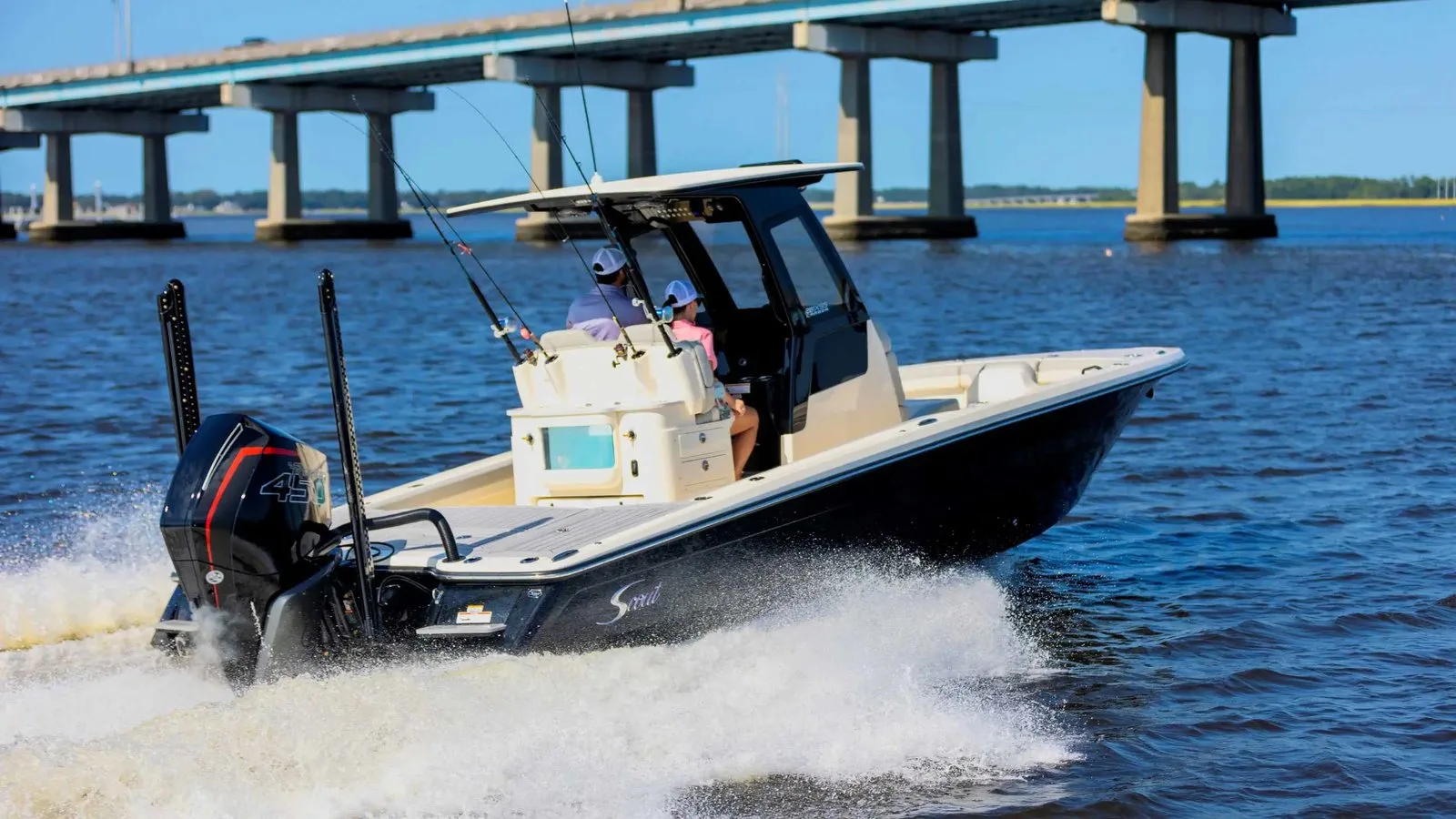
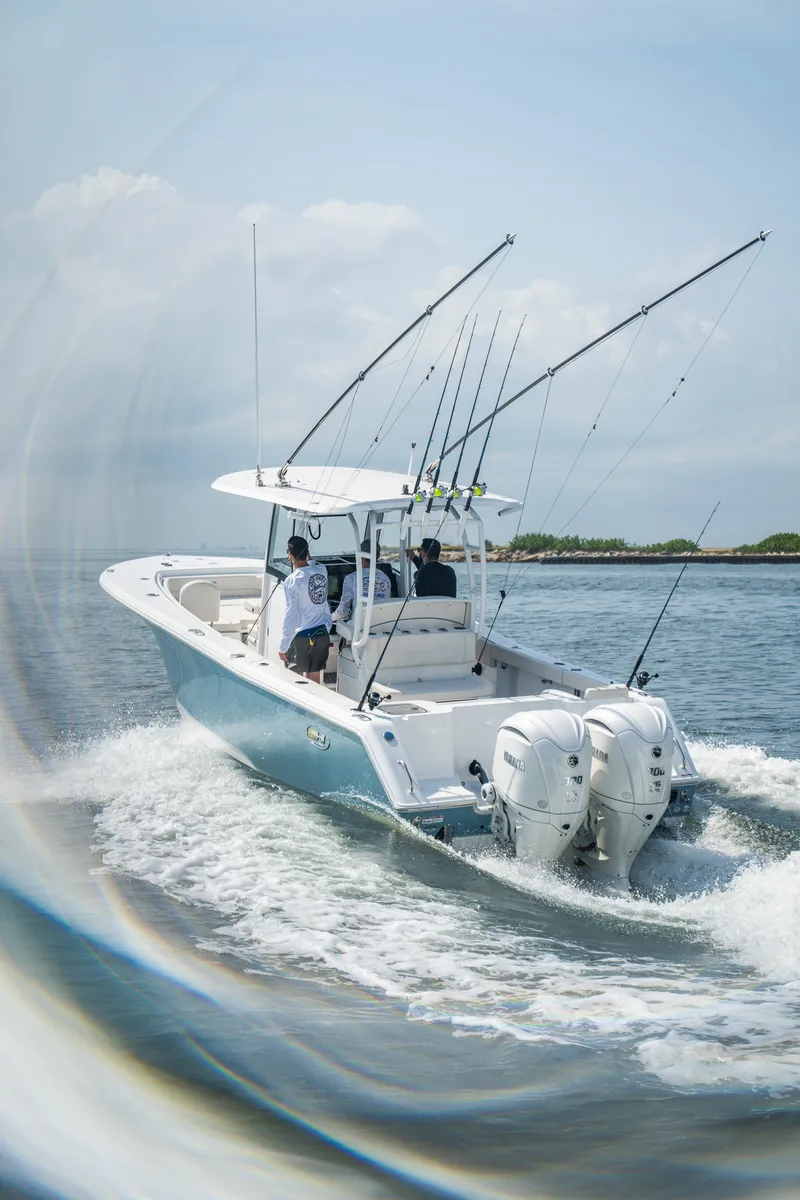
Yes. An LXF is a center console first, and the fishing kit is standard, not an afterthought. The 288 LXF is a good example: a 45-gallon aerated baitwell in the aft center of the cockpit, in-floor fish boxes with a diaphragm pump, a leaning post with a bait prep station, sink, tackle drawers and four more rod holders, a port tackle station and a console locker for gaffs and brushes. The 357 LXF goes further with a 47-gallon cockpit baitwell and 43-gallon fish boxes on each side.
What makes it different from a bare sportfish is what surrounds that cockpit. The same boat has a private head, forward lounges, a stereo and on most models a walkable swim platform. A practical example: on a summer day off Port Canaveral, a crew can slow-troll live bait for kingfish at the nearshore reefs in the morning, then run home with guests aboard who never had to sit on a cooler. Outriggers, rocket launchers and bigger Garmin displays are on the option lists, so set the boat up for how far out you really go.
26 to 30 feet: the 260, 288 and 305 LXF
Scout 260 LXF
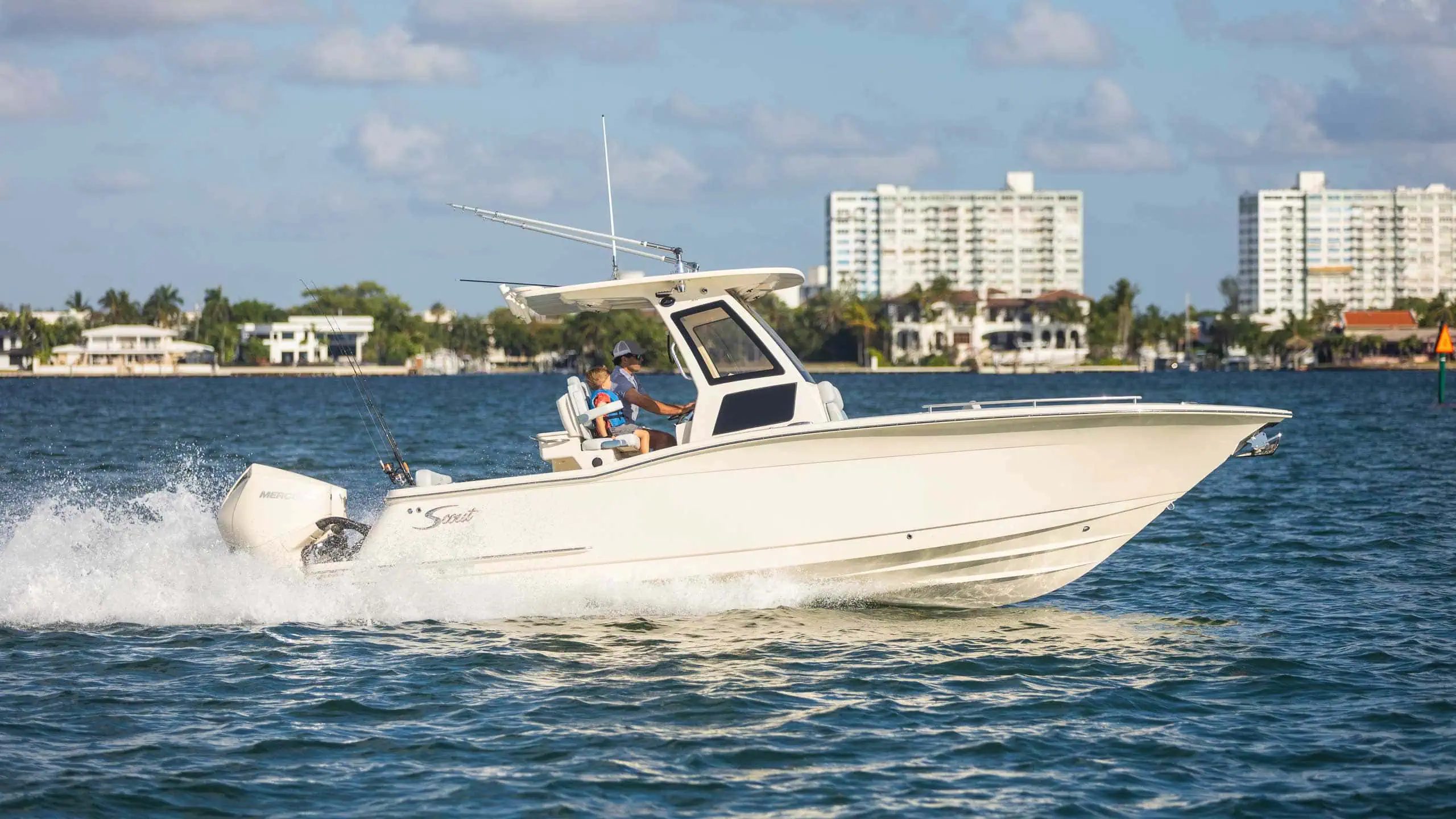
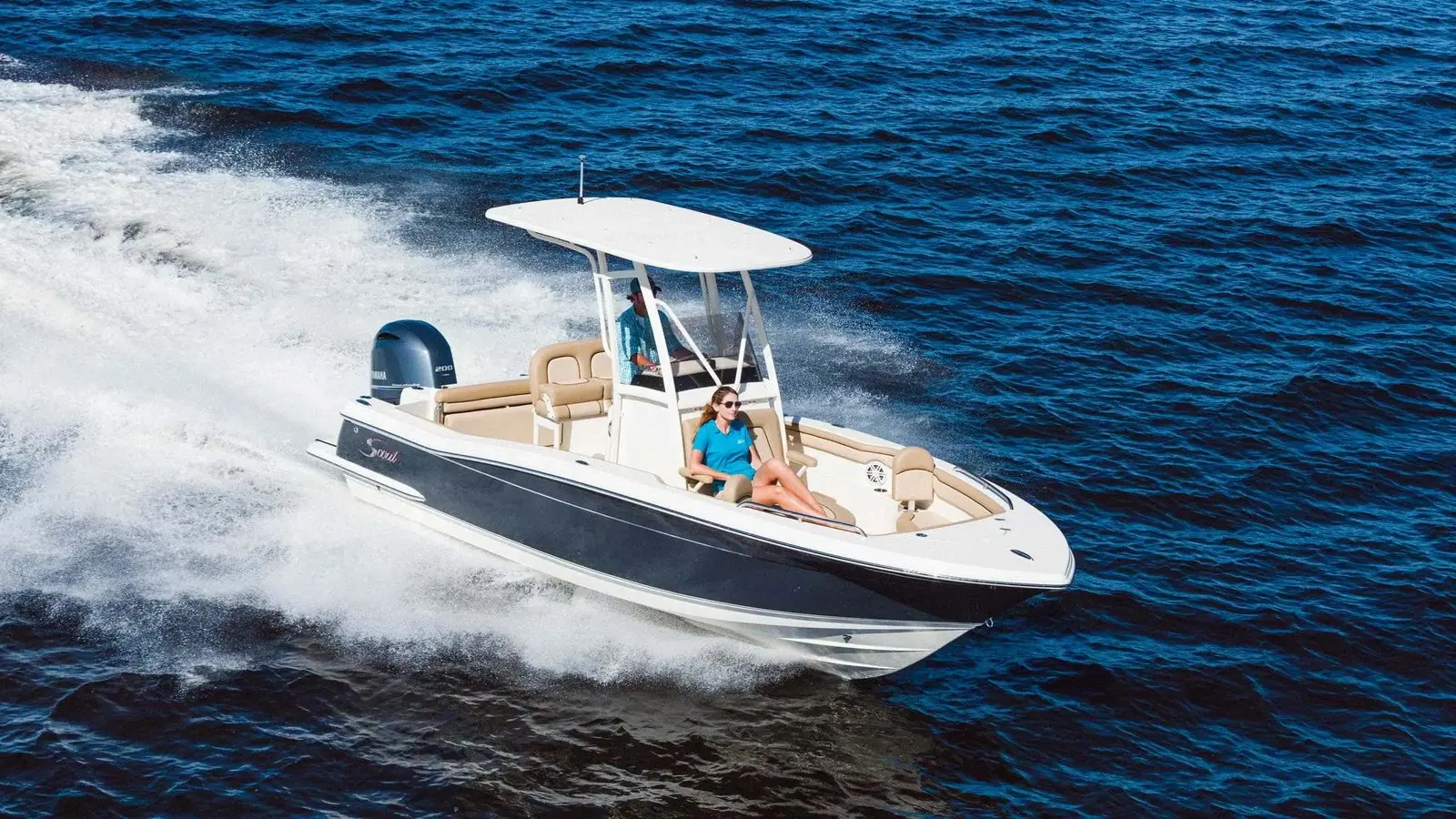
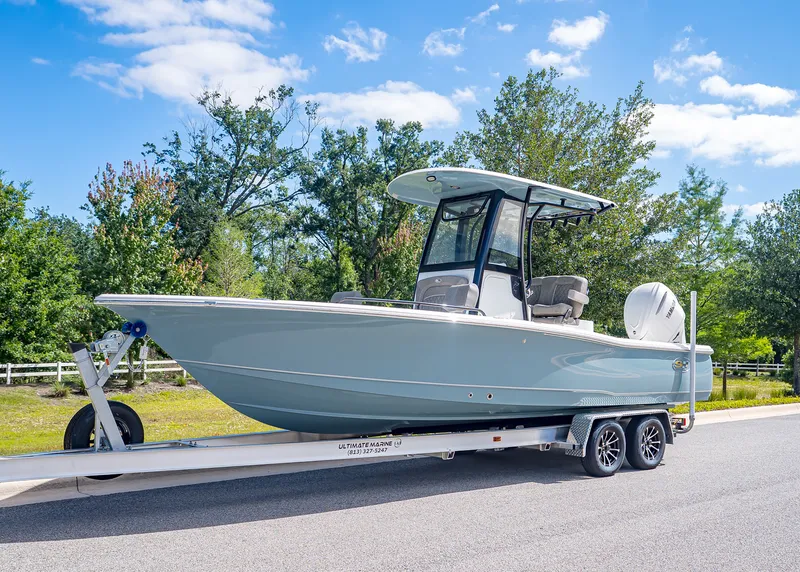
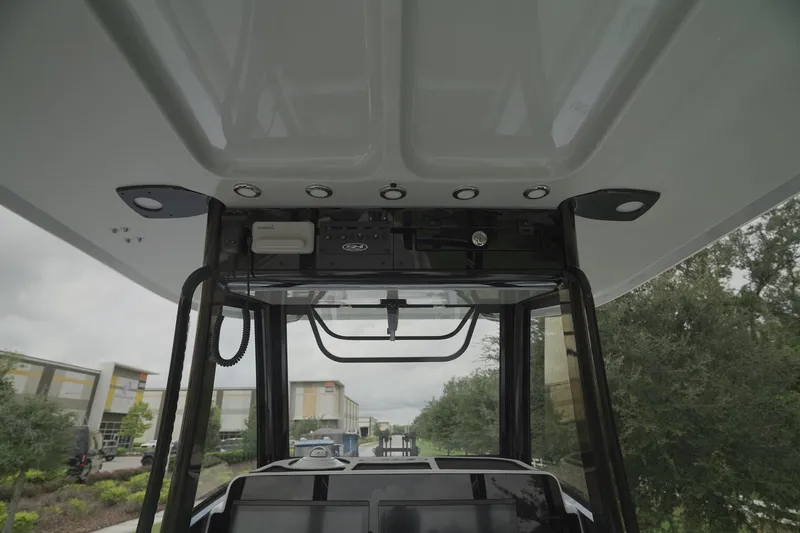
The smallest current LXF is 26 feet with an 8′ 11″ beam, 146 gallons and a 450 hp rating. Standard equipment includes an exposed carbon fiber T-top with a fully enclosed windshield, a forward lounge seat, a side swing-in door, in-floor fish boxes, a step-inside console with a porcelain head, a windlass with an anchor camera, and Seakeeper Ride. It's the LXF for a couple or a small family who want the finish of the bigger boats on a hull they can keep on a standard lift.
Scout 288 LXF
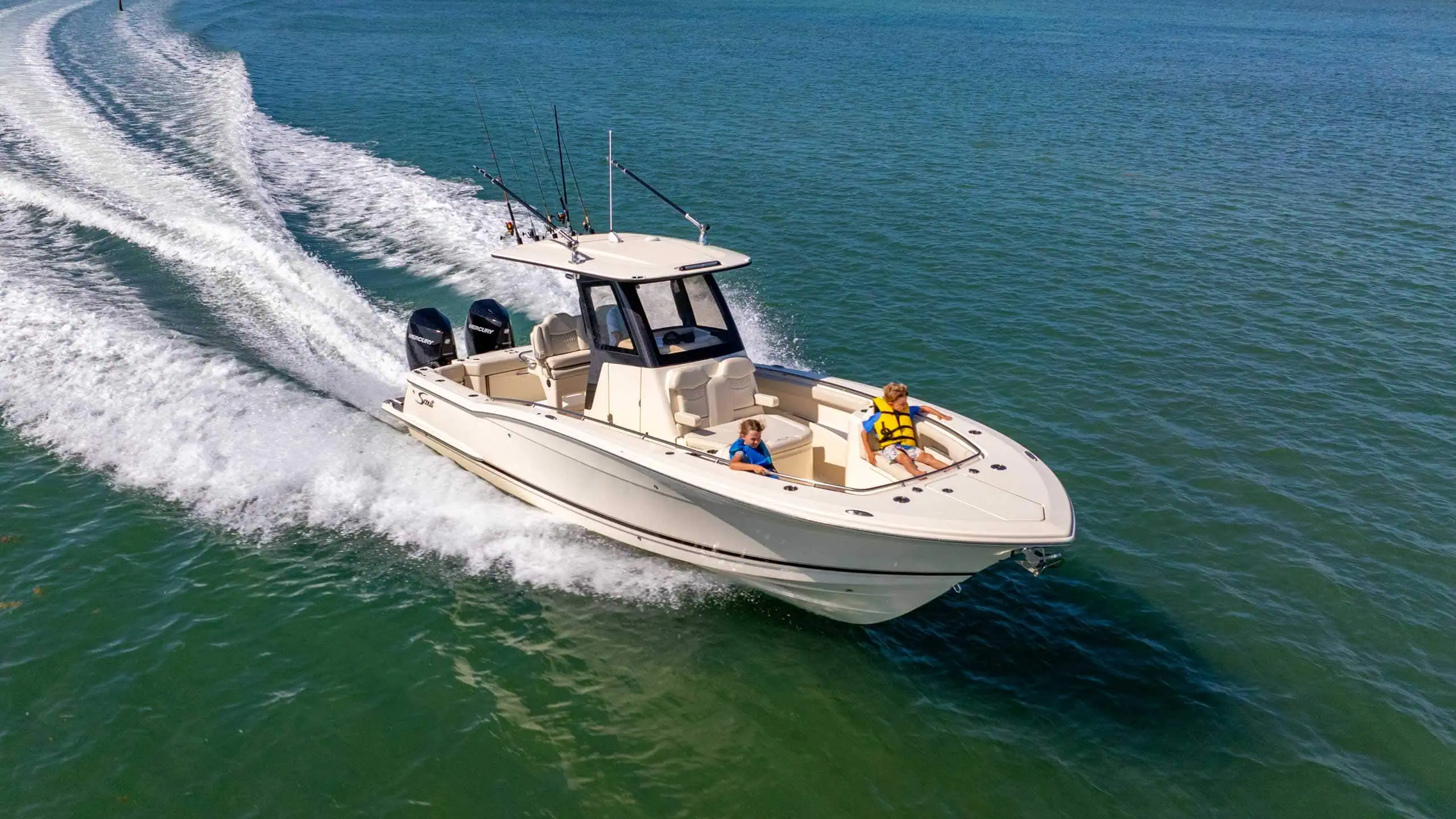
At 28′ 9″ by 9′ 9″ with 188 gallons and up to 600 hp, the 288 is the fishing-forward step, with the 45-gallon baitwell and the bait-prep leaning post described above. It has a 21-degree deadrise, Zipwake trim, an electric head and Maretron digital switching. Estimated range is about 349 miles with twin Mercury 300s at optimal cruise in good conditions.
Scout 305 LXF
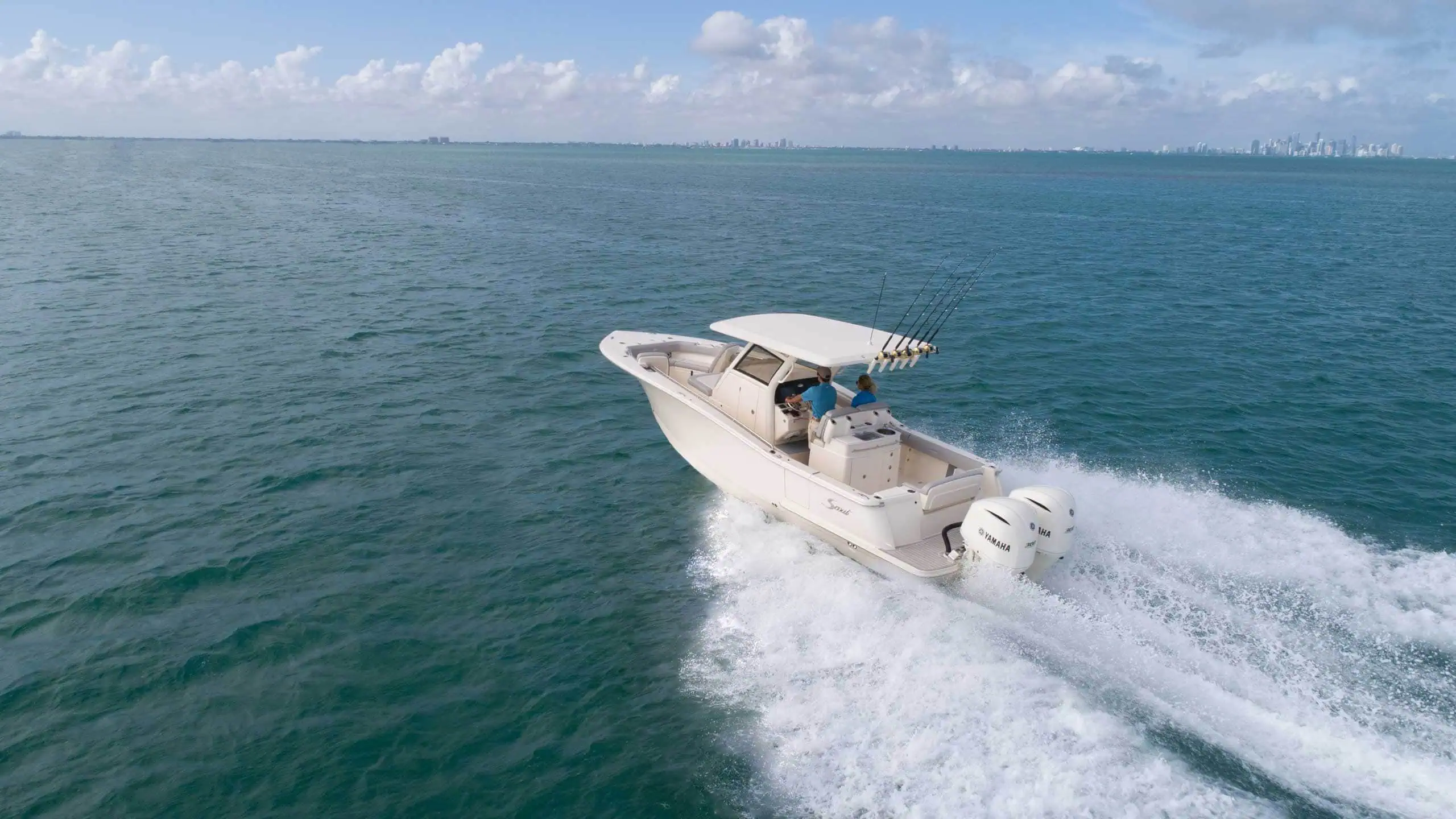
The 305 LXF adds a cushioned berth inside the console, with 110V air conditioning as an option. It's 30′ 1″ with 212 gallons and an 800 hp rating, with a removable bow table, a six-speaker stereo and key fob power-up. Estimated range is about 417 miles with twin Yamaha 300s at optimal cruise. Pick it if you want a place to nap out of the sun or overnight at an anchorage.
Full finish and a real fishing cockpit in a size that fits most lifts and dry stacks.
A console berth and optional air conditioning at 30 feet.
31 to 38 feet: the 315, 330, 357 and 377 LXF
Scout 315 LXF and 330 LXF
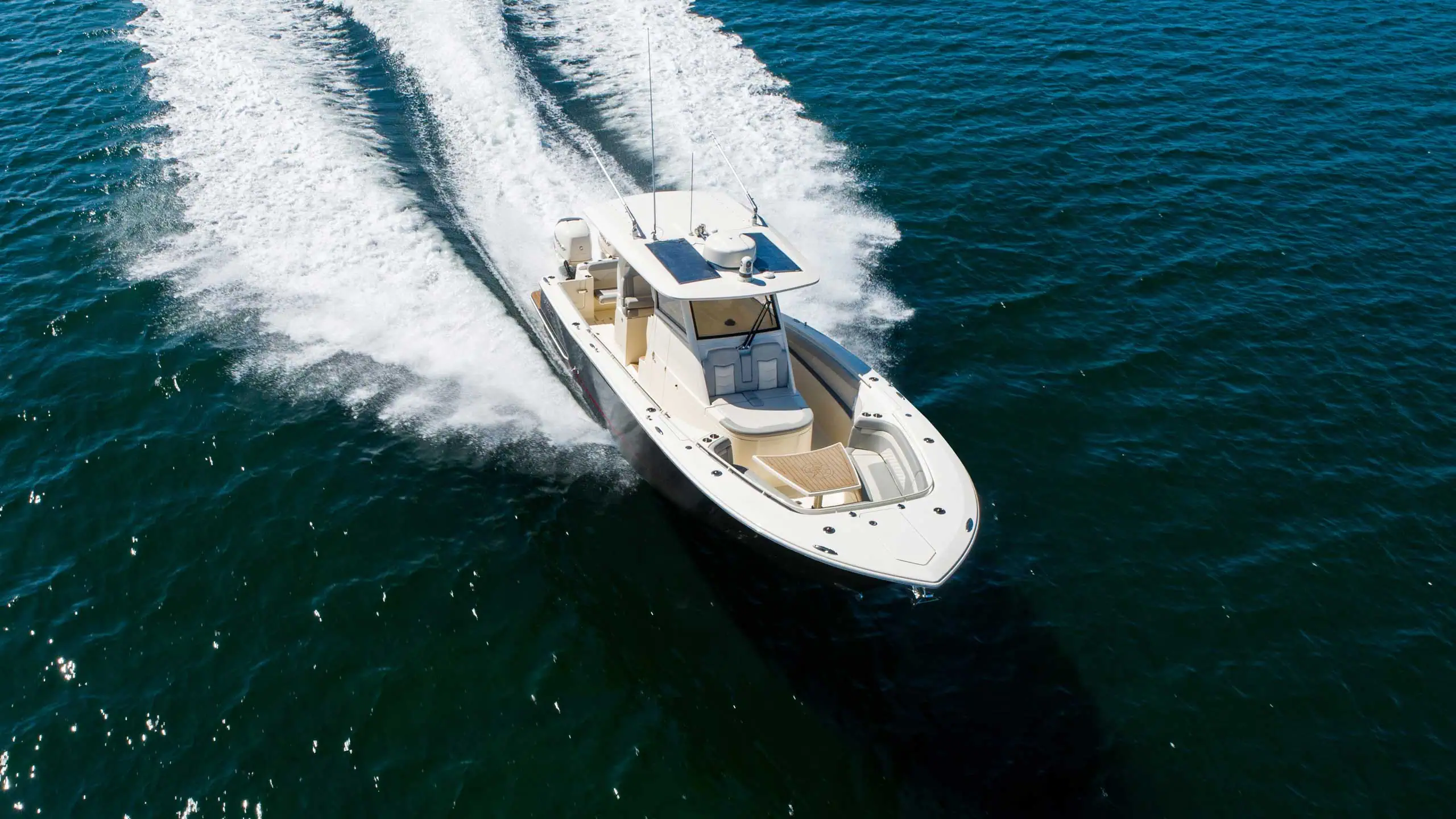
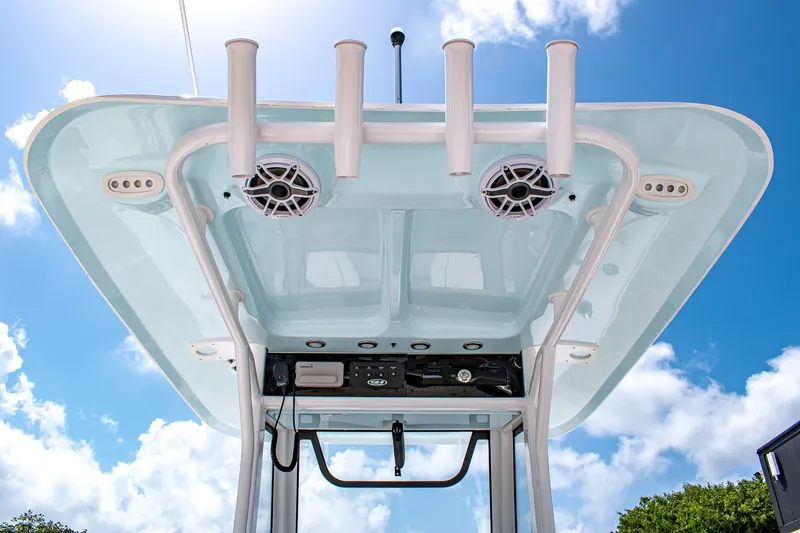
The 315 LXF (31′ 5″, 253 gallons, up to 700 hp) adds electrically actuated beach platforms on both sides, which fold down to widen the cockpit at the sandbar. The 330 LXF is the first S-Class model: epoxy-infused stepped hull, a powder-coated hardtop with six rocket launchers, heated helm seats, and a leaning post with tackle drawers, a sink and a 65-quart YETI slide-out cooler, plus an inner console berth with an electric head.
Scout 357 LXF
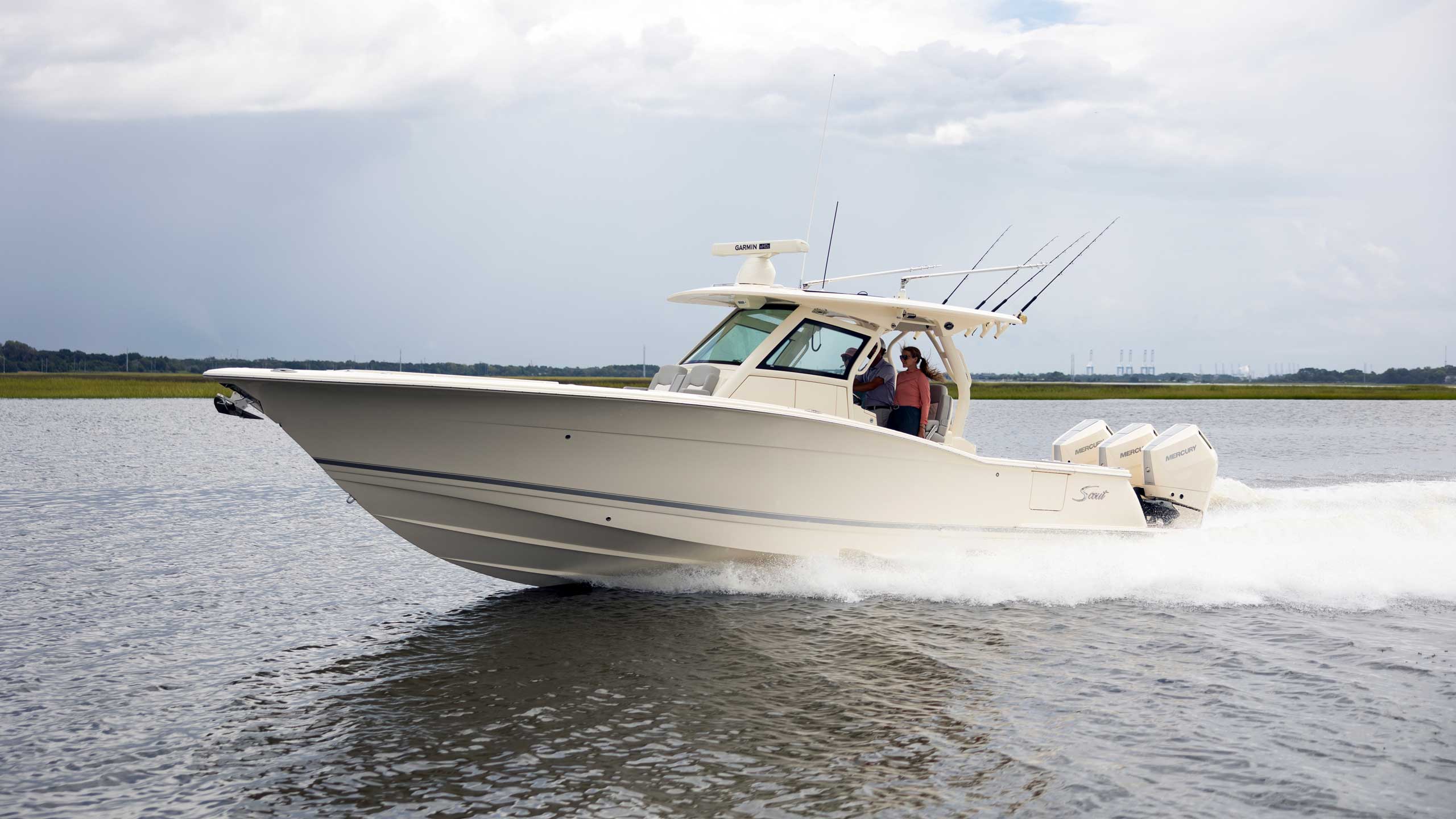
The 357 LXF is 35′ 3″ with 319 gallons and up to 1,200 hp. It carries the most fishing kit in its size: the 47-gallon cockpit baitwell, a 60-gallon transom fish box, 10 flush-mount rod holders and raw and fresh water washdown. Three heated helm chairs, an electric bow table that converts to a sun lounge, and a double berth below handle the family side. A Seakeeper 3 and air conditioning are options.
Scout 377 LXF
At 37′ 7″ with 363 gallons and up to 1,350 hp, the 377 adds a spacious cabin with an enclosed head and Corian vanity, air conditioning and heat in the cabin and at the helm, and a lithium-ion battery system designed to remove the need for a generator. An optional summer kitchen adds a grill and sink.
Big baitwells and fish boxes, plus berths, air conditioning and heated helm seats.
Twin or triple big outboards, a slip and more systems to maintain.
42 feet and up: the 425, 435 and 530 LXF
Scout 425 LXF and 435 LXF Li-Ion
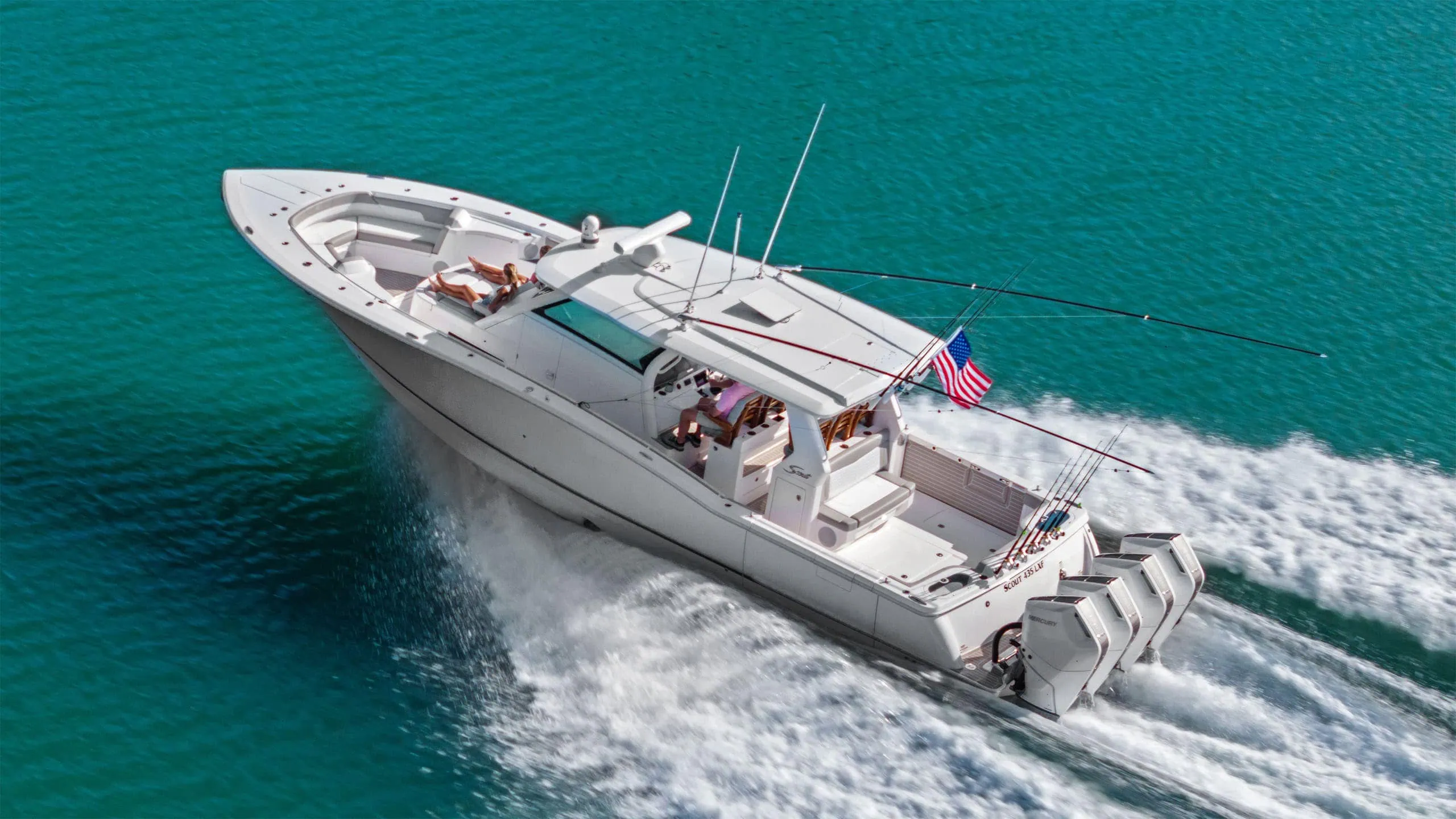
Both are 13′ 1″ wide with an 1,800 hp rating and carbon epoxy construction. The 425 LXF (42′ 2″, 545 gallons) comes standard with a Seakeeper 4.5 gyro, second-row seating and a leaning post with an electric drawer cooler, a summer kitchen with grill and sink, and stowaway barstools. The 435 LXF Li-Ion (43′ 4″, 605 gallons) is Scout's newest LXF, with a Seakeeper 5, hydraulic beach platforms on both sides, an electric transom seat flanked by two 45-gallon baitwells, and a lithium-ion system charged by the engines.
Scout 530 LXF
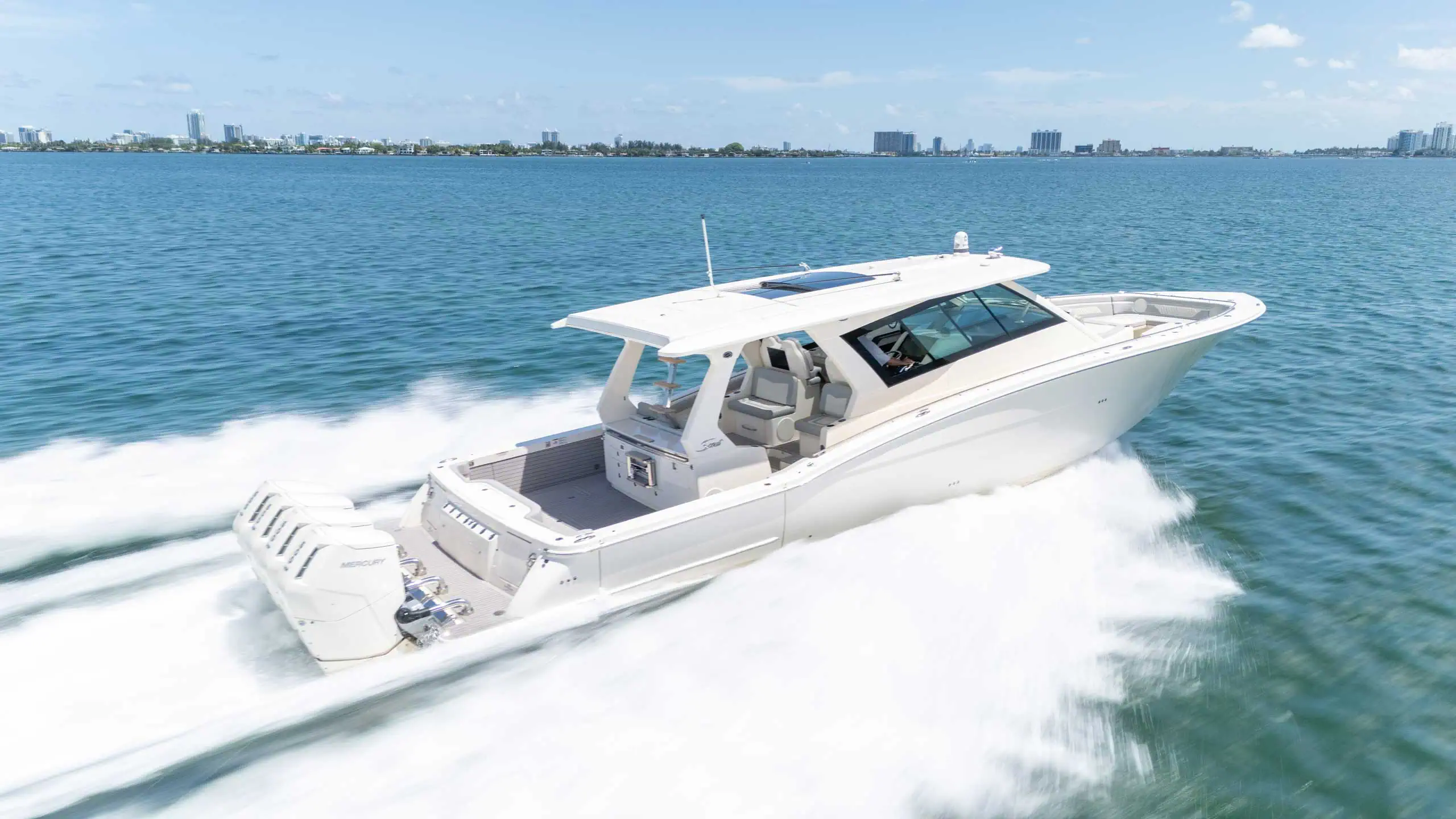
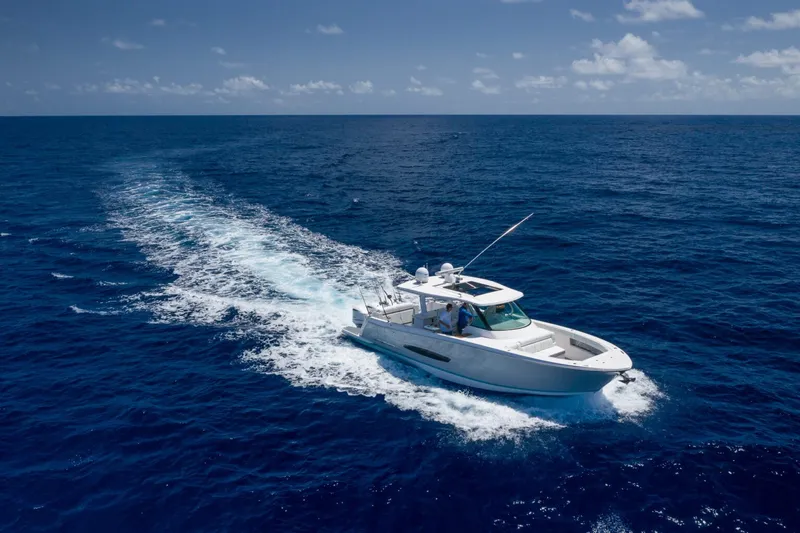
The 530 LXF is 53′ 5″ with 875 gallons and up to 2,400 hp, and Scout now offers it with a flybridge. Its hydraulic beach platforms open to 17′ 10″ of deck width, with 105 square feet of fishing space when raised. Below are a master stateroom, an aft berth, a galley and a separate shower and head. A Seakeeper 6 is standard, and Scout says a USCG-licensed captain from the factory delivers each boat and walks the owner through its systems.
Cabins, a gyro and long range, with a cockpit that still fishes.
A boat this size needs a slip, and some owners hire a captain.
How does a Scout LXF fit Florida water?
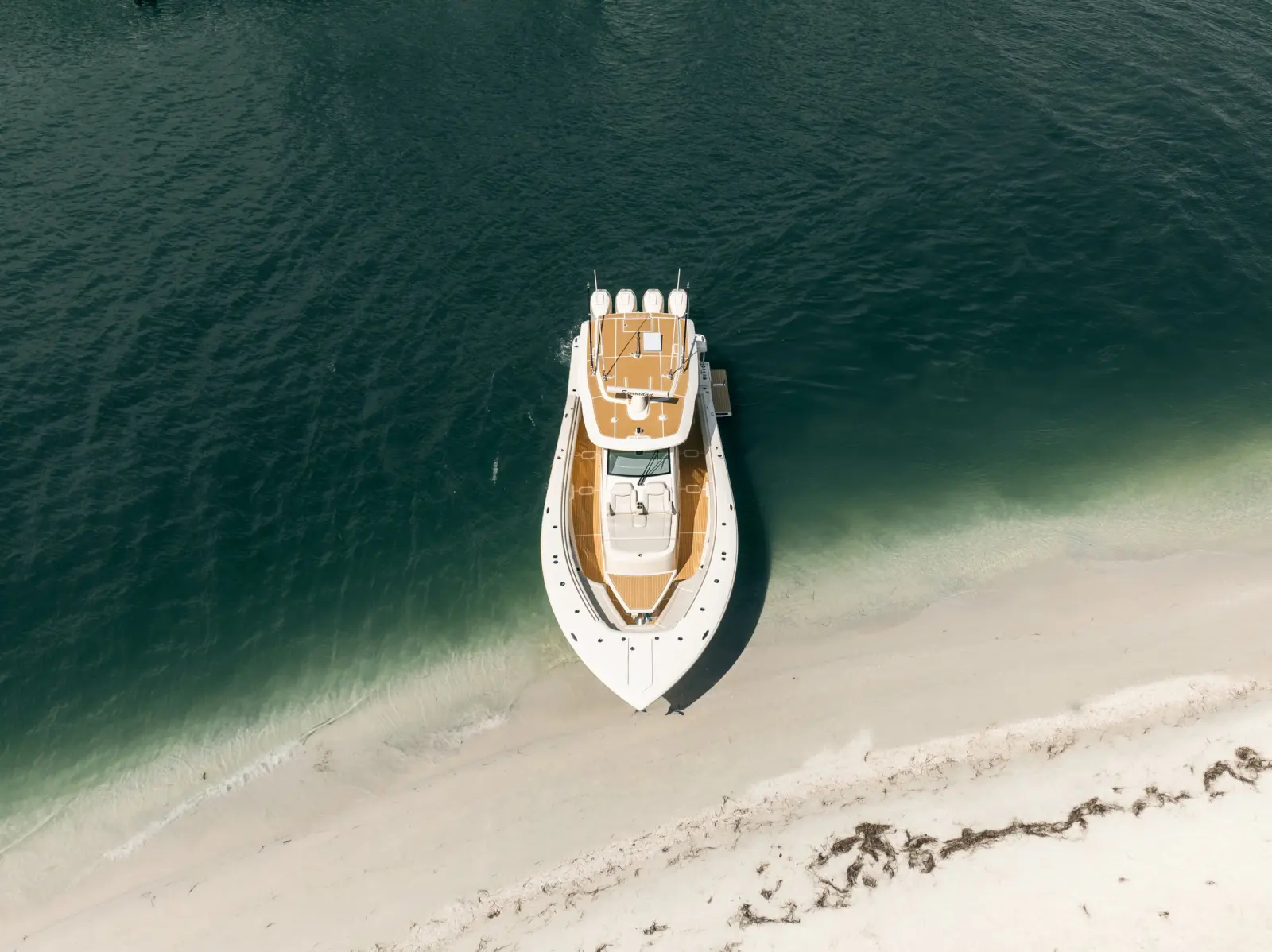
Where it shines. An LXF is an inlet-and-offshore boat. Running out of Ponce Inlet or Port Canaveral on a summer afternoon, when the sea breeze stacks a short chop against an outgoing tide, a 20- to 22-degree deadrise and a heavy, finished hull ride the way buyers at this level expect. A gyro or Seakeeper Ride keeps the boat steady while you drift a wreck. The bigger tanks give you room to plan fuel by thirds on long Atlantic runs or a fair-weather trip to the Bahamas.
Where it doesn't. No LXF is a flats boat. At 20 to 31 inches of draft, Mosquito Lagoon and the shallow edges of the Indian River are off the list, and FWC treats seagrass scarring in aquatic preserves as a violation. If you want the flats too, Scout's XSS bay boats are the better tool.
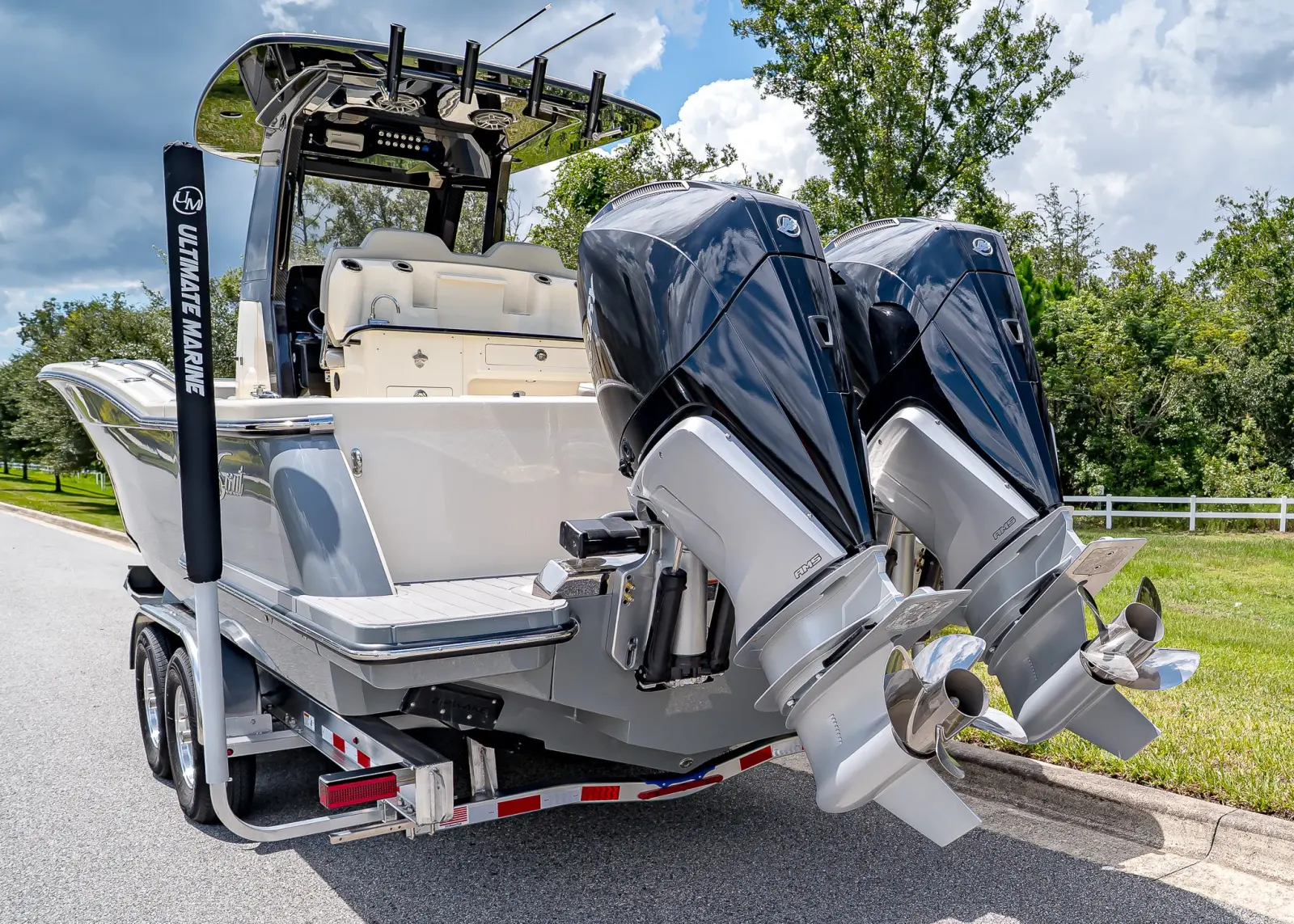
Where it lives. Every LXF is wider than 8′ 6″, Florida's 102-inch limit for towing without a permit. Some owners of the 260 trailer with an oversize permit, but most LXF owners keep the boat on a lift, in a slip, or in a dry-stack marina. Check rack length and weight limits before you choose a size: the 260 LXF weighs about 5,300 pounds dry before engines, and the weight climbs fast from there.
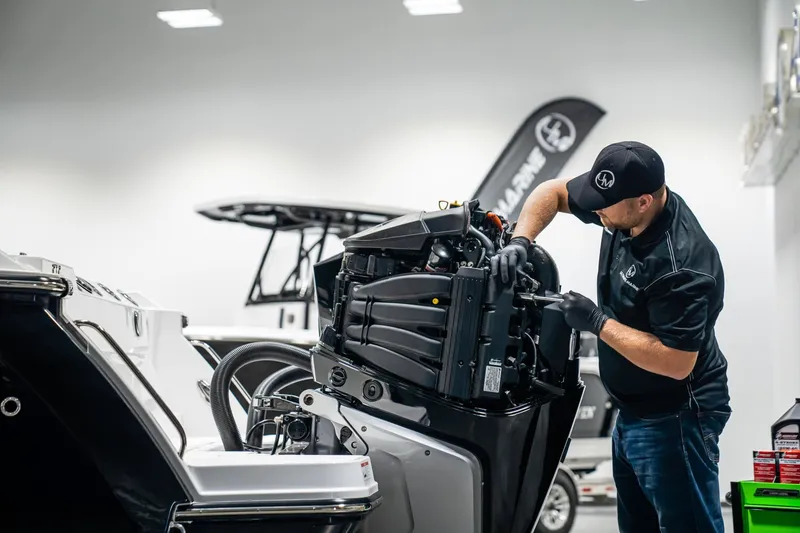
Storms and service. Hurricane season runs June 1 to November 30, so arrange haul-out or a storm plan with your marina before you take delivery. Twin, triple and quad outboards each need their own service, and salt calls for a freshwater flush after every trip.
Who should choose a Scout LXF?
An LXF suits a boater who doesn't want to choose between a fishing boat and a cruiser, and who cares about how a boat is finished. Three examples show the range.
- The serious angler with a family. Fishes kingfish and mahi on Saturdays and takes the family to the sandbar on Sundays. A 288 or 305 LXF covers both without a second boat.
- The step-up buyer. Has owned a 24- or 25-foot center console and wants quieter, drier and more finished. A 260 or 288 is the natural first LXF.
- The owner who entertains. Wants guests aboard for dinner runs and overnights, with air conditioning and a real cabin. The 357, 377 and up are built for that day, and they still carry big baitwells.
Who it isn't for: anyone who fishes the flats most days, needs to tow at home without a permit, or wants the simplest possible boat to own. Those buyers are better served elsewhere in Scout's lineup.
Before you settle on a size, ask three questions. Where will the boat live, and what length and weight will that lift, slip or rack accept? How many people come on a normal day, not a holiday? And how far out do you fish most often? The answers usually point to one rung of the ladder above.
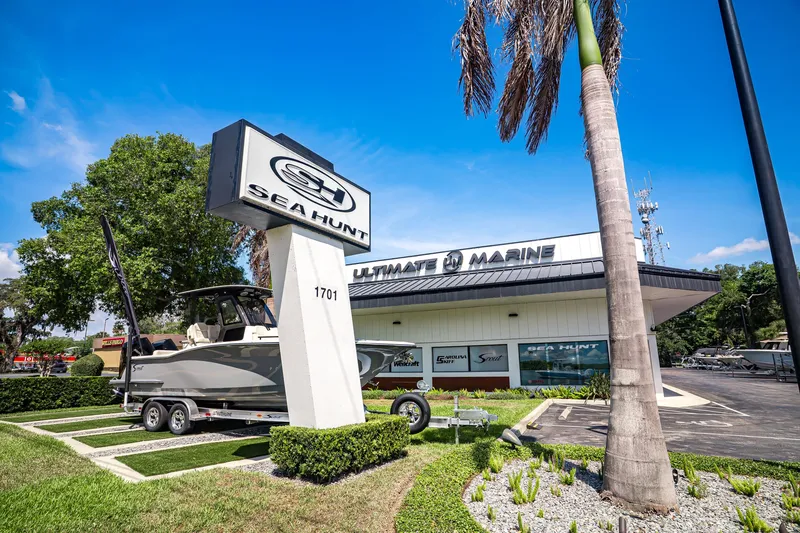
Visit our Orlando or New Smyrna Beach store
The finish and the layout are easiest to judge in person. Tell us which sizes interest you and how you fish, and we'll set up the visit.
Questions we hear
What does LXF mean on a Scout boat?
LXF is Scout's name for its luxury center console line. Scout doesn't spell out the letters. The boats combine cruiser finish, such as private heads, lounges and on bigger models heated helm seats and air conditioning, with a center console cockpit that carries baitwells, fish boxes and rod storage as standard.
What sizes does the Scout LXF come in?
The current LXF lineup runs from the 26-foot 260 LXF to the 670 LXS at 66′ 9″. In between are the 277, 288, 305, 315, 330, 357, 377, 400, 425, 435 and 530 LXF. Scout calls the models from 33 feet up S-Class, built with epoxy-infused stepped hulls and its highest level of finish.
Is the Scout 255 LXF still made?
No. The 255 LXF isn't in Scout's current lineup. The 260 LXF is the current LXF at that size: 26 feet, an 8′ 11″ beam, 146 gallons of fuel and a 450 hp rating. It comes standard with a carbon fiber T-top with an enclosed windshield, a private console head, in-floor fish boxes and Seakeeper Ride. Used 255 LXFs do come up for sale.
Can you fish offshore in a Scout LXF?
Yes. Every LXF carries a baitwell, fish boxes and rod holders as standard, from the 260's aerated baitwell and six flush-mount rod holders to the 357's 47-gallon cockpit baitwell and 43-gallon fish boxes. Fuel runs from 146 gallons on the 260 to 875 on the 530. Outriggers and rocket launchers are options, so set up the boat for how far out you fish.
Can you trailer a Scout LXF in Florida?
Florida limits a vehicle and its load to 102 inches (8′ 6″) wide without a permit. Every LXF is wider, from 8′ 11″ on the 260 to 14′ 8″ on the 530. Some 260 owners trailer with an oversize permit, but most LXF owners keep the boat on a lift, in a slip or at a dry-stack marina.