








Scout 281 XSS review: Scout’s flagship bay boat
A 28-foot bay boat built to sight-fish the flats in the morning and run nearshore in the afternoon. Here's how it's built, how it fishes and who it suits.
In this article
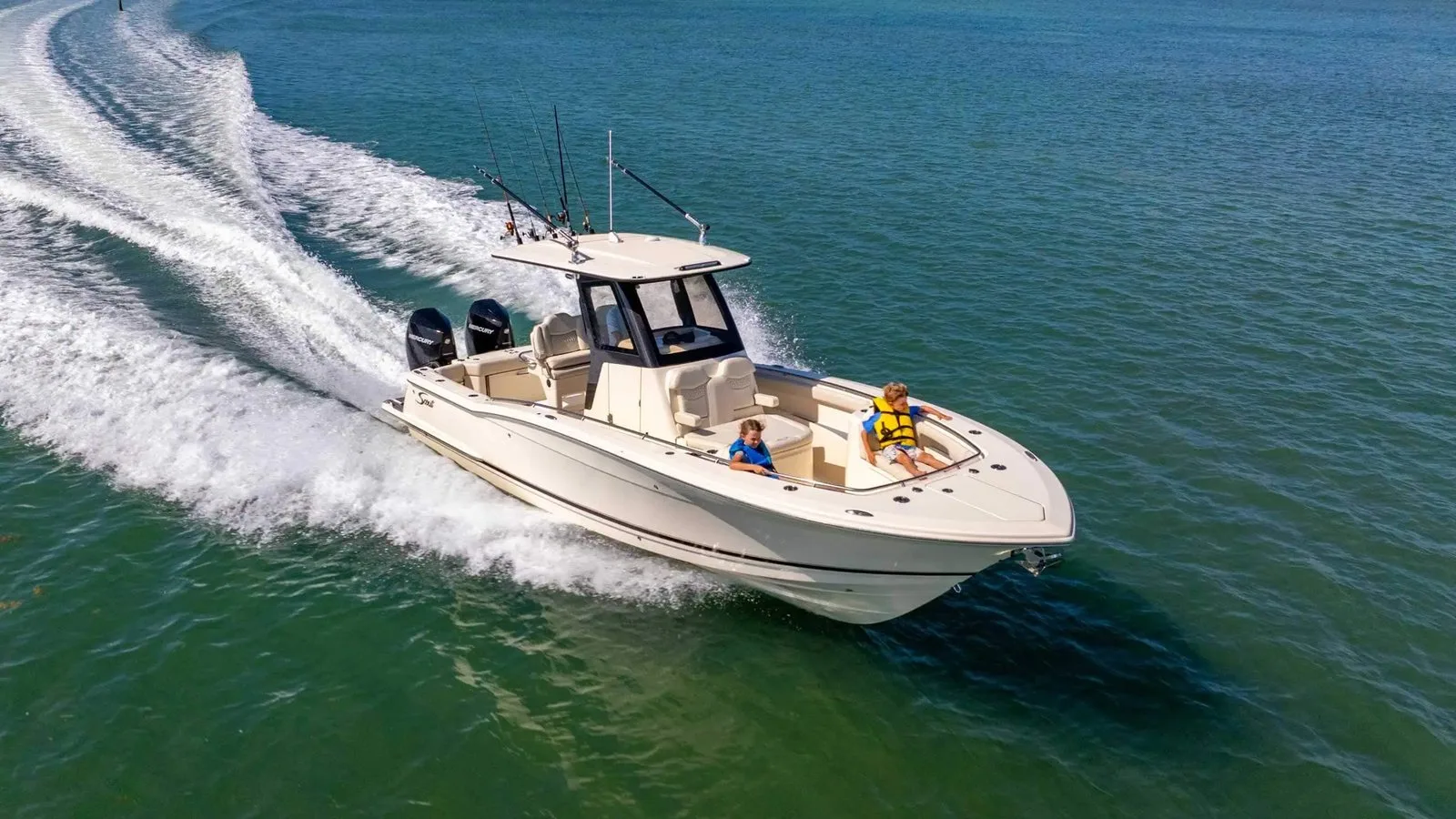
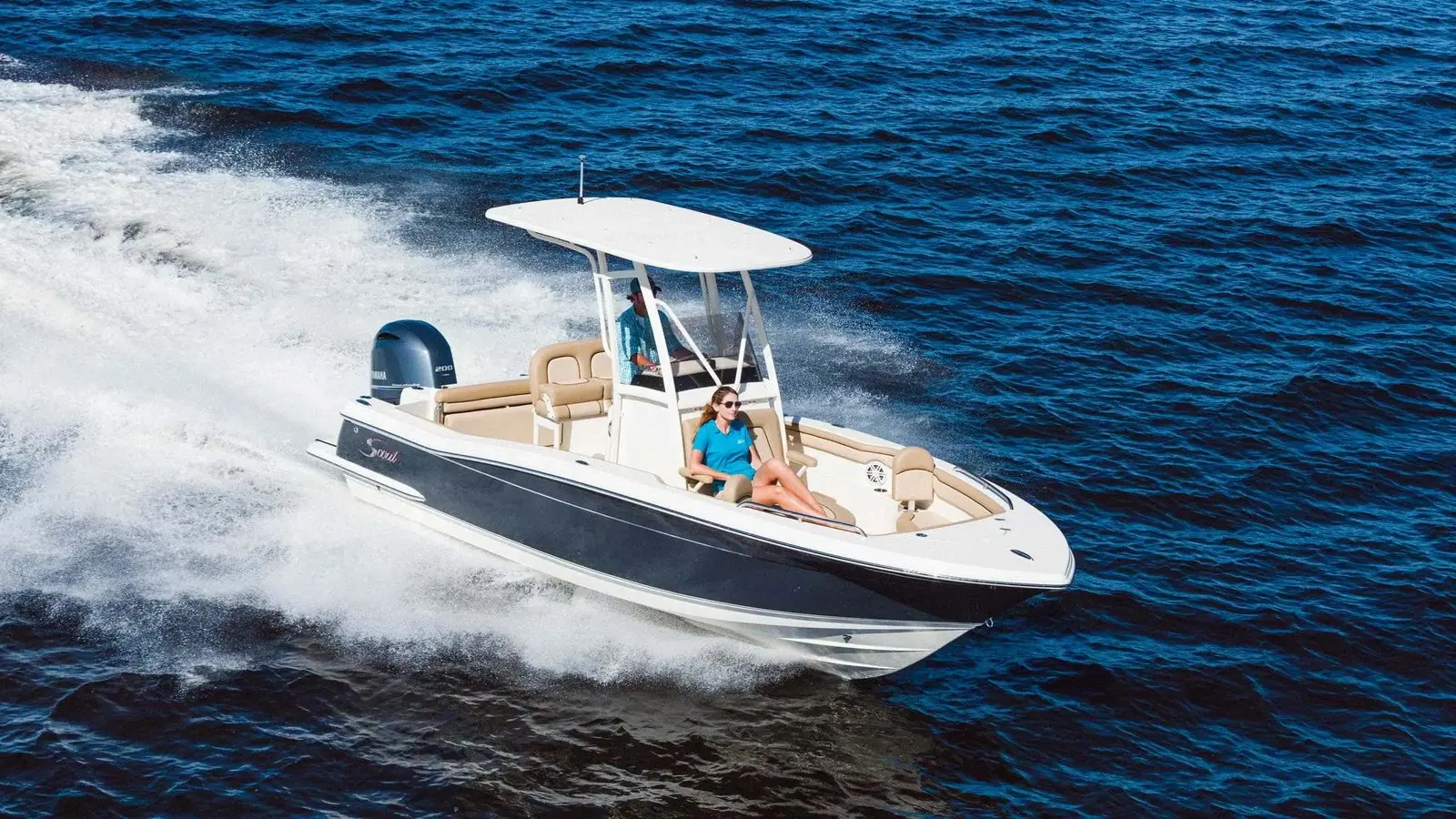
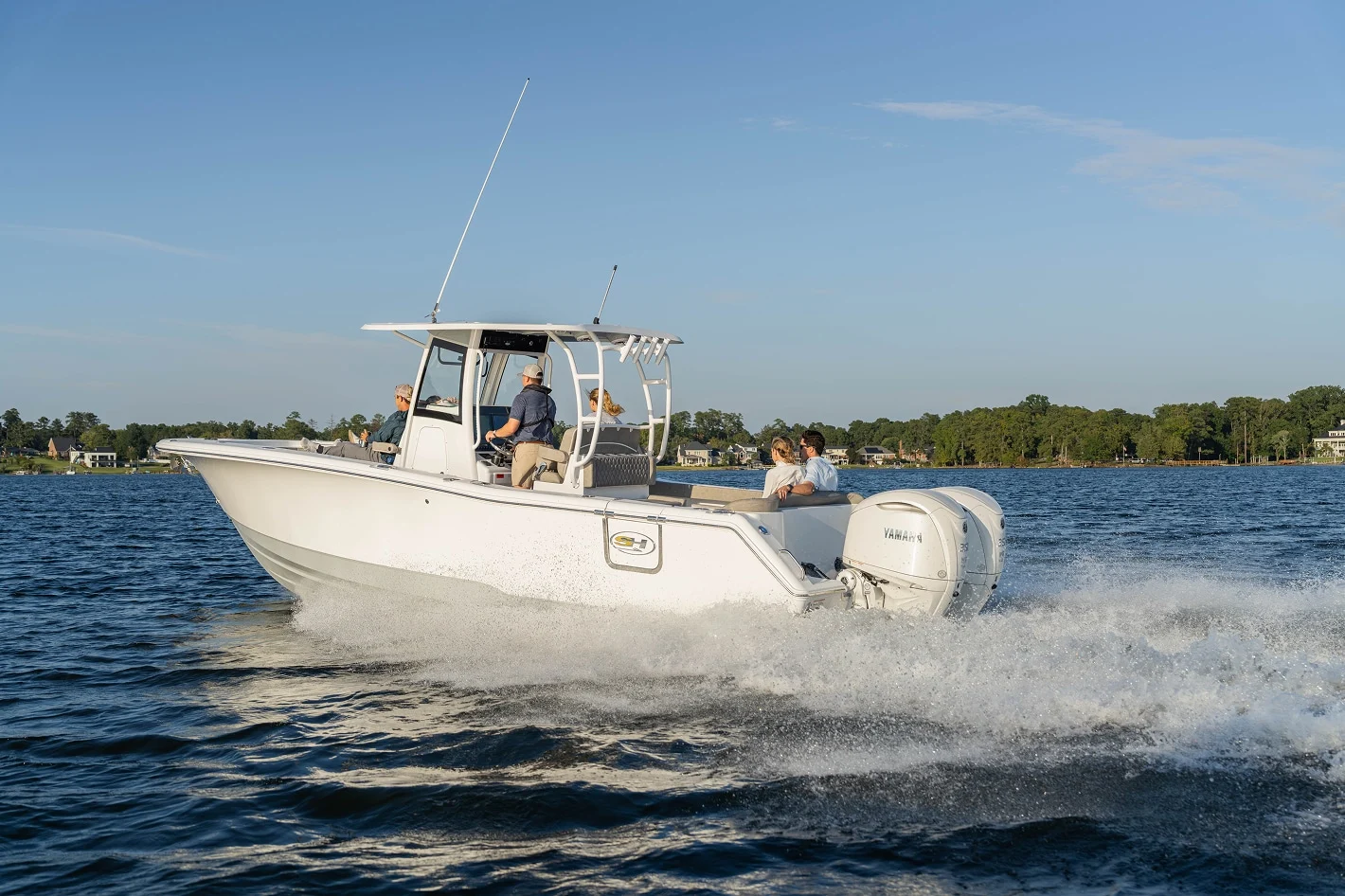
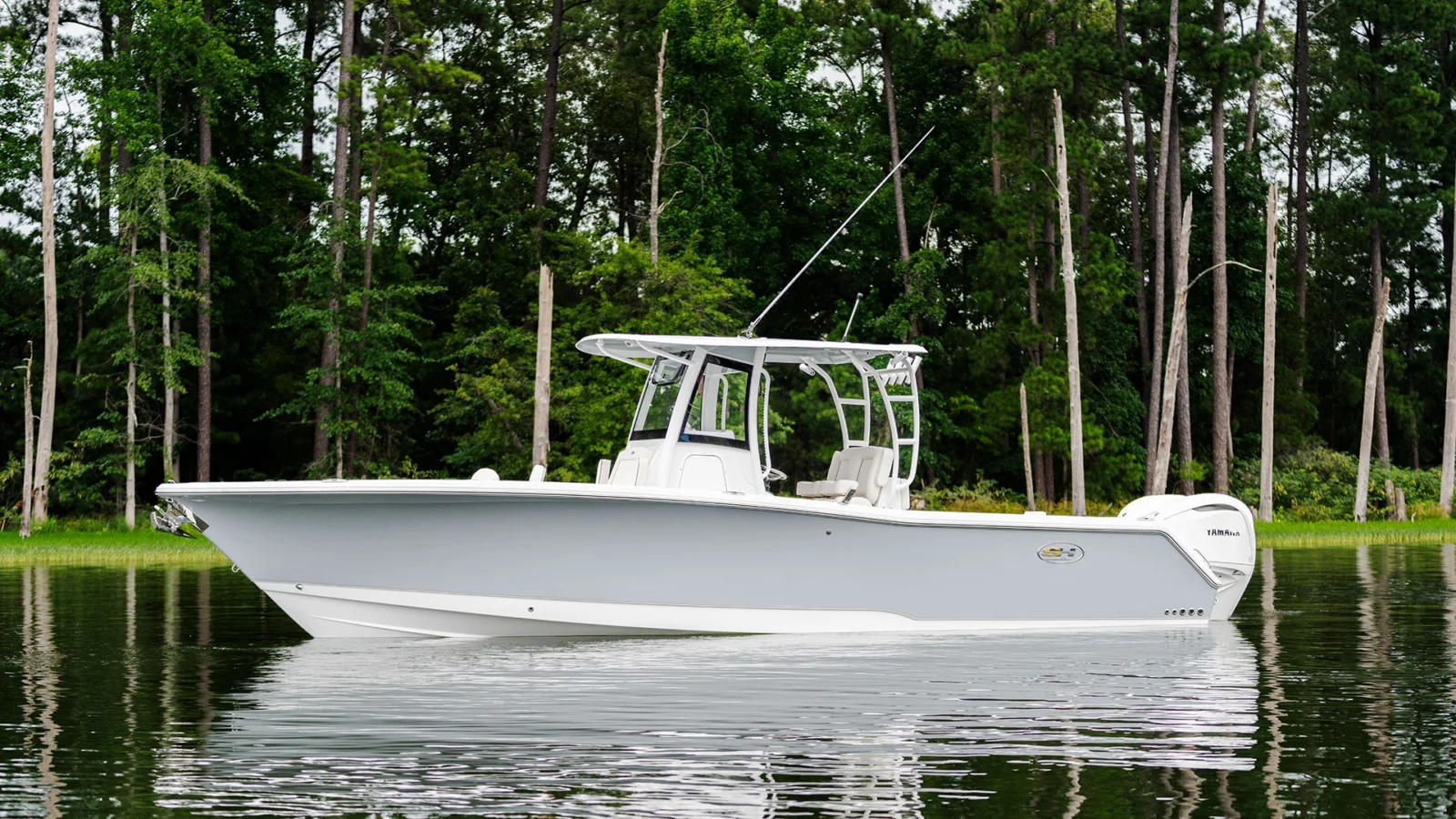
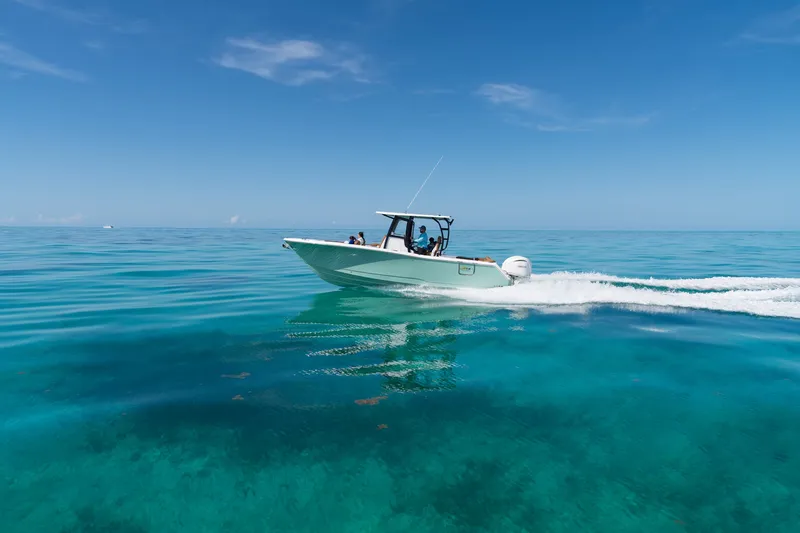
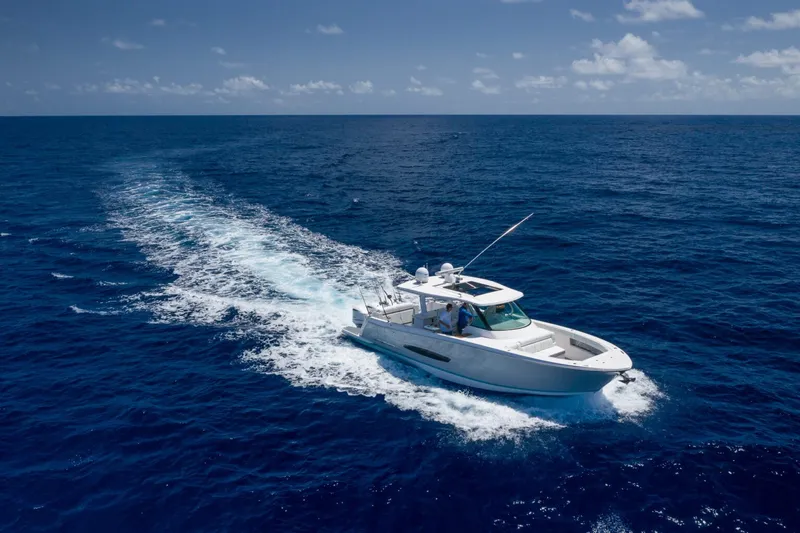
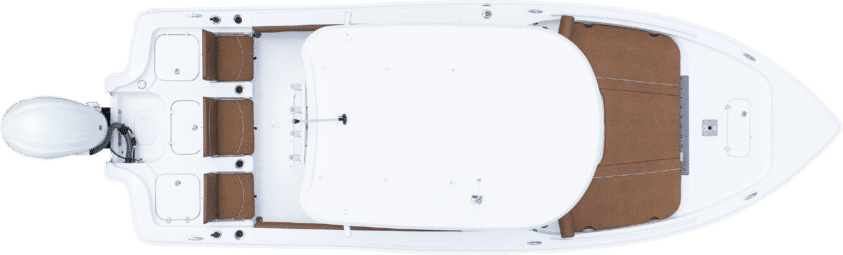
The 281 XSS is the biggest boat in Scout's XSS bay boat line and its newest flagship bay boat, an inshore/offshore crossover. It has casting decks at both ends, carbon epoxy construction and up to 600 hp of Mercury power. It suits Florida anglers who want to sight-fish the lagoon and run nearshore reefs from one boat.
- Scout's flagship bay boat: 28′ 1″, 600 hp max, 126 gallons of fuel, and a 315-mile estimated range with the Mercury 425.
- It fishes like a bay boat (big casting decks, a baitwell leaning post, transom fish boxes, a jack plate) and is built like Scout's offshore boats, with carbon epoxy infusion.
- Running far offshore most weekends? A Scout LXF center console fits better. Splitting flats and nearshore? This is the boat Scout built for it.
Most Florida anglers who fish both inside and outside end up with two boats, or with one boat that's wrong half the time. The 281 XSS is Scout's answer to that problem: a bay boat layout on a bigger, stiffer hull with the fuel and power to cross an inlet. Scout says it designed the boat to be like no other bay boat or inshore/offshore crossover on the market.
Below: specs and the three Mercury power packages, how the deck fishes, how the hull rides, who it suits on Florida water, and how it compares with the Sea Hunt BX 25 FS. Specs come from our model page and Scout's own literature. See the Scout 281 XSS.
Scout 281 XSS specifications and power options
Specifications
| Spec | Scout 281 XSS |
|---|---|
| Length | 28′ 1″ |
| Beam | 9′ 4″ |
| Max power | 600 hp |
| Fuel | 126 gal |
| Draft, approx. | 19″ on Scout's website; 14″ on its model flyer |
| Dry weight, no engines | 5,457 lb |
| Deadrise | 15.5° |
| Freshwater | 13 gal |
| T-top clearance, approx. | 7′ 8″ |
| Estimated range | 315 miles with the Mercury 425 |
Length, beam, max power and fuel from our model page; other figures from Scout's site and model flyer, checked October 2026.
Two numbers need a note. Scout's website lists the draft at about 19 inches, while its downloadable model flyer lists about 14. We can't tell you which is current, so ask us to confirm with Scout before you plan around a particular flat. And the dry weight leaves out engines, fuel and gear, so the boat on the trailer weighs well over 5,457 pounds.
Power options
| Engine setup | Top speed | Range (est.) | Best for |
|---|---|---|---|
| Single Mercury Verado 400 V10 | 55.3 mph | 303 miles | Mostly inshore, occasional nearshore |
| Single Mercury Verado 425 V10 | 57.7 mph | 315 miles | More speed on one simple rig |
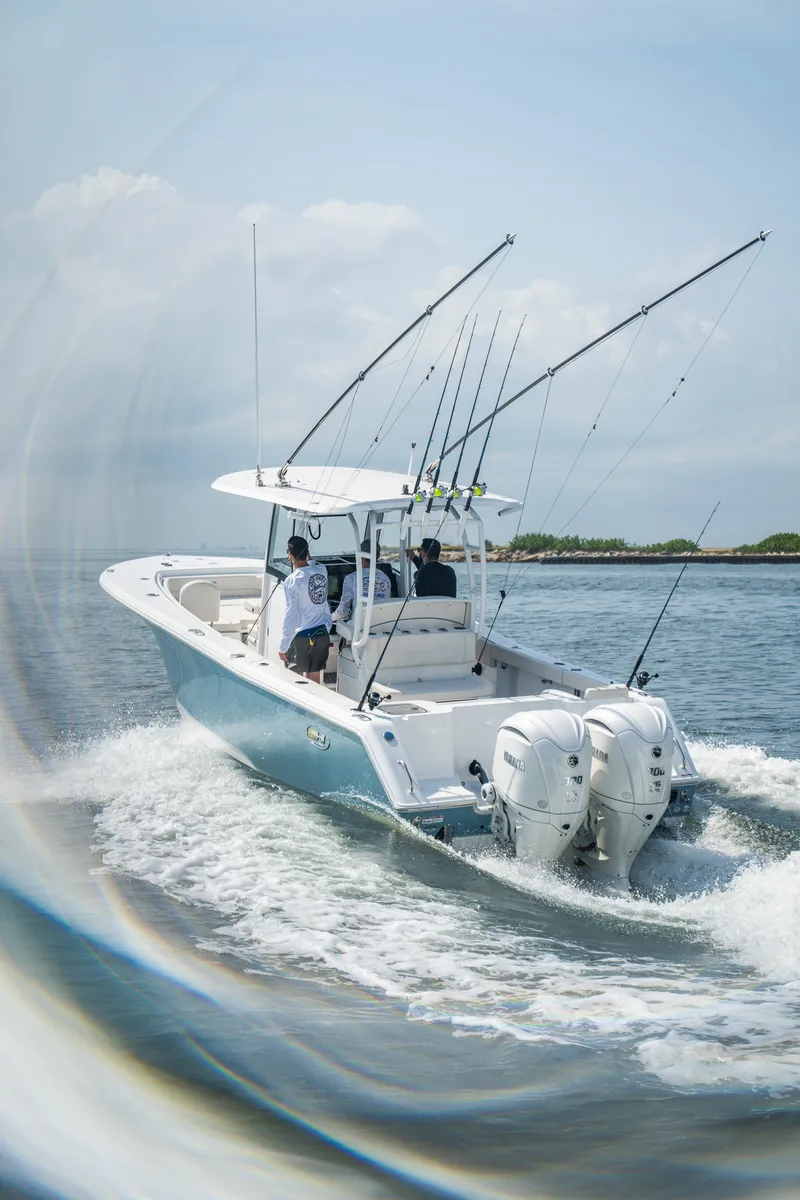
| Twin Mercury 300 XXL | 66.3 mph | 315 miles | Regular nearshore and offshore runs |
Scout performance bulletin data. The figures are approximate and a guideline only; test loads and conditions differ between bulletins.
The single V10s are the simplest rigs: one engine to service, one prop, less weight on the transom. Twins add speed and, offshore, a second engine to get home on. The estimated ranges sit close together, so the choice is about redundancy, not fuel.
How does the 281 XSS fish?
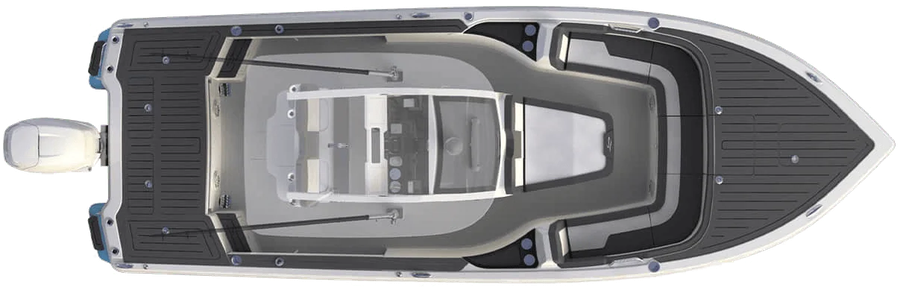
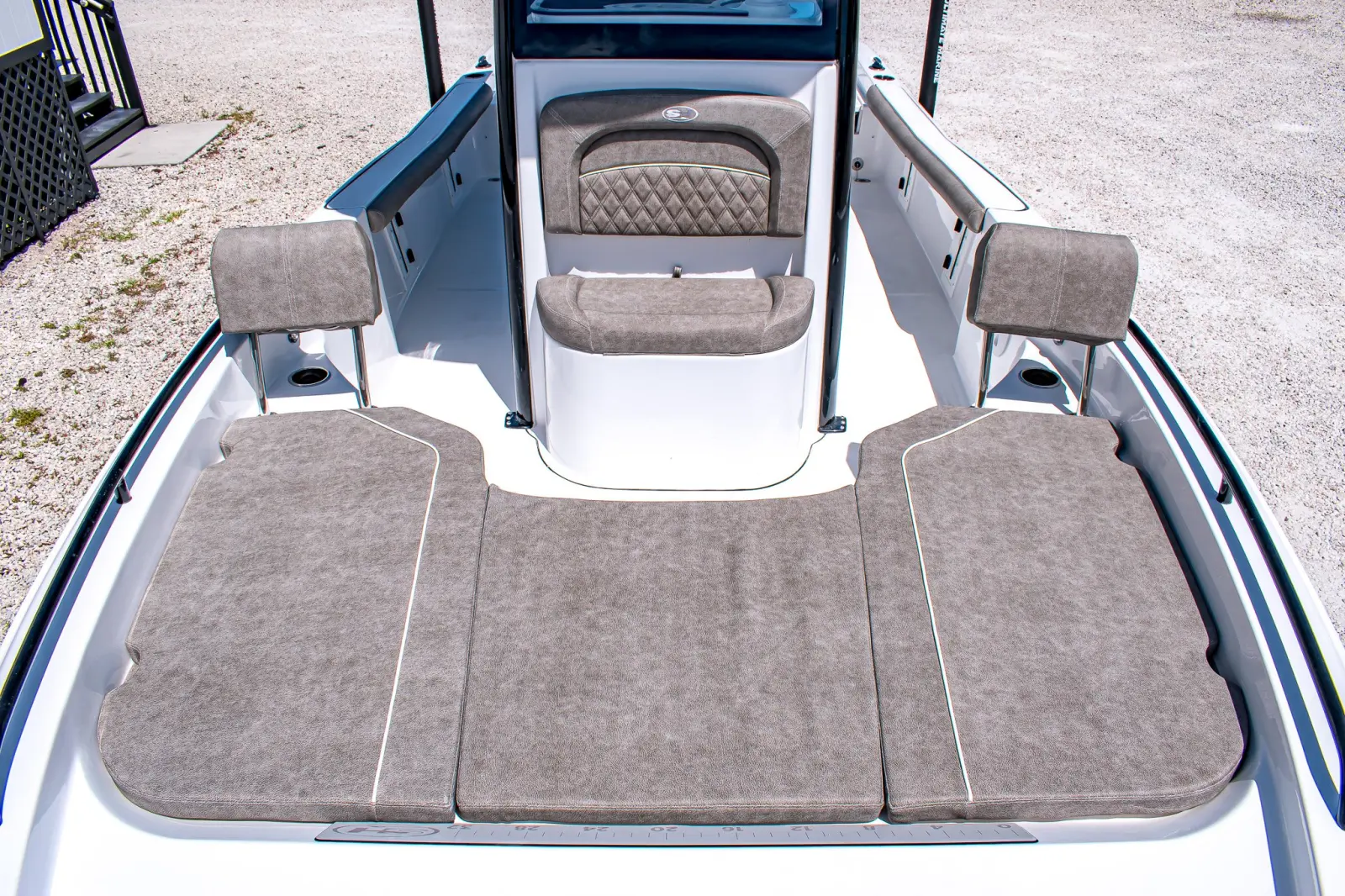
The 281 XSS is built around fishability: a large casting foredeck, a large casting rear deck, dual stern bait and fish boxes, and ample rod storage. The standard equipment list fills in the detail.
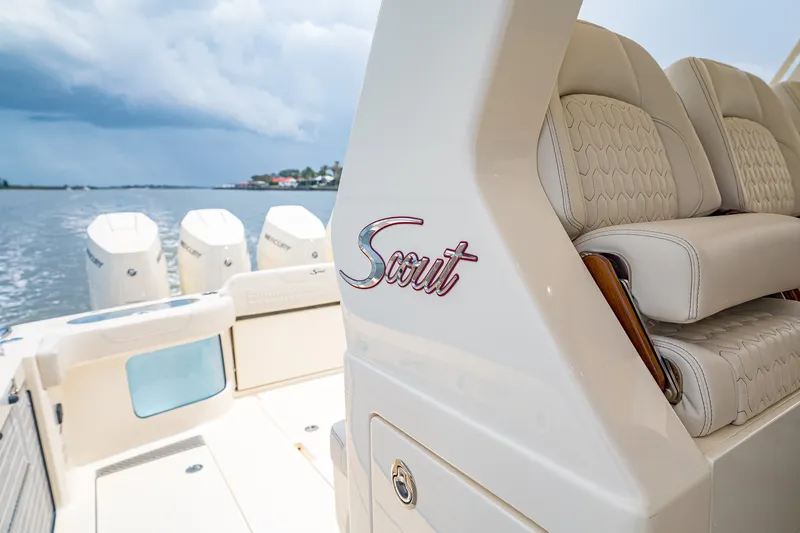
- Bait: a leaning post with a baitwell, Corian countertop, cutting board and rod holders. Options include a recirculating leaning-post livewell and converting one or both transom fish boxes into livewells.
- Rods: eight stainless flush-mount rod holders and horizontal rod storage for two rods on each side. Hardtop rocket launchers are an option.
- Storage: port and starboard bow dry boxes, a center bow box, tackle drawers under the cockpit steps, a console coffin box and a 65-quart slide-out YETI cooler in the leaning post.
- Shallow-water tools: a 10-inch hydraulic jack plate (dual 12-inch with twins) standard; Power-Pole anchors and a Garmin Kraken or Minn Kota Terrova trolling motor with a 36-volt lithium battery as options.
- Clean-up: fresh and raw water washdown with hose reels and a self-bailing cockpit.
On the water: at first light on a Mosquito Lagoon flat, one angler works the foredeck with the trolling motor while another covers the rear deck, both clear of the console. By late morning, with the wind down, you run the inlet to the reef, and the same leaning-post baitwell feeds pilchards to snapper.
Transom storage for four fenders (included) keeps them out of the rod locker.
How does the 281 XSS ride, and how is it built?
The hull is what lets one boat do both jobs. The 281 XSS uses a double-stepped hull with the hull, deck and stringers infused, and epoxy infusion with carbon fiber and e-glass throughout the boat, including the hardtop superstructure. That's the construction approach Scout uses on its larger LXF center consoles, applied to a bay boat.
Carbon and epoxy make a structure stiff for its weight. A stiff hull flexes less landing off a wave, and less weight helps it plane. Steps are meant to cut drag at speed. Treat these as Scout's design goals; a sea trial tells you how they feel.
The deadrise is 15.5 degrees: a bay boat number. A flatter bottom floats shallower and sits steadier with two anglers on one side, but meets steep chop harder than a deep V. In a 2-foot chop off Ponce Inlet you'll pick your speed more carefully; on a calm lagoon morning, the flatter hull is the better tool.
Zipwakes automatic trim is standard and Seakeeper Ride is optional. Neither changes the hull, but both help keep the boat level when conditions build.
Who is the 281 XSS built for?
Redfish on the lagoon in the morning, the nearshore reef in the afternoon, from one boat with room for two casting anglers.
126 gallons is a lot for a bay boat but limits long offshore runs. Scout's LXF center consoles are built for that.
The 281 XSS makes the most sense for a Florida angler who plays both games: sight-fishing reds and trout or chasing snook on the mangrove edges, then running out for kingfish, cobia or reef fish when the forecast allows, without a second boat. It also suits anglers stepping up from a smaller bay boat who keep getting turned back at the inlet.
Where it fits: the Indian River and Mosquito Lagoon, with Ponce and Sebastian inlets close for nearshore reefs; Tampa Bay, where the longer hull earns its keep crossing open water in a west wind; and the Keys, flats plus calm-day runs to the patch reefs. Mosquito Lagoon's two pole-and-troll zones ban gas engines and any vessel drawing more than 12 inches, and damaging seagrass in an aquatic preserve violates Florida law, so know your loaded draft.
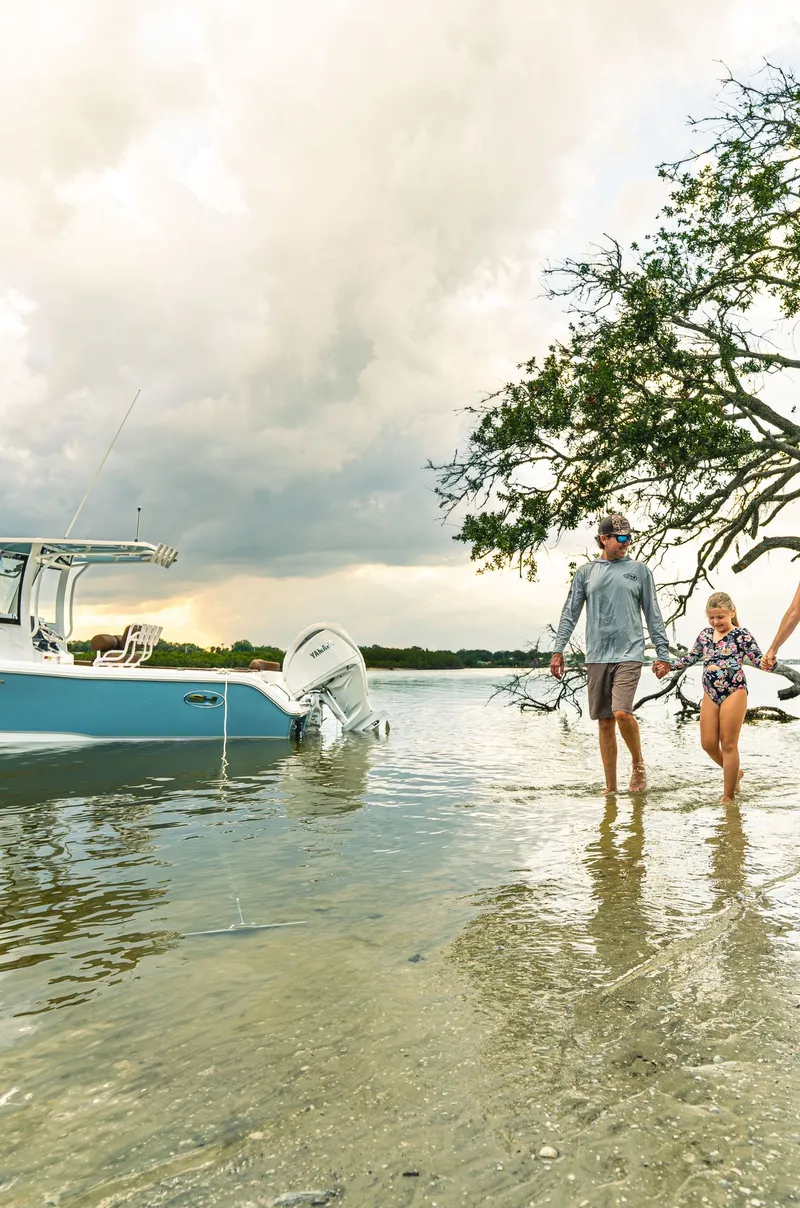
It's the wrong boat if you run to the Gulf Stream most weekends; a Scout LXF center console rides better in big water. If you fish only skinny backcountry water, Scout's smaller XSS models are lighter and easier to handle. The 261 XSS (26′ 0″, 8′ 6″ beam, 90 gallons, 400 hp) stays inside Florida's 102-inch road width limit. Family days work too (a Porta Potti, a transom ladder and a Fusion stereo are standard), but if sandbar days outnumber fishing days, look at Scout's Dorado dual consoles.
How does the 281 XSS compare with the Sea Hunt BX 25 FS?
| Scout 281 XSS | Sea Hunt BX 25 FS | |
|---|---|---|
| Fuel | 126 gal | 68 gal |
| Max power | 600 hp | 350 hp |
| Length | 28′ 1″ | 25′ 3″ |
| Beam | 9′ 4″ | 8′ 6″ |
| Deadrise | 15.5° | 15/20/50 |
| Model page | See the 281 XSS | See the BX 25 FS |
Dimensions, power and fuel from our model pages. Scout and Sea Hunt state deadrise differently.
Shoppers often cross-check these two because both are bay boats we carry, but they suit different buyers. The BX 25 FS carries 68 gallons, an 18-gallon console livewell and a 20-gallon aft livewell, Bennett trim tabs and trolling motor wiring as standard, with a single engine up to 350 hp.
The 281 XSS has nearly twice the fuel, twin-engine capability and a longer standard list (hardtop with enclosed glass windshield, windlass, washdown, jack plate, Zipwakes).
A bigger hull, nearly twice the fuel and twin-engine power for nearshore runs, with Scout's carbon epoxy build.
A smaller, simpler bay boat for the flats and bays that tows inside the road width limit. See the BX series.
What does it take to own a 281 XSS in Florida?
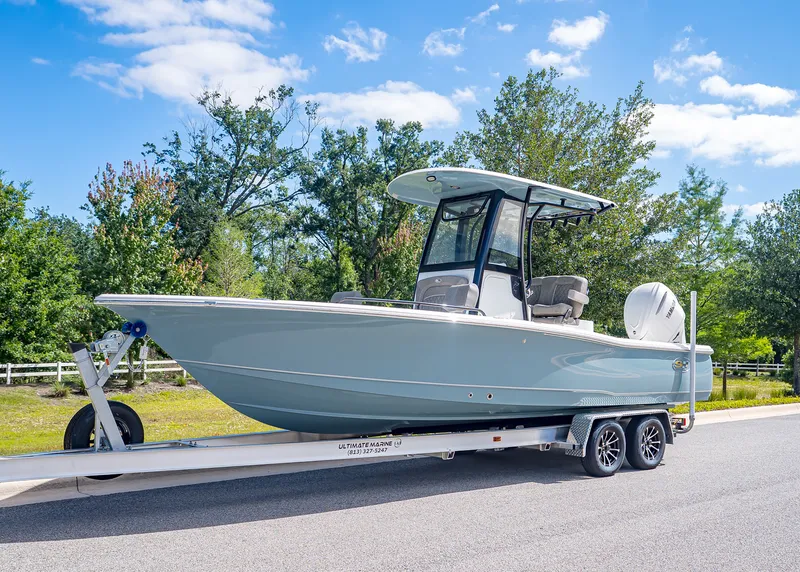
Towing. At 9′ 4″ the 281 XSS is wider than Florida's 102-inch (8′ 6″) road limit, so trailering falls under oversize rules; check FDOT's permit requirements. Add 5,457 pounds dry, one or two outboards, fuel and the trailer, and you need a full-size truck rated for the loaded weight.
Storage. Most owners use a lift or dry stack. Give the marina Scout's approximate 7′ 8″ T-top clearance and ask about its beam and weight limits before you buy.
What stands behind a Scout build?
Scout is family owned and builds in Summerville, South Carolina, with 100% hand-laid construction and finished bilges, lids and hatches. New boats carry a 3-year limited stem-to-stern warranty plus a 10-year limited structural hull warranty that transfers to the next owner, with claims handled through authorized dealers. Buying used? Scout must receive the transfer form, a notarized bill of sale and a fee within 30 days of purchase, or the transfer is void.
Talk to us about the 281 XSS
Scout is sold at our Orlando and New Smyrna Beach stores. Tell us where you fish. We'll tell you honestly if the 261 XSS or another Scout fits better.
Questions we hear
Is the Scout 281 XSS a bay boat or a center console?
Both, in a sense. The 281 XSS is the newest flagship of Scout's bay boat line, built as an inshore/offshore crossover. Like every bay boat, it has a center console layout, with large casting decks fore and aft. Its 15.5-degree deadrise and big decks favor shallow water, while 126 gallons of fuel and up to 600 hp let it run nearshore when the weather allows.
What is the fuel capacity and range of the Scout 281 XSS?
The 281 XSS carries 126 gallons of fuel, for an estimated range of about 303 miles with a single Mercury 400 V10 and about 315 miles with either a single Mercury 425 V10 or twin Mercury 300 XXLs. The estimates assume optimal cruising speed and sea conditions, so plan real trips with a reserve, such as the rule of thirds.
What engines come on the Scout 281 XSS?
Scout publishes performance bulletins for three Mercury setups: a single Verado 400 V10, a single Verado 425 V10 and twin 300 XXLs, up to 600 hp total. A single engine is simpler to maintain and lighter. Twins add top speed and a second engine to get home on, which matters most if you run offshore regularly.
How fast is the Scout 281 XSS?
Scout's performance bulletins put top speed at about 55 mph with a single Mercury 400 V10, about 58 mph with a single Mercury 425 V10 and about 66 mph with twin Mercury 300 XXLs. The figures are approximate and a guideline only. Load, fuel, weather, prop and hull condition all change real-world speed.
What warranty does Scout offer on the 281 XSS?
New Scouts carry a 3-year limited stem-to-stern warranty plus a 10-year limited structural hull warranty that transfers to the next owner. To transfer the hull warranty, the new owner must send Scout the transfer form, a notarized bill of sale and a fee within 30 days of the purchase date. Claims go through Scout's authorized dealers.