






Sea Hunt Ultra 265 SE vs. Ultra 255 SE
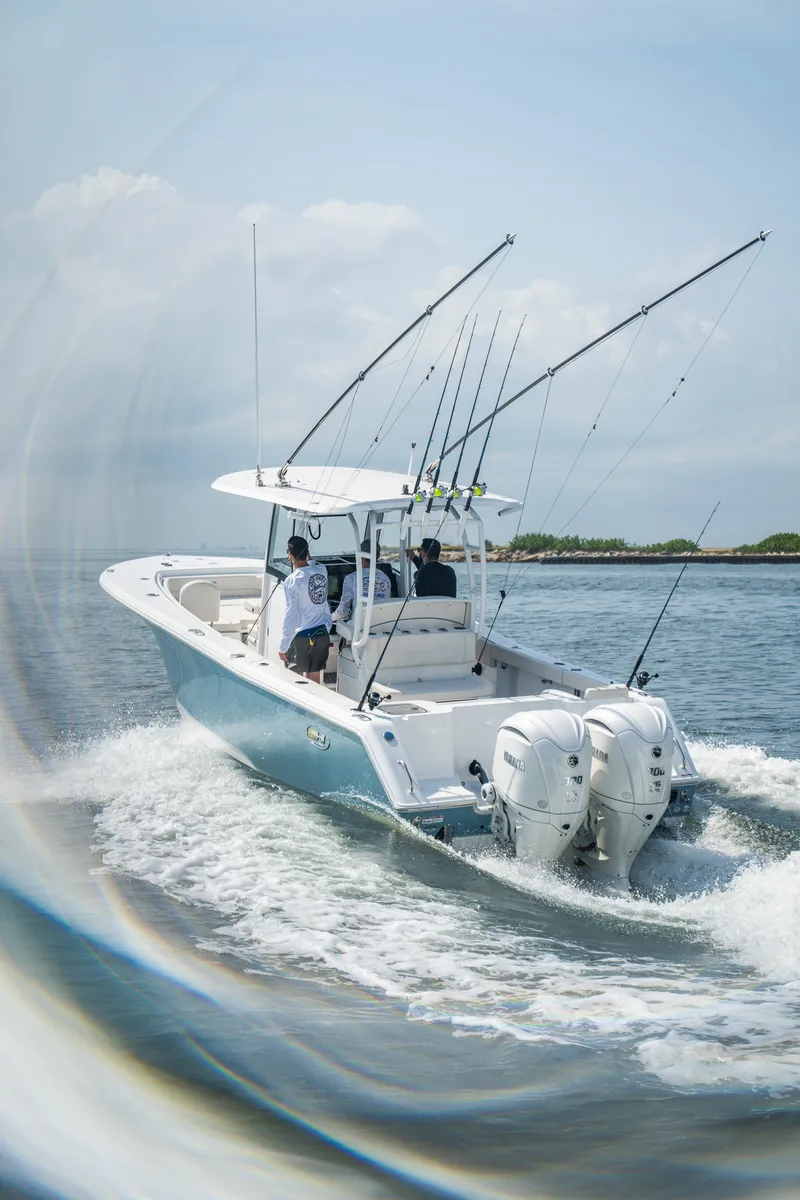
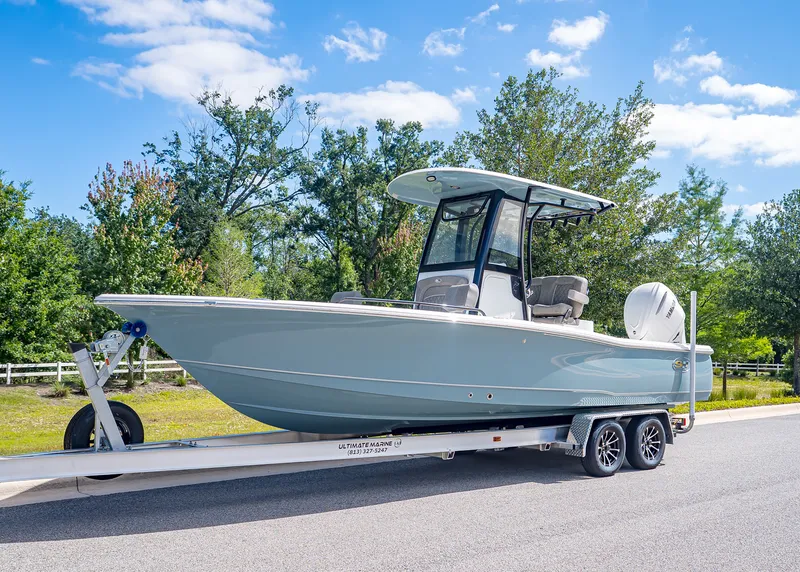
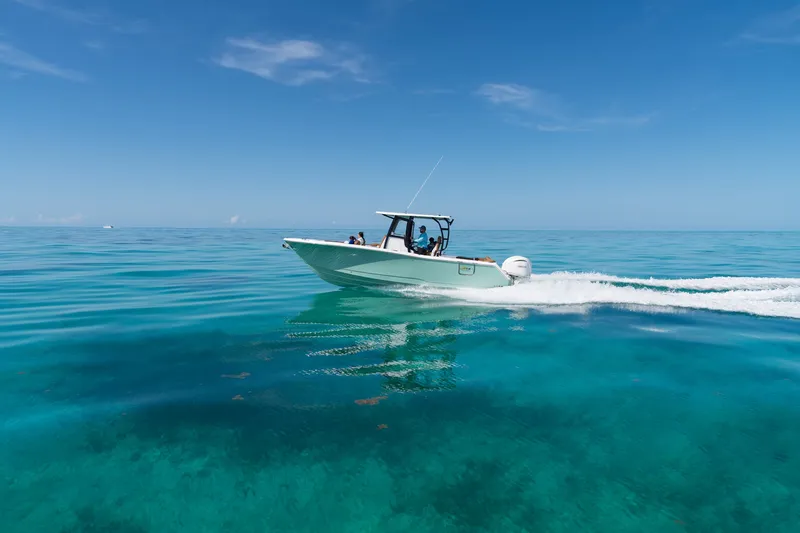
Two Sea Hunt family center consoles, a foot and a half apart. One runs twin engines on a sharper offshore hull; the other runs a single engine and floats in less water.
In this article
- Both boats come standard with 300 horsepower: twin Yamaha F150s on the 265 SE and a single Yamaha F300 on the 255 SE. The choice is two engines or one, not more power or less.
- The 265 SE lists the same 21/24/60 deadrise as Sea Hunt's Gamefish 25, so it's the better boat for regular inlet runs. The 255 SE lists 18/24/55 and a 14-inch draft against the 265's 21 inches.
- Neither beam fits Florida's 102-inch road limit (8′ 9″ and 9′ 2″), so plan for an oversize permit if you trailer, or for a lift or dry stack slip.
You fish nearshore and offshore, carry a full crew, and want a second engine and a sharper hull for the ride home.
You spend more days in the bays, the Intracoastal and at the sandbar, and want one engine to maintain and a boat that floats in less water.
The Ultra 265 SE and Ultra 255 SE share a T-top, a head in the console, a windlass, side doors and a 12-inch Garmin. They split below the waterline and at the transom: the 265 SE has a sharper hull and two outboards, the 255 SE a flatter hull that draws a third less water and one bigger outboard. Both sit in Sea Hunt's Ultra series.
Ultra 265 SE vs 255 SE specs side by side
| Ultra 265 SE | Ultra 255 SE | |
|---|---|---|
| Length | 26′ 5″ | 24′ 11″ |
| Beam | 9′ 2″ | 8′ 9″ |
| Draft | 21 in | 14 in |
| Dry weight | 5,800 lb | 4,600 lb |
| Deadrise | 21/24/60 | 18/24/55 |
| Standard power | Twin Yamaha F150 (300 hp total) | Single Yamaha F300 |
| Optional power | Twin Yamaha F200 | Single Yamaha F350 |
| Max power | 400 hp | 350 hp |
| Fuel | 145 gal | 120 gal |
| Fresh water | 19 gal | 19 gal |
| Livewell | 10 gal | 10 gal |
Specs from our model pages, checked October 2026. Dry weight leaves out fuel, gear and people. Specs can change by model year. For speed and fuel burn, see performance data in the Boating Guide.
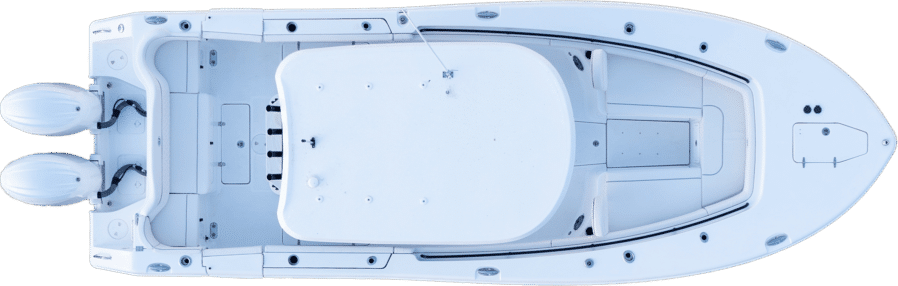
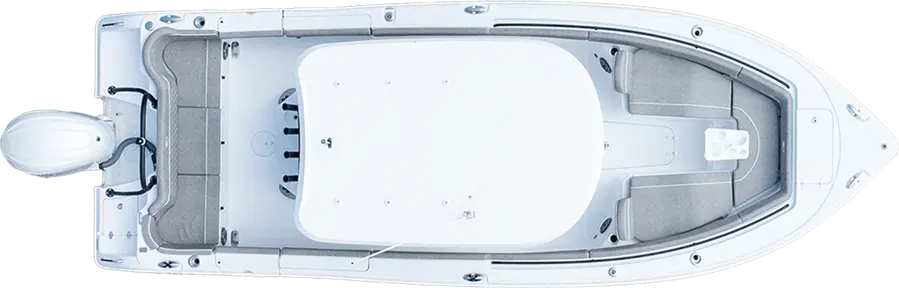
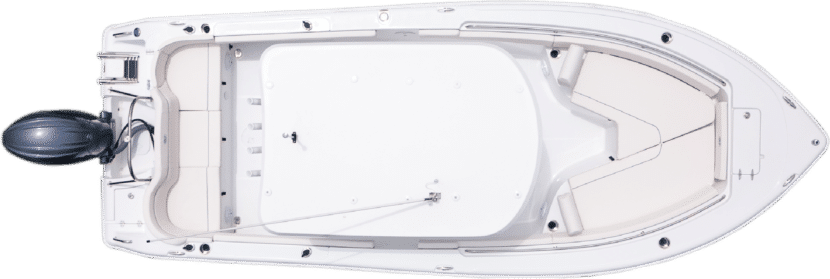
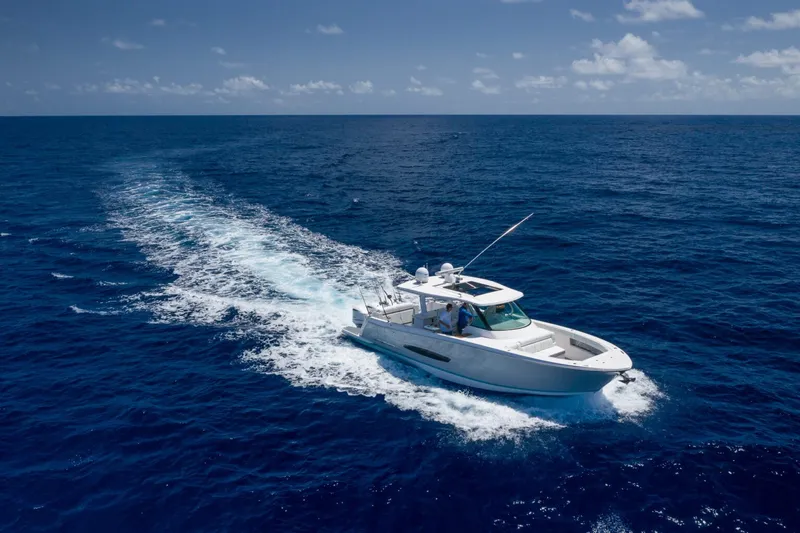
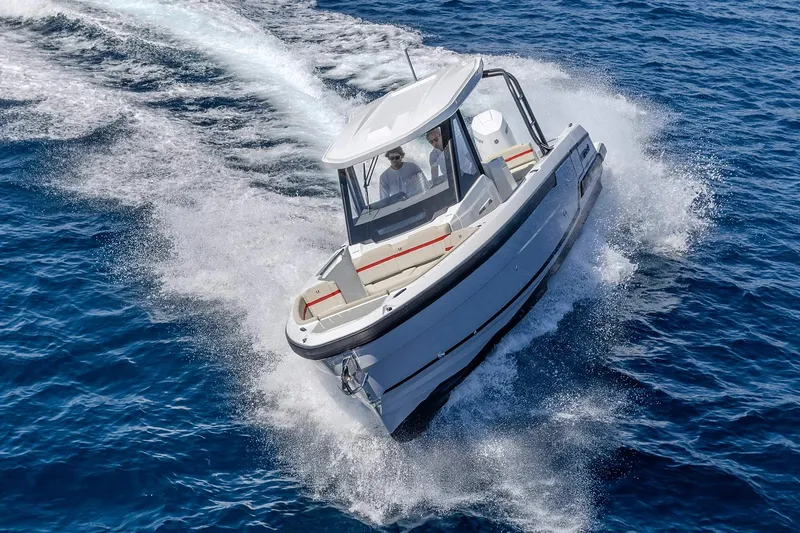
Ultra 265 SE (left) and Ultra 255 SE from above.
Read the table from the bottom up and the boats look nearly identical: the same livewell, the same fresh water tank, and standard engines that add up to the same 300 horsepower. Read it from the top down and the gap opens. The 265 SE is 18 inches longer and 5 inches wider. It weighs 1,200 pounds more dry, draws 7 more inches of water and carries 25 more gallons of fuel.
The deadrise row explains most of that. Each hull has three deadrise numbers, and higher numbers mean a sharper V. The 265 SE's 21/24/60 matches Sea Hunt's Gamefish 25 offshore boat, along with the same 9′ 2″ beam and 145-gallon tank. In practice, the 265 SE is a family boat built on offshore-style numbers, while the 255 SE leans toward the bay.
Twin F150s or a single F300: which is better?
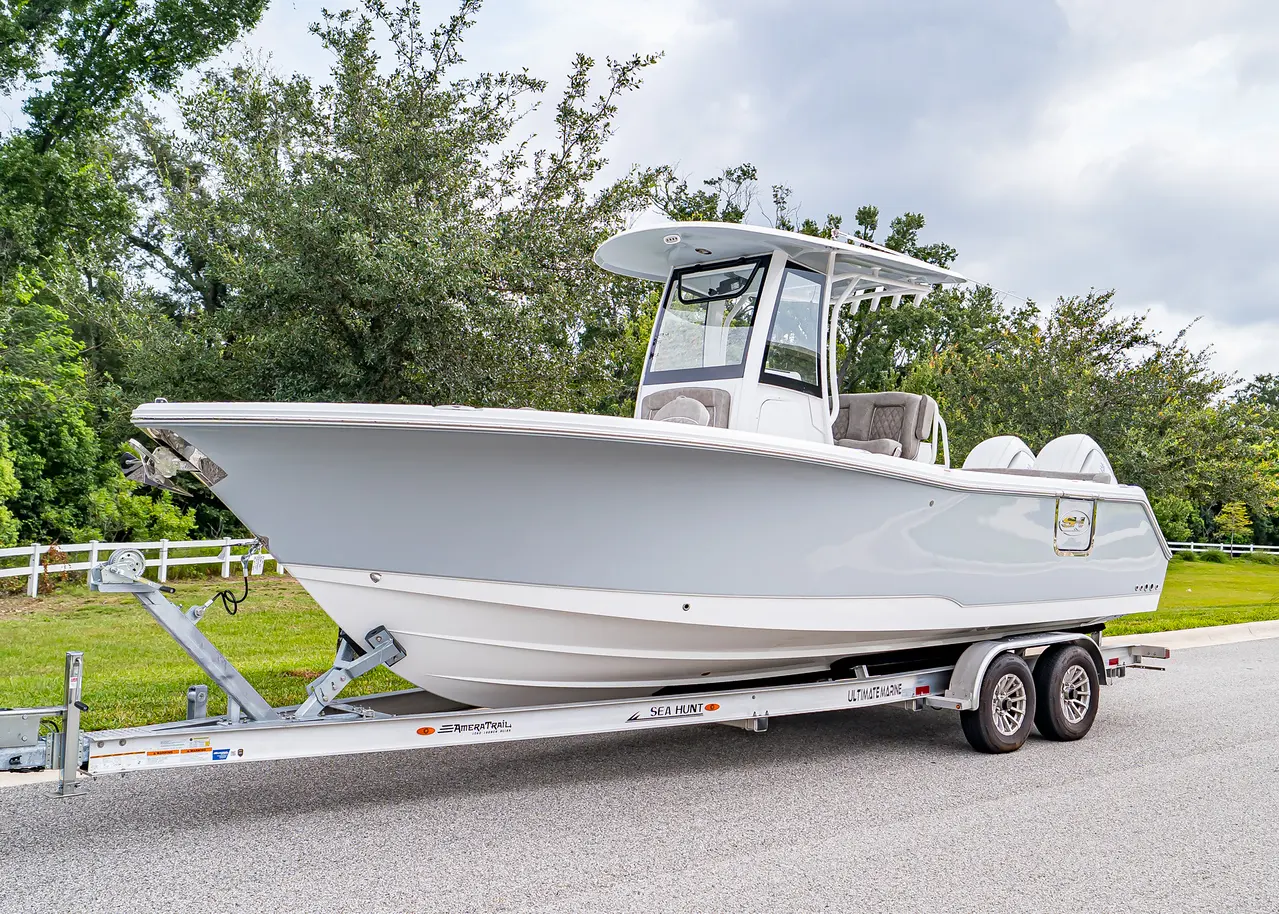
Start with the fact most buyers miss: both boats leave the factory with 300 horsepower. The 265 SE gets it from twin Yamaha F150s, the 255 SE from a single Yamaha F300. So the real question isn't more power or less. It's two engines or one.
Why people choose twins. A second engine is a way home. If one outboard picks up a bad tank of fuel, overheats on a clogged water intake or wraps a crab trap line 10 miles off Port Canaveral, you can usually still run on the other. Twins also help around the dock. Once you learn to steer with the throttles, putting one engine in forward and one in reverse turns the boat nearly in place, which helps in a tight marina with the wind blowing you off the slip.
Why people choose one. A single outboard is simpler. There's one engine to service, one prop to check and one set of parts to keep up with in salt water. Yamaha's own maintenance guidance calls for changing engine and lower unit oil every 100 hours, flushing regularly, replacing fuel filters and staying ahead of corrosion. With twins, every one of those jobs happens twice.
The upgrade paths differ too. The 265 SE offers twin Yamaha F200s, which reach its 400 hp rating, and the 255 SE offers a single Yamaha F350. Only the 265 SE lists the Yamaha Helm Master with SetPoint and autopilot as an option. Helm Master EX brings joystick control and SetPoint positioning modes such as FishPoint and DriftPoint, and its StayPoint station-keeping mode needs twins or more. Both boats list a Yamaha autopilot option.
How do they ride? Deadrise, draft and weight on Florida water
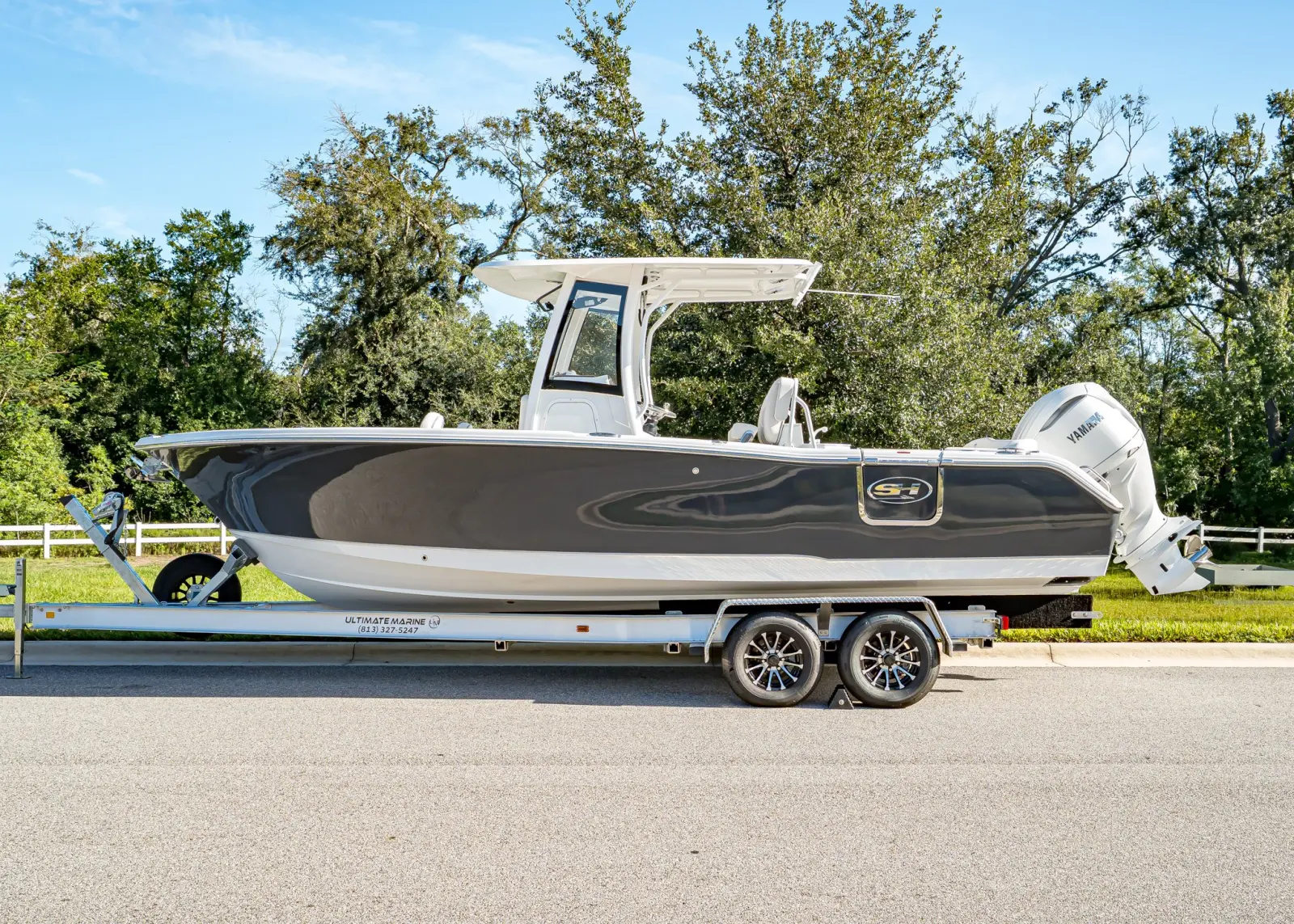
Deadrise is the angle of the V in the hull bottom. A sharper V meets a wave on a narrow edge and lands softer; a flatter V sits steadier at rest and floats in less water. The 265 SE is 21/24/60 and the 255 SE is 18/24/55. The middle number matches. The first and last numbers are sharper on the 265.
Here is how that plays out, as an example. It's a Saturday in June out of Sebastian Inlet. By early afternoon the sea breeze has built a 2-foot chop from the east, and you're running back in. The 265 SE carries more weight and a sharper entry, so it pushes through the short waves and holds a steadier speed. The 255 SE handles the same run, but you'll ease off sooner and lean more on the trim tabs to keep the ride comfortable. Bennett tabs with indicators are standard on both.
The trade comes back at the sandbar. The 265 SE draws 21 inches and the 255 SE draws 14. Seven inches decides whether you can nose up to a sandbar on the Indian River at low tide or anchor farther off and wade in. Real draft runs deeper with fuel, coolers and people aboard, and the lower units usually reach below the hull, so learn your own number with a normal load before you push into skinny water.
Weight works the same way. The 265 SE's extra 1,200 pounds dry helps it settle into a chop and resist being knocked around. It also takes more power to plane and more truck to tow. If most of your water is Tampa Bay, the Banana River and calm nearshore days, the 255 SE gives up little. If you run Ponce Inlet on an outgoing tide against an east wind, the 265 SE's hull earns its keep.
How much more room does the 265 SE have?
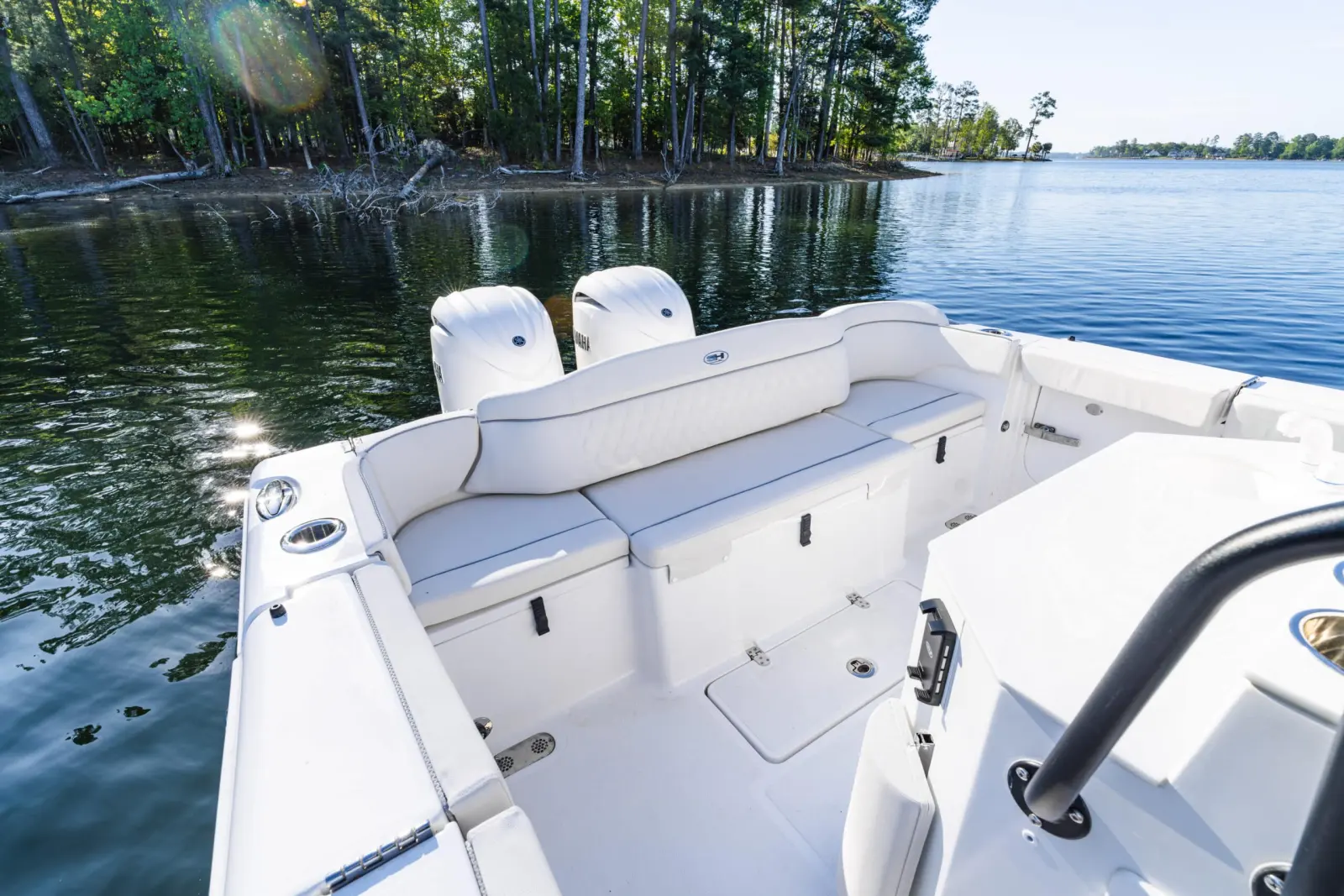
| Storage and comfort | Ultra 265 SE | Ultra 255 SE |
|---|---|---|
| Bow storage | 148 qt port and starboard | 148 qt port and starboard |
| In-floor storage | 140 qt | 188 qt |
| Aft insulated box | 40 qt | 40 qt |
| Mezzanine cooler | Not listed | 60 qt |
| Bow extras (standard) | Telescoping bow table | Contoured bow cushion, bow beverage center |
| Leaning post (standard) | Ultra Mezzanine LP with captains chairs | Ultra Mezzanine LP with captains chairs |
| Head, anchor, doors | China toilet, windlass, dual side entry doors | China toilet, windlass, dual side entry doors |
Specs from our model pages. "Not listed" means Sea Hunt doesn't list it for that model.
The 265 SE's extra length and beam show up as open floor: more room to move around the console with six people aboard and more space to fight a fish without bumping into someone in the bow. A wider boat also feels steadier at rest, which matters when the whole crew stands on one side to watch a dolphin.
The surprise is storage. The smaller 255 SE has more in-floor storage (188 quarts against 140) and adds a 60-quart mezzanine cooler and a bow beverage center as standard. The 265 SE answers with a telescoping bow table. Both share the same bow lockers, aft box and leaning post. If you carry lots of gear and drinks for a day at the sandbar, the 255 SE packs it away well for its size.
Which is better for fishing?
Both boats fish the same way out of the box. Each comes with a 10-gallon livewell, a 40-quart insulated box at the stern and a 12-inch Garmin GPSMAP 1243xsv package with VHF. Both offer the same fishing options: kingfish rod holders on the T-top, a Gemlux outrigger kit, a recirculating livewell, a trolling motor plug and wiring harness, and the Ultra Bait Tank leaning post with captains chairs. Dual 12-inch Garmin screens are optional on both.
A 10-gallon well holds enough shrimp or a few dozen pilchards for a morning in the bay. For slow-trolling live bait for kingfish off the beach, most anglers want more, which is where the bait tank leaning post comes in. Sea Hunt doesn't list its capacity on these spec pages, so ask to see it in person.
Where the boats differ for fishing is the water they reach. The 265 SE's twin engines, extra fuel and sharper hull make it the better choice for running well offshore to the reefs and wrecks off the Atlantic coast, or crossing the Gulf off Clearwater on a breezy day. The 255 SE's shallower draft and lighter weight suit drifting grass flats in Tampa Bay, working dock lights at night on the Intracoastal or fishing the edges of the Mosquito Lagoon channel, where every inch of draft counts.
Neither is a flats skiff or a dedicated offshore boat. Both are family center consoles that fish well. If fishing comes first and family second, Sea Hunt's Gamefish line is worth a look before you decide.
Which one fits you? Choosing between them
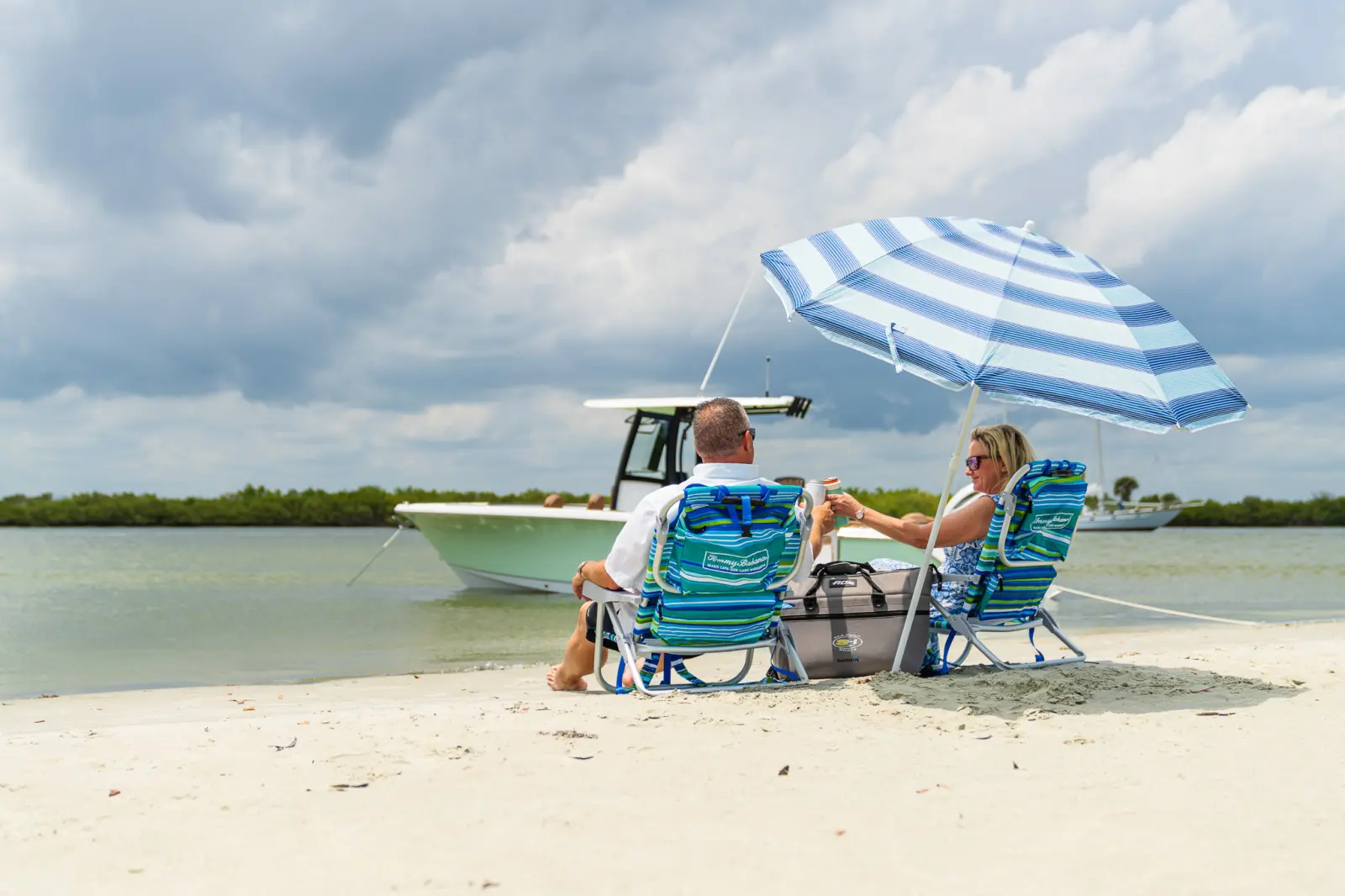
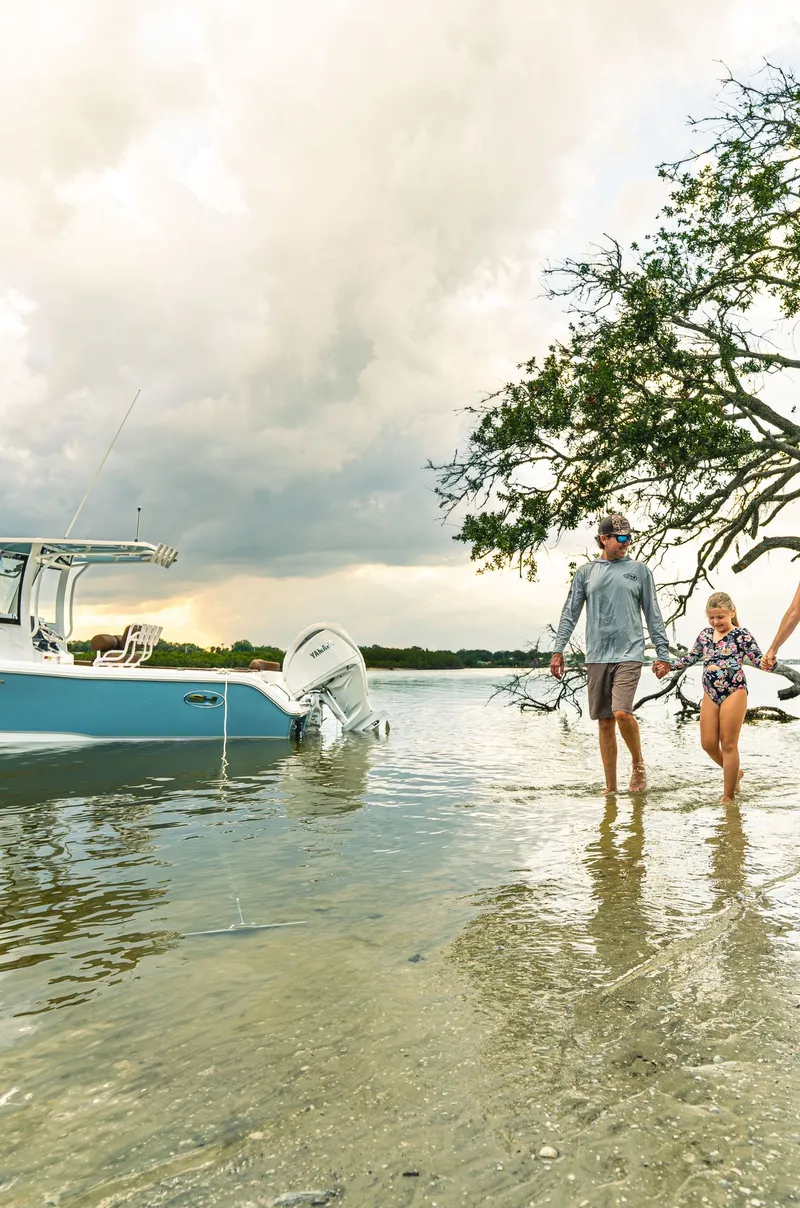
For family days, both boats bring the basics: a fiberglass T-top with a mister, a China toilet, bow backrests, side entry doors and a 19-gallon fresh water system. The 255 SE leans further toward play. Its bow cushion, beverage center and 60-quart mezzanine cooler are standard, it offers a ski tow bar option the 265 SE doesn't, and its 14-inch draft lets you anchor closer to the beach at places like Disappearing Island. The 265 SE answers with room: more seats that aren't shoulder to shoulder, a telescoping bow table, and a smoother run to the sandbar when the bay gets choppy.
- Count your inlet daysLook back at your last 20 trips. If more than a handful went out an inlet, lean toward the 265 SE's hull and second engine.
- Name your roughest regular runPick the run that turns nasty most often, like Ponce Inlet on an outgoing tide or Tampa Bay in a west wind, and buy the hull for that run.
- Check your water depthIf your favorite sandbar, ramp or canal is shallow at low tide, the 255 SE's 14-inch draft may decide it.
- Decide how you'll store itMeasure your lift, call your dry stack and check your truck's rating before you fall for either boat.
Plan storage before you buy. Both beams (8′ 9″ and 9′ 2″) are over Florida's 102-inch road limit, so towing falls under oversize rules, and many owners use a lift or dry stack instead. For range, use the rule of thirds: the 265 SE's 145 gallons gives a bigger offshore reserve than the 255 SE's 120. Twins also double routine engine service.
Neither boat is better overall. Buy for the water you run most, with margin for its worst regular day, and if you're still torn, ride both in the same conditions.
Ride both, back to back
Tell us where you boat and who comes along, and we'll set up a time to compare the 265 SE and 255 SE on the water.
Questions we hear
How big is the Sea Hunt Ultra 265 SE?
The Ultra 265 SE is 26′ 5″ long with a 9′ 2″ beam and a 21-inch draft. It weighs 5,800 pounds dry, carries 145 gallons of fuel and 19 gallons of fresh water, and is rated for up to 400 horsepower. Twin Yamaha F150s are standard and twin F200s are optional. Its deadrise is 21/24/60, the same as the Gamefish 25's.
What engine does the Sea Hunt Ultra 255 SE have?
The Ultra 255 SE comes standard with a single Yamaha F300 outboard with a Yamaha Saltwater Series prop, and a single Yamaha F350 is optional. The boat is rated for up to 350 horsepower. It's 24′ 11″ long with an 8′ 9″ beam, a 14-inch draft, 120 gallons of fuel and a dry weight of 4,600 pounds.
What is the difference between the Sea Hunt Ultra 255 and 265?
The 265 SE is 18 inches longer, 5 inches wider and 1,200 pounds heavier dry, with a sharper 21/24/60 deadrise, twin engines and 25 more gallons of fuel. The 255 SE draws 14 inches instead of 21, runs one Yamaha F300 and has more in-floor storage plus a 60-quart mezzanine cooler. Both come standard with 300 total horsepower, a T-top, a China toilet and a windlass.
Is the Ultra 265 SE good for offshore fishing?
It's the more offshore-capable of the two. It shares the Gamefish 25's 21/24/60 deadrise and 145-gallon tank, and its twin engines give you a way home if one has a problem. It's still a family center console with a 10-gallon standard livewell, so serious offshore anglers often add the bait tank leaning post, kingfish rod holders or outriggers from Sea Hunt's option list.
Can you trailer a Sea Hunt Ultra 265 SE?
Yes, with planning. Its 9′ 2″ beam is wider than Florida's 102-inch road limit, so towing it falls under oversize rules; check FDOT's permit requirements. You'll also need a truck rated for the loaded weight: 5,800 pounds dry, plus fuel, gear and the trailer. Many owners keep a boat this size on a lift or in dry stack storage instead.