







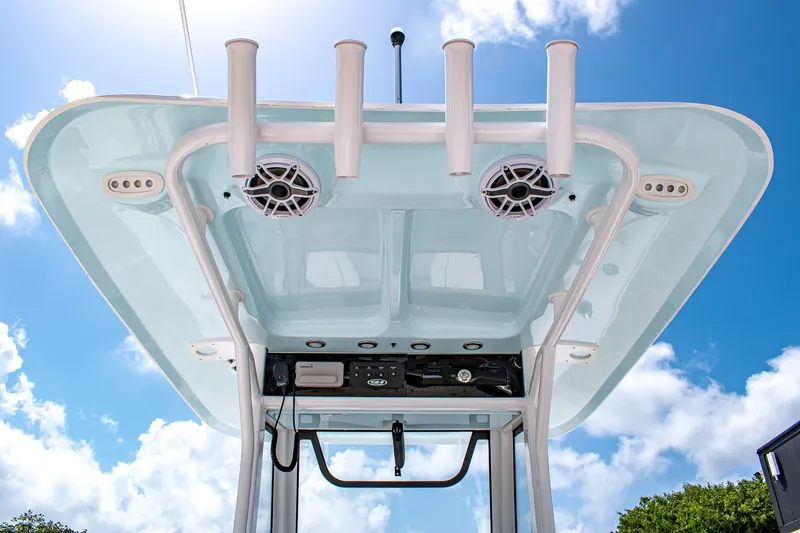
Gamefish 25 vs Ultra 255 SE: which should you buy?
Nearly the same length, very different days on the water. Here's how the hull, power, fishing gear and seating differ, and how to tell which one fits you.
In this article
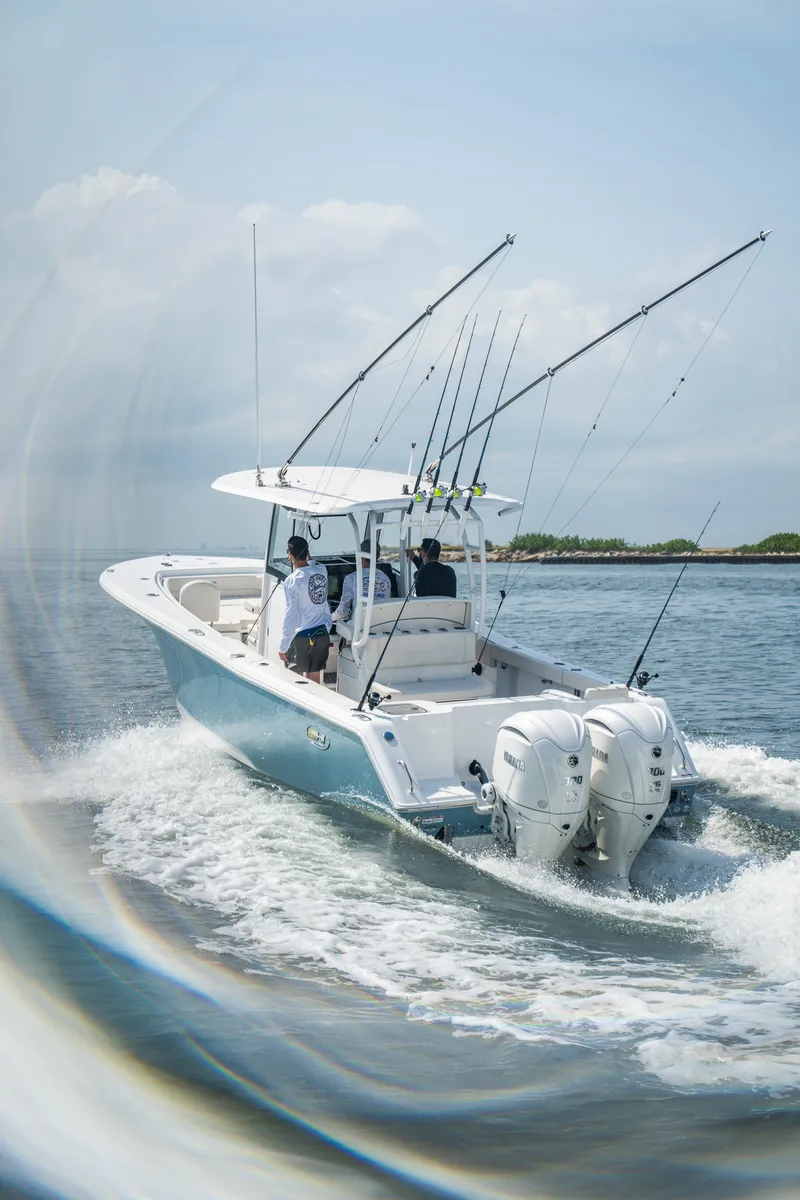
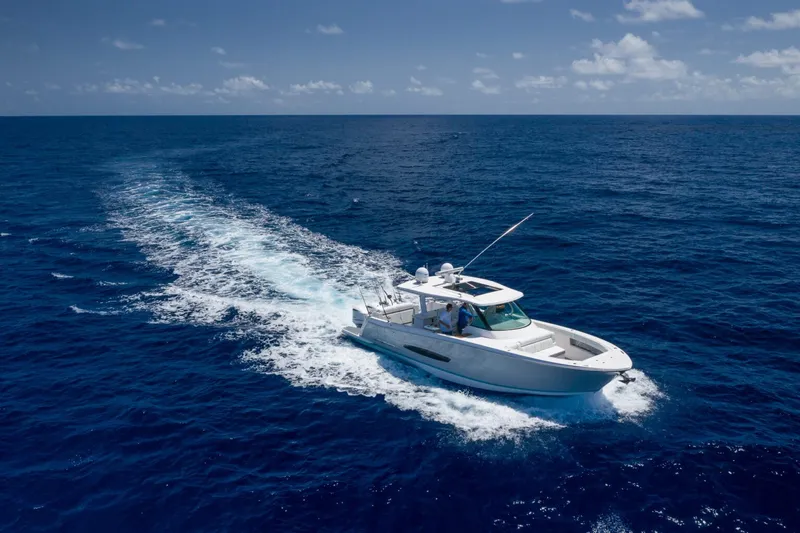
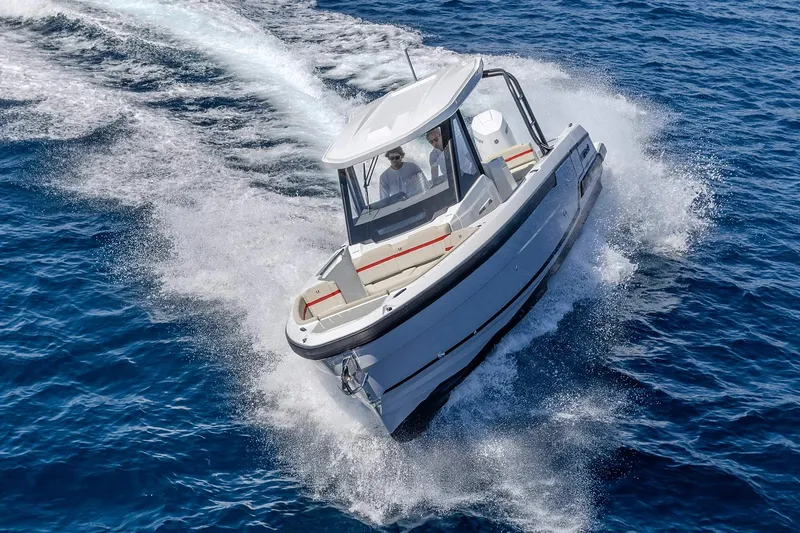
If fishing offshore is the point, choose the Gamefish 25: a sharper, heavier hull, twin Yamaha F150s, two livewells and 145 gallons of fuel. If your days mix bay or nearshore fishing with family time at the sandbar, choose the Ultra 255 SE: a lighter, shallower single-engine boat with mezzanine seating and room for guests. If you want twin engines with Ultra comfort, look at the Ultra 265 SE.
- The Gamefish 25 is about 1,500 lb heavier dry, with sharper deadrise angles (21/24/60 against 18/24/55). Expect a softer ride in an inlet chop.
- The Ultra 255 SE floats in 14 inches against the Gamefish's 19, and its single engine gave better fuel economy in Yamaha's tests.
- Both beams are over Florida's 102-inch road limit, so either one needs an oversize permit to trailer.
The Gamefish 25 and the Ultra 255 SE are within a foot of each other, so size won't decide this. How you spend your day on the water will. One is the entry point to Sea Hunt's offshore fishing series; the other is the mid-size boat in its family center console line. They share a surprising amount of standard equipment, which makes the real differences easier to see.
| Gamefish 25 | Ultra 255 SE | |
|---|---|---|
| Length | 25′ 8″ | 24′ 11″ |
| Beam | 9′ 2″ | 8′ 9″ |
| Draft | 19″ | 14″ |
| Deadrise angles | 21/24/60 | 18/24/55 |
| Dry weight | 6,100 lb | 4,600 lb |
| Max power | 400 hp | 350 hp |
| Standard power | Twin Yamaha F150 | Single Yamaha F300 |
| Fuel | 145 gal | 120 gal |
| Livewells | 35 gal leaning post + 16 gal transom | 10 gal |
| Fish and cold storage | Two 200-qt fish boxes | 60-qt mezzanine cooler, 40-qt aft box |
| Seating | Bait-tank leaning post, bow cushions, rear bench | Ultra mezzanine post, contoured bow lounge |
| Side entry doors | One | Two |
| Standard electronics | 12″ Garmin with VHF, Yamaha CL5 | Same |
| Towing and upkeep | Over the 102″ road limit: oversize permit; two engines to service | Over the 102″ road limit: oversize permit; one engine to service |
| Series | Gamefish: offshore fishing | Ultra: family and fishing |
Specs and standard equipment from our model pages, current model year. Max power is the total for the transom.
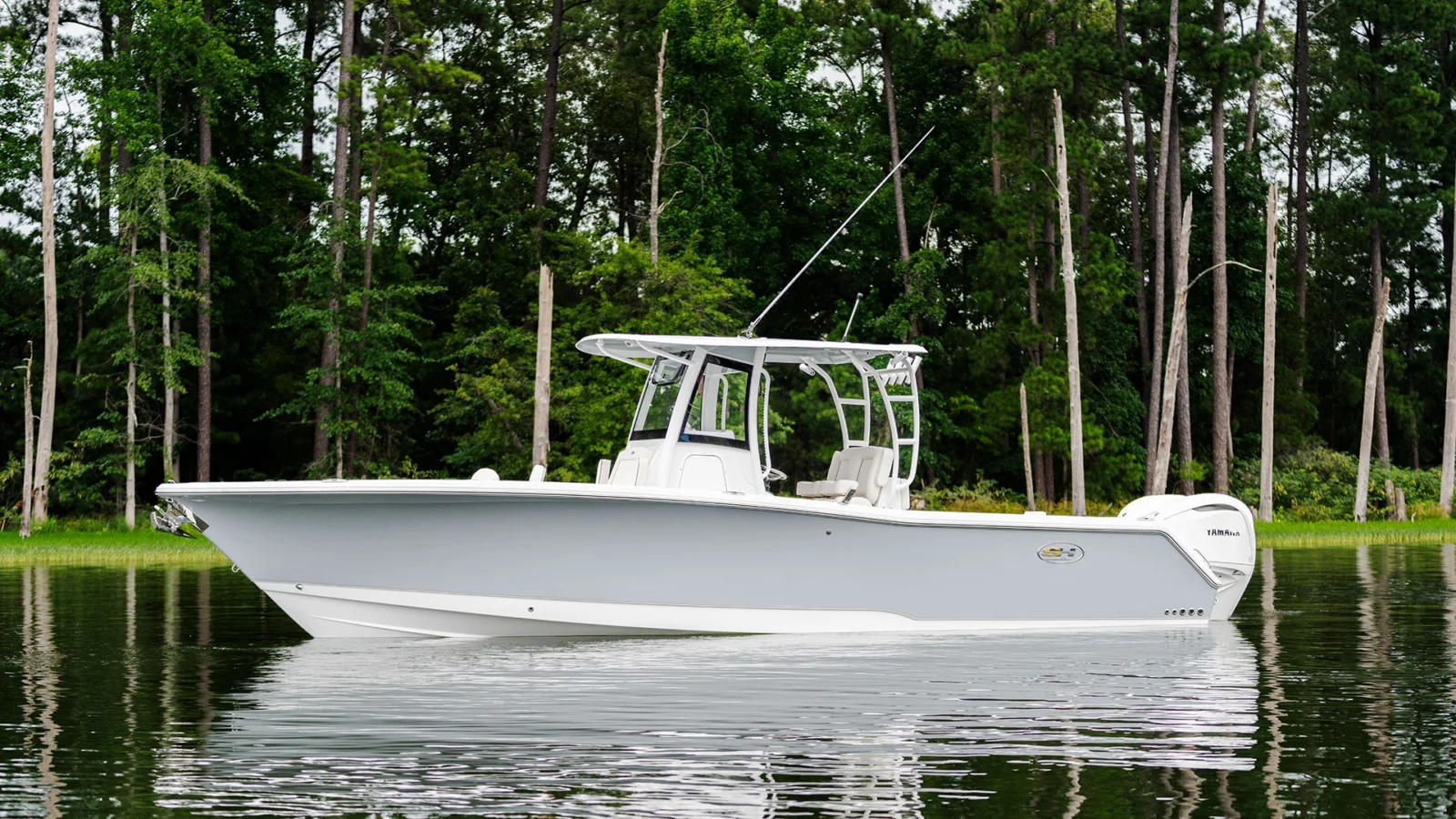
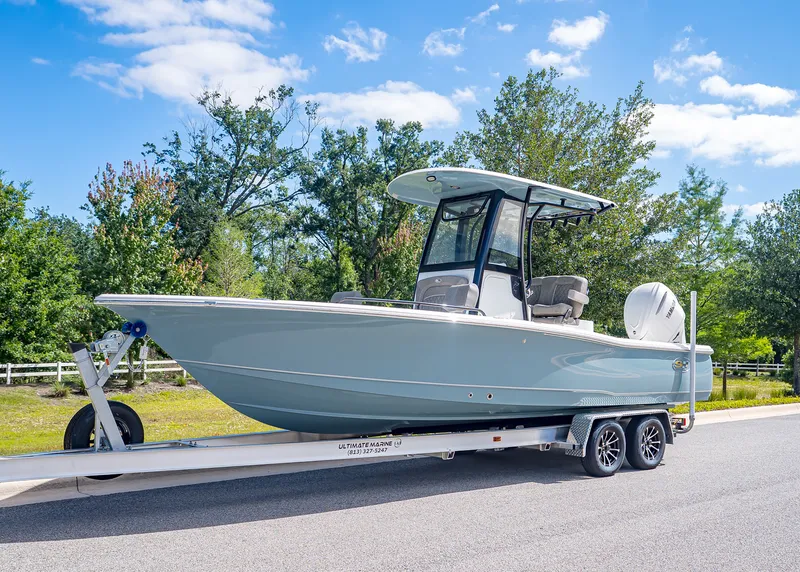
A sharper, heavier hull, twin engines, 51 gallons of livewell and 145 gallons of fuel for long runs to the fish.
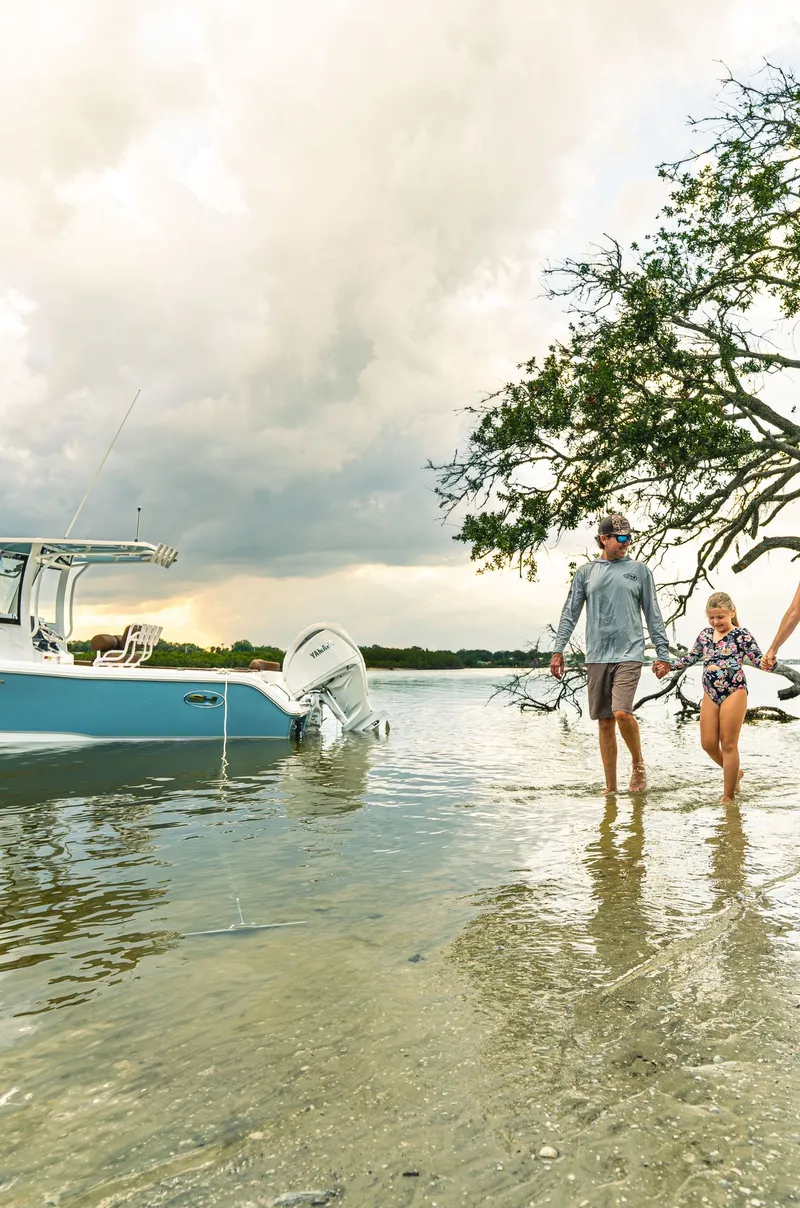
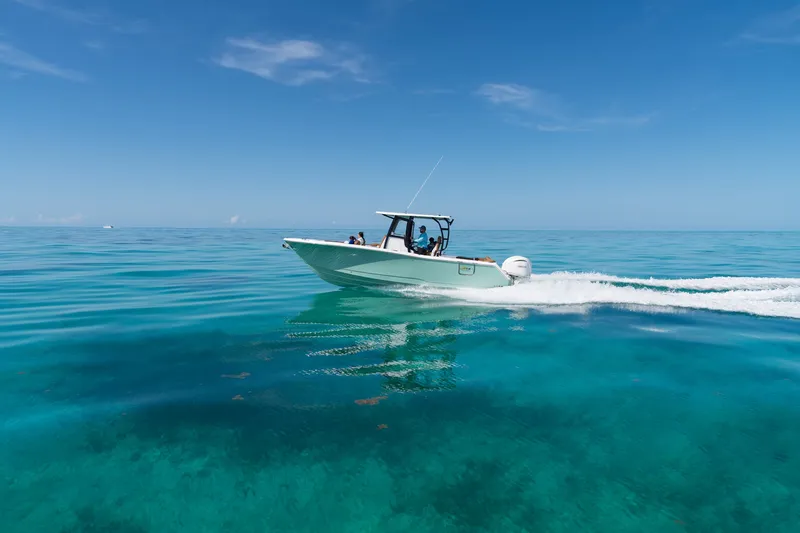
Mezzanine seats over a 60-quart cooler, a lounge-style bow and a door on each side, in a lighter boat that still fishes.
Who is each boat built for?
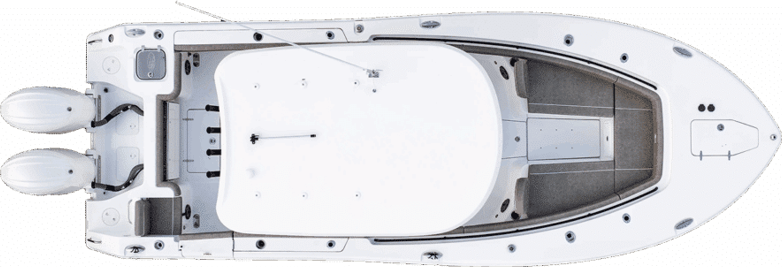
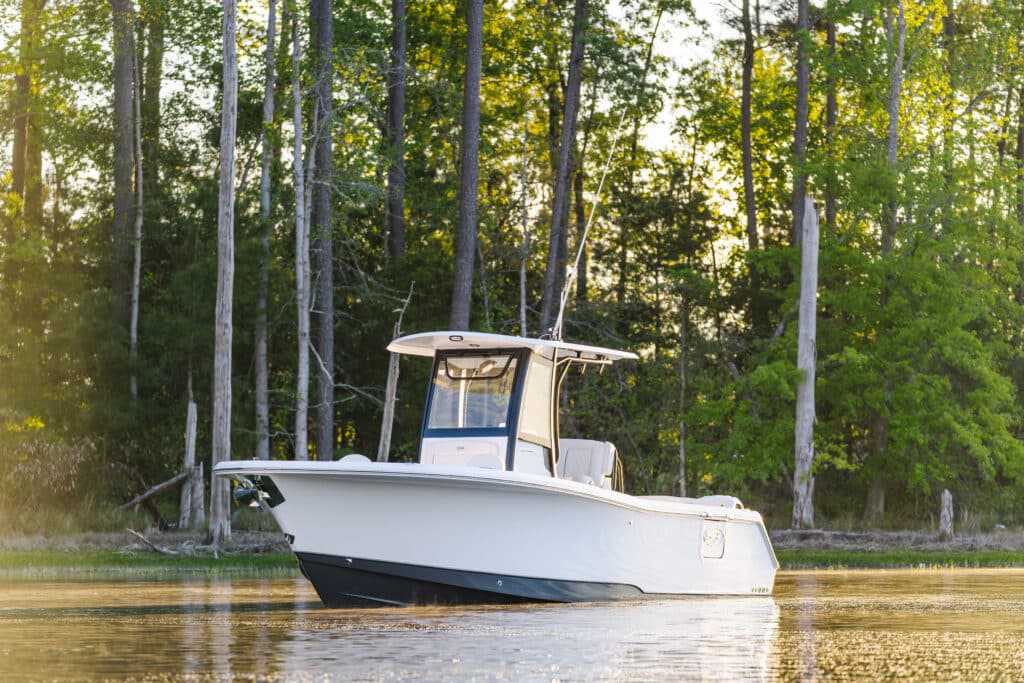
Gamefish 25. The smallest boat in Sea Hunt's offshore fishing series gives its deck to a 35-gallon livewell leaning post, a 16-gallon transom well and two 200-quart fish boxes. It's built for running an inlet with a purpose, and two engines mean that if one quits 20 miles out, you still have a way home.
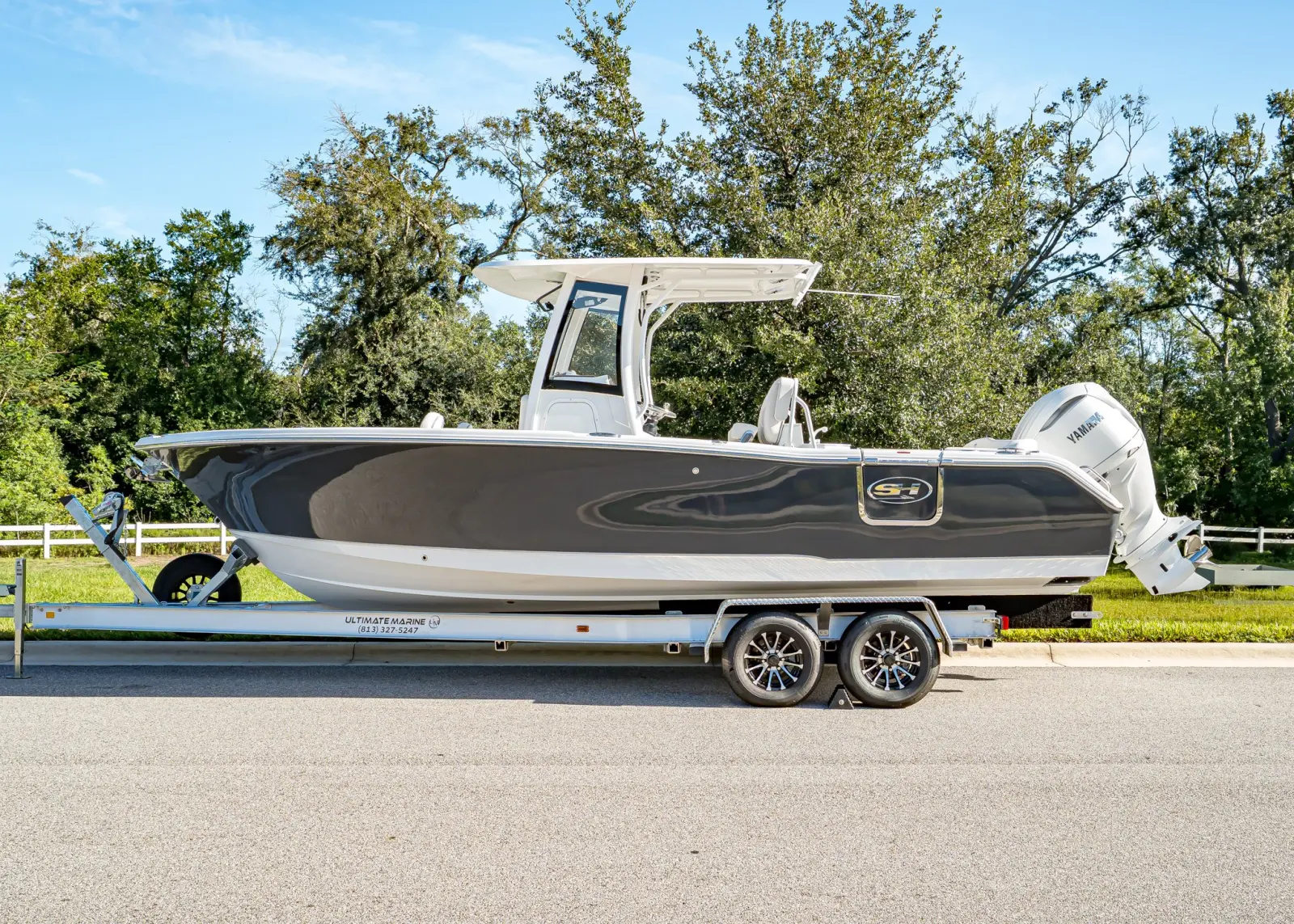
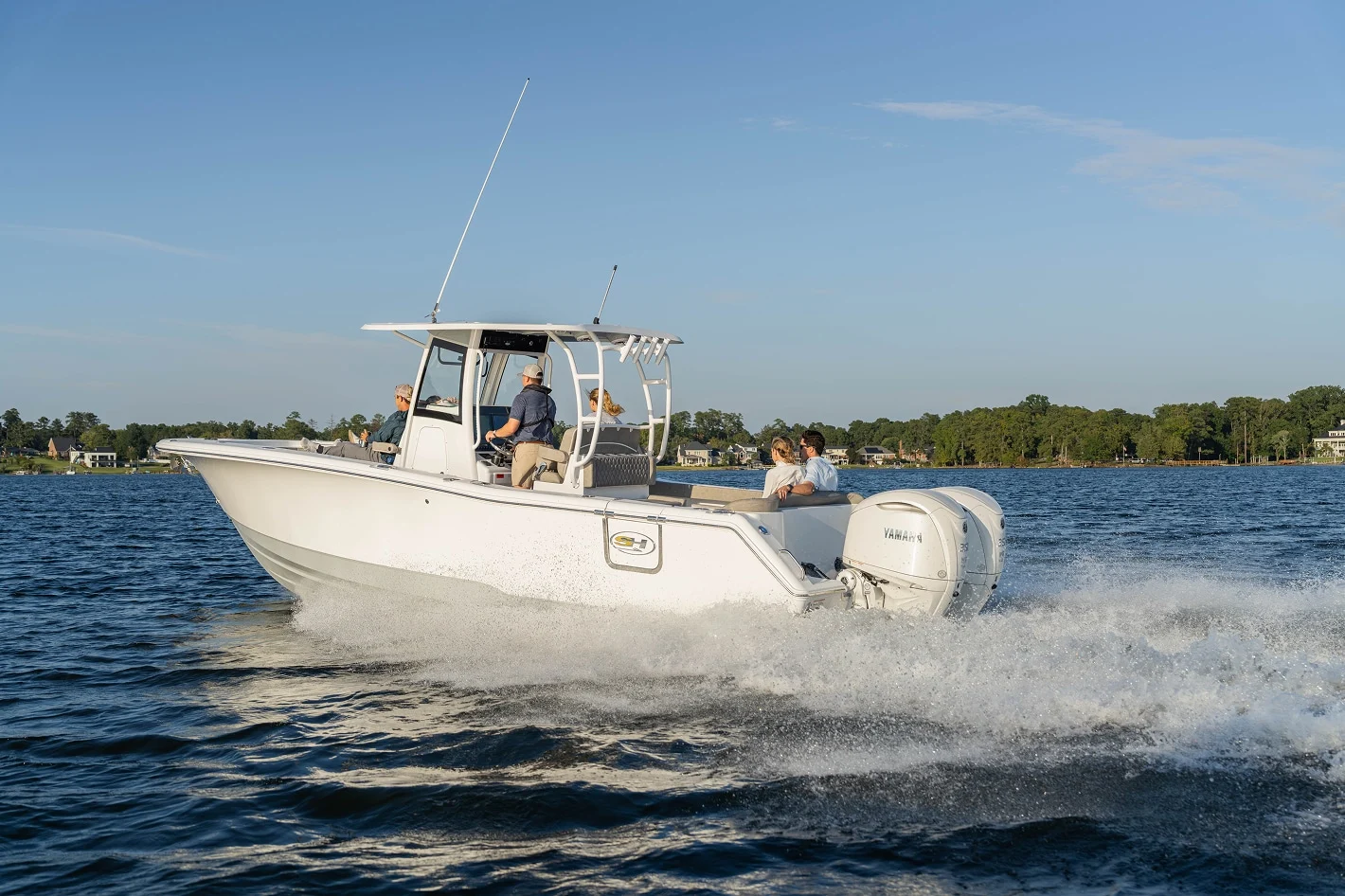
Ultra 255 SE. This is a family center console that still fishes: mezzanine seats over a 60-quart cooler, a bow beverage center, an upgraded Bluetooth stereo and a door on each side. Think live-bait snook on the Indian River in the morning and the sandbar in the afternoon, on one simpler-to-own engine.
How do the two hulls ride differently?
Three numbers in the spec table explain most of the difference you'll feel: deadrise, weight and draft. Deadrise is the V-angle of the hull bottom, and each hull has three angles: 21/24/60 for the Gamefish and 18/24/55 for the Ultra. Each Gamefish figure is equal or sharper. A sharper V lets the hull slice into a wave instead of slapping on top of it. The Gamefish is also about 1,500 pounds heavier dry. Weight works in its favor in rough water, because a heavier boat gets pushed around less.
Picture an example afternoon off Ponce Inlet with a two-foot wind chop on the bow, the kind that builds most summer days once the sea breeze fills in. The Gamefish will let you hold a steadier speed with fewer hard landings. The Ultra will get you home just as surely, but you'll trim the bow down, back off the throttle and take it more gently. On a glassy morning in the lagoon or a calm run across Tampa Bay, the difference all but disappears, and the lighter Ultra gets on plane with less effort.
Draft cuts the other way. The Ultra floats in 14 inches, the Gamefish in 19. Five inches doesn't sound like much until you're idling toward a sandbar on a falling tide or easing into a shallow ramp. Neither of these is a flats boat, but the Ultra will tuck in closer to the beach at the sandbar and leaves more room for error around the shoals that line Florida's inshore water. A deeper hull also rolls a little more at anchor in a beam swell, a small comfort point for guests at the sandbar.
Which one has more range and better fuel economy?
Sea Hunt rigs these two very differently. The Gamefish 25 comes standard with twin Yamaha F150s, a 300-horsepower package on a hull rated for 400. The Ultra 255 SE comes with a single F300 and offers an F350. Yamaha has published a performance bulletin for each boat, though with different engines and test loads, so treat the comparison as a guide.
| Yamaha test | Gamefish 25, twin F150XSA2 | Ultra 255 SE, single F350XSA2 |
|---|---|---|
| Weight as tested | 8,124 lb | 6,129 lb |
| Fuel aboard in test | 60 gal | 60 gal |
| Cruise example | 23.4 mph at 3,500 rpm, 11.0 gph (2.13 mpg) | 27.9 mph, 3.38 mpg (best on-plane row) |
| Top speed | 47.0 mph | 52.8 mph at 6,100 rpm, 31.4 gph |
Yamaha performance bulletins: Gamefish 25 (26 Jul 2025), Ultra 255 SE (14 Nov 2023, optional F350). Yamaha calls its figures approximate; load, weather, props and options change results.
The Ultra's single engine is the main reason it goes further on a gallon: one lower unit in the water and one engine's weight. Multiply each boat's tank by those cruise figures and you get roughly 309 miles for the Gamefish and 406 for the Ultra under test conditions. Real days are heavier, with full fuel, ice, bait and four people. Plan on using no more than a third of your fuel going out, a third coming back and a third in reserve. By that rule both boats comfortably cover a day of nearshore fishing.
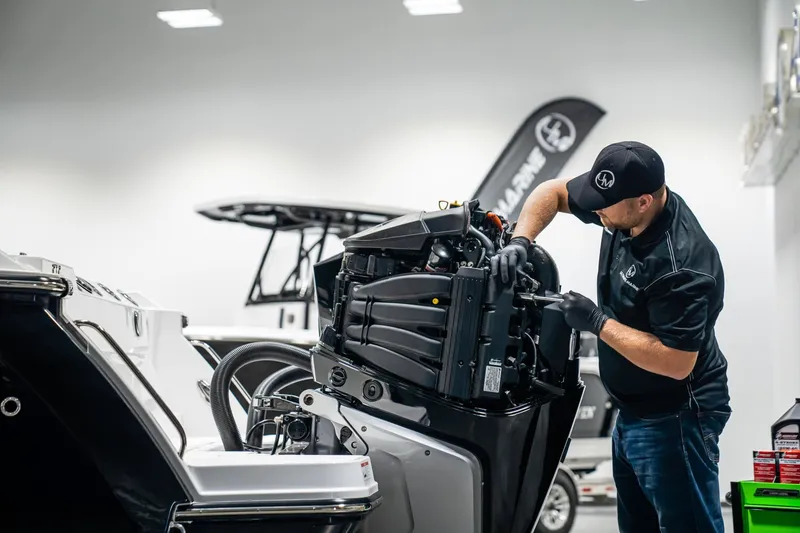
Why choose twins, then? Redundancy offshore. On a single-engine boat, a fouled fuel filter or a failed water pump 25 miles out means a tow. On twins, you idle home on one. That's the argument for the Gamefish if you regularly fish beyond sight of land. The trade-off is ownership: two engines double the routine service, from oil and gear lube to water pumps and anodes.
How much fishing capability do you give up with the Ultra?
Less than the name suggests for inshore and nearshore fishing, and quite a lot for offshore. The biggest gap is live bait. The Gamefish 25 carries 51 gallons of livewell across two wells; the Ultra 255 SE carries 10 gallons. A 10-gallon well keeps a few dozen shrimp or a handful of pilchards lively for a morning of snook and redfish. It isn't enough for a day of slow-trolling live baits for kingfish, where anglers often want a well full of bait and a second well for backups.
Fish storage follows the same pattern. The Gamefish's two 200-quart fish boxes swallow a cooler's worth of snapper or a pair of mahi without crowding the deck. The Ultra keeps its catch in the 40-quart aft box and the 60-quart mezzanine cooler, which most families also use for drinks and lunch. If you plan on keeping fish regularly, you'll want a separate fish bag or cooler aboard.
Some of the gap closes with options. Both boats list kingfish rod holders, an outrigger kit and a recirculating livewell on Sea Hunt's options sheet, and the Ultra adds an optional Bait Tank leaning post. Both carry the same 12-inch Garmin with VHF and the same Yamaha CL5 display as standard. Where the Ultra can't match the Gamefish is the hull and the second engine. If your fishing is mostly within a few miles of the beach, a well-optioned Ultra will catch you plenty of fish. If you want to run 30 miles to a ledge, you're shopping in the Gamefish line.
Which one is better for family days and the sandbar?
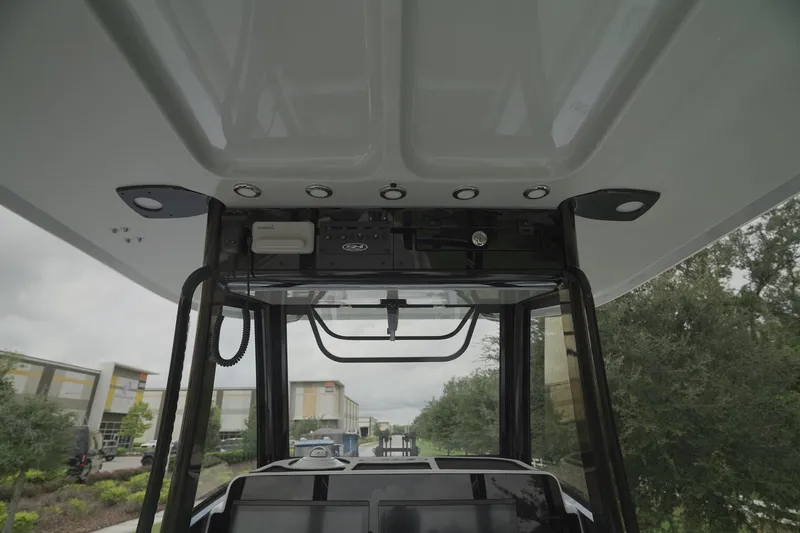
The Ultra, but the Gamefish is closer than its name implies. Sea Hunt equips the Gamefish 25 with bow backrests and cushions, a telescoping bow table and a rear bench seat, plus the same T-top with misters, toilet, freshwater washdown and Bluetooth stereo as the Ultra. Kids won't be miserable on a Gamefish. They'll just have less to sit on and a cockpit built around bait wells.
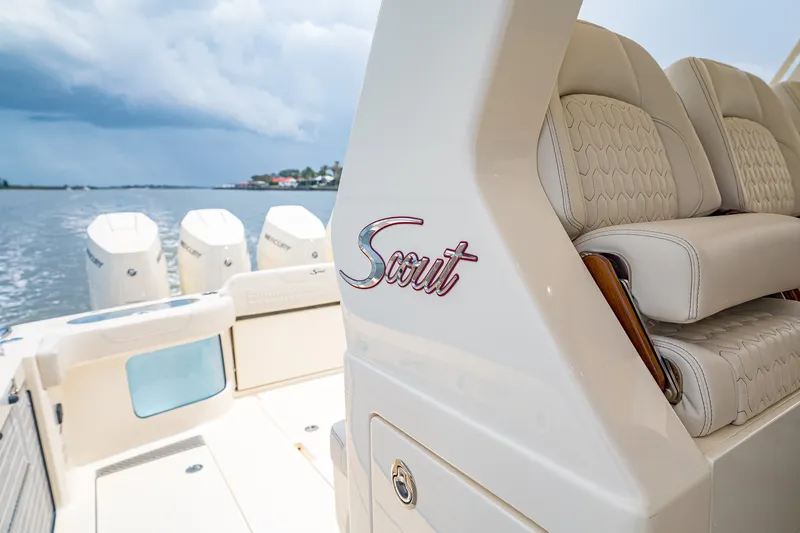
The Ultra's advantages are in the details that matter when non-anglers are aboard. The mezzanine seat gives two people a shaded, rear-facing spot to watch the wake or the lines, with the cooler underneath. The contoured bow cushion and bow beverage center make the front of the boat a lounge at anchor. Dual side entry doors, one on each side, make it easier to step on from a floating dock or climb back aboard after a swim with the optional ladder; the Gamefish has one side door. The Ultra's lower draft also lets you anchor closer to the sand, so younger kids don't have a long wade.
As an example, a family of five that sandbars on Saturday and fishes on Sunday will use the Ultra's seating on every trip and miss the bigger livewell only on the best fishing days. Two friends who chase kingfish off Port Canaveral every weekend, with an occasional family outing, will feel the opposite: the Ultra's seats sit empty while they wish for bait capacity.
Gamefish 25 or Ultra 255 SE: which should you choose?
- Where do you fish most?Offshore most trips points to the Gamefish 25. Bay, nearshore and sandbar days point to the Ultra 255 SE.
- Who comes along?Mostly anglers: Gamefish. Family and friends who want a mezzanine seat, a cooler and a beverage center: Ultra SE.
- How far do you run?The Gamefish carries 145 gallons and twin engines; the Ultra carries 120 on one. Long runs favor the Gamefish.
- Where will it live?A shallow canal, sandbar habit or a lighter tow favors the Ultra's 14-inch draft and lower weight.
Answer those four questions honestly about your typical weekend, not the trip you take twice a year. Most buyers land clearly on one side. The ones who don't usually want two things at once: twin-engine security for offshore days and Ultra seating for the family. Sea Hunt builds that boat too.
If you're between the two
Look at the Ultra 265 SE. It shares the Gamefish 25's 9′ 2″ beam, 21/24/60 hull, 400-hp rating, 145-gallon tank and twin F150 standard power, but keeps the Ultra mezzanine leaning post, dual side doors and a telescoping bow table. It carries the Ultra's 10-gallon livewell, so it's still a family boat first, and at 26′ 5″ it's the longest of the three. Our Ultra 265 SE vs 255 SE comparison covers that step in detail, and our Ultra vs Gamefish guide compares the whole lineups.
Talk it through with us
Tell us where you fish and who comes along, and we'll help you compare the two.
Questions we hear
Is the Sea Hunt Gamefish 25 good offshore?
It's the entry point to Sea Hunt's offshore fishing line. It has a 9′ 2″ beam, a 21/24/60 deadrise, 145 gallons of fuel and twin Yamaha F150s as standard on a hull rated for 400 hp. Twin engines give you a way home if one fails, and the 35- and 16-gallon livewells hold enough bait for a day of trolling. Like any 25-footer, it still needs a sensible weather window; check the marine forecast before you cross an inlet.
Is the Ultra 255 SE a good fishing boat?
Yes, for bay and nearshore fishing. It carries a 10-gallon livewell, a 40-quart aft box, the same 12-inch Garmin with VHF as the Gamefish and optional kingfish rod holders, outriggers and a Bait Tank leaning post. It falls short of the Gamefish 25 for long offshore days: 10 gallons of livewell against 51, a less sharp 18/24/55 deadrise and a single engine. It's a strong choice for anglers who also want family seating.
What's the difference between Sea Hunt Gamefish and Ultra?
Gamefish boats are Sea Hunt's offshore fishing line, with twin outboards across the series, big livewells and fish boxes. Ultra boats are its family center consoles, with more seating, coolers and lounge space, and they still carry a livewell and rod storage. At 25 feet, the Gamefish 25 and Ultra 255 SE show the split clearly: the Gamefish is heavier with a sharper hull and twin engines, while the Ultra is lighter, shallower and runs a single engine.
How fast is the Sea Hunt Gamefish 25?
In Yamaha's performance bulletin, a Gamefish 25 with twin F150XSA2 outboards reached 47.0 mph at wide-open throttle and ran 23.4 mph at 3,500 rpm burning 11.0 gallons per hour, about 2.13 miles per gallon. It was tested at 8,124 pounds with 60 gallons of fuel and two people aboard. Yamaha calls its figures approximate, so a fully loaded boat, a different prop or the optional twin F200s will give different numbers.
Can you trailer a Gamefish 25 or Ultra 255 SE in Florida?
Yes, with an oversize permit. Florida law limits a vehicle and its load to 102 inches wide, and the Gamefish 25 is 9′ 2″ (110 inches) and the Ultra 255 SE 8′ 9″ (105 inches). Check FDOT's current permit rules before you tow. You'll also need a tow vehicle rated well above the boat, engines, fuel and trailer combined. Many owners of boats this size keep them on a lift, in a slip or in dry storage instead.