






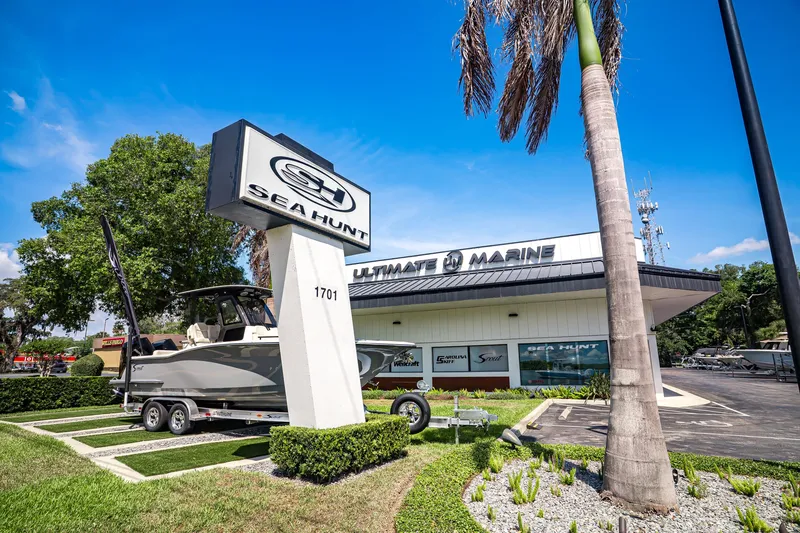
Your first boat in Florida, without the regret
Five decisions separate happy first-time owners from the ones selling a year later. Here's how to get each one right.
In this article
Buy for the water you'll actually run and the trips you'll actually take. Budget for owning the boat, not just buying it. Decide new or used honestly. And pick a dealer whose service you'll trust for years. A little less boat than your loan approval allows is often the happier choice.
Most first-boat regrets come from a handful of decisions made in the first few weeks of shopping: buying for the wrong water, buying for the boating life you imagine instead of the one you have, budgeting for the purchase but not the ownership, and choosing the seller on price alone. This guide takes those decisions in the order you'll face them, with the Florida details that change the answer.
It's written for first-time buyers who will mostly fish, cruise and spend days at the sandbar. Numbers that come from a law, an agency or a manufacturer are attributed. Where something is our own rule of thumb from selling and servicing boats, it says so.
Which boat fits the Florida water you'll actually run?
| Where you boat | What it asks of a boat | Look at |
|---|---|---|
| Central Florida lakes (Toho, the Butler and Conway chains), with weekend runs to the Atlantic | Easy to trailer and launch, shallow enough for lakes, able to handle the coast | Sea Hunt Ultra 219 to 255 SE |
| Tampa Bay and the Gulf | Skinny water at low tide, a comfortable ride home in a Gulf chop | Sea Hunt BX bay boats |
| Mosquito Lagoon, the Indian River and Ponce Inlet | Lagoon fishing in the morning, an offshore run the same day: range and versatility | BX 25 FS or Ultra 255 SE |
| The Florida Keys | Backcountry flats one day, the reef the next | Family-and-fishing center consoles like the Ultra or Gamefish |
Our starting points, not rules. Tell us where you boat and we'll narrow it down.
Draft and hull shape are the two numbers that decide this. Draft is how deep the boat sits in the water. The BX 22 BR bay boat and the Ultra 219 and 234 center consoles draw 13 inches, the BX 25 FS draws 15, and the offshore-leaning Gamefish 25 draws 19. That six-inch difference decides whether you can idle across a grass flat in the Indian River Lagoon at low water or have to go the long way around. Hull shape decides the other half: flatter hulls are stable and shallow, deeper V hulls ride better in an inlet chop.
Some of Florida's best inshore water has rules that shape the choice. Inside Mosquito Lagoon, the Merritt Island refuge has two pole-and-troll zones where internal combustion engines aren't allowed and boats drawing more than 12 inches may not enter. FWC also asks boaters to know their operating depth and stay in marked channels to protect seagrass, which is protected by law in aquatic preserves. A buyer who plans to sight-fish redfish on those flats needs a different boat than one who plans to run out Ponce Inlet for kingfish.
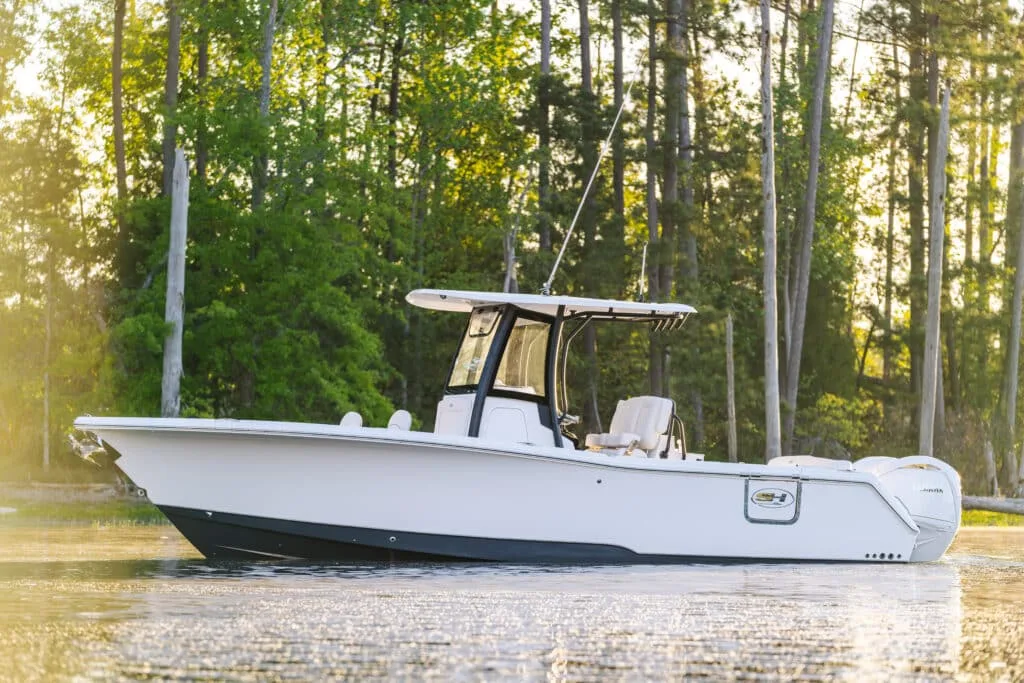
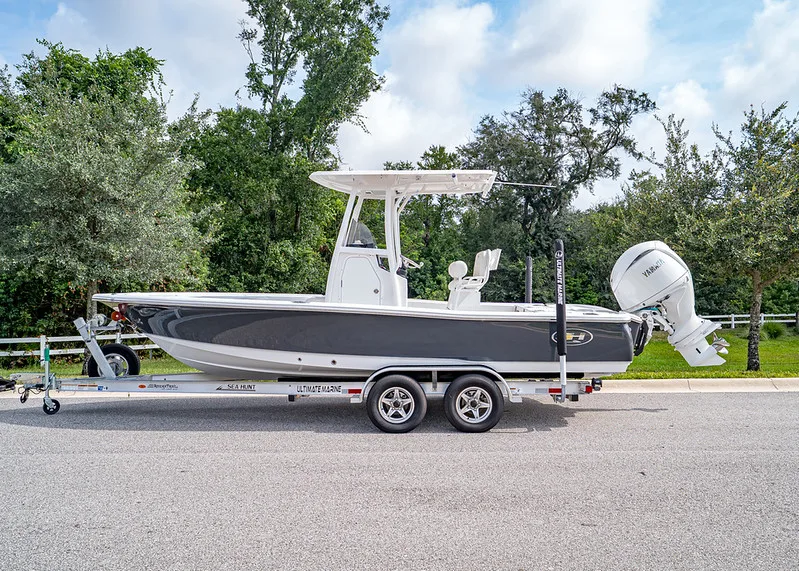
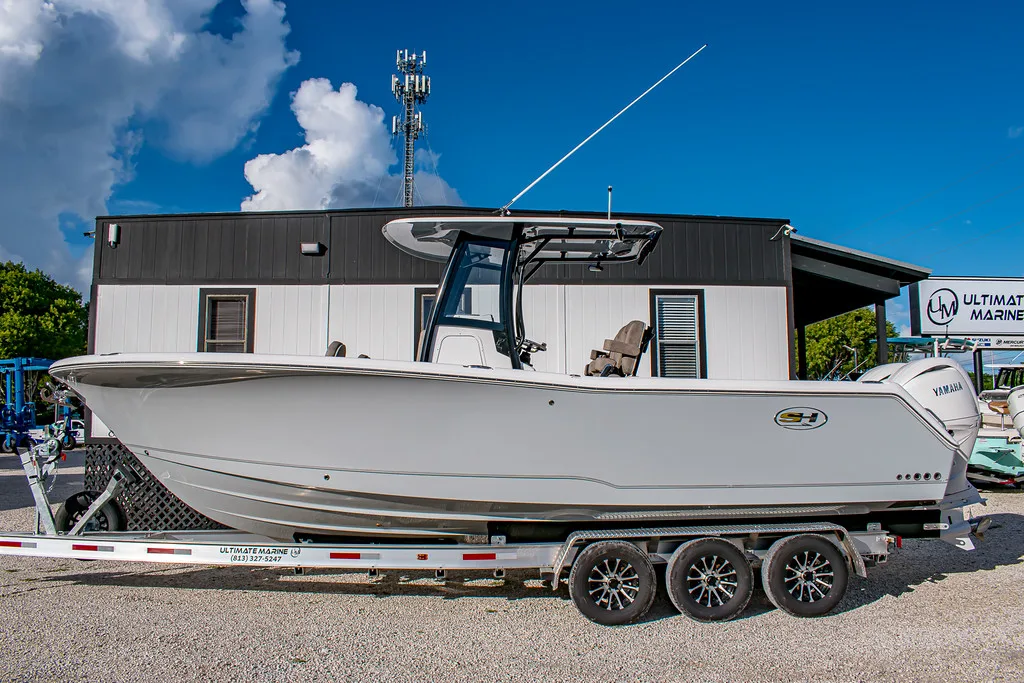
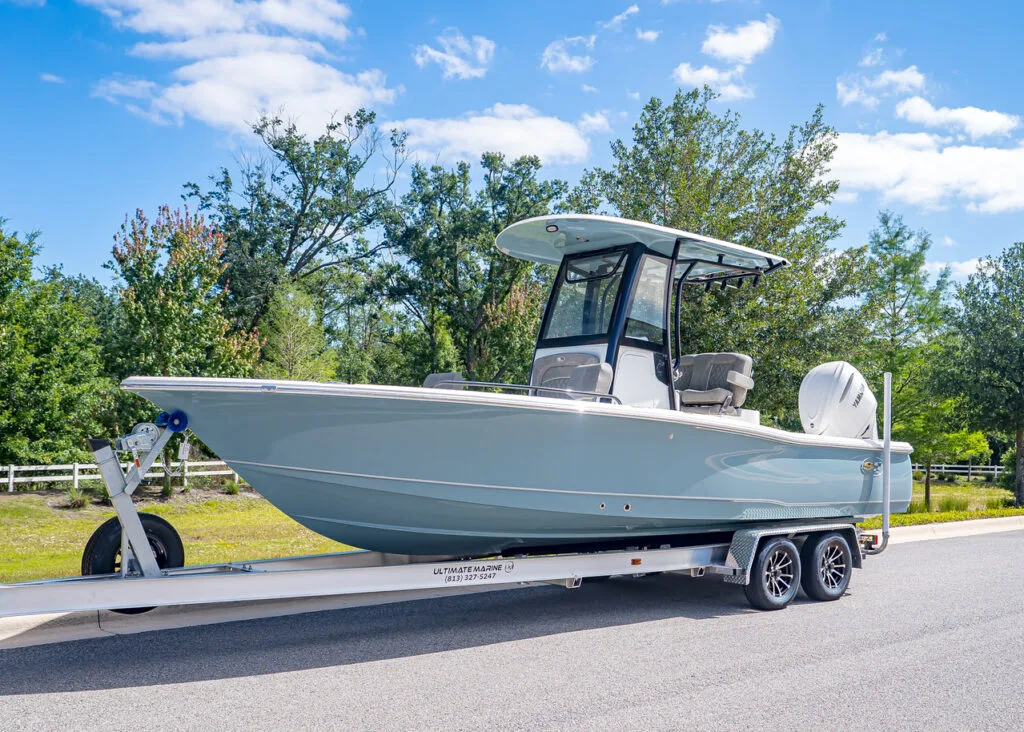
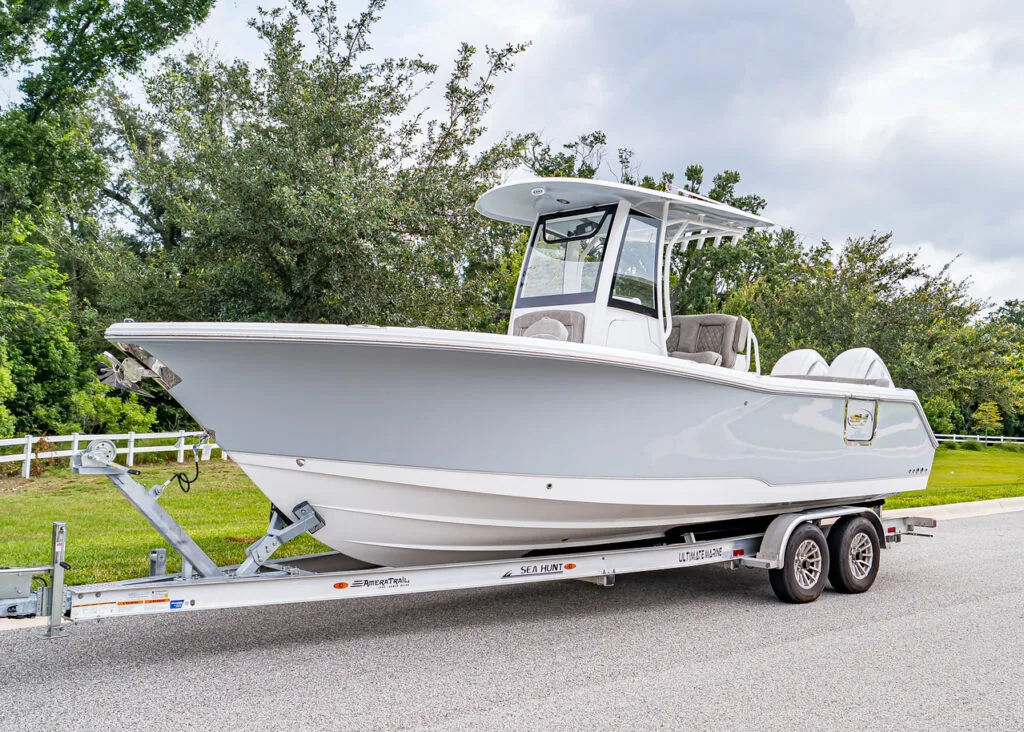
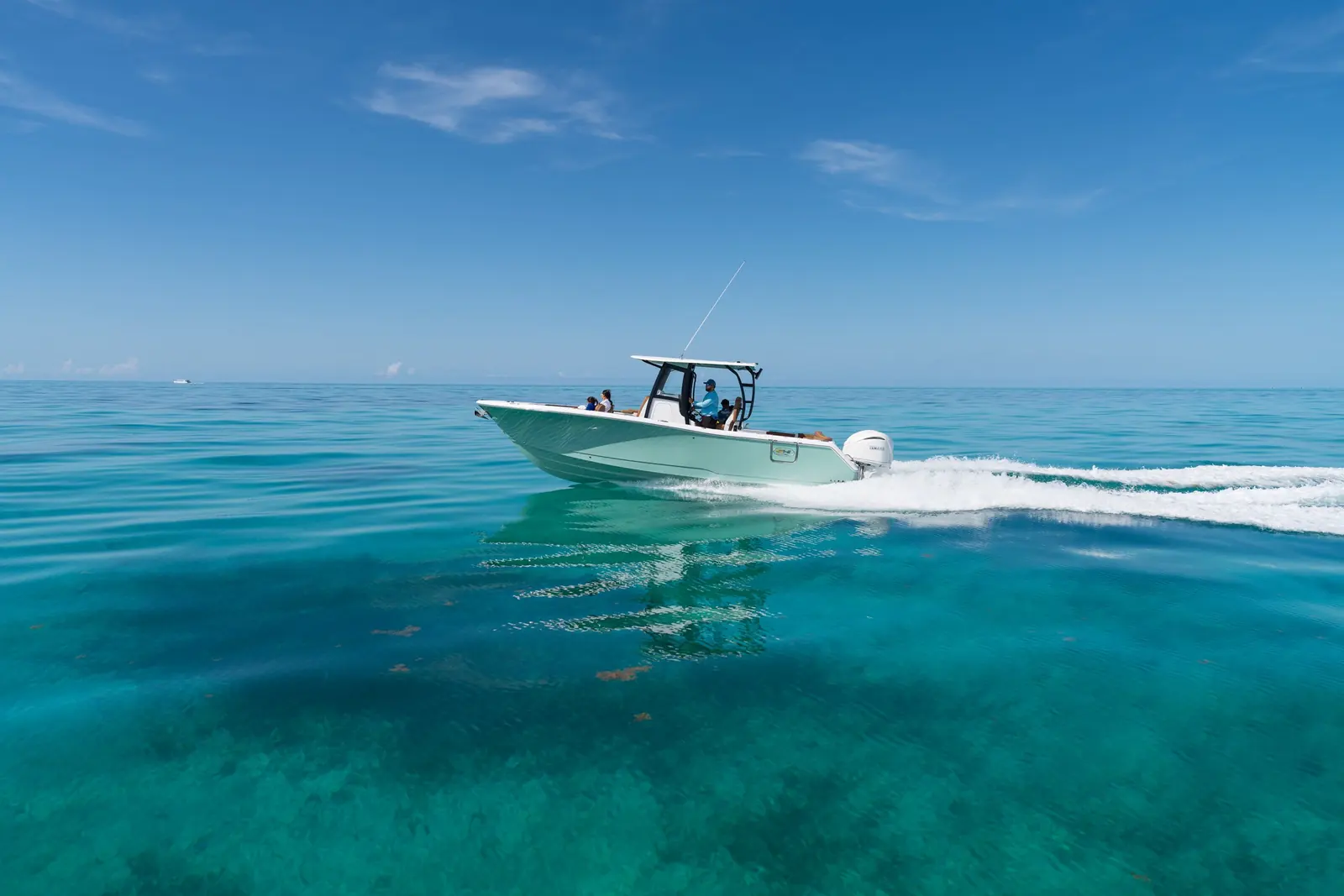
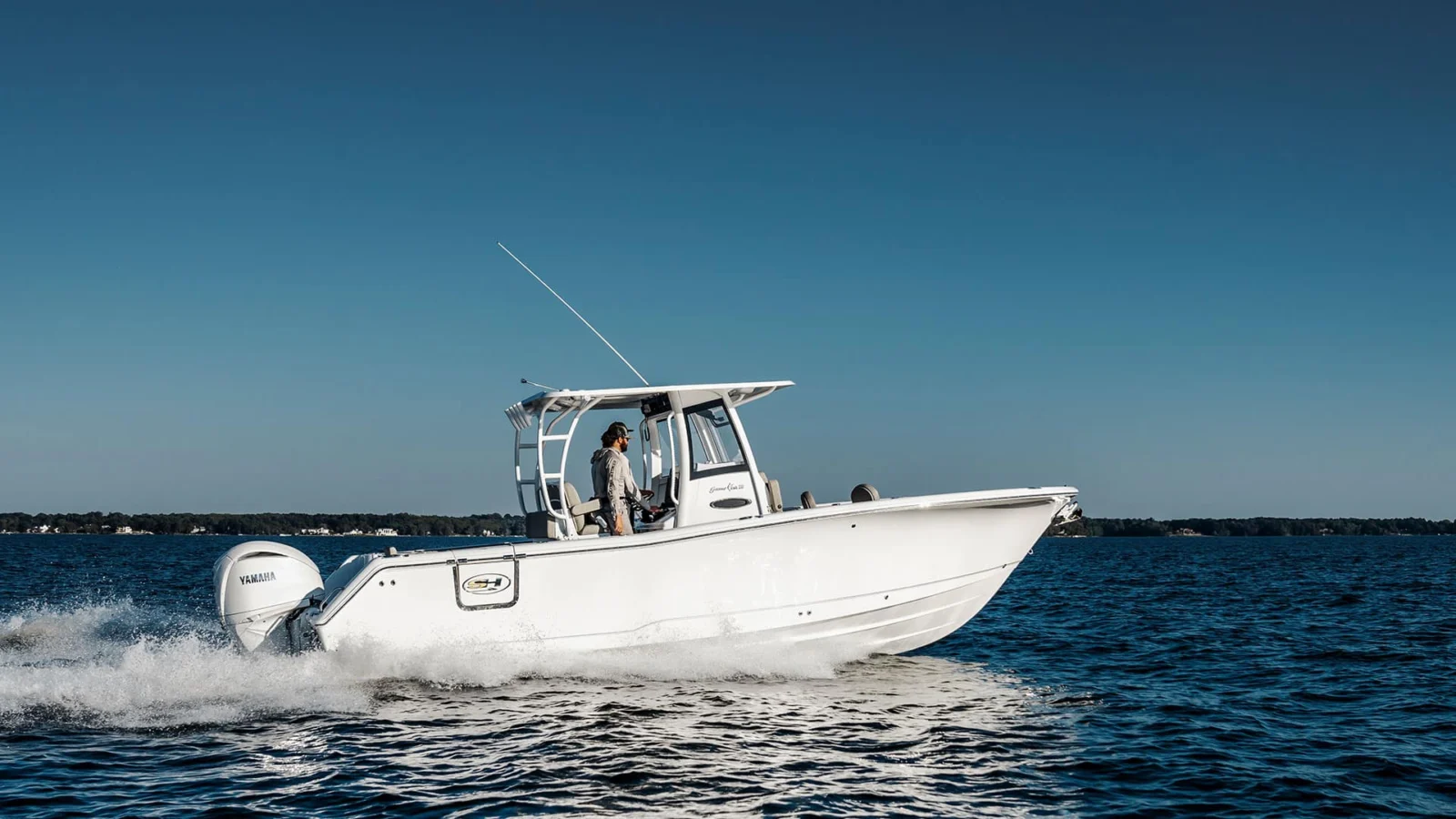
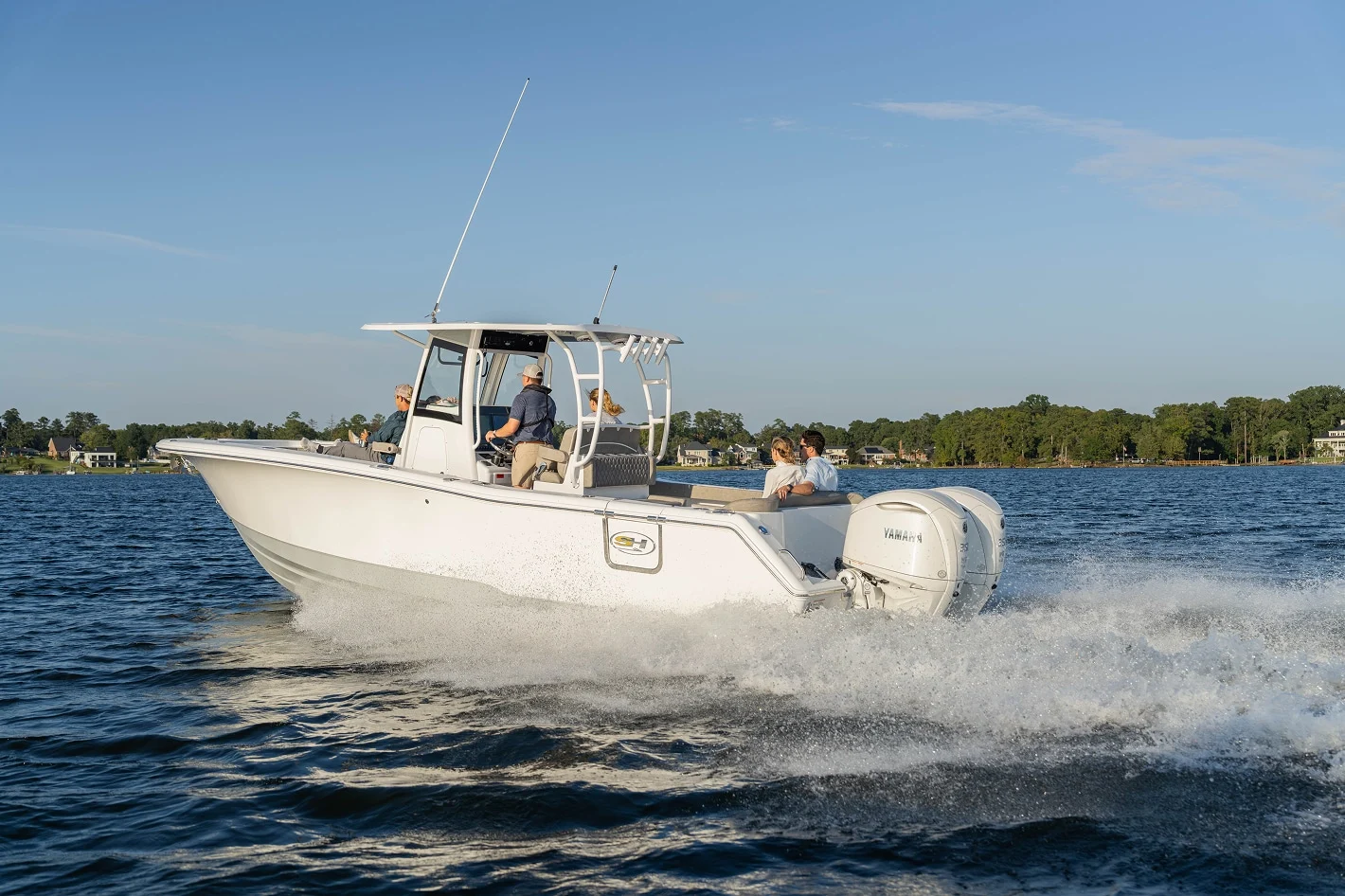
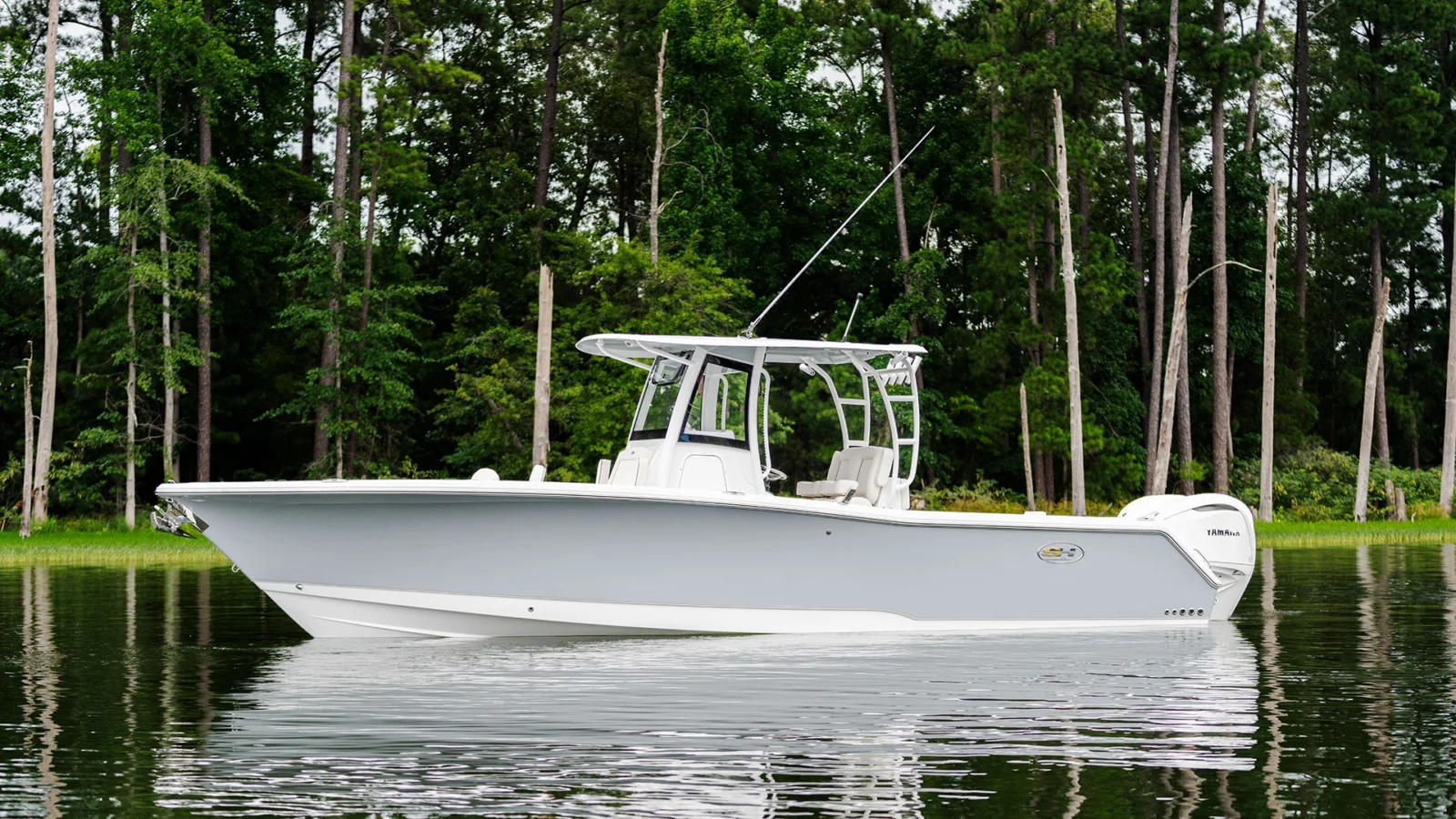
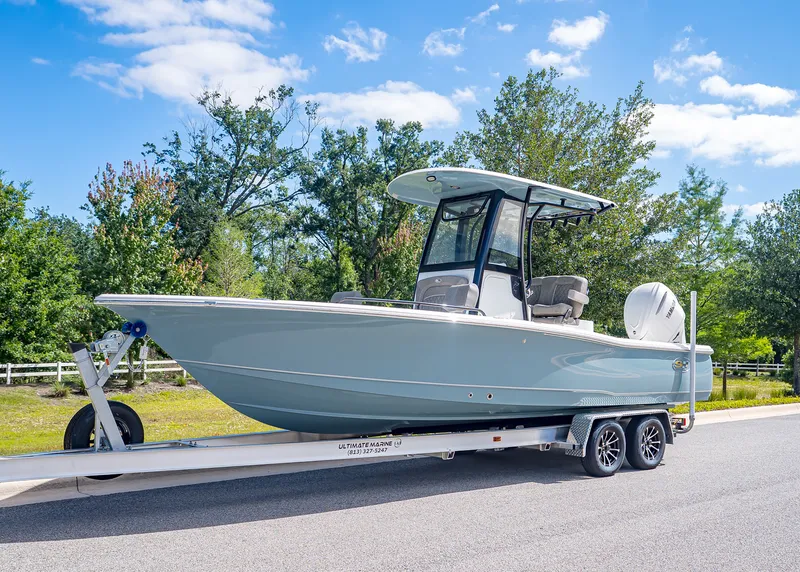
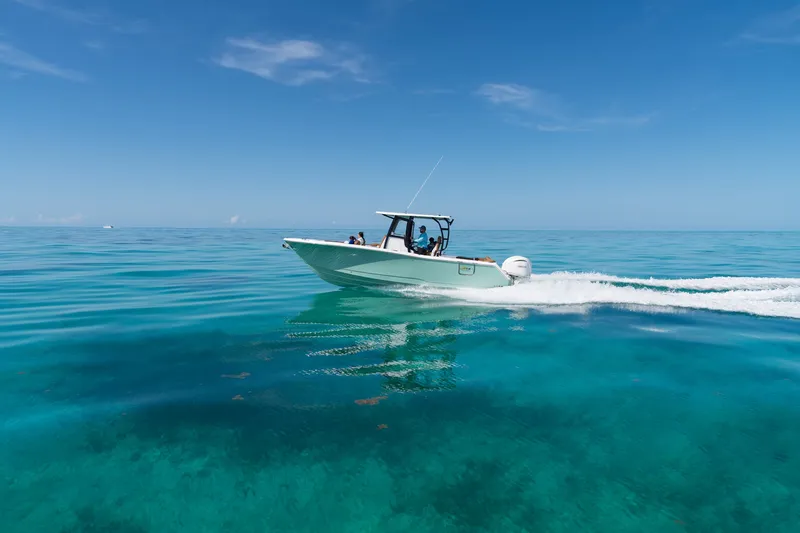
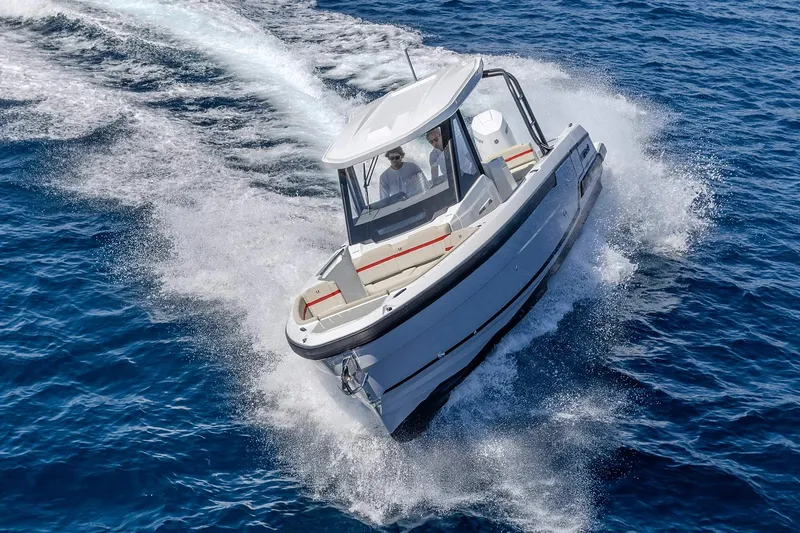
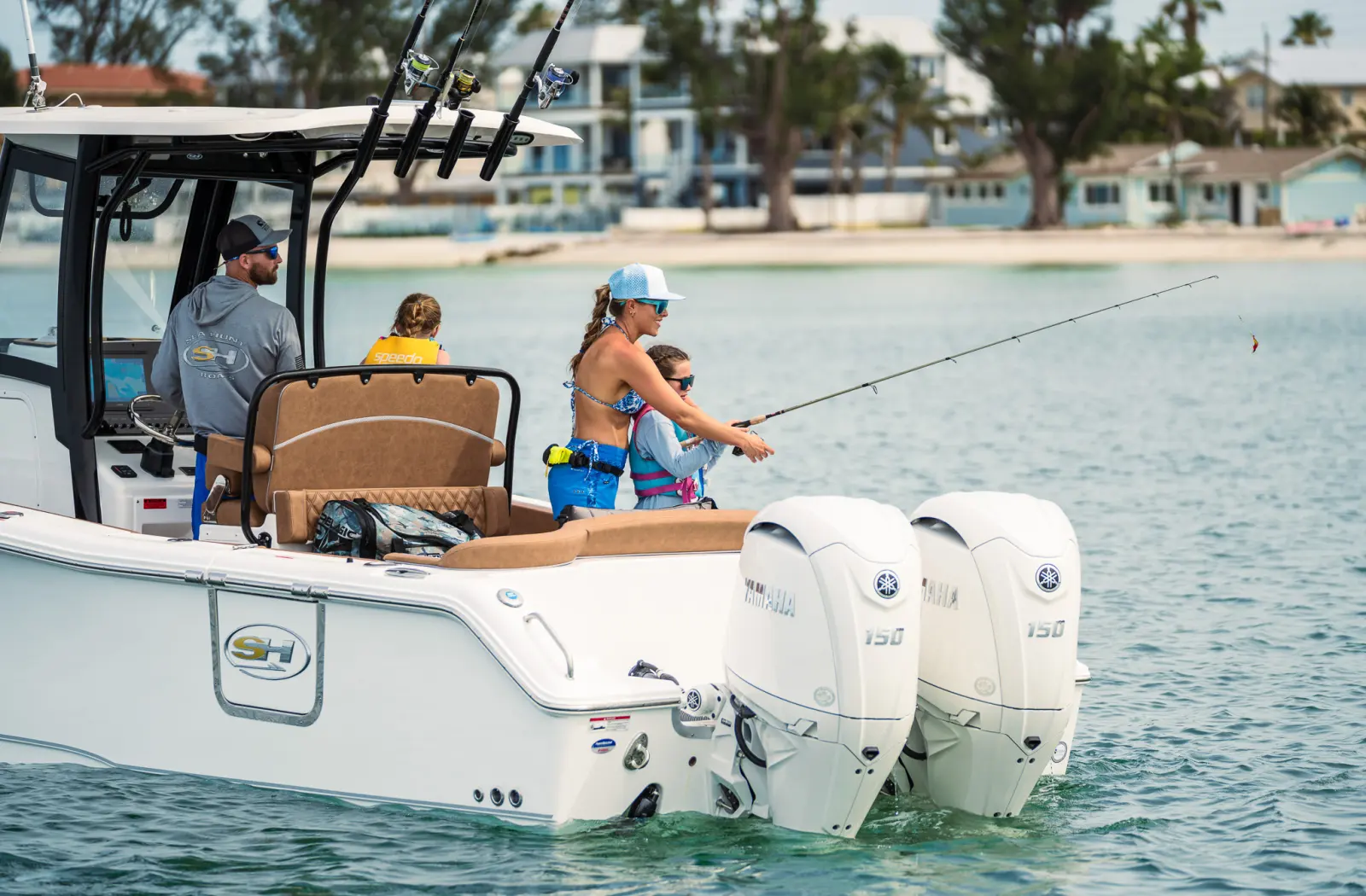
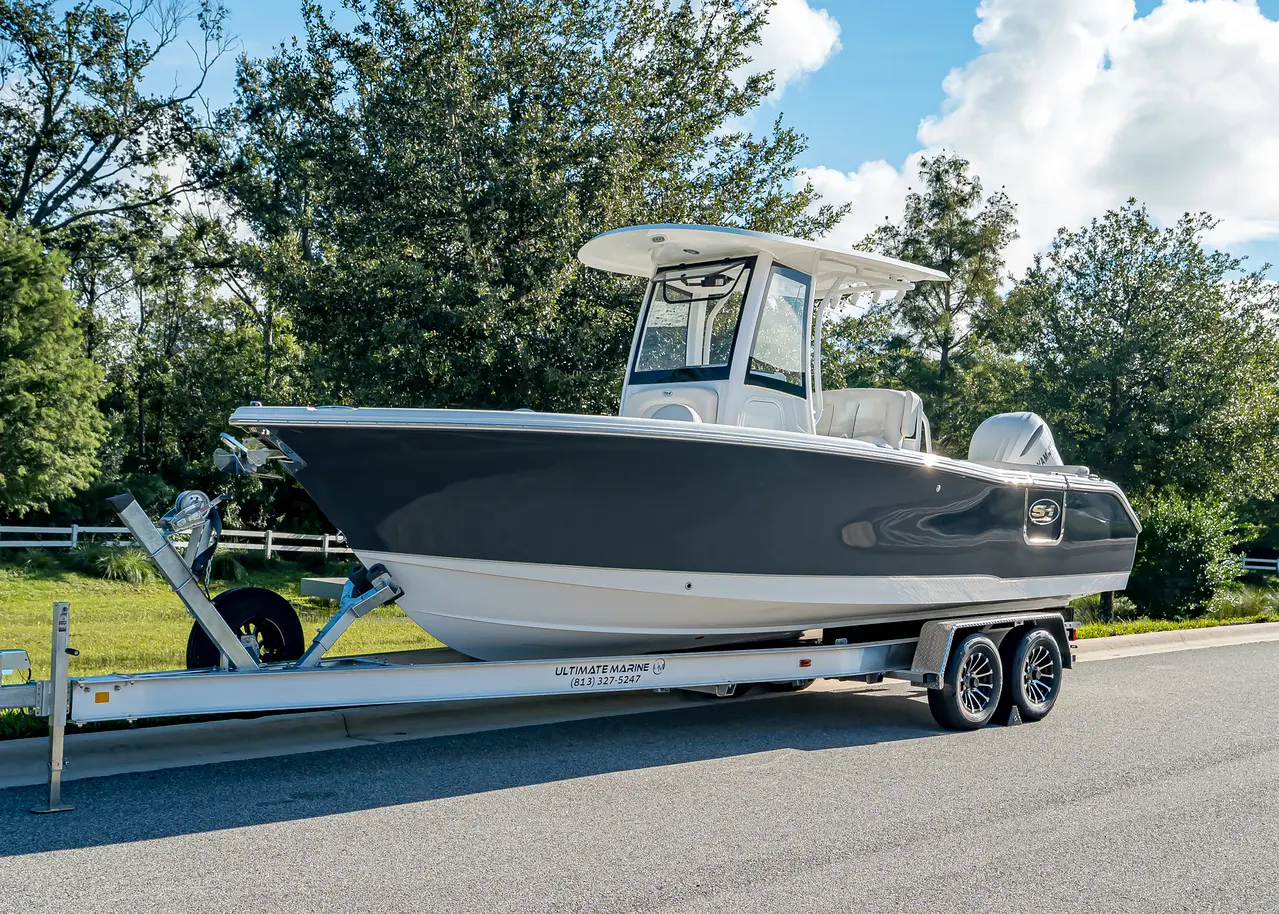
Boats from the table: a Sea Hunt Ultra 265 SE on the water, then a BX 22 BR, Gamefish 27 FS, BX 25 FS and Ultra 265 on their trailers.
Our rule: buy the right tool for the water you'll run most weekends, not the trip you hope to take twice a year. A big offshore boat that struggles inshore is a worse first boat than a smaller crossover that handles your real Saturday well. If your water genuinely splits, say lagoon on Saturday and nearshore on Sunday, a bay boat or a 23- to 25-foot center console is the usual compromise. See our comparison of center consoles and bay boats for the trade-offs in detail.
How big should your first boat be?
Start with how you'll really use it. A common regret story starts with "I thought we'd be out every weekend." Size the boat, the budget and the storage plan for the trips you'll really take. Smaller boats tend to get used more because they're cheaper to run and easier to launch on a weekday evening. Many owners start smaller and trade up once they know how they boat.
Then count your usual crew. Plan around the four or five people who come most weekends, not the ten who come on the Fourth of July. Every foot of length adds weight, fuel, insurance and storage cost, and a boat that's too big for your normal crew feels empty and costs more every trip.
Storage sets a hard limit. Florida law caps a vehicle and its load at 102 inches wide (8′ 6″) on the road. A boat wider than that needs an oversize permit to trailer, which is why most first boats people tow at home are 8′ 6″ or narrower. The Ultra 219 weighs 2,350 pounds dry and the Gamefish 25 weighs 6,100. Dry weight leaves out fuel, gear and the trailer, so compare the loaded total with your vehicle's towing rating before you fall for a boat. If you'll keep the boat on a lift or in dry storage, ask the marina about its length, beam and weight limits first.
What does it cost to own a boat in Florida?
Plan for these on top of the boat itself:
- Tax, title and registration. Florida sales or use tax plus any county surtax; a Florida dealer collects it at the sale. FLHSMV requires title and registration within a set deadline.
- Insurance. A lender requires coverage for the boat's full value, and most marinas want proof of liability. Ask whether a policy pays agreed value or actual cash value, and what it expects when a named storm is forecast.
- Storage. Trailer, dry stack, lift or slip. On the coast this is the biggest variable; a trailer is cheapest if you have room and a tow vehicle.
- Fuel. Coastal boaters often underestimate it. Plan trips by thirds: a third out, a third back, a third in reserve.
- Service. Routine engine service, fuel filters, corrosion care and a fresh-water flush after salt use, on your engine maker's schedule.
- Trailer and tow vehicle. Tires, bearings and brakes on the trailer, and a vehicle rated for the loaded weight.
- Safety gear and boater education. Required gear for your boat's size, and the boater education card if you need one.
Write these down for your situation before you visit a showroom. A boat on a trailer in the garage, launched at a free county ramp, costs very differently from the same boat on a lift behind a canal home or in a coastal dry stack. Hurricane season (June 1 to November 30) also brings marina and insurer requirements, so ask before you commit to a storage plan.
Should your first boat be new or used?
New makes sense if you'll keep the boat five years or more and want warranty coverage, current electronics and a service history from day one; the dealer also handles the title application and tax. Used makes sense if your budget is well below new for the boat you need, or you're still testing whether boating fits your life. On any used boat, BoatUS advises a marine survey by a surveyor you hire yourself, plus an engine inspection.
Survey, engine checks, title, liens and tax, step by step: how to buy a used boat in Florida →
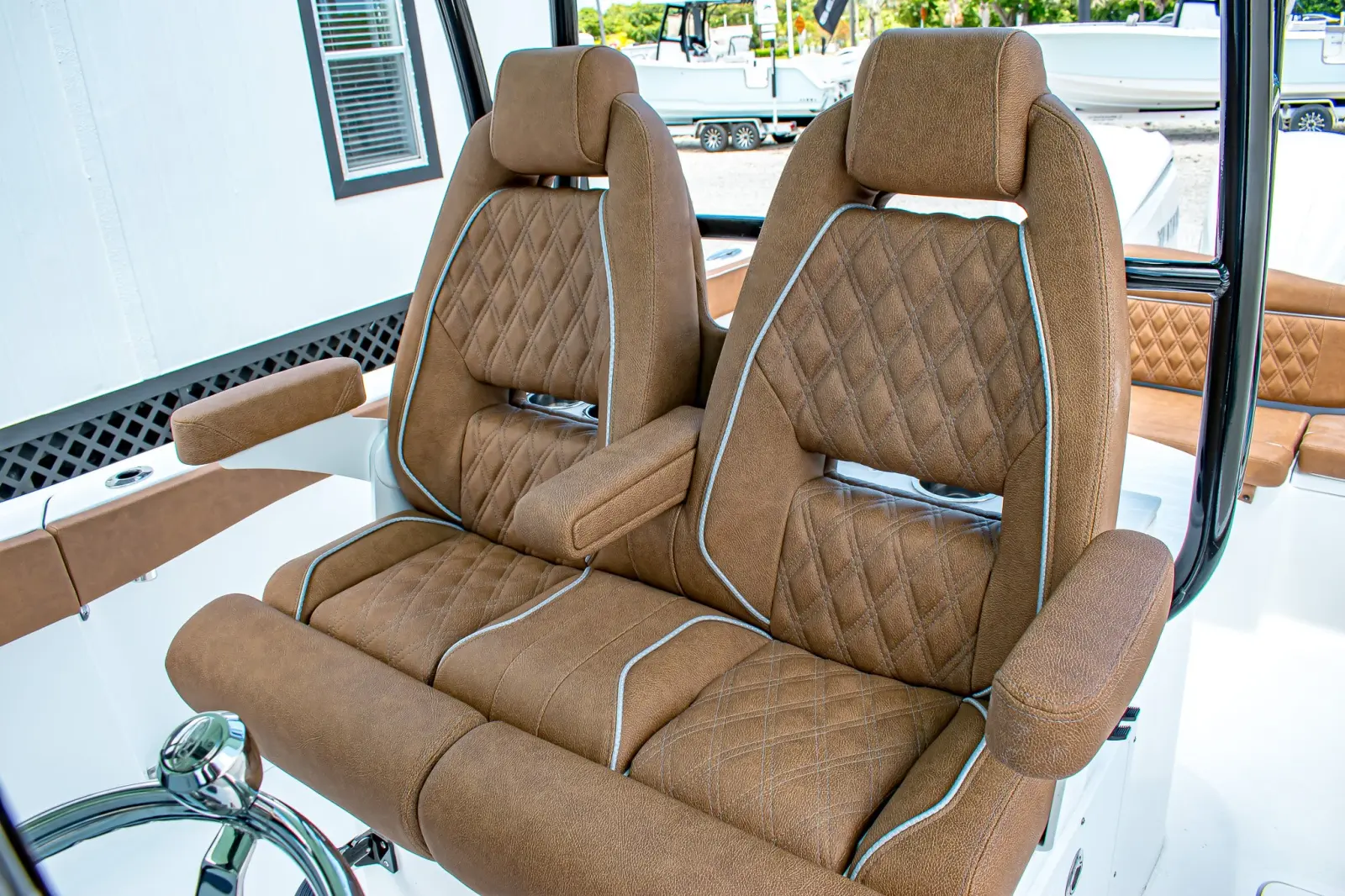
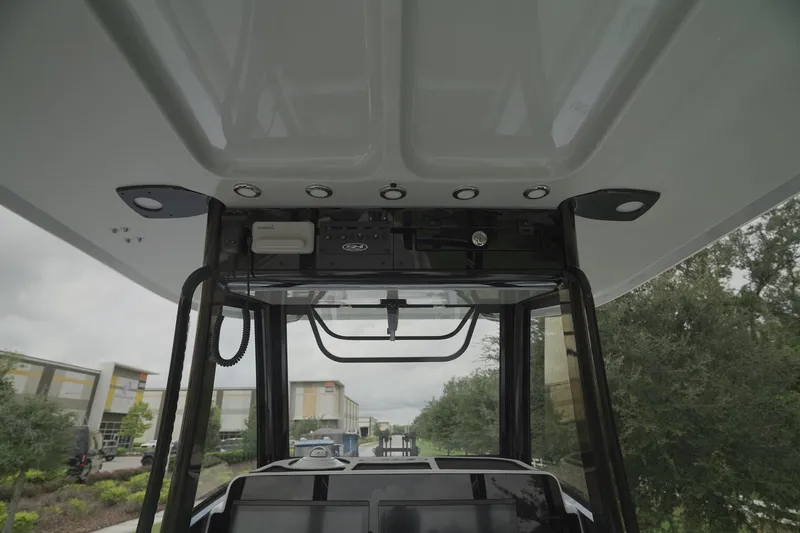
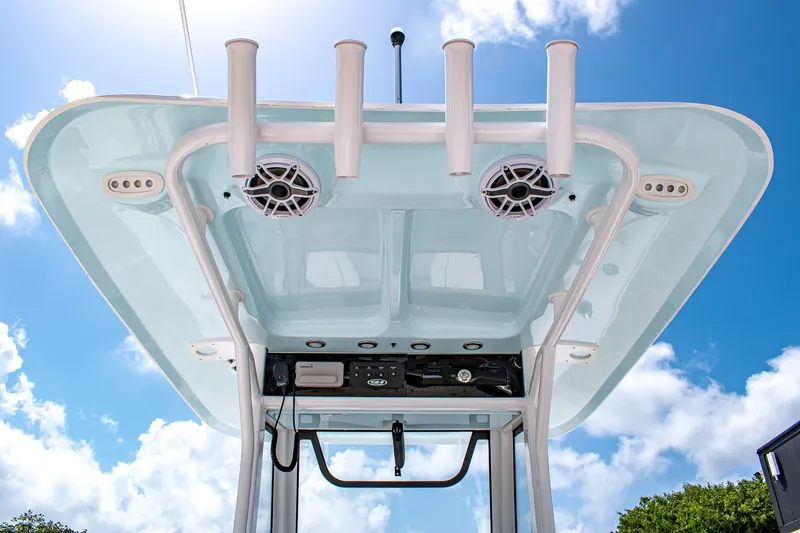
Comparing new boats? Look past the layout. Ride the hull in the water you'll use most. Ask which engine comes standard and what the transom is rated for. Check that the upholstery, canvas and finish are made to stand up to Florida sun. Make sure the electronics do what you need now, with room to add later. Then ask the dealer the questions below about who supports the boat after delivery.
How should you finance a first boat?
Get pre-approved before you shop. Marine lenders understand boat values and terms, and knowing your number keeps the conversation on the right boat. Lenders treat boats more like houses than cars: expect to provide a personal financial statement, and on a used boat often a tax return. The lender will look at the boat's age, condition and value, check for a clear title, and usually require insurance.
Long terms are available. Our finance team can arrange terms of up to 20 years, but a long term is a tool, not a target. Choose a boat you could still afford comfortably if your income dipped, not one sized to your best year. Compare offers in writing from more than one lender, and look at the total cost over the life of the loan as well as the monthly figure.
Put the ownership costs above into the same budget as the loan. A buyer who stretches to the top of an approval, then meets insurance, storage and the first service bill, is the buyer who sells the boat a year later. If you're trading in a boat, get the trade-in allowance and the purchase price written as separate lines; in Florida, tax on a dealer sale is figured on the difference. See boat financing.
Get an insurance quote before you sign, not after. The lender will require coverage, and in Florida the premium can vary a lot with where the boat is kept, how it's stored in hurricane season and your boating experience. A boater safety course can help on both the legal and the insurance side. Knowing the real annual number for insurance and storage often changes which boat you end up choosing.
What mistakes do first-time boat buyers make?
- Buying too much boat.A common regret. Bigger boats cost more to store, insure, fuel and service, and they get used less.
- Buying for the wrong water.An offshore hull on a shallow lagoon, or a flats boat for a crew that wants to run the inlet.
- Underestimating saltwater upkeep.A boat kept on the coast needs regular flushing and corrosion care. Budget for it.
- Skipping the survey on a used boat.A surveyor finds problems the seller may not know about. It's cheap next to what it catches.
- Forgetting the trailer and tow vehicle.The trailer is part of the purchase, and the vehicle has to handle the loaded weight at a slick ramp.
- Buying out of state to save money.Florida use tax applies to a boat brought in within six months of purchase, with credit for tax paid to the other state. You can also lose the local service relationship.
Most of these share a cause: deciding on the boat before deciding how you'll use, keep and pay for it. Write down your water, crew, storage and total budget first, and the list of sensible boats gets short quickly. The out-of-state point surprises people most. If you buy in a state with a 4% rate and bring the boat into Florida within six months, you owe the 2% difference plus any county surtax, so the saving is often smaller than it looks.
What should you ask a dealer before you buy?
You buy the boat once. You live with the dealer's service department for years, so vet it as carefully as the boat. Before you sign, ask:
- Are you factory-authorized to do warranty work on this boat and this engine?
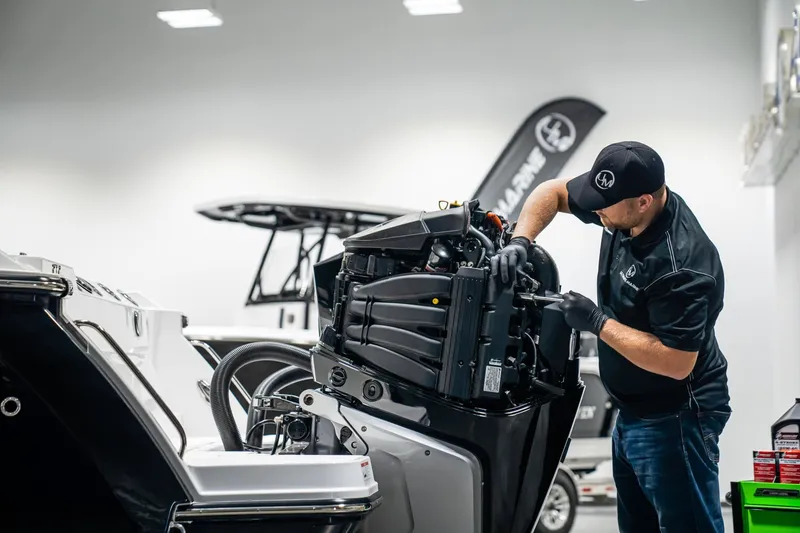
- Who does the work, and are they trained on the outboard brand I'm buying?
- What does delivery include: a walk-through, a sea trial, help with the first launch?
- How far out is your service schedule in spring, and how do you handle hurricane-season haul-outs?
- If I want a bigger boat later, how does a trade-in work with you?
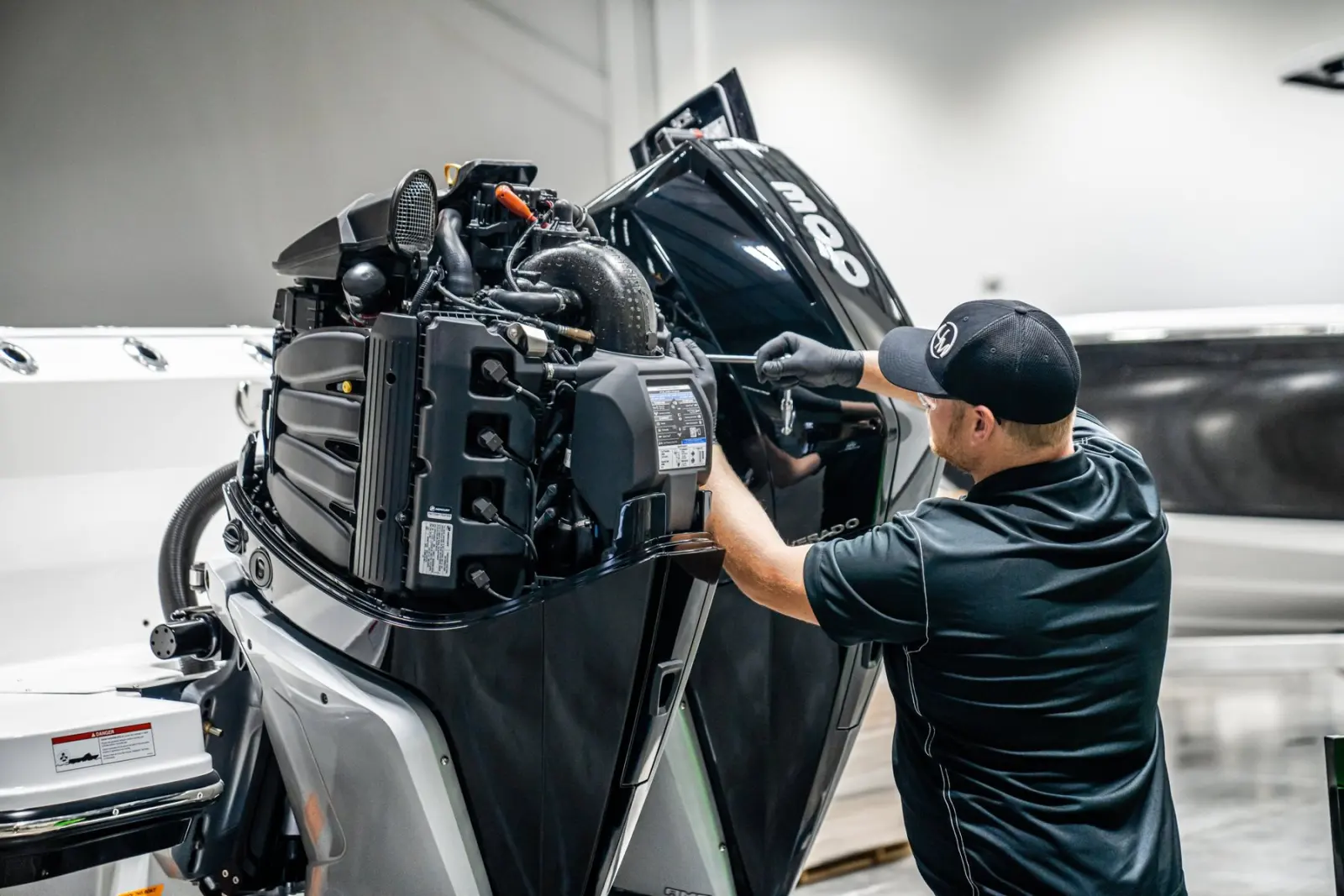
The answers tell you how the first year will go. A thorough delivery, with someone showing you the systems on the water and helping with your first launch, prevents most first-month problems. A service department that can see you within a reasonable time in April matters more than a small difference in price. Ask other owners at the ramp where they get their boats serviced and how it went; that's often the most honest review you'll get.
Price still matters, but compare like with like. Two quotes for the same model can differ in engine, electronics, trailer, prep and delivery, so line them up item by item. A slightly higher number that includes a proper trailer, a full delivery and a first service can be the better deal.
Talk it through with us
Tell us where you boat, who comes along and what you want to spend. We'll tell you honestly what fits, including when the smaller boat is the right one.
What do you need before your first trip?
- Get your boater ID.Florida law requires anyone born on or after January 1, 1988 to carry a Boating Safety Education ID card to run a boat of 10 hp or more. A new owner is exempt for 90 days after purchase with a qualifying bill of sale aboard; use that time to take the course.
- Finish the paperwork.Title and register within 30 days, put the numbers and decal on the bow, and keep the registration aboard.
- Check the required gear.Life jackets for everyone aboard, a throwable device, fire extinguisher, signaling devices and lights, as required for your boat's size.
- Practice at the ramp.Back the trailer in an empty lot first, then launch on a quiet weekday.
- Plan around the weather.Summer storms build in the afternoon. Go early, watch the sky and leave a float plan with someone ashore.
The first month is when new owners learn the most, so keep the early trips short and close to home. Run the boat in protected water until docking, trimming and anchoring feel routine, then work out to the inlet on calm days. Clip on the engine cut-off switch lanyard every time you're on plane; on many boats under 26 feet it's federal law. And ask your dealer to show you the battery switches, bilge pump and fuel filter before you leave the lot. Knowing where those are is the difference between a short delay and a long tow.
Questions we hear
What's the best first boat for a Florida buyer?
It depends on your water. For families who fish and cruise, a center console in the 22- to 26-foot range is a common starting point because it handles fishing, sandbar days and the occasional nearshore trip. If you'll mostly fish shallow lagoons and bays, a bay boat with a shallower draft fits better. If you'll trailer it yourself, staying at 8′ 6″ wide or less avoids an oversize permit. Tell a dealer where you launch and who comes along before you look at models.
Do I need a boating license in Florida?
Florida doesn't issue a boating license. Instead, FWC requires anyone born on or after January 1, 1988 who runs a boat with 10 horsepower or more to pass an approved boating safety course and carry a Boating Safety Education ID card with photo ID. The card is good for life. New owners have a 90-day exemption after buying a boat if a qualifying bill of sale is aboard, which gives you time to take the course.
Do you pay sales tax on a boat in Florida?
Yes. Florida's state rate is 6%, plus county surtax where it applies on the first $5,000 of the price, with a maximum of $18,000 in tax on one boat. A Florida dealer collects it at the sale; on a private sale you pay it when you title and register. With a dealer trade-in, tax is figured on the difference between the price and your trade-in allowance.
Is it cheaper to keep a boat on a trailer or in a slip?
A trailer is usually cheapest if you have the space, a suitable tow vehicle and your HOA allows it. A slip adds convenience but is the biggest storage cost on the coast and leaves the hull in salt water. Dry stack sits in between: the marina stores the boat on a rack and launches it when you call, but each facility has its own limits on length, beam and weight. A lift behind a home keeps the hull dry and ready.
Should I buy a new or used boat for my first boat?
New if you'll keep it five years or more and want warranty coverage, current electronics and a service history from day one. Used if your budget is well below new for the boat you need or you're still testing whether boating fits your life. On any used boat, especially a private sale, BoatUS advises a marine survey by a surveyor you hire yourself, plus an engine inspection and a title and lien check.