

How to winterize your boat in Florida and prep it for summer
In this article
Before a layup: wash and dry the boat, change the engine oil, filter and gear lube, treat the fuel with stabilizer and run it through the system, replace the fuel filter, fog the engine, check the anodes, and charge the battery and keep it charged. Drain livewells and water systems, take cushions out and cover the boat. Before summer: check hoses, clamps, bilge pump, battery, trim fluid, prop and trailer, then your safety gear, registration and insurance. Follow your engine owner's manual for products and intervals.
Most Florida boats never see a hard freeze, so "winterizing" here usually means laying the boat up for a stretch when it won't be used, and for many owners that stretch is summer. Either way, the job is the same: protect the engine from stale fuel, moisture and corrosion, and the hull and interior from sun and mildew.
The engine steps follow Yamaha's and Mercury's published storage guidance and the summer checklist follows BoatUS. Your owner's manual is the final word on products and intervals.
Do you need to winterize a boat in Florida?
You don't need full freeze protection for most of the state, but you do need a layup if the boat will sit for more than a few weeks. Mercury makes the same point: even in mild climates, the end of the season is the time for annual maintenance. The things that hurt a stored boat in Florida are fuel that goes stale, salt left in the cooling passages, moisture that condenses inside the engine and the fuel tank, and mildew in a closed-up, humid boat.
Freeze steps still matter in three cases: boats stored in North Florida or inland where a cold snap brings freezing nights, boats trailered or stored up north, and any boat with a freshwater system, head or washdown that holds water. Water in gear lube can freeze and crack the gearcase.
A simple rule: if the boat will be used again within two or three weeks, keep to your normal flush-and-rinse routine. If it will sit longer, do the layup below.
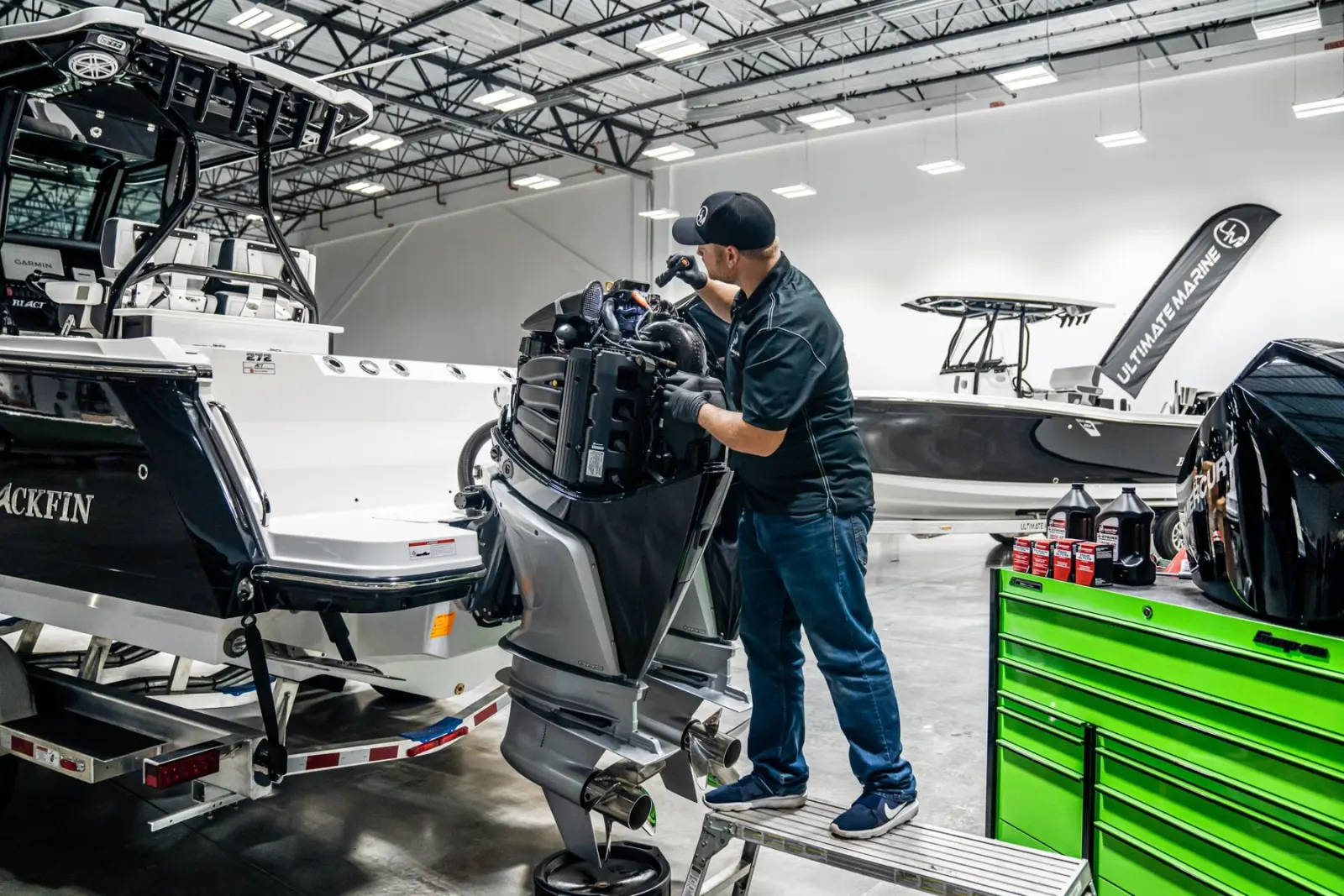
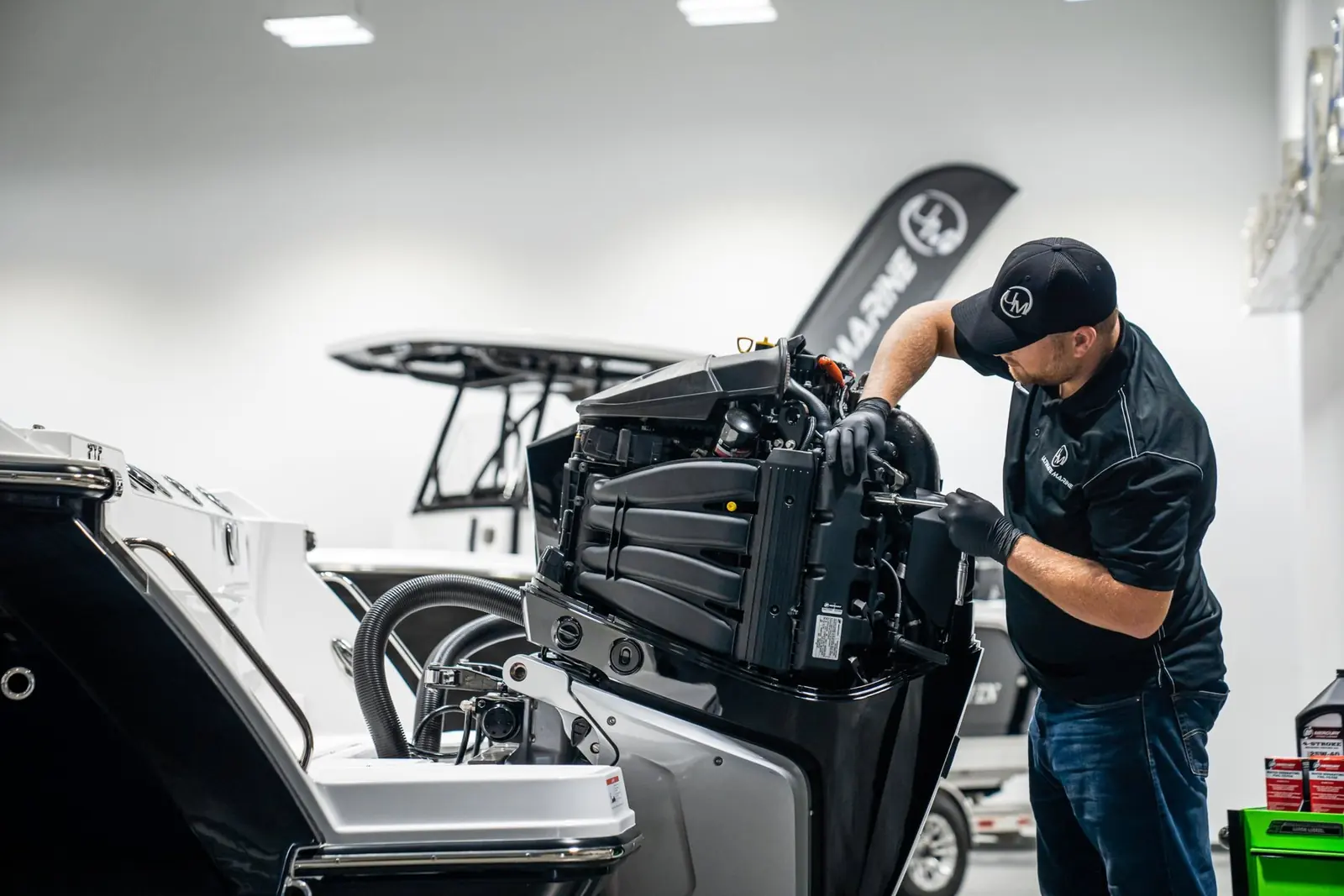
How do you lay up an outboard for storage?
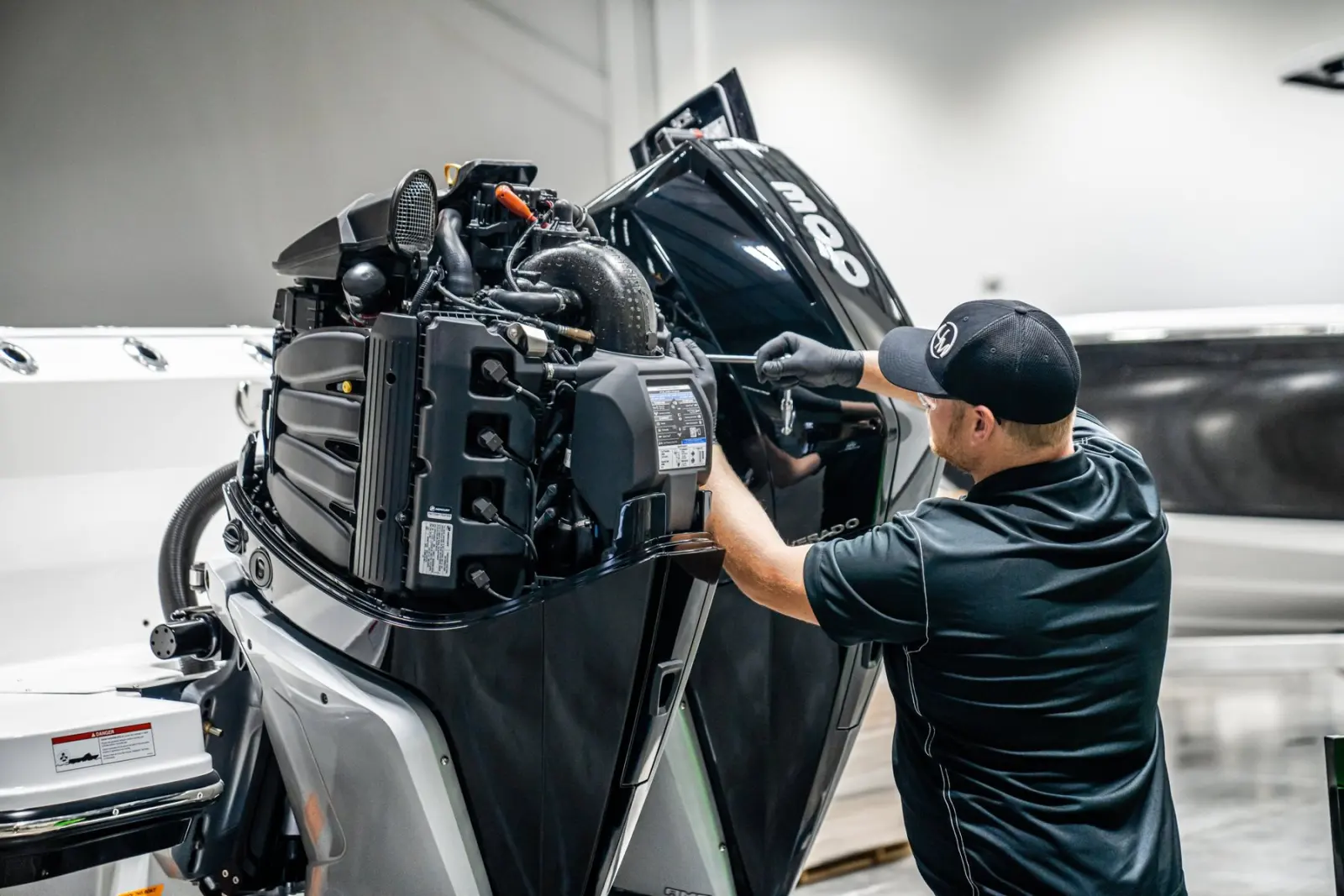
Never run an outboard out of the water unless fresh water is flowing to it through the flush port or flush muffs, as your engine manual describes.
- Inspect it top to bottom.Yamaha suggests pulling the cowling and prop and working from the top of the cowling down to the skeg, looking for anything damaged, missing or loose.
- Flush the cooling system.Mercury's guidance for its flush connector is to lower the engine and run water through it for about 10 minutes; follow your manual for your model.
- Treat the fuel and run it through.Add marine fuel stabilizer to fresh fuel, then run the engine about 10 minutes (on the water or on a hose, per your manual) so treated fuel reaches the whole system.
- Change the fuel filter.Both Yamaha and Mercury say to replace it before storage. Yamaha recommends a 10-micron fuel/water separating filter.
- Change engine oil and filter.Change four-stroke oil and filter every 100 hours or once a season. Storing an engine on old oil exposes it to moisture and acidic by-products.
- Change the gear lube and look at the old oil.White, creamy or foamy gear lube can mean water is getting past a seal. Discarded fishing line behind the prop is the most common cause.
- Fog the engine.Fogging oil coats internal parts against rust. Use the product and method your manual specifies; Yamaha and Mercury each describe their own procedure.
- Grease, check anodes, protect.Grease the fittings your manual lists, replace anodes that are half gone, check trim fluid (bright red is good), and coat the powerhead with a corrosion inhibitor.
The fuel step causes the most trouble when skipped: Mercury says most of the problems its dealers see come from stale fuel, and ethanol fuels can pull water in through the tank vent. Yamaha says to store with the tank about seven-eighths full; Mercury says about 95 percent for older vented tanks, while newer tanks that can't freely vent don't need filling. Never plug the vent.
After the oil change, start the engine and check for leaks: an old filter gasket stuck to the block can double up with the new one.
How do you protect the boat, battery and trailer while it's stored?
Layup checklist for everything but the engine
Mildew is the Florida storage problem. Yamaha's advice is to make sure the boat is bone-dry before you close it up, and a breathable, well-fitted cover with some airflow matters more here than in a cold climate.
A battery left discharged for months can be ruined, so keep it on a marine charger or check it monthly. The trailer sat in salt all season: spin each wheel and listen for grinding, and replace bearings or bunk carpet now rather than halfway to the ramp.
Where should you store a boat during a Florida layup?
A trailer at home, a lift, dry stack or a wet slip all work for a layup; the difference is how exposed the boat is and who checks on it. A wet slip needs the most attention on a long absence, and dry stack the least. Our boat storage guide compares the options.
The Atlantic hurricane season runs June 1 to November 30, so a summer layup and storm season are the same months. Before you leave, write down where the boat is, who has keys and what happens if a storm is forecast. The hurricane prep checklist covers the rest.
How do you get your boat ready for summer?
- Walk the hull.Take the cover off and look for blisters, cracks and chips. Wash, then wax the gel coat to protect it from UV.
- Check hoses and clamps.Replace stiff, cracked or leaking hoses and rusty clamps. Double-clamp fuel lines and hoses below the waterline where you can.
- Test the bilge pump and float switch.Lift the float or add water and make sure the pump runs and pumps overboard.
- Charge and connect the battery.Clean and tighten both ends of the cables, then test that it holds a charge.
- Check the fuel system.Inspect fuel lines and fittings for softness, cracks or leaks, and replace the fuel filter or water separator if it wasn't done at layup.
- Check the outboard.Gear lube level, trim fluid, anodes (replace if more than half wasted), prop condition, and spark plugs and water pump impeller on your manual's schedule.
- Check the trailer.Tires (including the spare), wheel bearings, lights, winch, safety chains and brakes.
- Check safety gear and paperwork.Life jackets for everyone aboard, flares in date, extinguishers, engine cut-off switch lanyard, registration and insurance.
The safety items change more than people expect. Pyrotechnic flares expire 42 months after manufacture, and a 2022 rule puts a 12-year expiration on disposable fire extinguishers. Federal law also requires the operator of many boats under 26 feet to use an engine cut-off switch lanyard or wireless device when running on plane, so check the lanyard and any fob batteries. Consider a free vessel safety check from the Coast Guard Auxiliary, a good spring habit if you're unsure what's required.
Renew the trailer tag, and review your insurance's named-storm terms before hurricane season.
What should you check on the first run of the season?
Start at the dock or on the trailer with water flowing to the engine. Once it fires, look for a steady stream from the cooling-water telltale within a few seconds. A weak or missing stream means stop and check the water pump before going anywhere. Let it idle and look under the cowling for fuel or oil leaks, especially around the oil filter and fuel filter you changed at layup.
Fogging oil burns off in the first few minutes, so a bit of smoke at startup after a layup is normal. Smoke that keeps coming, rough running, or warning alarms on the gauge are not normal. Check that the trim goes all the way up and down, the steering moves freely lock to lock, and the bilge pump and navigation lights work.
Make the first trip short and close to the ramp. Run the engine through its range, check again for leaks, and refill with fresh fuel rather than topping off months-old gas. Save the long offshore trip for the second weekend.
Seasonal checklist: layup vs summer prep
| Task | Off-season layup | Summer prep |
|---|---|---|
| Wash and inspect | Wash, wax, dry before covering | Inspect hull, wax |
| Flush the engine | Yes | Check telltale on first start |
| Fuel | Stabilize, run through, new filter | Check lines; fresh fuel |
| Engine oil and filter | Change | Check level |
| Gear lube | Change, inspect for water | Check level |
| Fog the engine | Yes | |
| Anodes, trim fluid, grease | Check and service | Check |
| Battery | Charge, test, keep charged | Clean, connect, test |
| Water systems | Drain; antifreeze in head if freezing | Refill and check |
| Bilge pump, hoses, clamps | Test and inspect | |
| Trailer | Bearings, bunks, winch | Tires, lights, brakes |
| Safety gear and paperwork | Check dates, registration, insurance |
Products and intervals vary by engine; your owner's manual decides.
Printable: before the off-season
Printable: before summer
When should you call a technician instead?
Stop and have the engine looked at if you find milky or creamy gear lube (Mercury recommends a dealer pressure check of the gearcase), pink or milky trim fluid, a weak telltale after layup, metal shavings on the drain plug, or sour, cloudy fuel or water in the separator. Mercury also notes a technician doing a layup may spot problems an owner wouldn't, like loose transom bolts or a bent prop shaft. Book ahead of spring and hurricane season, when shops fill up.
Book a layup or summer service
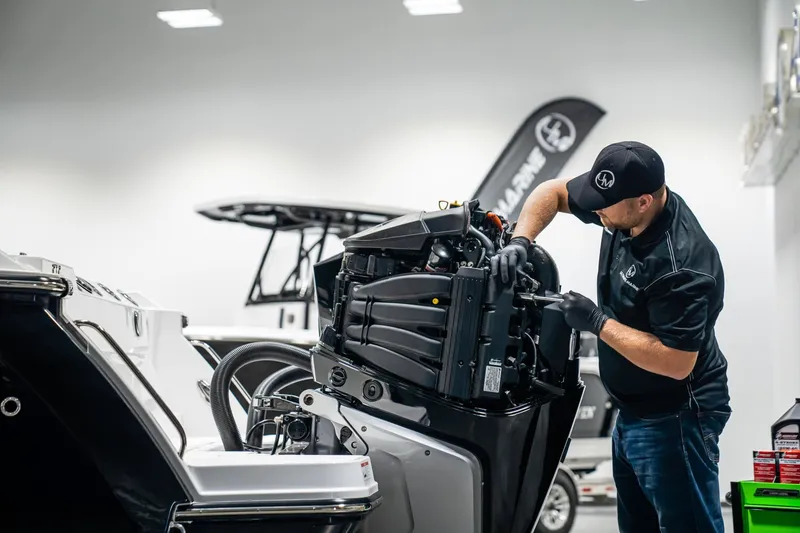
Our technicians can handle the engine steps for you, so you can just take the cover off and go.
Questions we hear
Do you need to winterize a boat in Florida?
Most Florida boats don't need full freeze protection, but any boat that will sit for more than a few weeks needs a layup. That means treated fuel run through the engine, a new fuel filter, fresh engine oil and gear lube, fogging, and a charged battery, following your owner's manual. Boats stored in North Florida, trailered north, or with freshwater systems and heads should also get freeze steps, such as draining water lines and using non-toxic antifreeze in the head.
How do I get my boat ready for summer?
Inspect and wax the hull, then check hoses, clamps, the bilge pump and float switch, battery connections and fuel lines. On the outboard, check gear lube, trim fluid, anodes and the prop, and keep spark plugs and the water pump impeller on your manual's schedule. Check the trailer's tires, bearings and lights. Finally, confirm flares and extinguishers are in date, life jackets fit everyone, and your registration and insurance are current.
Should you fill the gas tank before storing a boat?
Usually, with a caveat. Yamaha says to store with the tank about seven-eighths full of stabilized fuel to limit condensation, and never to plug the vent. Mercury says filling to about 95 percent helps older vented tanks, while newer tanks that can't freely vent don't need to be filled. Both want the fuel treated with marine stabilizer and run through the engine before storage. If your fuel is already old, have it pumped out and replaced.
How often should you change outboard oil?
Change four-stroke engine oil and lower-unit gear oil every 100 hours or once a year, whichever comes first. Many Florida owners don't reach 100 hours in a year, so the annual change is the one that usually applies, and a layup is a convenient time to do it. Storing an engine with old oil exposes internal parts to moisture and acidic combustion by-products, which can cause corrosion.
Do you need to fog a fuel-injected outboard?
Both Yamaha and Mercury include fogging in their storage steps for four-stroke outboards. Yamaha sells a fogging oil made for most modern fuel-injected four-strokes, and Mercury says to treat four-stroke and conventional two-stroke engines with fogging oil. Mercury's direct-injected two-strokes such as OptiMax get a measured amount of outboard oil in each cylinder instead. The method differs by model, so follow your owner's manual or have your dealer do it.
Sources
- Yamaha Outboards, Extended Storage..
- Yamaha Outboards, How to Winterize Your Four-cylinder Outboard..
- Yamaha Outboards, Maintenance Matters..
- Mercury Marine, How to Winterize Your Outboard..
- Mercury Marine, Quick Tip: Flushing an Outboard Motor..
- BoatUS, Spring Commissioning Checklist..
- National Hurricane Center..