







July 4th fireworks from your boat
Where Florida boaters anchor for the show, from Tampa Bay to Key West, and how to plan a safe night on the water.
In this article
- Fireworks barges carry a Coast Guard safety zone. Around Tampa Bay and the Gulf coast it's up to 500 yards from the launch site, per federal rule. Plan to anchor well outside it.
- Arrive in daylight, anchor upwind of the launch and out of any channel, and show your all-round white anchor light once the sun goes down.
- The riskiest part of the night is the ride home, when every boat leaves at once in the dark. Wait out the rush and run slowly with a lookout.
From the water you skip the parking and the crowds, get a clear view over the launch site, and see every burst twice: once in the sky and once on the water. Below are the areas Florida boaters head for, from Tampa Bay and the Gulf beaches to New Smyrna Beach, Key Largo, Miami, Fort Lauderdale and Key West. Show names, times and launch sites change every year, so each area says what to check. After the places: the rules, a planning checklist, anchoring, storms and the ride home.
Where to watch fireworks by boat in Tampa Bay
Downtown Tampa is the area's headline show, with the skyline as the backdrop. In recent years the City of Tampa has centered its July 4th celebration on the Tampa Riverwalk and Julian B. Lane Park, with fireworks over the Hillsborough River and, in some years, more displays nearby. Popular spots with boaters include:
- Tampa Riverwalk: anchor or idle near the Riverwalk for a downtown view and the city atmosphere.
- Channelside: watch from the water by the entertainment district near the port.
Show names, launch sites, times and any no-anchor areas change every year. Check the City of Tampa and Friends of the Tampa Riverwalk event pages, and the Coast Guard's notices, before you go.
Downtown water is tight. The Hillsborough River is narrow, it carries a current, and on the Fourth it fills with everything from center consoles to water taxis and paddleboards. That's where FWC's rule against blocking navigation matters most. Officers may keep a lane open and move boats that anchor in it. If you want room to swing on the anchor, look for space where the river opens up rather than squeezing into the busiest stretch.
Channelside sits beside Port Tampa Bay's shipping channel. Ships and tugs don't stop for holidays, and they can't maneuver around small boats. Stay out of the marked channel and keep a radio on channel 16.
The ride there matters as much as the spot. If you're coming from the open bay, a west or southwest breeze can stack up a short, steep chop across Hillsborough Bay by late afternoon. Leave early, run it in daylight, and plan a slow, careful return after dark.
Where to anchor for fireworks in St. Petersburg and Clearwater Beach
Cities and beach towns along the Pinellas coast, including St. Petersburg and Clearwater, hold July 4th events each year. Anchor in a designated or open area, give other boats room, and watch from your own deck.
Which beaches and waterfronts hold a show, their launch sites and any designated anchoring areas change by year. Check the City of St. Petersburg, City of Clearwater and beach-town event pages each June.
Gulf-side shows bring a different set of conditions from the downtown rivers. A beach show means anchoring off an open shoreline, where a light Gulf swell can make a boat roll all evening. A deeper-V center console handles that better at anchor than you might expect, but anyone prone to seasickness will feel it. Bayside waterfronts are calmer, though they can be shallow along the edges, so check the chart for grass flats and spoil areas before you choose a spot.
Getting there and back usually means a pass, such as John's Pass or Clearwater Pass. Passes run strong tidal currents, and at night, with a line of boats behind and ahead, they're no place to rush. Time your trip with the tide if you can, keep your speed down and respect the posted speed zones.
This stretch falls under the St. Petersburg safety zone rule covered below.
Fireworks on the water in New Smyrna Beach and Key Largo
Two smaller shows draw plenty of local boats, and both are easy to reach from nearby ramps.
New Smyrna Beach
In recent years the City of New Smyrna Beach has held its July 4th celebration at Riverside Park, with fireworks over the Indian River. Confirm the date, time and launch site on the city's event page each year.
The river along downtown New Smyrna is part of the Intracoastal Waterway, and the water shallows quickly outside the marked channel. Many boats here are bay boats and skiffs that draw little water, but even those can find a sandbar on a falling tide. Seagrass grows across much of the lagoon, and Florida protects it, so anchor in sand where you can and idle off the flats.
Key Largo
Key Largo's July 4th fireworks have been held at Rowell's Waterfront Park on Blackwater Sound, near mile marker 104.5. Check the date and time with the event organizers each year.
Blackwater Sound is on the bay side of Key Largo, not the ocean. It's sheltered from Atlantic swell but shallow in places. Have local charts on board, know your boat's draft, and run back in the dark only on a route you've already driven in daylight.
Smaller shows cut both ways. Fewer boats means room to swing at anchor and a calmer ride home, but also fewer patrol boats and less shore lighting, and in shallow water a wrong turn in the dark ends on a flat. Slow down and trust the track you laid in daylight.
Where to watch fireworks from a boat in Miami, Fort Lauderdale and Key West
South Florida's shows are busy with private boats, charters and rentals. Plan ahead, expect a crowded waterfront, and leave extra time on both ends.
Miami
Miami has more than one show: the Bayfront Park celebration, with fireworks over Biscayne Bay, and Miami Beach's Fire on the Fourth. For Bayfront Park, boaters anchor on Biscayne Bay near the park and watch the fireworks reflect off the water. The bay near downtown carries cruise ship and commercial traffic, so stay clear of the marked channels.
Fort Lauderdale
Fort Lauderdale's July 4th show details change from year to year, so check the city's event page and any Coast Guard notice for the launch area before you go. Anchoring off an ocean beach means swell, and a long run back through the inlet in the dark, so check the marine forecast before you commit. Follow local markers and watch for other boats.
Key West
Key West's main display, hosted by the Rotary Club of Key West, launches from the Edward B. Knight Pier (the White Street Pier, at White Street and Atlantic Avenue) over the Atlantic. The water off those beaches is shallow in places, so check the chart, anchor in sand rather than on grass or coral, and leave plenty of room from the pier.
Show names, launch sites and times in Miami, Fort Lauderdale and Key West change by year. Check each city's event page and any Coast Guard notice before you go.
What rules apply on the water during a fireworks show?
Coast Guard, FWC and local officers are out in force on the Fourth. Five rules matter most.
Safety zones around the launch site. In the Coast Guard's St. Petersburg zone, which covers Tampa Bay and much of Florida's Gulf coast, federal rule 33 CFR 165.783 sets a safety zone of up to 500 yards around every fireworks barge, platform or structure while fireworks are stored, prepared and launched. Barges carry "FIREWORKS—STAY AWAY" signs. You can't enter or anchor inside without permission, requested on VHF channel 16. Large events can get their own zones, and other sectors set their own, so check the local notices.
- Don't block navigation. Florida law makes it unlawful to anchor or operate in a way that unreasonably interferes with other boats. Stay out of channels, bridge approaches and the lane to the ramp.
- Lights from sunset to sunrise. Sidelights plus the white light underway; the all-round white anchor light at anchor.
- Kids under 6 wear life jackets underway on boats under 26 feet, as Florida law requires. The rides out and home both count.
- The operator stays sober. Florida presumes impairment at .08, and holidays bring extra patrols.
How do you plan a fireworks night on the boat?
Treat the night like a short offshore trip: a plan, a weather check, a gear check and a route you already know.
- Pick the show and check its notices.The host city's event page for time and launch site, and any Coast Guard safety zone.
- Run your route in daylight.Mark the channel, markers and shallow spots on your chartplotter. You'll retrace it in the dark.
- Leave early.Popular anchorages fill hours before the show.
- Brief your crew.Where the life jackets are, who's on lookout, and that you leave after the rush.
Fireworks night checklist
Test the lights at the dock, not at sunset; a blown fuse is easy to fix in daylight. Plan fuel by thirds: a third out, a third back, a third in reserve for a slow line home or a storm detour.
How do you pick a spot and anchor for the show?
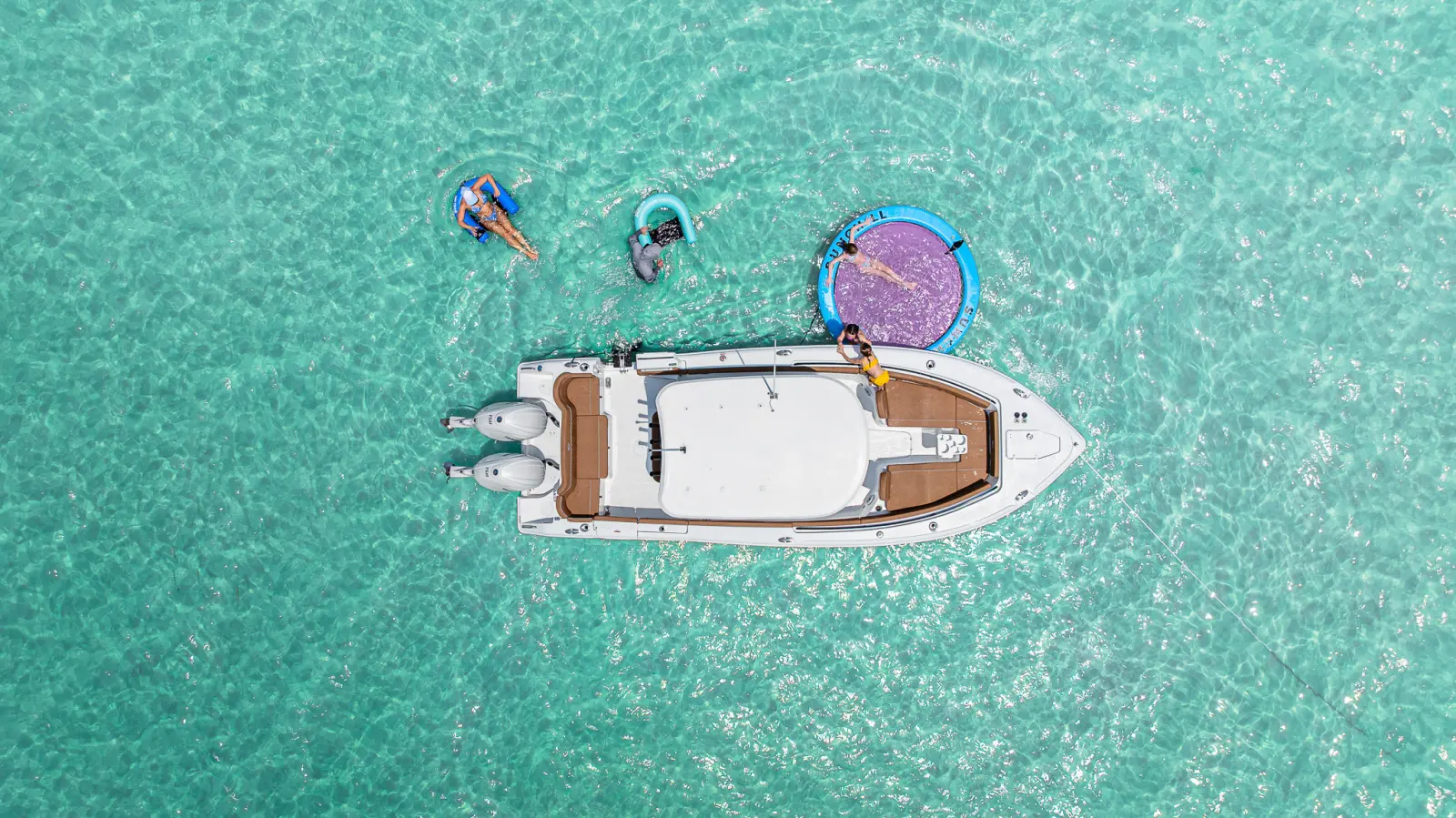
The best seat isn't the closest one. A spot well outside the safety zone shows the whole burst and keeps you out of falling debris. Smoke, ash and paper casings drift downwind, so anchor upwind or off to the side, and leave room to swing if a nearby storm shifts the breeze.
Anchor out of the channel, in water deep enough for a falling tide. A common rule of thumb is five to seven times the depth in line. Pick two landmarks on shore; if they drift apart, you're dragging. Rafting up? Set one good anchor on the biggest boat, fender between hulls, and agree when you'll break apart. Get swimmers aboard well before sunset.
What if a storm builds before the show?
July is the heart of Florida's thunderstorm season, and afternoon storms often build as boats head out. The National Weather Service's advice: check the forecast, and if severe weather is predicted, stay home or go earlier. Lightning can strike from a clear sky miles ahead of a storm; if you can hear thunder, you're close enough to be struck.
Make the call early. If storms are over the area an hour before you'd leave, watch from a dock. If one builds while you're anchored, leave before the crowd. Caught out, the NWS says to stay low in the boat, keep arms and legs inside, and disconnect electronics.
How do you get home safely after the show?
When the finale ends, most of the fleet pulls anchor at once, in the dark. That's the riskiest part of the night.
- Wait out the rush.Stay anchored 20 to 30 minutes.
- Get ready before you move.Lights on, everyone seated, kids in life jackets, anchor line stowed clear of the prop.
- Post a lookout.One person watches for unlit boats, paddleboards, swimmers, markers and debris.
- Go slow on the daylight route.Run at a speed that lets you stop in the distance you can see, and don't take shortcuts.
Dim the chartplotter and keep white light pointed away from the helm. Use a spotlight in short bursts to check a marker, not as a headlight.
Posted speed zones still apply at night. "Idle Speed - No Wake" means the slowest speed that still lets you steer; "Slow Speed, Minimum Wake" means fully off plane. Many protect manatees and are enforced around the clock.
Find one that fits your crew
Tell us how many people you take out and where you go. We'll point you to a few family boats to look at.
Questions we hear
Can you watch fireworks from a boat?
Yes. Most big Florida coastal shows can be seen from the water, and many boaters prefer it to the crowds ashore. Stay outside the Coast Guard safety zone around the launch site, which in the St. Petersburg sector reaches up to 500 yards from the barge. Anchor out of channels, show your anchor light after sunset, and have a sober operator. Plan to wait out the crowd before heading home in the dark.
Where can I watch fireworks on the water near me in Florida?
Popular spots include the Tampa Riverwalk and Hillsborough River in downtown Tampa, the St. Pete and Clearwater waterfronts and beaches, Riverside Park on the Indian River in New Smyrna Beach, Blackwater Sound off Key Largo, Biscayne Bay near Miami's Bayfront Park, the beach off Fort Lauderdale, and Higgs and Smathers beaches in Key West. Show times and launch sites change every year, so check each city's event page each June.
How far do you have to stay from a fireworks barge?
It depends on the Coast Guard sector and the event. In the St. Petersburg sector, which covers Tampa Bay and much of the Gulf coast, federal rule sets a safety zone of up to 500 yards around fireworks barges and platforms while fireworks are prepared and launched. Large events may get their own zones. Barges carry "FIREWORKS—STAY AWAY" signs. To enter a zone you need permission from the Coast Guard, requested on VHF channel 16.
What lights do I need on my boat at night?
Florida and the Coast Guard require navigation lights from sunset to sunrise and in reduced visibility. Underway, show red and green sidelights plus a white light; most center consoles under 39.4 feet use an all-round white light for this. At anchor, show the all-round white anchor light. Test every light at the dock before you leave, carry spare fuses, and stow any canvas that blocks the white light.
Can you take a boat to the Tampa 4th of July fireworks?
Yes. In recent years the City of Tampa has centered its celebration on the Tampa Riverwalk and Julian B. Lane Park, with fireworks over the Hillsborough River, and boaters watch from the river and the water near Channelside. The river is narrow and busy, so leave the travel lanes open and stay out of the port's shipping channel. Check the city's event page each year for times and any no-anchor areas.