


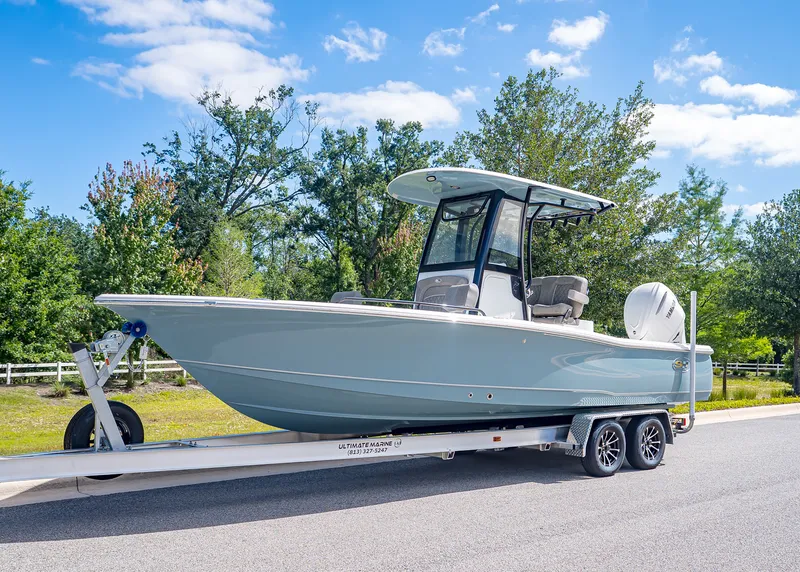
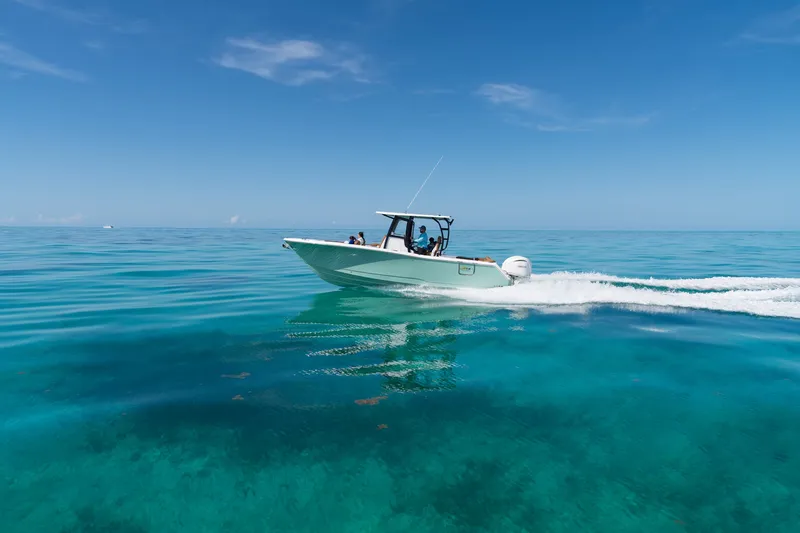


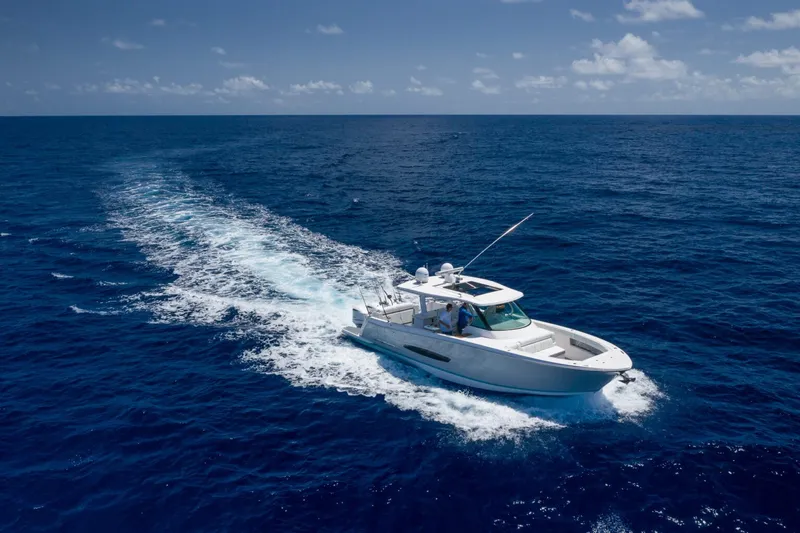


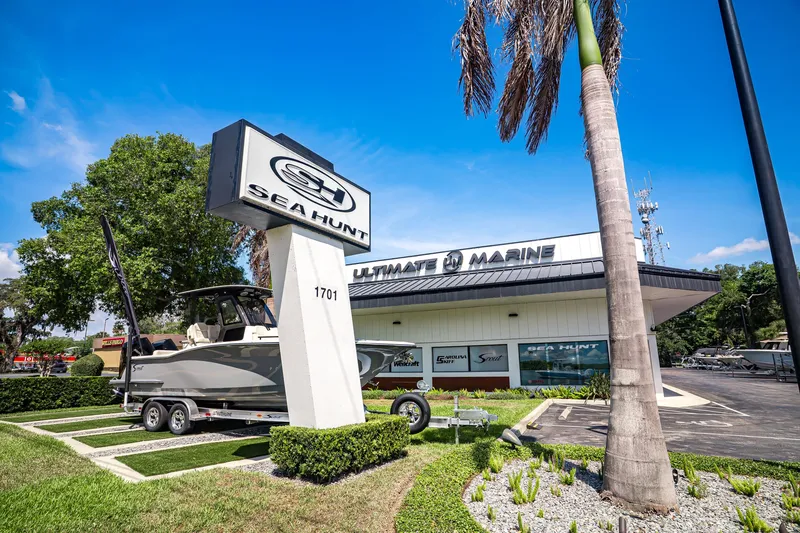
How to trade in your old boat for a new Sea Hunt
In this article
Send us your boat's details and photos through the Trade Submission Form. Our team reviews the boat and makes you a trade-in offer, and you can put that credit toward a new or pre-owned boat. Before you submit, clean the boat, fix small issues, and gather the title or registration, the trailer paperwork and your service records. In Florida, a dealer can deduct a trade-in from the purchase price before sales tax.
A trade-in lets you sell your old boat and buy the next one in a single deal. You skip the listing, the calls from strangers and the sale paperwork, and the value of your old boat goes straight toward the new one.
One thing up front: nobody can tell you what your boat is worth from an article. The offer comes from a review of your actual boat, its engines and its records. What you control is how complete and accurate the picture is when we look at it.
How does a boat trade-in work?
- Submit your boat informationFill out the online form with the make, model and year, the engine make, model and hours, its condition, recent upgrades and clear photos.
- Get your trade-in offerWe look the boat over and base the offer on its condition and the current market.
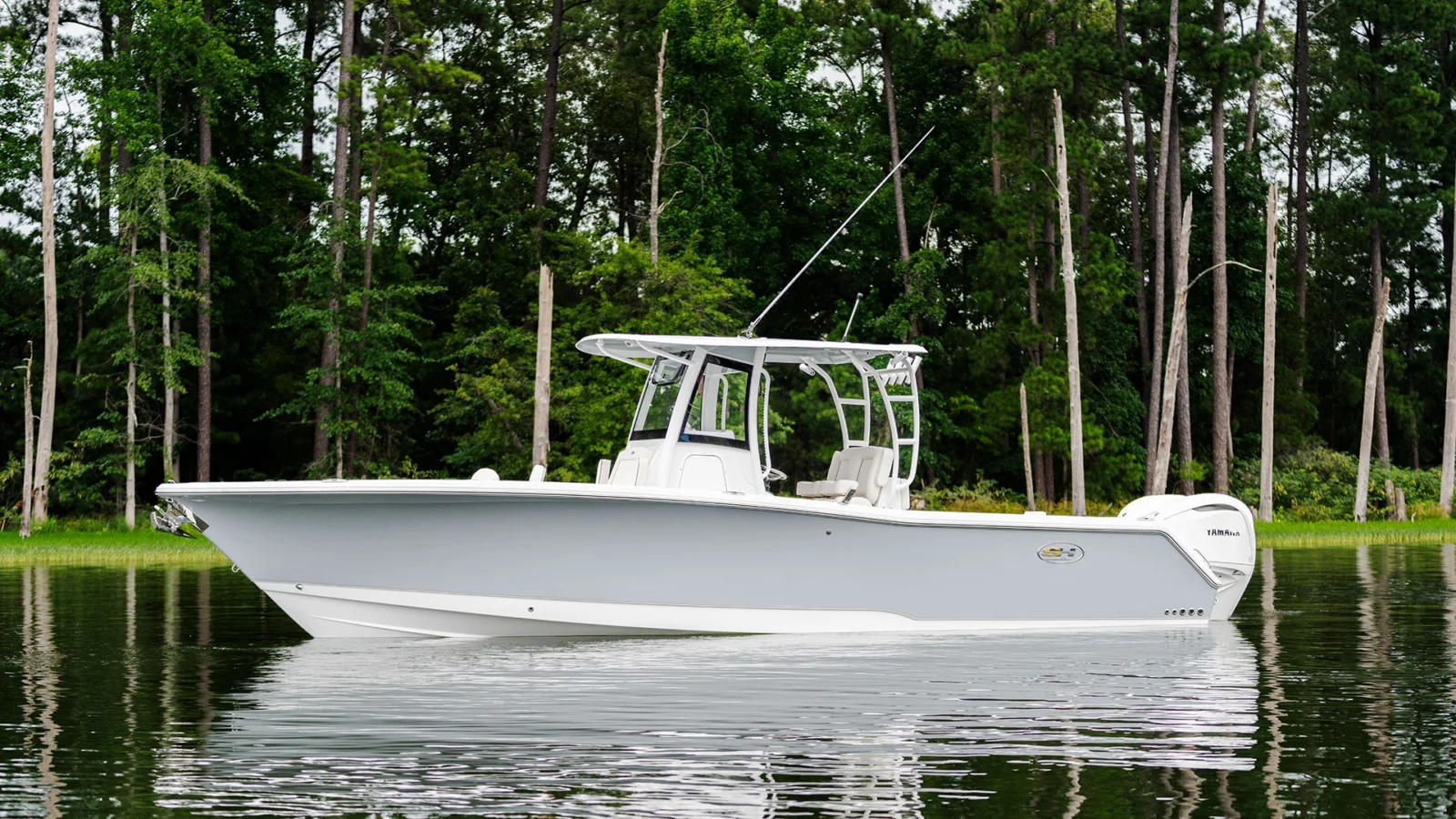
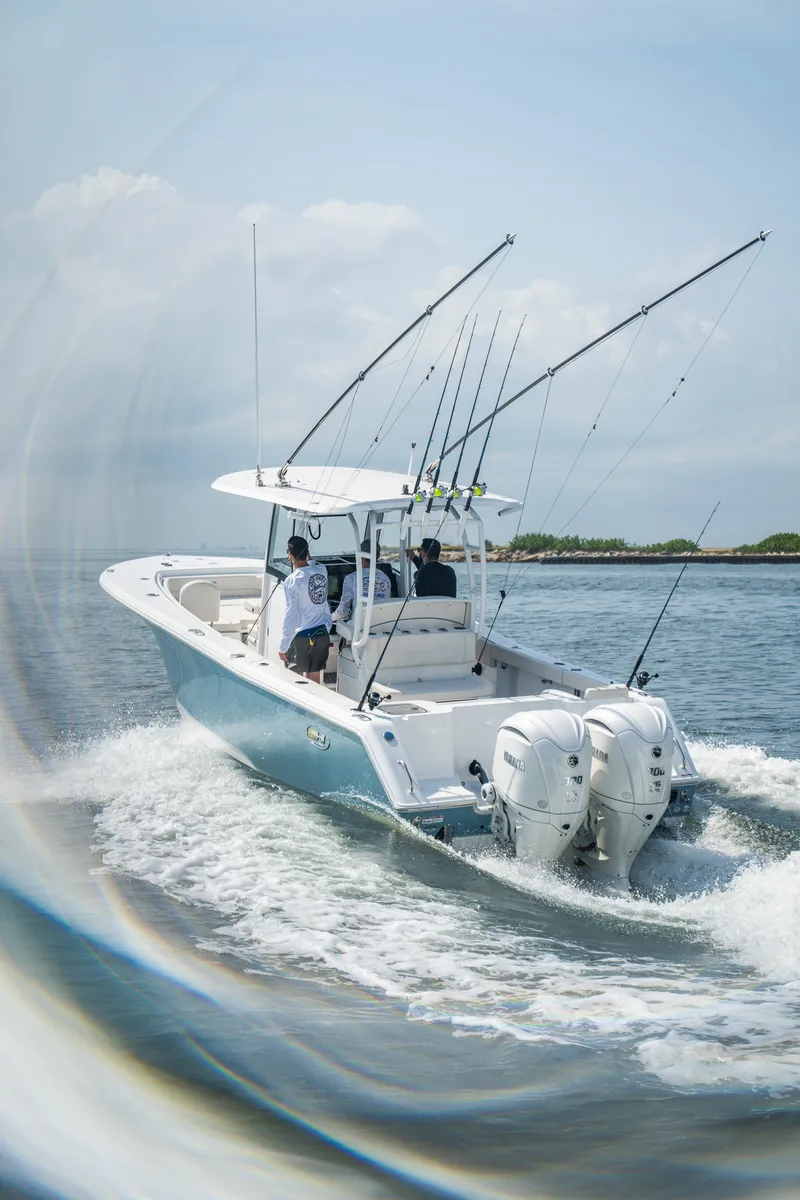
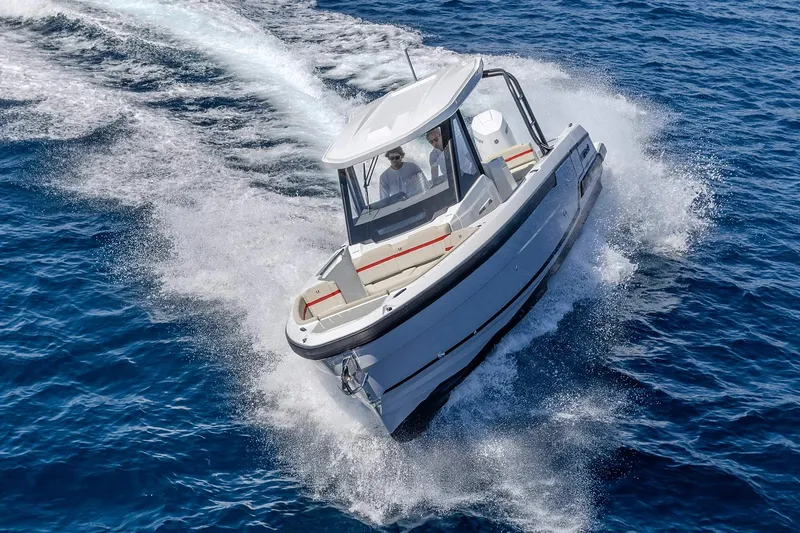
- Choose your next boatPick a new or pre-owned boat. For Sea Hunt, start with the Gamefish for offshore fishing, the Ultra for family days or the BX for bay fishing, or compare them all in the Sea Hunt lineup.
- Finalize the dealYour trade-in credit goes toward the purchase in the same transaction. If you'd like to finance the difference, see boat financing.
The form is the starting point, not the final word. Photos and a description give our team enough to understand the boat, but engines and structure are judged in person, so an offer can change if the boat turns out different from its description. That's the main reason to be thorough and honest on the form: surprises found later slow the whole deal down.
Steps two and three can run in either order. What matters is that the trade and the purchase close together: that's what makes it a trade-in, and it's what lets Florida's trade-in tax rule apply (see below). The contract should describe the trade-in boat and its exact value, as BoatUS advises, so read that line before you sign.
Trade-in or private sale: which is better for you?
| Trade-in | Private sale | |
|---|---|---|
| Your time | One transaction | Listing, calls, showings, sea trials |
| Price | Usually below a private-sale price | Can bring more, if the right buyer shows up |
| Sales tax on the new boat (Florida) | Trade-in deducted from the purchase price first | Paid on the full price of the new boat |
| Paperwork | Handled as part of the purchase | You handle title transfer and the buyer's questions |
| Risk | Low | Payment scams and no-shows |
| Timing | Old boat leaves when the new one arrives | You may own two boats, or none, for a while |
Tax treatment from the Florida Department of Revenue (GT-800005); pricing and scam notes from the BoatUS Boat Buyers Guide.
The trade-off is plain. A dealer probably won't pay top dollar, because it has to recondition and resell the boat, and it may look at your boat more critically than a private buyer would. A private sale can bring more, along with the work and the risk, including payment scams that usually start with an email from a buyer who never wants to talk on the phone.
Florida adds a factor that narrows the gap. Under Florida tax law, a registered boat dealer may deduct a trade-in allowance from the purchase price when the trade happens in the same transaction, so you pay sales tax on the difference. Florida's rate is 6% plus any county surtax, so on a larger boat that deduction is real money.
One deal, no strangers, and tax on the difference.
You may get more, but you do the selling and carry the risk.
How do you prepare your boat for a trade-in?
- Clean it inside and outWash the hull and deck, scrub the non-skid, wipe down the console and cushions, and empty every hatch and locker. Plan on a few hours.
- Fix the small thingsReplace burnt-out lights, tighten loose hardware, and repair torn upholstery or trim if it's quick.
- Check that everything worksRun the engines, pumps, lights, electronics and trim tabs. Note anything that doesn't work.
- Gather the paperworkTitle or registration, trailer paperwork, service records, manuals and spare keys.
- Take good photosDaylight, a clean boat, and every angle the form asks for.
- Write down upgrades and known issuesNew electronics, a repower, fresh canvas, plus any problems you know about.
Small repairs are worth doing; big ones are a judgment call. A dead navigation light or a loose cleat costs little and removes a question from the review. Value guides price a boat as if everything works, so a major engine repair may or may not come back to you in the offer. Ask us before you spend on anything large.
For photos, shoot the hull from both sides and the bow, the deck, the helm with the electronics on, the engines and the hour display, in daylight. Then list known issues honestly: on the form it's a line item; found later, it's a renegotiation.
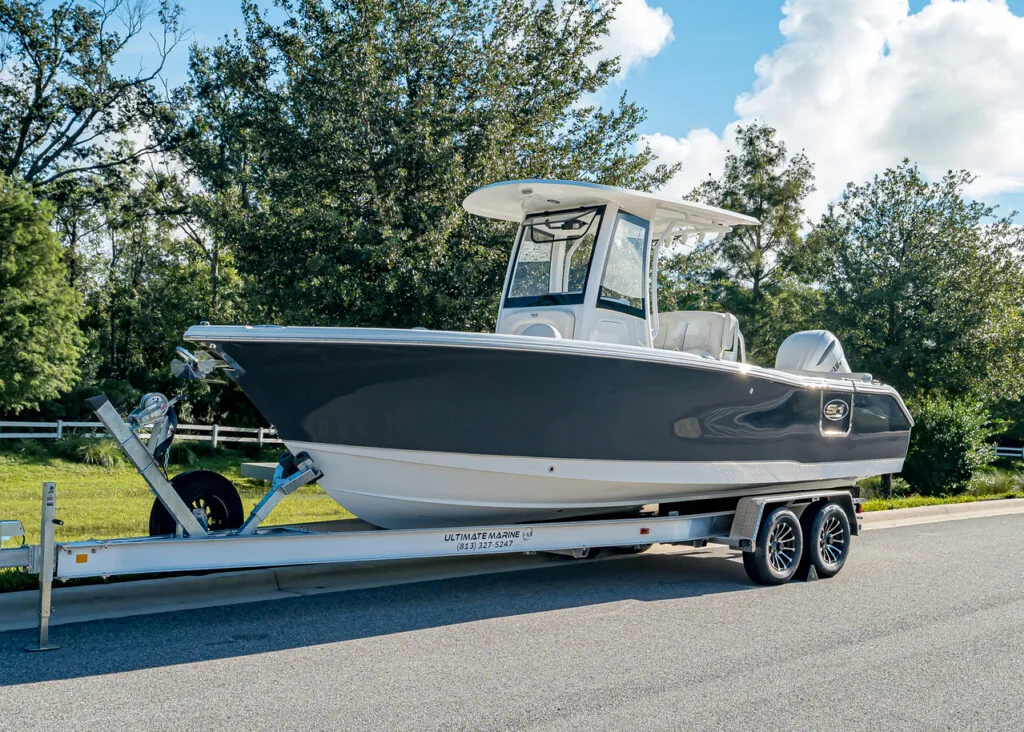
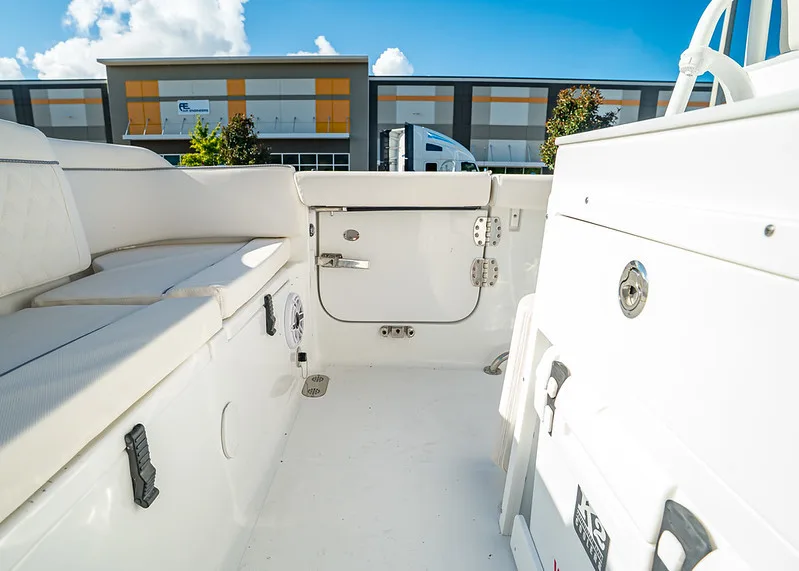
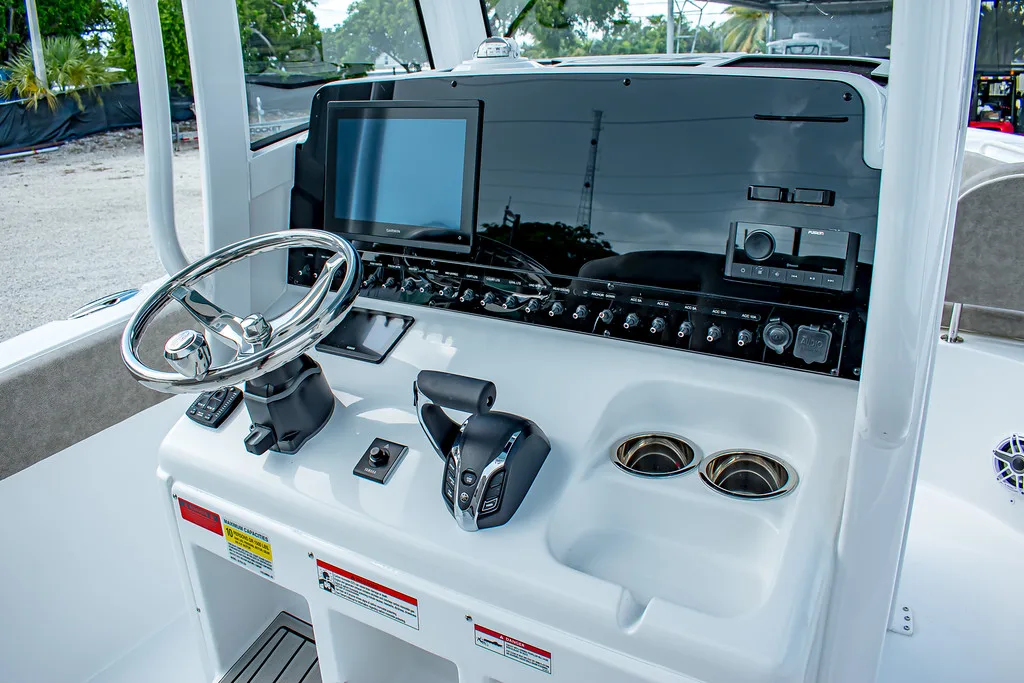
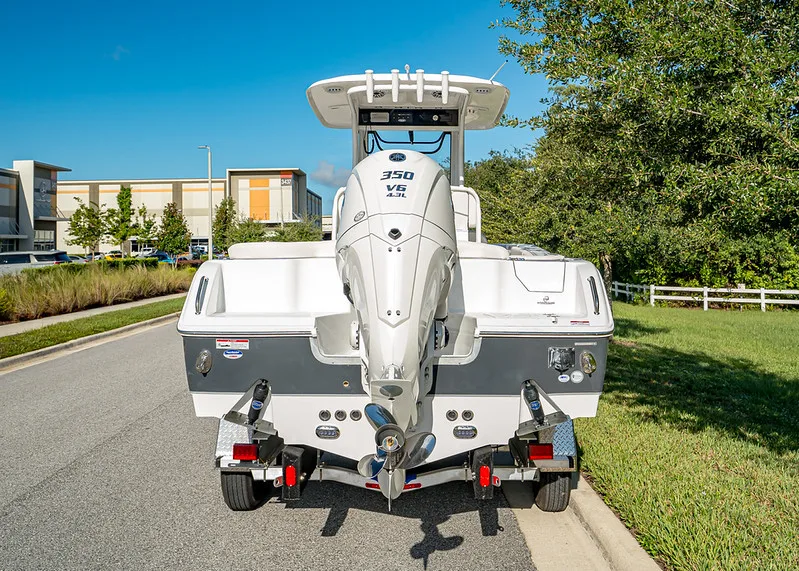
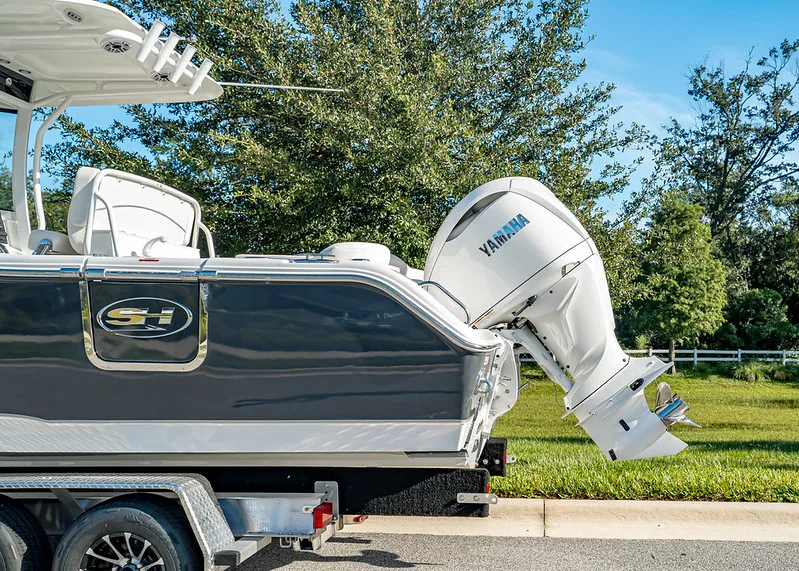
Example photos of the hull, deck, helm and engine, taken in daylight.
What paperwork do you need to trade in a boat in Florida?
Bring or upload these
The title proves you own the boat and can sell it. Florida titles and registers vessels through county tax collector and license plate agent offices, and the buyer of a new or used boat has 30 days to title and register it. Your title goes to us as part of the trade, so find it now; replacing a lost title takes time. If a lender holds the title, see the next section.
Don't forget the trailer. Florida titles trailers of 2,000 pounds or more net weight, and registers lighter ones, so a trailer may have its own paperwork separate from the boat. Listing the trailer separately from the boat on the contract also makes registration and tax simpler on both sides.
Service records do two jobs. They show the boat has been looked after, and they answer questions about the engines before anyone has to ask. Keep your own receipts; they're the record that travels with the boat. If you're trading a Sea Hunt, Sea Hunt's 10-year limited hull warranty can transfer to the next owner for the remaining term if a transfer form is filed within 15 days. Bring the original paperwork.
What affects a boat trade-in offer?
- Condition. Hull, deck, upholstery and canvas, and whether everything works.
- Engines. Hours, service history and how they run. On outboard boats, the engines are a large share of the value.
- Records. Maintenance receipts, upgrade invoices and manuals.
- Equipment. Electronics, T-top, trim tabs, trolling motor, and whether they're current.
- The trailer. If it goes with the boat: tires, bearings, brakes, lights and rust.
- The market. How much demand there is for that make, model and size, and how many similar boats are for sale.
Most of that list is about what's in front of us; the last item is about what's outside. A well-kept boat of a model that sells quickly gives the reviewer confidence. A boat that needs work, or that few buyers are looking for, carries more cost and risk for the dealer, and a dealer's offer reflects how easy the trade will be to resell.
Online value guides are a fair place to start your own homework, and BoatUS points to NADA's guides and BUCValu, plus its own Value Check for members. Read them with BoatUS's warning in mind: the numbers assume a clean, properly equipped boat with everything in working order. A guide figure is not an offer, and an asking price on a listing site is not a sale price.
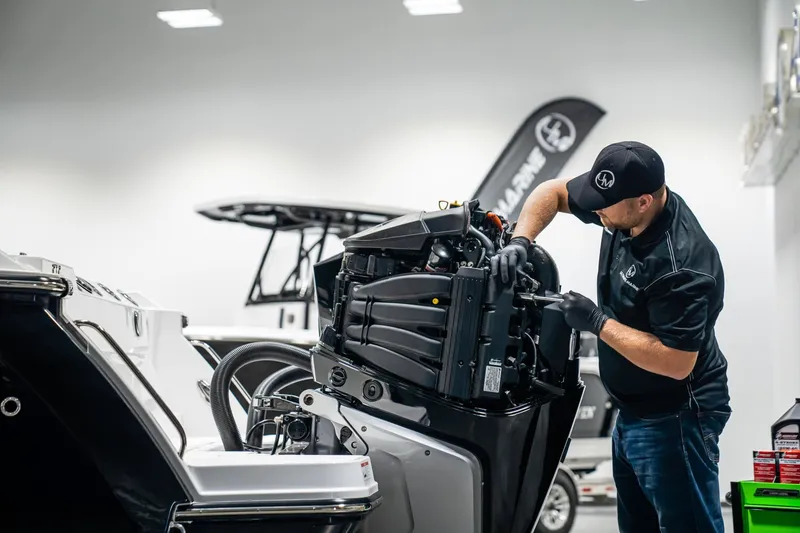
Engine condition is where honest records help most. Saltwater outboards in Florida work hard, and a technician will look at hours, service intervals and whether the engines were flushed after use. If the engines were serviced on schedule, say so and show the receipts. If something's been ignored, it's better on the form than discovered on the test run.
How do sales tax and an existing boat loan work with a trade-in?
Sales tax. Florida taxes boats sold by dealers at 6% plus any county surtax, and caps the tax on a single boat. Florida also allows a registered dealer to subtract the value of your trade before tax, as long as the trade is part of that one deal. In practice, you pay tax on the difference between the new boat and your trade, not on the full price. The trade has to happen in the same deal; selling your old boat to us next month and buying later doesn't qualify. If you're buying from a private seller instead, the rule only applies when you trade a boat, car, mobile home or aircraft in the same transaction.
If you still owe money. When a boat has a loan on it, the lender is usually listed as a lienholder on the title, and the lien has to be paid off before ownership can pass to someone else. That's normal and doesn't stop a trade. The steps are simple to start: find your lender's name and your account number, ask the lender for a payoff amount, and put both on the form.
Still owe money on your boat? Mention the loan on the trade-in form so we can talk through the payoff with you.
Financing the difference. If the trade credit doesn't cover the whole new boat, the balance can be paid or financed. See boat financing for how that works. If you owe more on your old boat than it's worth, talk to us before you choose the new one, because that gap has to be settled in the deal too.
Start your trade-in
Fill in the form with the details and pictures. We'll review it and get back to you.
Questions we hear
Can I trade in my old boat at a dealer?
Yes. Many boat dealers, including Ultimate Marine, take trades and apply the value toward a new or pre-owned boat. Start with the Trade Submission Form: make, model, year, engine hours, condition and photos. Our team reviews the boat and makes an offer. In Florida, a registered dealer can deduct the trade-in from the purchase price before sales tax when both happen in the same transaction.
How do I prepare my boat for a trade-in?
Wash it inside and out, empty the hatches, and fix small things like lights and loose hardware. Run the engines, pumps and electronics and note anything that doesn't work. Gather the title or registration, trailer paperwork, service records, manuals and spare keys. Take daylight photos of the hull, deck, helm, engines and engine hours. Then list upgrades and known problems honestly on the form.
Should I fix my boat before trading it in?
Fix the small, cheap things, such as bulbs, loose hardware and minor upholstery tears, because they remove questions from the review. Ask before you spend on big repairs or new electronics. Value guides assume a clean, properly equipped boat with everything working, but a large repair right before a trade may not come back to you in the offer. You can trade a boat that needs work; just describe it accurately.
Do you pay sales tax on the full price when you trade in a boat in Florida?
Not when you trade with a registered dealer in the same transaction. The dealer may deduct the trade-in allowance from the purchase price, so the 6% state tax and any county surtax apply to the difference. Selling your old boat separately and buying later doesn't qualify. Florida also caps the total tax on a single boat.
Can I trade in my boat for a used boat?
Yes. Trade-in credit can go toward a new or pre-owned boat. The process is the same: submit the form, get the offer, choose your next boat and close the deal. If you're buying used, ask for the service records and have the boat checked before you sign, the same way you'd want a buyer to look at yours.
Sources
- Florida Department of Revenue, Sales and Use Tax on Boats (GT-800005)..
- FLHSMV, Vessel Titling and Registrations..
- FLHSMV, Procedure RS-63: Trailers..
- BoatUS, Boat Buyers Guide..
- Sea Hunt limited warranty..