






How to teach kids about boating
Start with life jackets and what to do in an emergency, then make the rest a game. Tips you can use on your next trip, with the Florida rules parents ask about.
In this article
Start with safety: kids wear a life jacket every time, stay seated while the boat moves and know what to do if someone falls in. Then make learning fun with boat bingo and a scavenger hunt, a few boating words (bow, stern, port, starboard), knots and a turn at the wheel with you right beside them. Florida law requires children under 6 to wear a life jacket on boats under 26 feet while underway.
- Make the life jacket a no-exceptions rule and teach one emergency drill at the dock before you ever need it.
- Give every child a job: spotter, line handler, navigator. Kids with a job feel safer and stay interested.
- Teens can earn Florida's Boating Safety Education ID card through a free FWC-approved course, and they need it to run a boat of 10 hp or more.
Kids who learn the rules early become confident, careful boaters, and they have more fun because they understand what's happening around them. The trick is order. Safety habits come first and stay non-negotiable; everything after that works best as a game, a job or a small challenge, sized to the child's age. The examples assume a typical Florida family boat on the lagoon, a lake or a calm stretch of the Intracoastal.
How do you teach kids boat safety?
- Life jackets, every time. Explain why, however well they swim. Hold a life jacket "fashion show" at home so they try on different styles and pick one that fits and that they like.
- Balance and crowding. Show how too many people or too much weight on one side tips a boat. Stacking toys on a toy raft makes the point; then explain the real rule plainly.
- Boat rules. No running on deck, hands and feet inside the boat, sit down when the engine's in gear, and don't distract the driver.
- The red cord. Show them the engine cut-off lanyard clipped to the driver, and explain that it stops the engine if the driver falls.
- Weather. Teach them to notice clouds, wind and building chop, and why some trips get cut short.
Florida law sets a floor for the youngest kids. Under Florida law, a child under 6 must wear a Coast Guard–approved Type I, II or III life jacket aboard a vessel under 26 feet whenever it's underway, which FWC defines as any time except anchored, moored, tied to shore or aground. A boat drifting over a flat with the engine off is still underway. Many families go further and keep every child in a jacket whenever the boat is moving, whatever their age. That's easier to enforce than an age cutoff, and it removes the argument when a 7-year-old sees a 5-year-old buckled in.
Fit matters as much as the rule. Child jackets are sized by weight, and the Coast Guard notes adult jackets may not work for children at all. Do the lift test at the dock: buckle the jacket, then lift it by the shoulders. If it rides up past the chin, it's too big. Inflatable jackets are for wearers 16 and older, so younger kids need foam. Our guide to reading life jacket labels covers weight classes and fit in detail.
Planning a night trip with kids aboard? Our guide to watching July 4th fireworks from your boat covers lights, anchoring and the ride home.
What should kids know in an emergency?
- Someone falls inShout "Person overboard!", point at them and keep pointing. Practice throwing a cushion or ring at a target on the dock.
- Reach or throw, don't goKids should never jump in after someone. They throw something that floats and let the adults handle the rest.
- Make noiseShow them the whistle or horn and when to use it to get attention.
- Call for helpShow them the radio and phone. Older kids can learn that VHF channel 16 is the distress and calling channel.
- Find the adultThere's always a designated adult watching the kids. Make sure they know who it is.
Practice turns these steps into reflexes. Run a short drill at the dock or at anchor on a calm day: toss a hat or a fender over the side, have a child shout and point, and let another throw the cushion. It takes five minutes, kids treat it like a game, and the pointing habit is genuinely useful. A person in the water disappears quickly in even a light chop, and a child who never takes their eyes off the spot gives the driver something to steer toward.
For older kids, add the "what if the driver can't drive" talk. Show them the cut-off switch, how to put the engine in neutral and how to make a simple call on VHF channel 16: the boat's name, where you are, what's wrong. Keep it calm and matter-of-fact; the point is that the one person who knows how to call for help isn't also the one who needs it.
How do you get kids ready for their first boat trips?
- Build a model boat together. Pick an age-appropriate kit and name the parts as you build.
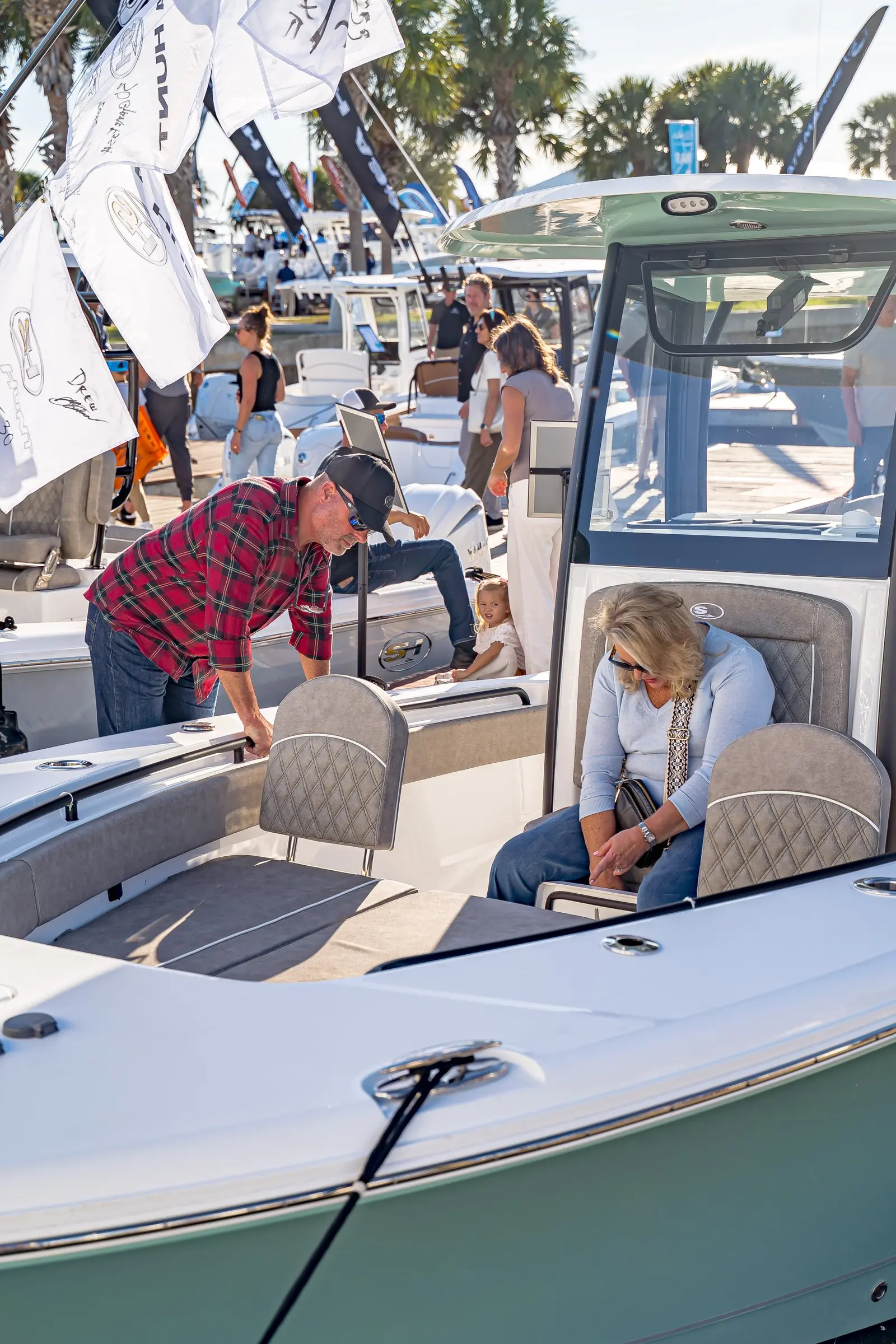
- Visit a marina or boat show. Let them climb aboard, ask questions and see different types of boats up close.
- Keep the first trips short. An hour on calm water beats a long day that ends with a tired, sunburned child.
The first few trips decide whether a child loves boating or dreads it. Pick a glassy morning, not a windy afternoon. In much of Florida that's also the safer choice, since summer thunderstorms tend to build after lunch. Choose protected water, like a lake, the lagoon or a no-wake stretch of the Intracoastal, so the ride stays smooth and nobody gets wet before they're ready.
Plan the small things that ruin a trip. Bring more water and snacks than you think you need, a towel and dry clothes, and show kids where the head is if the boat has one. Give each child a seat where they can see over the bow; kids who can see the horizon are less likely to feel queasy. End the trip while everyone's still having fun, so they ask when they can go again.
What are good boat games for kids?
Games train kids to watch the water, which is exactly what a good crew member does. The best ones need no gear and work at any speed.
- Boat bingo: first to spot a line wins (card below).
- Scavenger hunt: a list of things to find on the boat or at the marina. Let them photograph each one and make an album later.
- Boating trivia: questions about safety, types of boats and the animals you see. Take turns asking.
- I spy, marker edition: spot the next channel marker, call its color and read its number.
Florida boat bingo card
Tune the card to where you boat. On Mosquito Lagoon or the Indian River, dolphins, pelicans and ospreys nesting on channel markers come up on almost every trip. On a Central Florida lake, swap in herons, alligators spotted from a safe distance and a fishing boat with a trolling motor. Offshore, it's flying fish, sargassum weed lines and birds working bait.
Games also slip in lessons. Ask why green markers have odd numbers and red ones even, or why you keep hands inside when a dolphin surfaces. Rotate the spotter job every 15 minutes and give a small prize for the first full row, like picking the sandbar lunch spot.
Which boating words should kids learn first?
| Word | What it means |
|---|---|
| Bow | The front of the boat |
| Stern | The back of the boat |
| Port | The left side, facing the bow |
| Starboard | The right side, facing the bow |
| Hull | The body of the boat that sits in the water |
| Deck | The floor you stand on |
| Cleat | The metal fitting you tie a line to |
| Wake | The waves the boat leaves behind it |
Port and starboard never change, whichever way you face. That's why boaters use them instead of left and right.
Flashcards or a matching game help, and kids can draw the cards themselves. Then use the words on every trip until they stick: "grab the line on the port side", "sit in the bow". A memory trick works well: "port" and "left" both have four letters.
Once those stick, add the channel markers. In U.S. waters, a boat returning from sea keeps the red markers on its right side, which boaters remember as "red, right, returning". Green markers carry odd numbers and red markers even ones. Kids enjoy being the one who calls the next marker and which side to pass it on, and it's a real navigation skill. Make it a game on the way home from the inlet or the sandbar: who can spot the next marker first, and which side will we pass it on?
What boating skills can kids learn on board?
- Tie two knotsStart with the cleat hitch and the bowline. Practice at home with a piece of rope until they can tie them without looking.
- Handle the linesAt the dock, let them hand you a line or loop it on a cleat, with an adult in charge of the boat.
- Read the waterTeach the compass, channel markers and buoys. Older kids can follow along on the chart plotter and spot hazards with you.
- Plan a routeBefore you leave, let them help plot the course on the plotter or a chart and guess how long it will take.
- Take the wheelIn calm, open water at low speed, let them steer with you right beside them and the cut-off lanyard on you. Simple instructions: "slow down", "hold it straight".
Match the job to the age. A 5-year-old can be the official marker spotter. An 8-year-old can learn a cleat hitch and help coil lines. A 12-year-old can follow the route on the plotter, call out depth and steer for a stretch of open water. Always keep your hand near the throttle and the cut-off lanyard clipped to you while a child steers.
Teens raise a legal question. Florida has no minimum age to operate a boat, but anyone born on or after January 1, 1988 needs a Boating Safety Education ID card and a photo ID to run a boat with 10 horsepower or more. One exemption covers family boats: an operator without the card may drive if a person 18 or older who holds the card is aboard and responsible for the boat. Personal watercraft have their own rule: FWC sets the minimum age to operate one at 14. A teen who wants real time at the wheel should take the course, which also teaches the navigation rules most adults learned the hard way.
How do you teach kids to respect Florida wildlife?
Look, don't touch. Kids care about animals naturally, so use that to explain the rules.
- Manatees. Never touch, feed or give them water from a hose. They're protected by state and federal law.
- Dolphins. NOAA Fisheries says to stay at least 50 yards away and never feed them; feeding wild dolphins is illegal.
- Seagrass. FWC asks boaters to avoid running through seagrass beds, which feed manatees and sea turtles.
- Birds. Don't feed pelicans or gulls, and keep fishing line and hooks away from them.
Make one child the "wildlife officer" who watches for manatee swirls and calls out when to slow down. Kids who learn to slow down for a manatee at 6 become the teen drivers who obey idle-speed zones without being told.
How do you keep kids comfortable in Florida sun and storms?
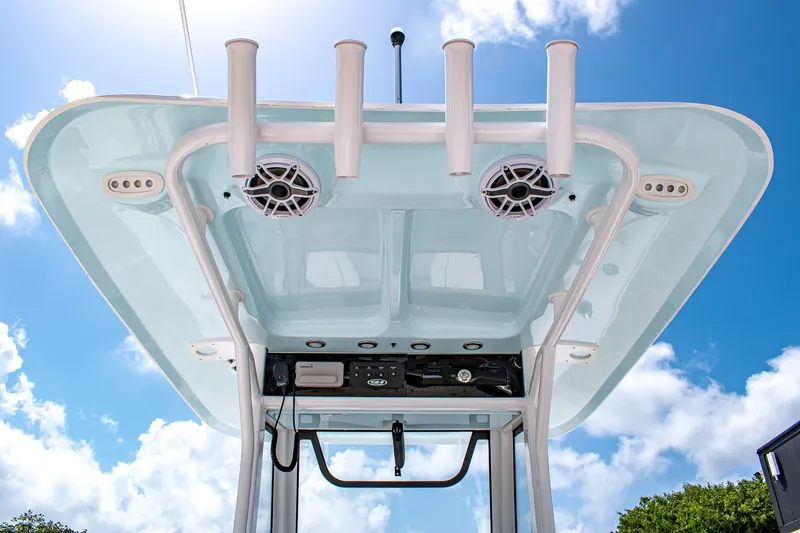
Florida sun ends more kids' boat days than anything else. The CDC recommends a broad-spectrum sunscreen of SPF 15 or higher put on before you go outside, plus shade, hats, sunglasses and covering clothing. A T-top makes a long morning possible; without one, plan shorter trips, and move a child who goes quiet, flushed or headachy into shade with water right away. Summer storms often build in the early afternoon, so make "head in when the thunder starts" a family rule. Our boat passenger guide covers the rest of what guests should pack.
Where can kids take a boating safety course?
- FWC-approved courses. FWC lists approved classroom and online courses, including Coast Guard Auxiliary classes. Passing one earns the Boating Safety Education ID card.
- Florida Virtual School Outdoor Education. Free online for Florida residents ages 12 to 18; it earns the card and a half credit toward high school.
- BoatUS Foundation. A free online Florida course approved by FWC.
- Local clubs. The Coast Guard Auxiliary and America's Boating Club run classes around the state; ask a local flotilla or squadron about youth programs.
A course works best after a season of hands-on trips, when kids already know what a cleat and a channel marker look like. See FWC's course list.
Questions we hear
How do I get my kids comfortable on a boat?
Start with short trips on calm, protected water in the morning, before Florida's afternoon wind and storms. Give each child a seat with a view over the bow, a fitted life jacket and a job, like spotting channel markers or dolphins. Bring snacks, water, shade and a game such as boat bingo. End the trip while everyone is still having fun, then go a little longer next time. Kids who know the rules and have a role feel safer and enjoy it more.
What are good boat games for kids?
Boat bingo is the favorite: a card with dolphins, pelicans, channel markers, bridges and other boats, and the first to fill a row wins. A scavenger hunt, boating trivia and a marker-spotting game also work well. All of them keep kids watching the water, which is what a good crew member does anyway. Rotate the spotter job every 15 minutes and give small prizes, like choosing the lunch spot.
Do kids have to wear life jackets in Florida?
In Florida, a child under 6 must wear a Coast Guard–approved Type I, II or III life jacket on a vessel under 26 feet while it is underway, meaning any time it isn't anchored, moored, tied to shore or aground. Every person aboard, of any age, must also have a properly sized wearable life jacket available. Many families simply keep all kids in jackets whenever the boat is moving, and child jackets must be foam, since inflatables are for ages 16 and up.
How old do you have to be to drive a boat in Florida?
Florida has no minimum age to operate a boat, but anyone born on or after January 1, 1988 needs a Boating Safety Education ID card and photo ID to run a boat of 10 horsepower or more. An exemption lets an operator without the card drive when a person 18 or older who holds one is aboard and responsible. Personal watercraft are different: you must be at least 14 to operate one in Florida.
Can kids take a free boating safety course in Florida?
Yes. Florida Virtual School's online Outdoor Education course is free for Florida residents ages 12 to 18 and leads to the Florida Boating Safety Education ID card. The BoatUS Foundation also offers a free FWC-approved online course, and the Coast Guard Auxiliary and America's Boating Club teach classroom courses around the state. FWC keeps the current list of approved courses on its website.