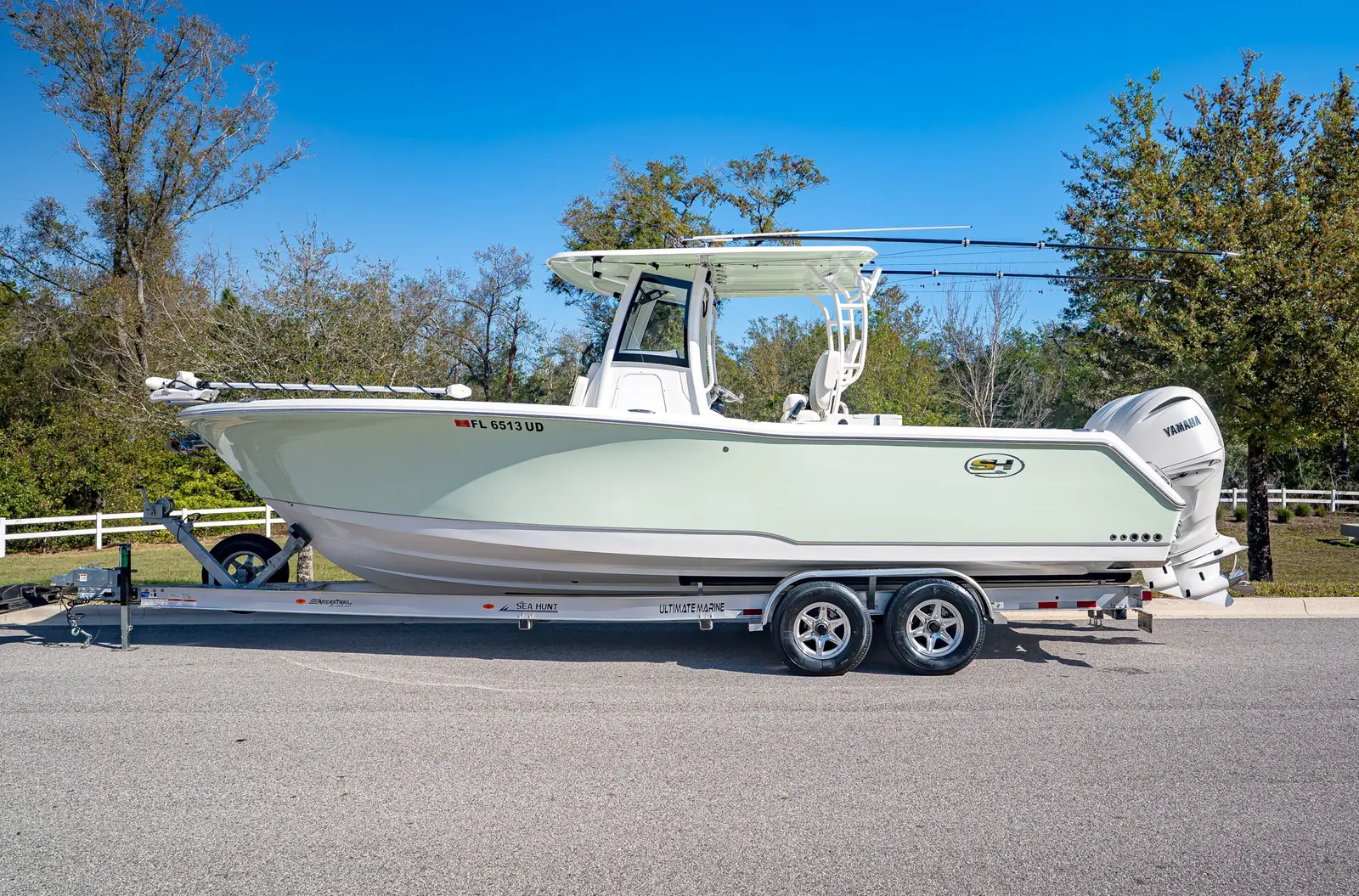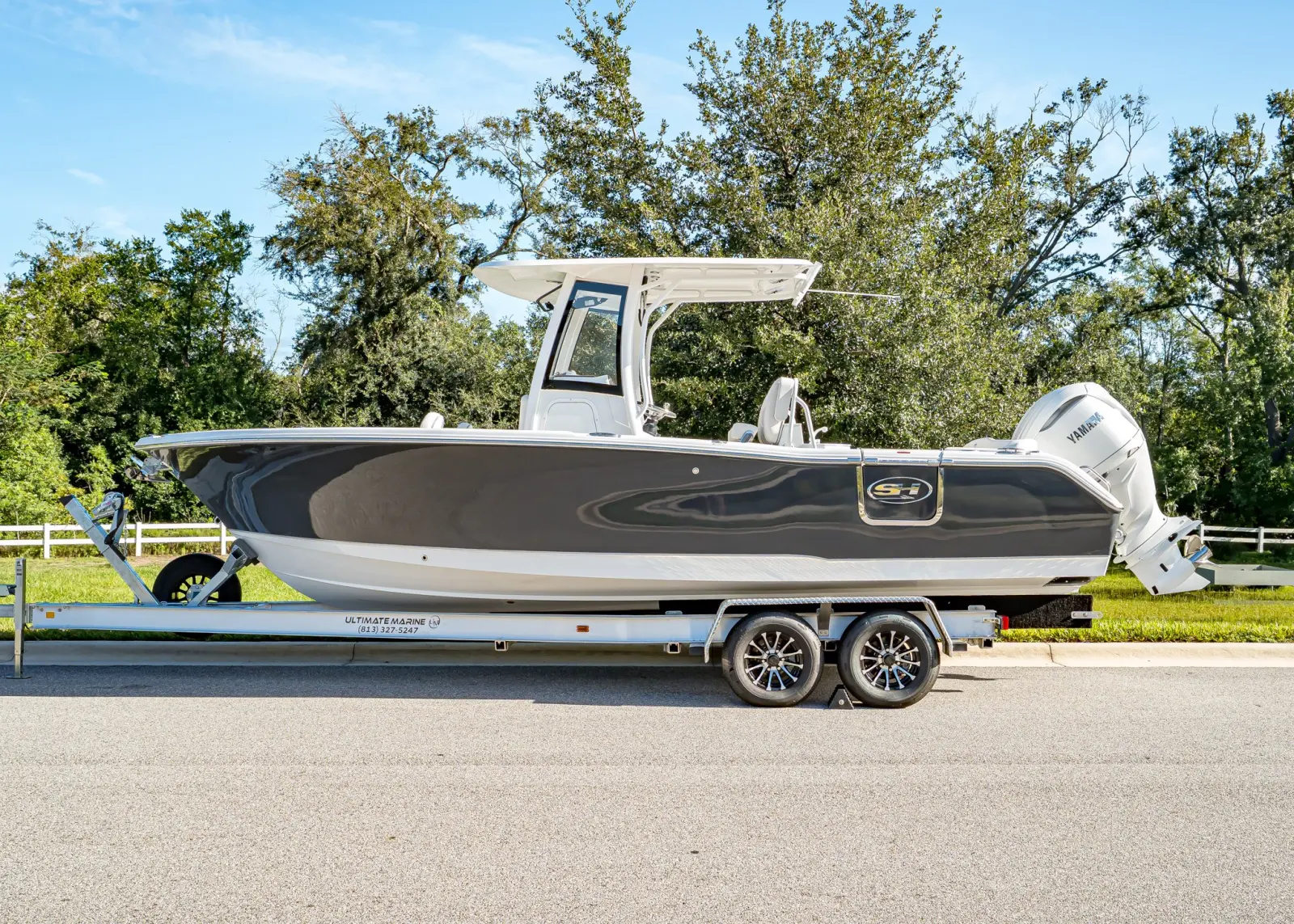



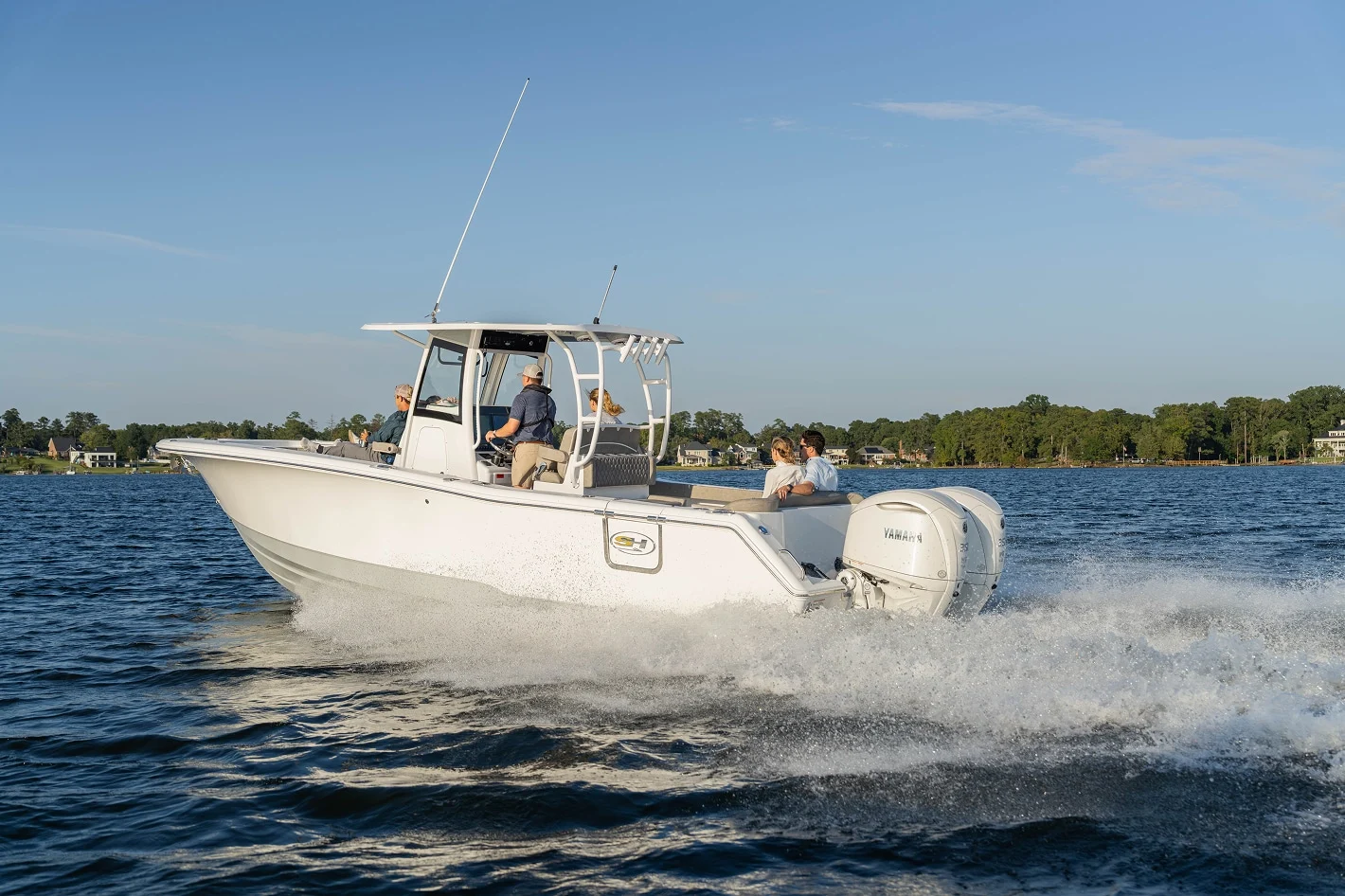
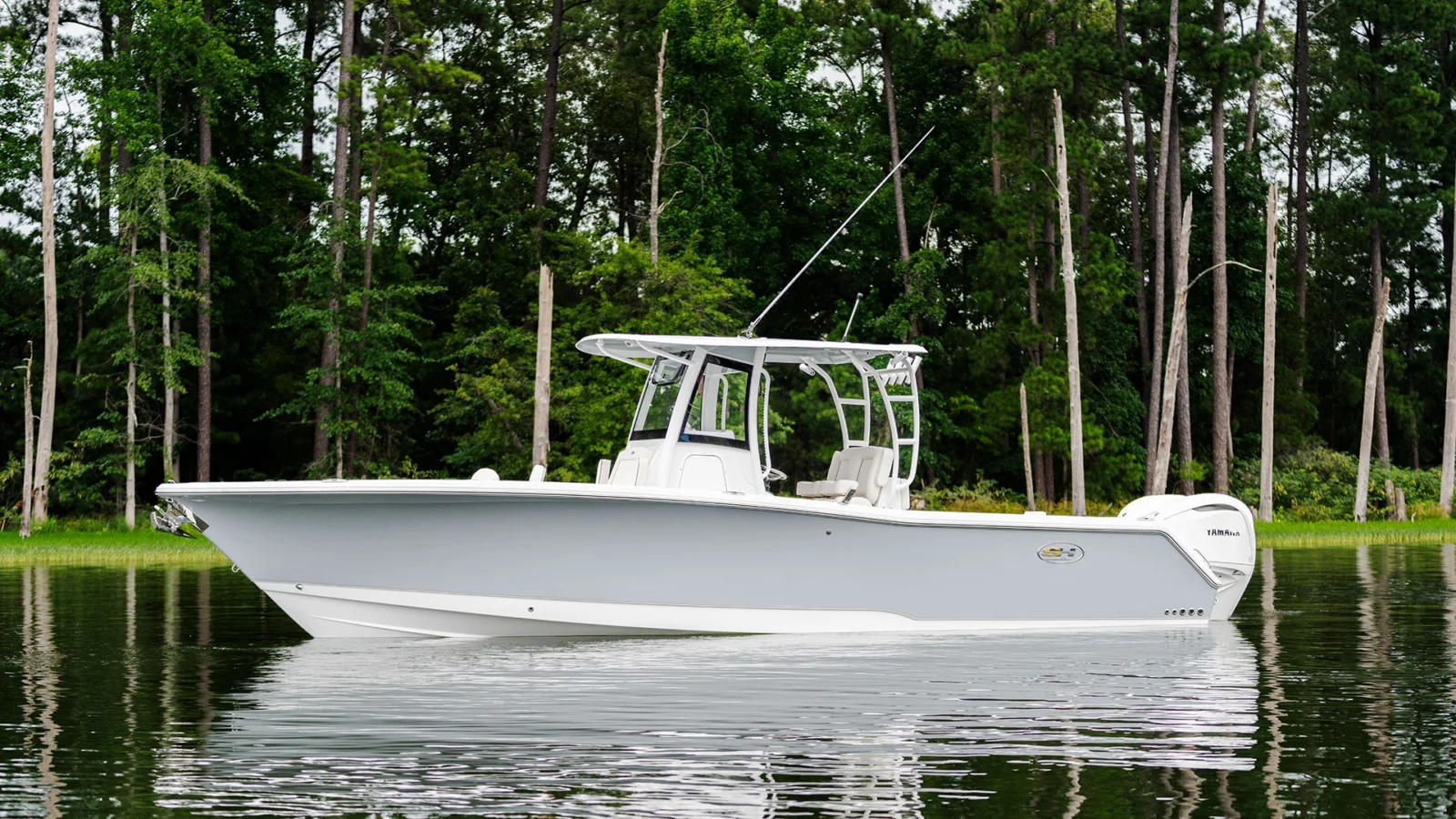




Sea Hunt Ultra vs Gamefish: which should you buy?
At the same size the hulls match on paper. The difference is how the deck is laid out, and who it's laid out for.
In this article
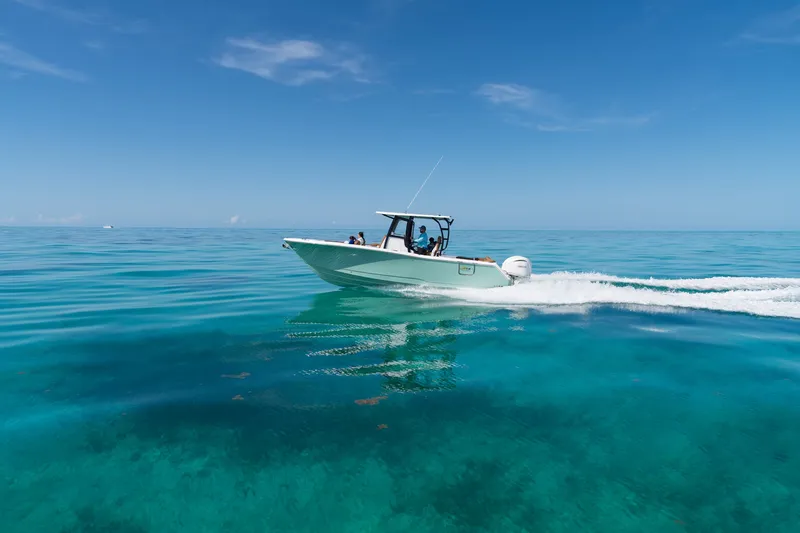
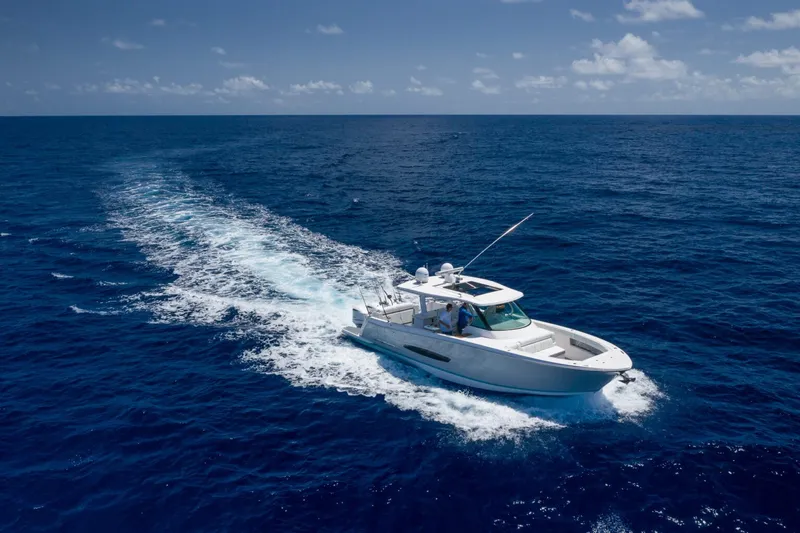
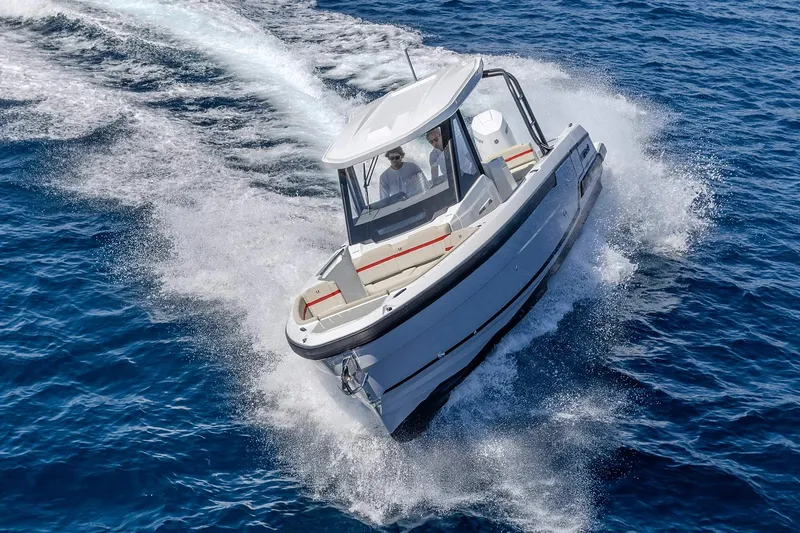
Choose the Gamefish if offshore fishing comes first: every model has twin Yamahas, bigger livewells and, on most, a transom well and fish boxes. Choose the Ultra if your days mix fishing with family time: it trades bait capacity for seating and comes in smaller sizes, starting with a 21-foot model. From 27 feet up, the two series share the same hull dimensions, power and fuel, so you're choosing a deck, not a boat size.
Bigger livewells, fish boxes and twin engines on every model.
More seating, side doors on both sides, and sizes from 21 feet.
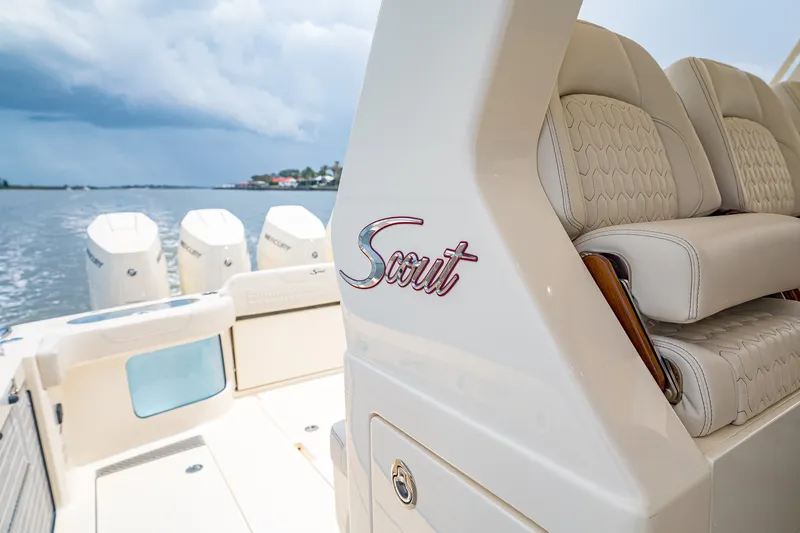
Both are Sea Hunt saltwater center consoles, and from 27 feet up they're built to the same dimensions. So "Gamefish for fishing, Ultra for family" is true but thin. Using the current spec sheets, this page shows how the matched pairs line up, where the decks differ, and the models that blur the line.
How do Ultra and Gamefish compare at the same size?
| Size | Gamefish | Ultra | Length | Beam | Max hp | Fuel | Standard power |
|---|---|---|---|---|---|---|---|
| 25-26 ft | Gamefish 25 | Ultra 265 SE | 25′ 8″ / 26′ 5″ | 9′ 2″ | 400 | 145 gal | Twin F150 |
| 27 ft | Gamefish 27 CB / 27 FS | Ultra 275 SE / 275 SL | 27′ 6″ | 9′ 6″ | 500 | 180 gal | Twin F200 |
| 28 ft | Gamefish 28 CB / 28 FS | Ultra 285 SE / 285 SL | 28′ 6″ | 9′ 9″ | 600 | 180 gal | Twin F300 |
| 30 ft | Gamefish 30 CB / 30 FS | Ultra 305 SE / SL | 30′ 2″ | 9′ 9″ | 700 | 230 gal | Twin F300 |
Specs from our model pages, current model year. At 27, 28 and 30 feet each pair also shares draft and dry weight (6,600, 6,800 and 7,000 lb).
At 27, 28 and 30 feet the two series are built to identical numbers: length, beam, draft, dry weight, power rating, fuel and standard engines all match. The 28s and 30s both come with dual 17-inch Garmin displays and Yamaha autopilot in either series. So the ride, the speed and the range on those pairs will be close, and the spec sheet can't settle the choice for you.
The smaller pair is close but not identical. The Gamefish 25 and Ultra 265 SE share a 9′ 2″ beam, a 400 hp rating, 145 gallons and twin F150s, but the Ultra is nine inches longer and it's 300 pounds lighter dry. Below 25 feet there's no overlap at all. The Gamefish starts at the 25, while the Ultra goes down to the 21′ 4″ Ultra 219, which comes with a single Yamaha F150 and an 8′ 3″ beam that stays inside Florida's road-width limit.
Where the decks differ: livewells, bow and cockpit
| At 27 feet | Gamefish 27 CB | Gamefish 27 FS | Ultra 275 SE | Ultra 275 SL |
|---|---|---|---|---|
| Livewells | 40-gal mezzanine, 10-gal pitch bait, 16-gal transom | 40-gal mezzanine, 16-gal transom | 20-gal mezzanine, 10-gal | 40-gal mezzanine plus 10-gal pitch-bait well |
| Bow | 256-qt coffin box | Seating, table, 172-qt lockers | Seating, table, 148-qt lockers | 256-qt sun lounge storage |
| Fish boxes | Two 200-qt | Two 200-qt | None listed | Two 200-qt |
| Side entry doors | One | One | Two | Two |
| Cockpit | Rear bench seat | Rear bench seat | 40-qt aft insulated box | 40-qt aft insulated box |
Specs from our model pages for each boat.
Read across the livewell row first, because it's the clearest split. Every Gamefish at this size carries a 16-gallon transom well and a 40-gallon mezzanine well. The Ultra 275 SE carries 30 gallons across two wells and no fish boxes. That's enough for a morning of live-bait snook or a few hours on a nearshore reef, not for keeping a big load of pilchards lively through a long offshore day.
Then look at the doors and the cockpit. Every Ultra here has side entry doors on both sides, which makes boarding from a dock or climbing in from a swim easy whichever side you tie up on. The Gamefish has one side door and a rear bench seat, which keeps more of the gunwale clear for rods. Those small differences add up over a season.
What is the Sea Hunt Gamefish built for?
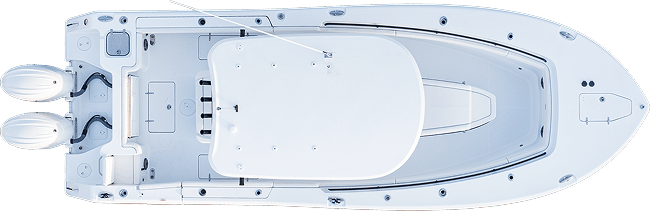
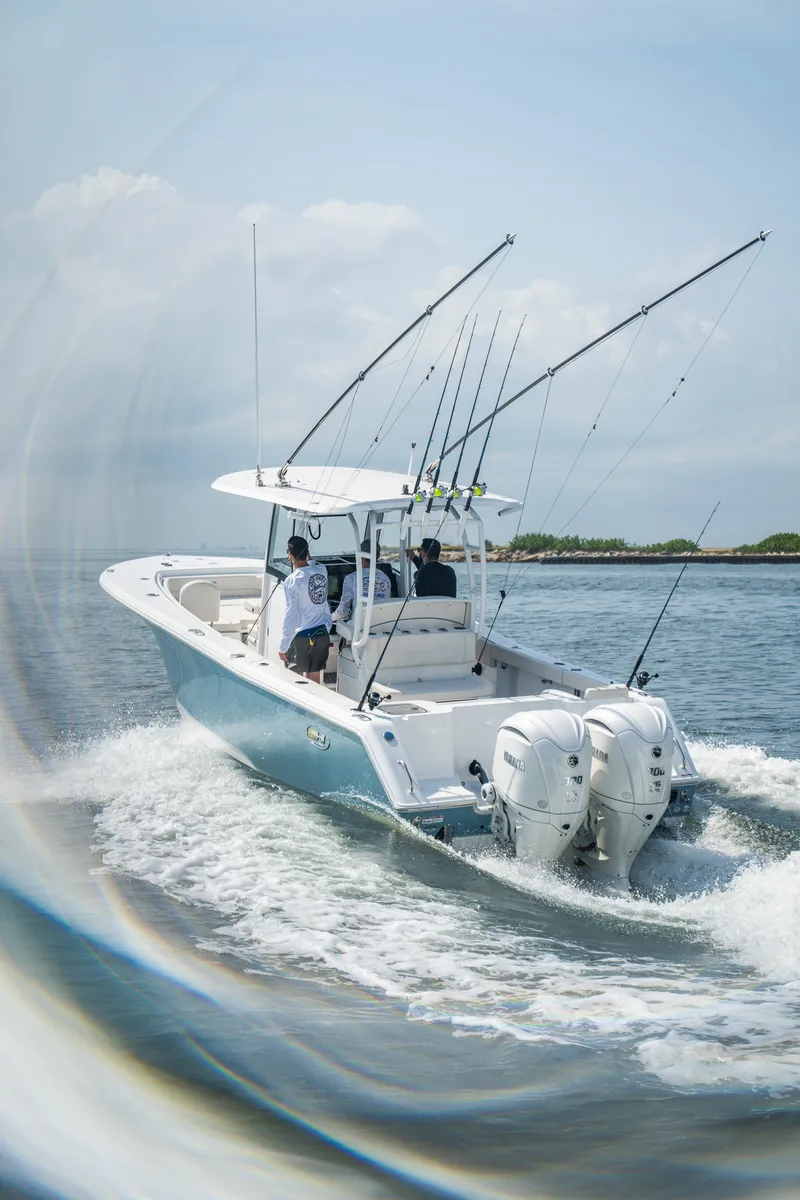
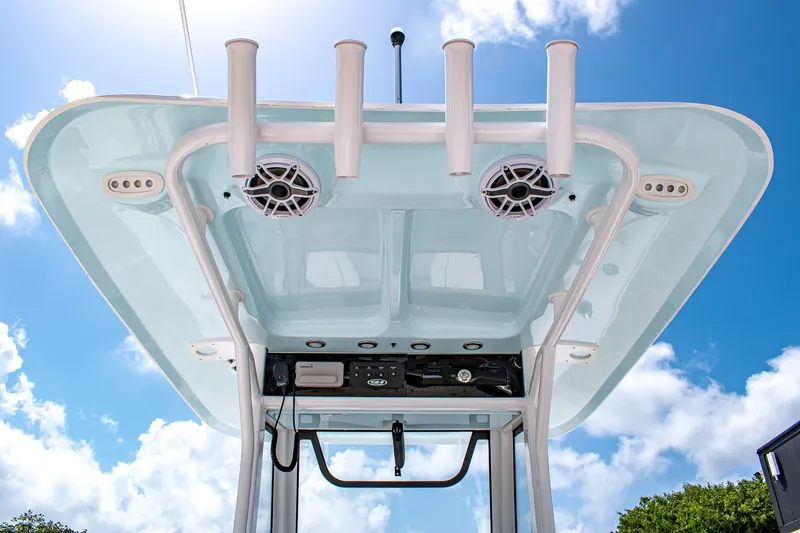
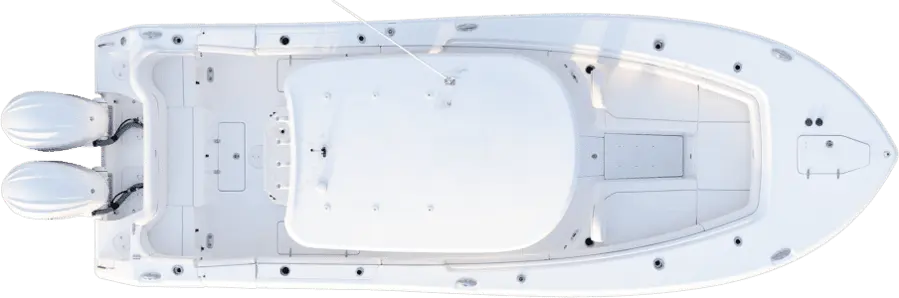
Gamefish is Sea Hunt's offshore fishing series, seven models from the Gamefish 25 to the 30 CB and 30 FS. Twin Yamaha outboards are standard on all of them, and so are a T-top with a mister system, a toilet, a windlass and trim tabs. The fishing gear scales with size: the 25 has a 35-gallon bait tank in its leaning post, and the 27 and up carry a 40-gallon mezzanine well.
The CB models are the purest fishing boats in the brand. A coffin box runs down the bow, a pitch-bait well sits within reach of the helm, and two 200-quart fish boxes are built into the deck. That layout suits four anglers trolling for kingfish and mahi, bottom fishing the ledges off Port Canaveral, or running deep out of Tampa Bay. The FS models swap the coffin box and pitch-bait well for bow seating and a table, and keep the rest.
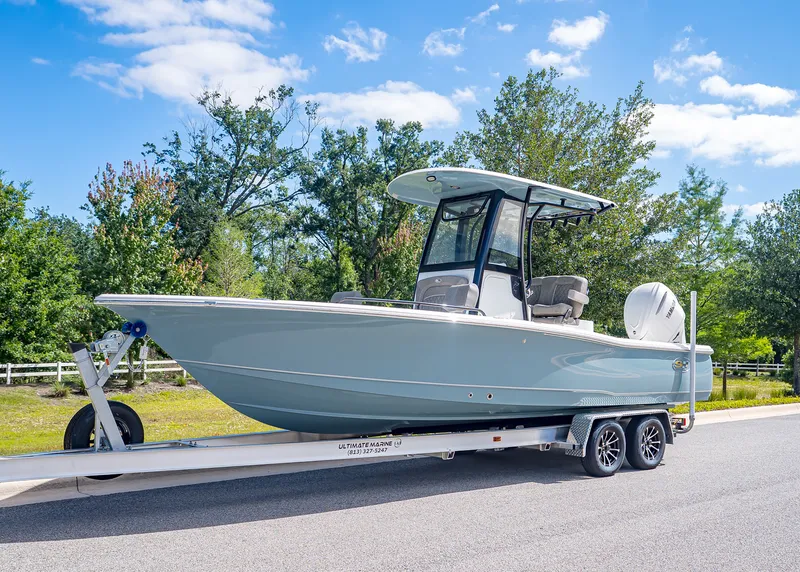
Standard equipment climbs with size. The 25 and 27 come with a single 12-inch Garmin and list Yamaha autopilot as an option; the 28 and 30 come with dual 17-inch Garmins and autopilot standard. Every Gamefish is wider than 8′ 6″, so plan on a lift, a slip or dry storage, or an oversize permit if you trailer.
- Good fit: anglers who run offshore on most trips, with a crew that fishes.
- Trade-off: less lounge seating and one side door; no model under 25 feet.
What is the Sea Hunt Ultra built for?
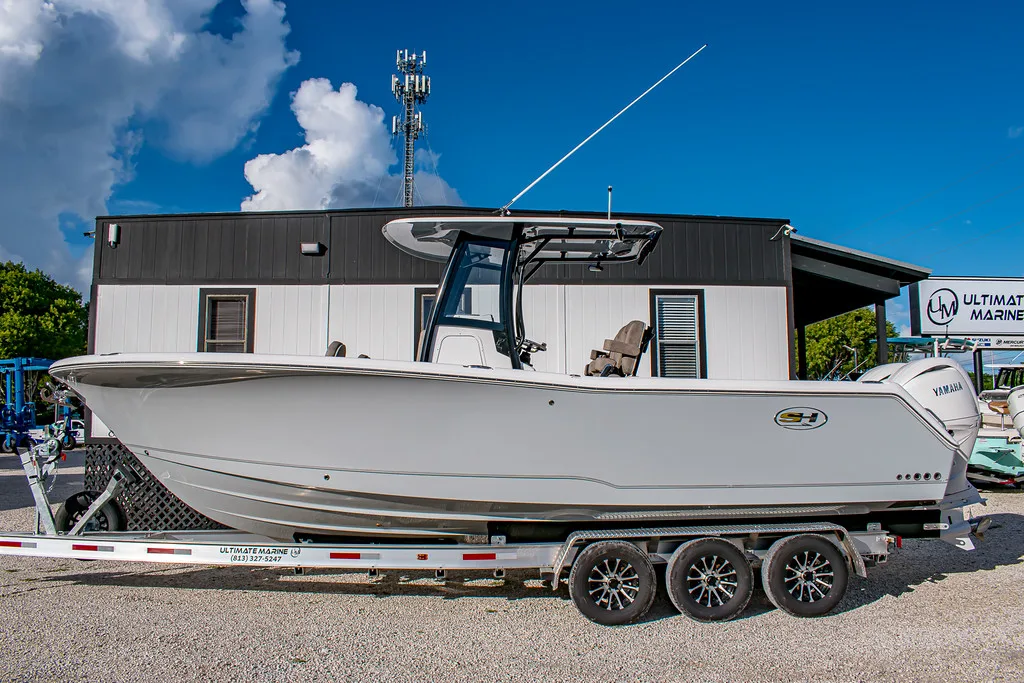
Ultra is Sea Hunt's family-and-fishing series, and it's the bigger family by far: from the 21-foot Ultra 219 to the 30-foot 305 SE, with SE and SL versions of the bigger sizes. The small Ultras are simple single-engine boats. The 219 comes with a single F150, and a T-top isn't on its standard list. From the 255 SE up, a T-top with misters, a toilet and dual side doors are standard, and from the 265 up the engines are twins.
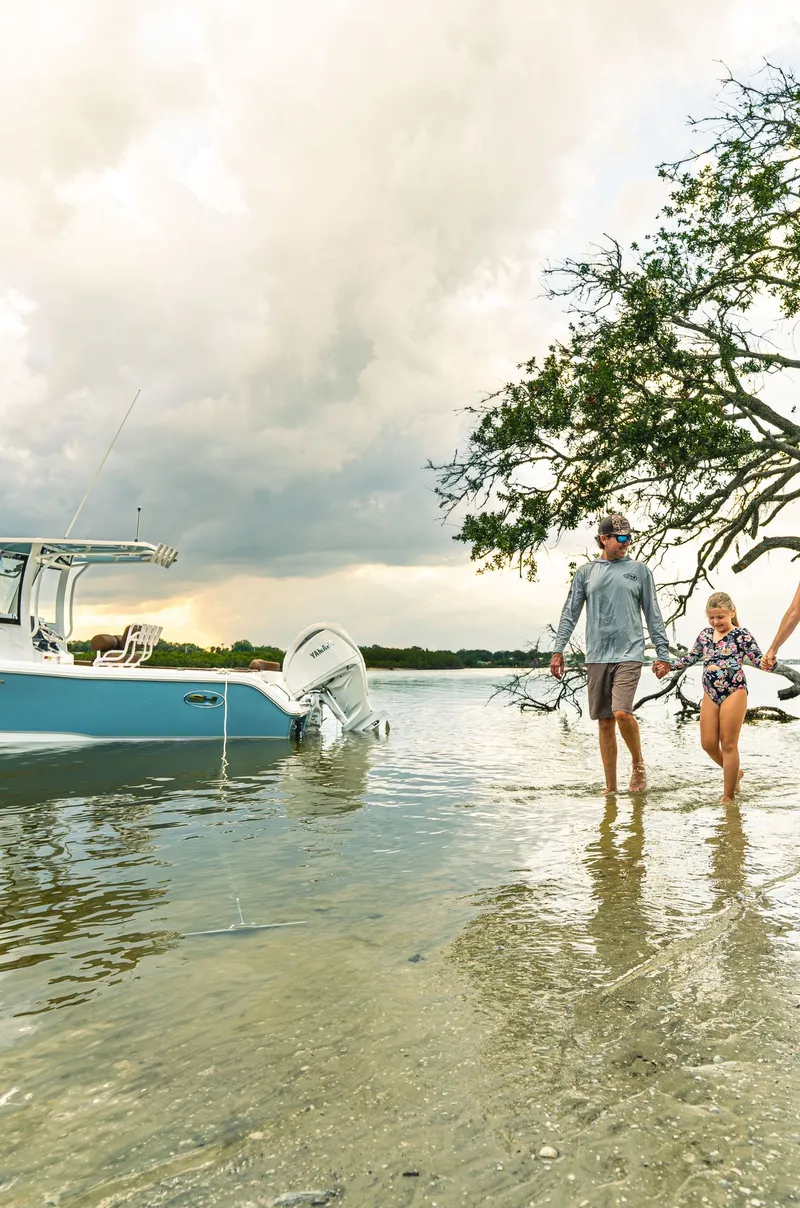
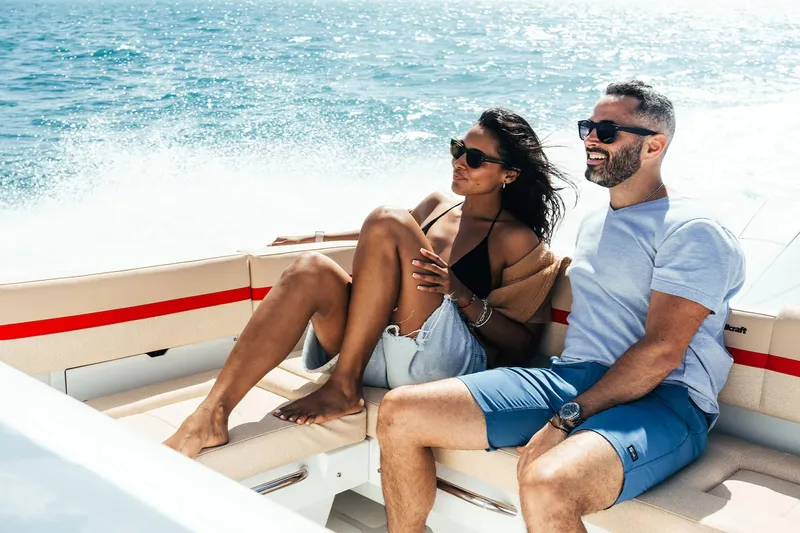
The SE models turn the bow into a lounge: backrests, cushions and a telescoping table. On a sandbar Saturday in the Indian River, that's where everyone ends up. They still fish. The Ultras covered here all list a livewell, and the 275 SE adds a 20-gallon mezzanine well. But the fishing gear is sized for a few hours of fishing inside a family day, not a full offshore trip.
The Ultra also fills the sizes in between. The current lineup includes the 229, 234, 235 SE, 239 SE, 245 SE and 255 SE between the 219 and the 265, so there's a step every foot or so. The 219 and 234 fit inside Florida's 8′ 6″ road-width limit, which matters if the boat will live in your driveway.
- Good fit: families who fish, cruise and swim, and buyers who want a boat under 25 feet.
- Trade-off: smaller livewells and no fish boxes on most SE models.
Ultra SL and Gamefish FS: the models that blur the line
Sea Hunt builds two kinds of boat that sit between the series, and they're worth knowing about before you decide the choice is binary.
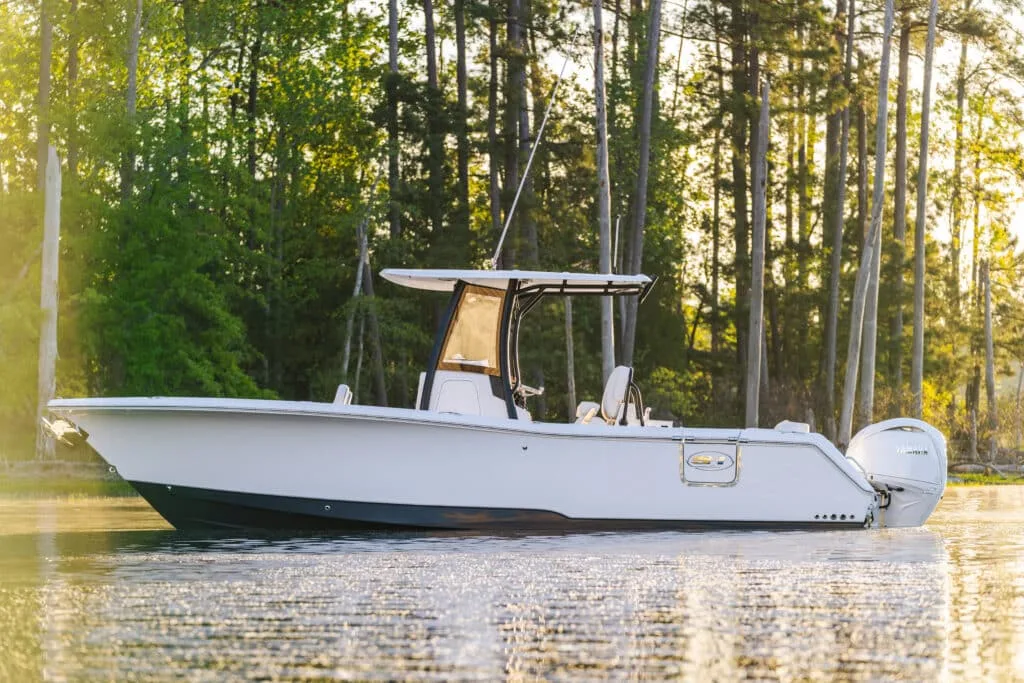
The Ultra SL models (265, 275, 285 and 305 SL) are Ultras with a fishing deck. The 275 SL carries a 256-quart sun lounge storage box in the bow, a 40-gallon mezzanine well, a 10-gallon pitch-bait well and two 200-quart fish boxes. On paper that's the Gamefish 27 CB's layout, with dual side doors and an aft insulated box in place of the transom well and rear bench. If you want Gamefish fishing room and doors on both sides, look at an SL.
The Gamefish FS models (27, 28 and 30 FS) go the other way: a Gamefish with a seating bow. At 28 feet the overlap is almost complete. The Ultra 285 SE and the Gamefish 28 FS come with the same 198-quart bow lockers, the same 40-gallon mezzanine well, the same 200-quart fish boxes and the same bow table. The Gamefish also has a transom livewell and a rear bench; the Ultra adds a second side door and a 40-quart aft box. At that point you're choosing on details, so stand on both.
At 30 feet the two SE and FS boats split again. The Ultra 305 SE has a 10-gallon livewell and an entertainment leaning post, where the 30 FS keeps the Gamefish's 40-gallon mezzanine well.
Ultra or Gamefish on Florida water: four examples
These are examples, not customer stories.
A family of five on the Indian River Lagoon. They sandbar on Saturday, wade-fish the flats on Sunday morning and trailer the boat home. The Gamefish isn't an option for them: every Gamefish is over 9 feet wide and draws 19 inches or more. An Ultra 219 or 234 tows without a permit and draws 13 inches, which is the right tool for the lagoon.
Two friends who fish out of Port Canaveral every weekend. They run 20 to 40 miles to the ledges, keep a well full of bait and come home with a box of fish. A Gamefish 27 or 28 CB fits that trip exactly, and the lounge seating on an Ultra SE would sit empty.
A Tampa Bay family that does both. Fishing the bay and nearshore reefs with the kids, plus the occasional run to deeper water. An Ultra 275 SE or a Gamefish 27 FS covers both; the deciding question is whether they'd rather have doors on both sides or the bigger mezzanine well.
A Keys couple who fish the reef and entertain. Short runs to the reef, long afternoons at anchor with friends. An Ultra SL, with fish boxes plus doors on both sides, fits that split; sea trial it next to a Gamefish CB.
Ultra or Gamefish: how do you choose?
- Count your last ten tripsMostly offshore fishing: Gamefish. A mix of fishing, cruising and sandbar days: Ultra.
- Look at your crewMostly anglers: Gamefish CB or Ultra SL. Family and friends who want a seat: Ultra SE or Gamefish FS.
- Check your size and storageUnder 25 feet, or a boat you can tow without a permit: Ultra only. From 27 feet up, both series match on size, power and fuel.
- Compare the deck detailsDoors on both sides, transom well, fish boxes and bow seating are the real differences at the same size.
Most regret here comes from buying for the trip you dream about instead of the trip you take. Owners who buy a Gamefish CB and spend most weekends at the sandbar miss the seating every time. Owners who buy an Ultra SE and then get hooked on offshore fishing miss the bait capacity just as often. If you're genuinely split, the crossover models exist for you: the Ultra SL if fishing leads, the Gamefish FS if seating matters but you still want a full-size bait well.
Comparing two specific boats? See Gamefish 25 vs Ultra 255 SE.
Compare the two layouts
The difference is easiest to feel standing on board. Tell us what you fish for and who comes along, and we'll help you compare an Ultra and a Gamefish.
Questions we hear
What is the difference between Sea Hunt Ultra and Gamefish?
Gamefish boats give more of the deck to fishing: twin Yamahas on every model, a 40-gallon mezzanine livewell from 27 feet up, a transom well and 200-quart fish boxes. Ultra boats give more to people: bow seating and tables on the SE models, side entry doors on both sides, and sizes down to 21 feet. From 27 feet up, matching Ultra and Gamefish models share the same hull dimensions, power and fuel.
Is the Sea Hunt Gamefish bigger than the Ultra?
Not at the same size. The Gamefish 27, 28 and 30 match the Ultra 275, 285 and 305 on length, beam, draft, dry weight, power rating and fuel. The Ultra line goes smaller, starting with the 21′ 4″ Ultra 219, while the smallest Gamefish is the 25′ 8″ Gamefish 25. Both series top out at 30′ 2″.
Which is better for offshore fishing, Ultra or Gamefish?
The Gamefish, because its livewells, fish boxes and transom well are sized for full days offshore. The larger Ultras run the same hulls and engines, so they handle the same water, and the Ultra SL models add fish boxes and a 40-gallon mezzanine well. An Ultra SE is better suited to shorter fishing trips mixed with family time.
What is a Sea Hunt Ultra SL?
The SL versions of the Ultra 265, 275, 285 and 305 replace the SE's bow seating and table with a sun lounge storage box, and add 200-quart fish boxes. From 275 up they also carry a 40-gallon mezzanine livewell and a pitch-bait well. They keep the Ultra's dual side entry doors. In practice, an SL is an Ultra with a fishing deck.
Is there a Sea Hunt Gamefish under 25 feet?
No. The smallest Gamefish is the Gamefish 25 at 25′ 8″ with a 9′ 2″ beam. If you want a Sea Hunt center console under 25 feet, look at the Ultra series, which starts at the 21′ 4″ Ultra 219, or Sea Hunt's BX bay boats if you fish shallow water.