
Boat ramp etiquette, step by step
In this article
Do all your prep in the staging area, not on the ramp: drain plug in, straps off, lines rigged, lights unplugged. Back down, float the boat off, tie it to the courtesy dock and park your vehicle right away. Coming back, wait off the ramp until your vehicle is in line, winch the boat on rather than driving it on, pull clear, and do your tie-downs and clean-up in the staging area. Then clean, drain and dry before the next launch.
Ramp etiquette is the set of mostly unwritten habits that keep a busy ramp moving. On a summer Saturday at a Central Florida ramp, a dozen rigs can be waiting at 7 a.m., and the same crowd comes back at once when the afternoon storms build. The boater who prepped in the parking lot is in and out in a few minutes. The one who starts loading coolers on the ramp holds up everyone behind them.
The steps below follow the BoatUS Foundation's trailering guide and the City of Marathon's ramp rules, in order: staging, backing down, launching, retrieving and cleaning up. Where a ramp posts its own rules, those come first.
How do you prepare in the staging area?
The staging area is the lane or lot near the top of the ramp set aside for getting boats ready. Do everything you can here, so the boat is ready to float the moment the trailer touches water. Two people halve your time on the ramp: one backs the trailer while the other handles the boat.
Before you pull up to the ramp
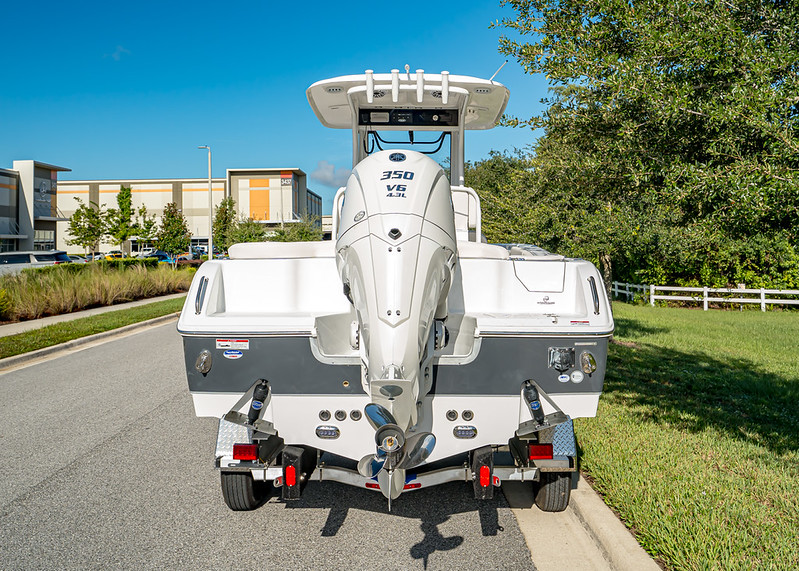
Unplug the trailer lights before you back in, because not all trailer lights are waterproof, and if your hubs lack bearing protectors, let them cool before they go under. Keep the bow winch strap and safety chain on until the boat is in the water; a boat with its straps off can slide off the back of the trailer if you brake hard on a steep ramp.
How do you back a boat trailer down a ramp?
- Practice first.The BoatUS Foundation suggests an empty parking lot before your first busy ramp. It takes practice, and it's easier to learn without an audience.
- Hold the bottom of the wheel.Push the bottom of the steering wheel the way you want the trailer to go. Small inputs work better than big ones.
- Use a spotter.Agree on hand signals before you start, and keep the spotter where you can see them in your mirror.
- Go slow and straight.Line up before the slope starts. If the trailer drifts, pull forward and start again rather than fighting it.
- Set the brake, keep the engine running.Leave the vehicle running in case you need power, set the parking brake and keep a wheel chock handy.
Backing a trailer is the skill that makes or breaks a ramp visit, and it's the one new owners skip practicing. The steering-wheel trick helps because it removes the reverse-image confusion: hand moves left, trailer goes left. Shorter trailers react faster than long ones, so a small bay boat feels twitchier than a 25-foot center console.
The parking brake is not a formality. Florida ramps are often coated in algae near the waterline, and a two-wheel-drive vehicle on wet concrete can lose grip. If your tires slip when you pull out, ease off the throttle, put a little weight in the bed, or ask for a tow up the ramp rather than spinning the tires. A four-wheel-drive tow vehicle is worth considering if your home ramp is steep or slick.
How do you launch a boat at a ramp?
- Back in until the boat can float.Lower the outboard once the water is deep enough to run it.
- Hold the boat with a line.Unhook the winch strap and safety chain only when someone has the bow or side line in hand.
- Start the engine.Start it and let it run steadily before backing the boat off the trailer.
- Back off slowly and clear the lane.Tie up at the courtesy dock, away from the launch lane, while the driver parks.
- Park right away.Pull the vehicle and trailer up the ramp and into a marked trailer space. Never leave a vehicle, trailer or boat unattended on the ramp.
Starting the engine before the boat leaves the trailer saves you from the most awkward moment at any ramp: a boat drifting off the back of the trailer with a motor that won't fire. If it doesn't start, you're still on the trailer and can winch back up and pull out of the lane to sort it out.
Courtesy docks are for loading people and holding the boat for a few minutes, not for rigging rods or waiting for friends who haven't arrived. Once the driver is back, load up and idle away. Many Florida ramps sit inside posted idle-speed or manatee zones. Florida law defines idle speed as the slowest speed that still lets you keep headway and steer. Watch for the signs as you leave the basin.
What should you do when retrieving a boat at a ramp?
Unload at the courtesy dock first, and don't pull into the launch lane until your vehicle is at the ramp. The line is formed by vehicles with trailers, not by boats waiting in the water.
- Drop people and gear first.Tie up at the courtesy dock, let passengers off, and have one go for the vehicle while others stage gear.
- Wait for your vehicle.Don't pull into a launch lane until your tow vehicle is at the ramp.
- Submerge about two-thirds of the bunks.That's the Marathon rule of thumb; your trailer may need a little more or less.
- Line up and winch on.Use the bow and stern lines to line the boat up, then attach the winch strap and crank. Keep everyone out of the line of the strap.
- Secure the bow and raise the engine.Hook the safety chain, shut down and tilt the outboard up before you pull forward.
- Pull clear, then finish.Tie-downs, lights and loose gear get handled in the staging area, not on the ramp.
Two safety points come from BoatUS. Stand out of the line of the winch cable while cranking; a failing strap can whip back hard enough to injure someone. And raise the engine before you pull the trailer up the ramp, or you'll grind the skeg on the concrete. In the staging area, re-attach the transom straps, reconnect and test the lights, and walk around the rig once before you drive off.
Why is power loading a boat onto a trailer a problem?
Power loading means driving the boat onto the trailer under engine power instead of winching it. The City of Marathon and the BoatUS Foundation both advise against it. Prop wash scours a hole just past the end of the concrete and piles the sediment into a mound behind it, so trailer tires get stuck and boats run aground at low water; FWC's boating-access staff list filling power-loading holes among their ramp repairs. BoatUS adds that the engine can suck sand and debris into its cooling system. If winching is hard, have the trailer's bunks and winch post fitted to the boat.
What does Clean, Drain, Dry mean, and does it matter in Florida?
- Clean off visible plants, animals and mud from the boat, trailer and gear before you leave the ramp area.
- Drain the motor, bilge, livewells and anything else that holds water before you leave.
- Dry everything for at least five days, or wipe it down with a towel, before launching in a different waterbody.
- Dispose of unwanted bait, worms and fish parts in the trash, never in the water.
Clean, Drain, Dry is a national campaign to stop aquatic invasive species from riding on boats and trailers from one lake or river to the next. The Fish and Wildlife Service also recommends flushing the motor and rinsing compartments with hot water (about 120°F) where you can, following the engine maker's instructions. Florida's freshwater lakes and rivers are where it matters most: a weed fragment caught on a trailer bunk at one lake can start a new infestation at the next.
Do the cleaning at the ramp or the staging area if there's a wash-down station, and drain livewells and bilge where the water won't run straight back into the waterway. Then, at home, rinse the hull, trailer and brakes with fresh water and flush the outboard after any saltwater trip. That's a corrosion habit rather than an invasive-species one, but it fits naturally into the same routine. Pull the drain plug before you leave the staging area so rainwater can't collect in the hull on the drive home.
Every ramp can have its own rules on speed, parking, overnight use and power loading. Read the posted signs before you launch and follow them over anything here.
What's different about Florida boat ramps?
| Situation | What to do |
|---|---|
| Low or wind-blown water | Check the tide or water level. Shallow ramps can leave the trailer short of floating depth; don't back the vehicle in past the hubs to make up for it. |
| Afternoon thunderstorms | Head in early. The ramp fills at once when storms build, and you don't want to be on the dock in lightning. |
| Slick concrete | Expect algae near the waterline. Walk carefully, use the parking brake, and give a two-wheel-drive vehicle extra weight or a chock. |
| Idle and manatee zones | Many ramp basins are posted. Idle speed means the minimum speed to keep headway and steer. |
| Finding a ramp | FWC's Boat Ramp Finder has information, maps and photos for hundreds of public ramps. |
Ramp details from FWC; seamanship notes are general guidance.
Florida's ramps range from a single lane at a lagoon causeway to big multi-lane parks on Tampa Bay and the Intracoastal. Before a first trip to a new ramp, look it up on FWC's Boat Ramp Finder: the photos show you how many lanes it has, whether there's a courtesy dock and how the parking is laid out. That saves you from discovering a one-lane ramp with no dock at 7 a.m. on Saturday.
Timing is the easiest courtesy of all. Summer storms in Central Florida tend to build in the afternoon, so half the boats on the water come back at the same time. If you can, launch early and come in before the rush, or wait out the line at the dock rather than crowding the lane. In winter, cold fronts bring north winds that can push water out of the lagoon and Intracoastal and leave some ramps shallower than usual, so check conditions before you hook up.
Questions we hear
When retrieving a boat at a ramp, what should you do first?
Unload passengers and gear at the courtesy dock, then send someone for the tow vehicle. Don't pull the boat into the launch lane until your vehicle is at the ramp; the line is formed by vehicles with trailers, not by boats in the water. Use the waiting time to stow loose gear and coil lines, so you can winch the boat on, secure it and pull clear quickly when it's your turn.
What are the rules at a boat ramp?
Each ramp posts its own, and they come first. The common ones: prep the boat in the staging area, not on the ramp; the line is formed by trailered vehicles; never leave a vehicle or boat unattended on the ramp; clear the courtesy dock quickly; don't power-load the boat onto the trailer; and clean, drain and dry before you leave. In Florida, many ramp basins also sit in posted idle-speed or manatee zones, so watch for signs as you leave.
Should you start the engine before taking the boat off the trailer?
Yes. Lower the drive, start the engine and let it run steadily before backing the boat off the trailer. That way, if the motor won't start, the boat is still on the trailer and you can pull out of the lane to fix it rather than drifting at the ramp. Keep a line to the bow or side cleat in hand while you do it.
Is it OK to power load a boat onto a trailer?
It's discouraged. Prop wash erodes the bottom just past the end of the ramp, digging a hole that traps trailer tires and leaving a mound that boats can run aground on. FWC's boating-access crews repair power-loading holes at the ramps they support. It can also pull debris into the engine. Winch the boat on instead, and have the trailer adjusted if loading is a struggle.
Should trailer lights be unplugged before launching?
Yes. The BoatUS Foundation advises disconnecting the trailer lights from the tow vehicle before you back into the water, and notes that not all trailer lights are waterproof. Unplug them in the staging area as part of your prep. When you're back on dry ground after retrieving, plug them in again and walk around the trailer to check the brake lights and turn signals before you pull onto the road.
Sources
- City of Marathon, Florida, Boat Ramp Etiquette..
- BoatUS Foundation, Transportation and Trailering..
- U.S. Fish and Wildlife Service, Clean, Drain, Dry..
- Stop Aquatic Hitchhikers..
- FWC, Boat Ramps and Access..
- FWC, Florida Public Boat Ramp Finder..
- FWC, Boating Access staff report..
- FWC, Boating Regulations..